Benzenes
Subcategories of "Benzenes"
- Benzamides(62 products)
- Benzoic Acids(5,475 products)
- Benzyl alcohols(1,457 products)
- Halogenated Benzenes(33,965 products)
- Phenols(2,664 products)
Found 11888 products of "Benzenes"
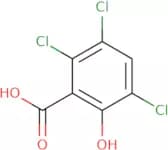
3,5,6-Trichlorosalicylic acid
CAS:3,5,6-Trichlorosalicylic acid binds to the active site of bacterial 5-nitrosalicylic acid reductase and inhibits its activity. It is an inhibitor of proton-translocating ATPases. 3,5,6-Trichlorosalicylic acid has been shown to be effective against a variety of bacteria at low concentrations. 3,5,6-Trichlorosalicylic acid has also been shown to inhibit some physiological activities such as the light emission and chemiluminescent reaction of luciferin in fireflies. This chemical reacts with chloride ions to produce light.Formula:C7H3Cl3O3Purity:Min. 95%Color and Shape:PowderMolecular weight:241.46 g/molMethyl 4-hydroxy-2-methylbenzoate
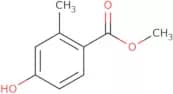
CAS:Methyl 4-hydroxy-2-methylbenzoate is a chromophore. It has demonstrated antioxidant and anti-oxidative properties in a number of assays, including 3-ethylbenzothiazoline-6-sulfonic acid (EBT) assay, naphthalene oxidation assay, and electrocyclic test. Methyl 4-hydroxy-2-methylbenzoate has been shown to be bioactive with respect to steroids and lignans. This compound has also been used as a tyrosinase inhibitor in neocarzinostatin (NCS) synthesis. Methyl 4-hydroxy-2-methylbenzoate is found in the extract of the leaves of Ligustrum lucidum.Formula:C9H10O3Purity:Min. 95%Color and Shape:White PowderMolecular weight:166.17 g/mol2,6-Dichlorobenzaldehyde oxime
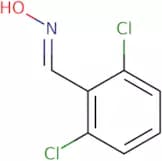
CAS:2,6-Dichlorobenzaldehyde oxime is a synthetic molecule that is prepared by the reaction of triphenylphosphine oxide and halides. It is also known as aldoxime and has been used in a number of chemical reactions. 2,6-Dichlorobenzaldehyde oxime has been used in the synthesis of a variety of organic compounds, including toxicants and preservatives.
Formula:C7H5Cl2NOPurity:Min. 95 Area-%Color and Shape:White PowderMolecular weight:190.03 g/molMethyl 2-methoxybenzoate
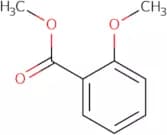
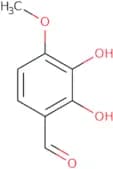
CAS:Methyl 2-methoxybenzoate is a synthetic chemical that is used in the treatment of wastewater. It inhibits the activity of enzymes such as fatty acid synthase, which are involved in the synthesis of long-chain fatty acids. Methyl 2-methoxybenzoate has been found to be an efficient method for the synthesis of prenyl compounds. This product is also an active methylene and hydrogen bond donor, and it can form products with carboxylic acid conjugates through acid catalysis. Methyl 2-methoxybenzoate has been used as a reagent for analytical chemistry, including gas chromatography and liquid chromatography.Formula:C9H10O3Purity:Min. 95%Color and Shape:Colorless Clear LiquidMolecular weight:166.17 g/mol2,3-Dihydroxy-4-methoxybenzaldehyde
CAS:2,3-Dihydroxy-4-methoxybenzaldehyde is the oxidized form of 2,3-dihydroxybenzaldehyde. It has been used in biological studies to investigate the biosynthetic pathways of reductoisomerase and analytical methods for detecting hydrogen bonds in samples. This chemical can also be found in urine samples as a metabolite of adenine nucleotide and polypeptides. The chemical has been shown to have health benefits, such as being a recombinant that helps cell culture.
Formula:C8H8O4Purity:Min. 95%Color and Shape:PowderMolecular weight:168.15 g/mol2,3-Diaminobenzoic acid methyl ester
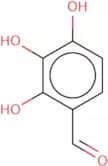
CAS:2,3-Diaminobenzoic acid methyl ester is a redox potential catalyst that has been shown to have anticancer activity in vitro and in vivo. It is a 5-ht4 receptor agonist, which causes an increase in the intracellular concentration of cAMP. The anticancer effect of this compound may be due to its ability to inhibit the growth of cancer cells by blocking DNA synthesis and cell division. The biological properties of this drug are not well understood, but it has been shown to have antioxidant effects, as well as proton-reducing and electron-accepting properties. This compound has also been studied electrochemically.Formula:C8H10N2O2Purity:95%NmrColor and Shape:PowderMolecular weight:166.18 g/mol2,3,4-Trihydroxybenzaldehyde
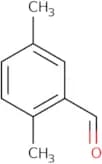
CAS:2,3,4-Trihydroxybenzaldehyde is a chemical compound that has been shown to have anti-cancer properties. It is used in the detection of cancer cells and as an indicator for the presence of palladium complexes. 2,3,4-Trihydroxybenzaldehyde is also a skin allergen and can cause allergic reactions. This chemical reacts with potassium ions in solution to form a precipitate or sludge. 2,3,4-Trihydroxybenzaldehyde has been shown to be effective against colorectal carcinoma cells and Group P2 bacteria.Formula:C7H6O4Purity:Min. 95%Color and Shape:PowderMolecular weight:154.12 g/mol2,5-Dimethylbenzaldehyde
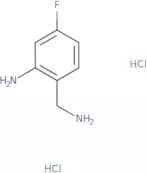
CAS:2,5-Dimethylbenzaldehyde is a chemical that is used in the synthesis of various compounds. It has been shown to have anticancer and energy metabolism properties. 2,5-Dimethylbenzaldehyde can be used as an energy source in the mitochondria. This compound also prevents the formation of fatty acids by inhibiting the conversion of acetyl-CoA into malonyl-CoA. The phase transition temperature for 2,5-dimethylbenzaldehyde is approximately −20 °C. The reaction mechanism for this compound is not well understood, but it has been shown to react with piperonal to form 3,4-dimethylbenzyl alcohol and methyl ethyl ether, which are both carcinogenic compounds. Chemical ionization mass spectrometry experiments have shown that protonated 2,5-dimethylbenzaldehyde reacts with methane gas to form methyl ethane and hydrogen gas. Thermodynamic data suggest that 2,5-dimethylFormula:C9H10OPurity:Min. 98.0 Area-%Color and Shape:Slightly Yellow Clear LiquidMolecular weight:134.18 g/mol2-Amino-4-fluorobenzylamine dihydrochloride
CAS:2-Amino-4-fluorobenzylamine dihydrochloride is a research chemical that is used as a reactant in organic synthesis. 2-Amino-4-fluorobenzylamine dihydrochloride is an intermediate for the preparation of other chemicals and can also be used as a building block for more complex compounds. This chemical has been shown to have good quality and can be used in many different types of research. 2-Amino-4-fluorobenzylamine dihydrochloride has CAS number 606139-20-2.Formula:C7H9FN2·2HClPurity:Min. 95 Area-%Color and Shape:PowderMolecular weight:213.08 g/mol4-Aminobenzoic acid
CAS:4-Aminobenzoic acid is a chemical compound that can be used as an antibacterial agent in wastewater treatment. It has been shown to be effective against Aerobacter aerogenes and other bacteria. 4-Aminobenzoic acid is a basic compound with an aromatic ring and four amine groups. It is often used in the synthesis of polymers, pharmaceuticals, dyes, and pigments. The polymerase chain reaction (PCR) technique uses 4-aminobenzoic acid as a cofactor for DNA synthesis. Electrochemical impedance spectroscopy (EIS) is another application of this chemical compound in which it acts as a redox mediator in the electrical circuit. 4-Aminobenzoic acid also has been shown to have toxic effects on bowel disease cells, which may be due to its ability to react with nucleophilic groups on cell surfaces or by inhibiting the production of essential proteins or enzymes within the cells
Formula:C7H7NO2Purity:Min. 98 Area-%Color and Shape:PowderMolecular weight:137.14 g/mol4-Octylbenzylamine
CAS:4-Octylbenzylamine is a hydrophobic molecule that is soluble in organic solvents. In simulations, it was shown to have affinity for anions and aromatic hydrocarbons, as well as the ability to be immobilized on surfaces. 4-Octylbenzylamine is also a chromatographic stationary phase that can be used to separate solutes with similar properties. This molecule has been oriented so that it binds to the hydrated surface of the column, which improves its affinity for anions and aromatic hydrocarbons. The high-performance liquid chromatography (HPLC) technique utilizes this property to separate molecules of different affinities from one another in a systematic manner.Formula:C15H25NPurity:Min. 95%Color and Shape:PowderMolecular weight:219.37 g/mol2-Methoxybenzoic acid
CAS:2-Methoxybenzoic acid is a nonsteroidal anti-inflammatory drug that belongs to the group of acetate extract. This compound has been shown to inhibit the production of prostaglandin E2 by inhibiting cyclooxygenase activity. 2-Methoxybenzoic acid also acts as an antagonist at serotonin 5HT1A receptors, which are involved in the regulation of mood and cognition. It is a competitive inhibitor of p-hydroxybenzoic acid, natural compounds, and protocatechuic acid with hydrogen bond interactions. 2-Methoxybenzoic acid also binds to tissue culture cells and inhibits cell growth through receptor binding.Formula:C8H8O3Purity:Min. 95%Color and Shape:PowderMolecular weight:152.15 g/mol4-Ethoxybenzonitrile
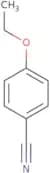
CAS:4-Ethoxybenzonitrile is an organic compound that belongs to the group of nitroalkanes. It is a substrate for reductive amination, which is a reaction in which the nitro group on 4-ethoxybenzonitrile is reduced by an amine to form an amide. This reaction can be facilitated by metal catalysts, such as copper(II) acetate and zinc chloride. The reaction yields high selectivity (>90%) with respect to the product formed and has been shown to be more efficient than other reductive amination reactions. 4-Ethoxybenzonitrile has been used as a building block for various compounds, including dyestuffs, pharmaceuticals, and pesticides. 4-Ethoxybenzonitrile is also resistant to tyrosinase due to its lack of electron donating groups on its aromatic ring.Formula:C9H9NOPurity:Min. 98 Area-%Color and Shape:PowderMolecular weight:147.17 g/mol2-Hydroxy-6-methylbenzoic acid
CAS:2-Hydroxy-6-methylbenzoic acid is a natural product that is synthesized by the enzyme p. pastoris. It is a member of the polyketide class of compounds and has shown to have physiological effects such as anti-inflammatory and antioxidant properties. 2-Hydroxy-6-methylbenzoic acid also has been shown to inhibit ATP binding cassette transporter (ABC) proteins, which are involved in drug resistance, from transporting drugs out of cells, making it an attractive candidate for drug discovery.
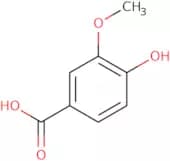
Formula:C8H8O3Purity:Min. 95%Color and Shape:PowderMolecular weight:152.15 g/mol4-Hydroxy-3-methoxybenzoic acid
CAS:Flavoring agent; interacts with TPRV receptors and ASIC channels
Formula:C8H8O4Purity:Min. 98 Area-%Color and Shape:White Beige PowderMolecular weight:168.15 g/mol(2,5-Dichlorophenyl)acetone
CAS:(2,5-Dichlorophenyl)acetone is a chemical compound that is used as a reaction component in the synthesis of other compounds. It can be used as a reagent in the preparation of high quality research chemicals, speciality chemicals and fine chemicals. It is also used as an intermediate in the synthesis of complex compounds. (2,5-Dichlorophenyl)acetone has CAS number 102052-40-4.Formula:C9H8Cl2OPurity:Min. 95%Color and Shape:PowderMolecular weight:203.06 g/mol2-Bromobenzaldehyde
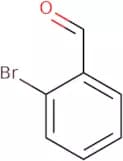
CAS:2-Bromobenzaldehyde is an important aryl aldehyde that can be synthesized through the copper-catalyzed coupling of 2-bromobenzyl bromide and phenylacetone. The synthesis of 2-bromobenzaldehyde has been used to study the effects of physiological activities on the coordination geometry. It is also used as a fluorescent probe for amines and esters, which are commonly found in bioinorganic chemistry. The compound is characterized by intermolecular hydrogen bonding and hydrogen bonding between the hydroxy group and chloride, which are associated with its acidity. 2-Bromobenzaldehyde has been shown to have antiinflammatory properties, which may be due to its ability to inhibit prostaglandin synthesis.Formula:C7H5BrOPurity:Min. 95%Color and Shape:Off-White PowderMolecular weight:185.02 g/molN-Phenylanthranilic acid
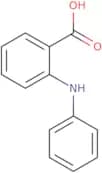
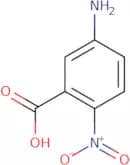
CAS:N-Phenylanthranilic acid is a nonsteroidal anti-inflammatory drug that inhibits the activity of cyclooxygenase-1 and cyclooxygenase-2. It has been shown to be effective against congestive heart failure in animal models. N-Phenylanthranilic acid also possesses potent anti-inflammatory activities that are mediated by inhibiting the production of prostaglandins. The compound binds to DNA and blocks the binding of transcription factors, leading to cell death. N-Phenylanthranilic acid has been shown to inhibit proliferation in human erythrocytes and k562 cells, as well as apoptosis pathway in these cells.Formula:C13H11NO2Purity:Min. 95%Color and Shape:PowderMolecular weight:213.23 g/mol5-Amino-2-nitrobenzoic acid
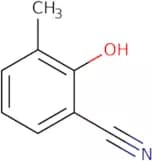
CAS:5-Amino-2-nitrobenzoic acid is a drug that has been shown to inhibit the activity of proteases. It has been used to detect the presence of protease activity in urine samples, as well as to study the inhibition of protease activity by other drugs. 5-Amino-2-nitrobenzoic acid is an inhibitor of chymotrypsin, trypsin, and elastase. This drug has been shown to be effective in inhibiting these enzymes at low concentrations, with a detection sensitivity of approximately 0.1 μM. 5-Amino-2-nitrobenzoic acid inhibits the growth of bacteria by binding to them and preventing protein synthesis. The compound also inhibits the enzyme dihydrolipoamide dehydrogenase in mitochondria, which is required for cellular respiration and energy production.Formula:C7H6N2O4Color and Shape:Brown Yellow PowderMolecular weight:182.13 g/mol2-Hydroxy-3-methylbenzonitrile
CAS:2-Hydroxy-3-methylbenzonitrile is a high quality chemical that is used as an intermediate in the synthesis of complex compounds. It can be used as a reagent in organic chemistry, and has been shown to be useful for the production of fine chemicals, such as antibiotics. 2-Hydroxy-3-methylbenzonitrile is also a versatile building block for the production of pharmaceuticals and research chemicals. It can be used as a reaction component for the synthesis of speciality chemicals and various building blocks.Formula:C8H7NOPurity:Min. 95%Color and Shape:PowderMolecular weight:133.15 g/mol