


Benzoic Acids
Benzoic acids are aromatic carboxylic acids with the molecular formula C7H6O2, characterized by a benzene ring bonded to a carboxyl group (-COOH). These compounds are widely used as preservatives, intermediates in organic synthesis, and in the production of various chemicals, including dyes and fragrances. Benzoic acids are also important in the food and pharmaceutical industries. At CymitQuimica, we provide a diverse range of high-quality benzoic acids to support your research and industrial needs.
Found 5434 products of "Benzoic Acids"
Sort by
Purity (%)
0
100
|
0
|
50
|
90
|
95
|
100
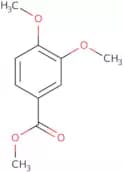
Methyl 3,4-dimethoxybenzoate
CAS:<p>Methyl 3,4-dimethoxybenzoate is an acetate extract that has been shown to inhibit tyrosinase activity. This compound also has a potent inhibitory effect on the production of p-hydroxybenzoic acid. Methyl 3,4-dimethoxybenzoate can be synthesized from protocatechuic acid and methoxy groups. It is a chemical reaction involving three steps: condensation, dehydration, and reduction. Tyrosinase is an enzyme in the melanin biosynthetic pathway that catalyzes the conversion of tyrosine to dopaquinone. Tyrosinase activity can be inhibited by methyl 3,4-dimethoxybenzoate through competitive inhibition or by its ability to reduce the availability of substrate for this enzyme.</p>Formula:C10H12O4Purity:Min. 95%Color and Shape:PowderMolecular weight:196.2 g/molRef: 4Z-B-085009
Discontinued productRef: 4Z-B-085188
Discontinued productRef: 4Z-B-085189
Discontinued productRef: 4Z-B-085060
Discontinued productRef: 4Z-B-085209
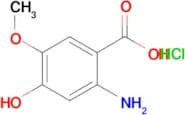
Discontinued product2-amino-4-hydroxy-5-methoxybenzoic acid hydrochloride
CAS:Purity:95.0%Molecular weight:219.61999511718753-[6-Chloro-4-(trifluoromethyl)pyridin-2-yl]benzoic acid
CAS:Purity:95.0%Color and Shape:SolidMolecular weight:301.64999389648442,3-Diaminobenzoic acid methyl ester
CAS:<p>2,3-Diaminobenzoic acid methyl ester is a redox potential catalyst that has been shown to have anticancer activity in vitro and in vivo. It is a 5-ht4 receptor agonist, which causes an increase in the intracellular concentration of cAMP. The anticancer effect of this compound may be due to its ability to inhibit the growth of cancer cells by blocking DNA synthesis and cell division. The biological properties of this drug are not well understood, but it has been shown to have antioxidant effects, as well as proton-reducing and electron-accepting properties. This compound has also been studied electrochemically.</p>Formula:C8H10N2O2Purity:95%NmrColor and Shape:PowderMolecular weight:166.18 g/molRef: 3D-FD11827
Discontinued product



![3-[6-Chloro-4-(trifluoromethyl)pyridin-2-yl]benzoic acid](/_next/image/?url=https%3A%2Fstatic.cymitquimica.com%2Fproducts%2F10%2Fthumb-webp%2FF317175.webp&w=3840&q=75)
![2-[4-(methylamino)-3-nitrobenzoyl]benzoic acid](/_next/image/?url=https%3A%2Fstatic.cymitquimica.com%2Fproducts%2F10%2Fthumb-webp%2FF518183.webp&w=3840&q=75)
