Pharmaceutical Standards
Pharmaceutical standards are a comprehensive set of reference materials essential for ensuring the safety, efficacy, and quality of pharmaceutical products. This category includes standards for active pharmaceutical ingredients (APIs), which are the core components responsible for therapeutic effects. Additionally, it covers compounds and metabolites relevant to both the pharmaceutical and veterinary industries, providing benchmarks for the accurate measurement and analysis of these substances. Nitrosamine control standards are crucial for detecting and mitigating potentially harmful nitrosamines in drug formulations. Toxicology standards help assess the safety and potential adverse effects of pharmaceutical compounds. Furthermore, enzyme activators and inhibitors standards are vital for research and development, enabling precise studies of biochemical pathways and drug mechanisms. These pharmaceutical standards are indispensable tools for regulatory compliance, quality control, and research, ensuring that pharmaceutical products meet stringent safety and effectiveness criteria.
Subcategories of "Pharmaceutical Standards"
- APIs for research and impurities(273,774 products)
- Enzyme Activators and Inhibitors(2,827 products)
- Nitrosamines(2,606 products)
- Pharmaceutical and Veterinary Compounds and Metabolites(2,613 products)
- Toxicology(13,652 products)
Found 7836 products of "Pharmaceutical Standards"
Sort by
Purity (%)
0
100
|
0
|
50
|
90
|
95
|
100
Cimetropium bromide
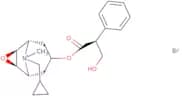
CAS:<p>Cimetropium bromide is a pharmacological agent that binds to muscarinic receptors, inhibiting the release of acetylcholine. It is used in the treatment of bowel disease, such as constipation and irritable bowel syndrome. Cimetropium bromide has been shown to be effective in treating symptoms of these diseases, including decreased intestinal motility, increased stool consistency, and relief from abdominal pain. Cimetropium bromide has also been found to be effective in reducing symptoms of inflammatory bowel disease. This drug inhibits the release of acetylcholine by binding with muscarinic receptors on the smooth muscle cells lining the intestine and bladder. Cimetropium bromide is a potent antimuscarinic agent that can cause dry mouth and blurred vision.</p>Formula:C21H28BrNO4Purity:Min. 95%Color and Shape:White PowderMolecular weight:438.36 g/molBudesonide
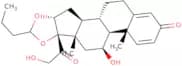
CAS:Controlled Product<p>Glucocorticoid receptor agonist; anti-inflammatory</p>Formula:C25H34O6Purity:Min. 95%Color and Shape:White Off-White PowderMolecular weight:430.53 g/mol4'-Bromo-3'-methylacetophenone, 75%
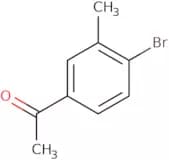
CAS:<p>4'-Bromo-3'-methylacetophenone, 75% is a high quality reagent that is a useful intermediate for the synthesis of complex compounds. It has CAS No. 37074-40-1 and can be used as a fine chemical or speciality chemical in research. This product is also a versatile building block that can be used as an intermediate in reactions and as a reaction component.</p>Formula:C9H9BrOPurity:Min. 95%Molecular weight:213.07 g/mol3,5-Diiodosalicylic acid
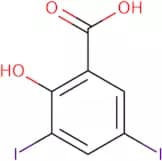
CAS:<p>3,5-Diiodosalicylic acid is a chemical compound that has been used in biological studies to study the kinetic energy of nuclear DNA and to examine the surface glycoprotein receptors. It binds tightly to copper chloride and lithium and can be used as an inhibitor for receptor activity. 3,5-Diiodosalicylic acid has also been shown to have anti-inflammatory effects in hl-60 cells by inhibiting the production of cytokines such as IL-1β, TNFα, IL-6, IL-10, and GM-CSF.</p>Formula:C7H4I2O3Purity:Min. 95%Color and Shape:PowderMolecular weight:389.91 g/mol4-Methoxy-3-nitropyridine
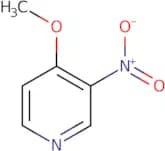
CAS:<p>4-Methoxy-3-nitropyridine (4MNOP) is an organic compound that is a white solid at room temperature. 4MNOP has been shown to interact with alkali metals and can be used in the preparation of emulsifying agents. It also has been found to have pharmacokinetic properties, including a low molecular weight, good solubility in water, and a high degree of absorption. The imidazopyridine ring system is susceptible to reductive amination reactions, which may lead to the formation of amine or surfactant residues.</p>Formula:C6H6N2O3Purity:Min. 95%Color and Shape:PowderMolecular weight:154.13 g/molDL-Erythro-dihydrosphingosine synthetic
CAS:<p>DL-Erythro-dihydrosphingosine synthetic is a nonsteroidal anti-inflammatory drug that blocks the activity of Bcl-2, a protein involved in apoptosis. This compound has been shown to have anti-cancer effects in hl-60 cells and squamous cell carcinomas. DL-Erythro-dihydrosphingosine synthetic also inhibits the matrix metalloproteinase activity of MMPs, which are enzymes that degrade the extracellular matrix and can cause cancer cell invasion and metastasis. The optimum concentration for this compound is 1 µM.</p>Formula:C18H39NO2Purity:Min. 95%Color and Shape:White PowderMolecular weight:301.51 g/molrec Neurotrophin-3 (human)
<p>Please enquire for more information about rec Neurotrophin-3 (human) including the price, delivery time and more detailed product information at the technical inquiry form on this page</p>Purity:Min. 95%2,2'-Biphenyldicarboxylic acid
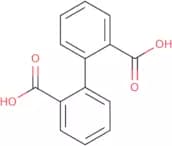
CAS:<p>2,2'-Biphenyldicarboxylic acid belongs to the group of diphenic compounds and is synthesized by the reaction of 2-bromobenzene and sodium carbonate. It has a molecular formula of C12H10O4 with an empirical formula of C8H6O4. The compound is an intramolecular hydrogen bond acceptor and an intermolecular hydrogen bond donor. 2,2'-Biphenyldicarboxylic acid has been shown to have analytical chemistry properties for measuring nitrogen content in organic compounds, as well as being used in the synthesis of p-hydroxybenzoic acid. This compound also has metabolic disorders such as cancer, diabetes mellitus, and Alzheimer's disease because it is a hydrogen bond acceptor that can be oxidized into p-hydroxybenzoic acid.</p>Formula:C14H10O4Purity:Min. 95%Color and Shape:PowderMolecular weight:242.23 g/mol3,6-Dinitro-1,8-naphthalenedicarboxylicanhydride
CAS:<p>3,6-Dinitro-1,8-naphthalenedicarboxylic anhydride is a fine chemical that is used as a building block in the synthesis of other compounds. It is also used as a reagent and can be found in research chemicals with CAS No. 3807-80-5. 3,6-Dinitro-1,8-naphthalenedicarboxylic anhydride is versatile and has many uses as a reaction component. The compound can be used to produce complex compounds or scaffolds that are useful in research.</p>Formula:C12H4N2O7Purity:Min. 95%Color and Shape:Beige PowderMolecular weight:288.17 g/molβ-Naphthamide
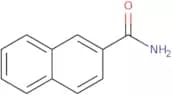
CAS:<p>Beta-naphthamide is an inhibitor binding to the dinucleotide phosphate (DNP) in bacterial cells. This binding prevents the enzyme from carrying out its normal function, which is the production of ATP, and it also inhibits various other enzymes. Beta-naphthamide inhibits the growth of Gram-positive bacteria by inhibiting their cell wall assembly and also has a bactericidal effect on Gram-negative bacteria. Beta-naphthamide has been shown to be active against multidrug efflux pump proteins that are present in Gram-negative bacteria, such as Escherichia coli. DNP is a receptor for dopamine and beta-naphthamide inhibits dopamine receptors in mammalian cells, which may lead to Parkinson's disease. Beta-naphthamide has been shown to inhibit the polymerase chain reaction (PCR) mechanism by binding to DNA polymerase. Beta-naphthamide binds to receptors on trigeminal nerve endings, which leads to paralysis of</p>Formula:C11H9NOPurity:Min. 95%Molecular weight:171.2 g/mol3,6-Difluoro-2-hydroxybenzoic acid methyl ester
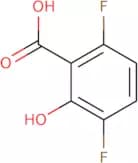
CAS:<p>3,6-Difluoro-2-hydroxybenzoic acid methyl ester is a combination of two substances that are used as deodorants and antiperspirants. They work by blocking the pores in the skin, which prevents perspiration and reduces body odor. 3,6-Difluoro-2-hydroxybenzoic acid methyl ester is not an anti-inflammatory drug.</p>Formula:C7H4F2O3Purity:Min. 95%Molecular weight:174.1 g/molCresol Red Sodium Salt
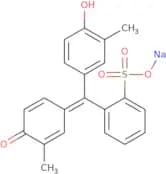
CAS:<p>Cresol Red Sodium Salt is a reagent, complex compound, and useful intermediate. It is CAS No. 62625-29-0 and has the molecular formula C10H8O4Na2S. It can be used as a building block for the synthesis of speciality chemicals, research chemicals, and versatile building blocks. This chemical can be used as a reaction component in organic syntheses.</p>Formula:C21H17NaO5SColor and Shape:PowderMolecular weight:404.41 g/mol4-Fluoro-3-nitrophenylacetic acid
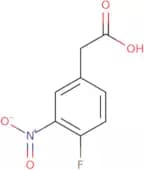
CAS:4-Fluoro-3-nitrophenylacetic acid is a chiral monomer that can be used to synthesize diphenyl ethers. The reaction requires a carbamic acid as the acid catalyst and a nucleophilic reagent, such as an amine. 4-Fluoro-3-nitrophenylacetic acid has been shown to have anti-cancer properties in vitro and in vivo. 4-Fluoro-3-nitrophenylacetic acid may also inhibit the synthesis of dihydroisoquinolines, which are important for the function of DNA polymerase. There are two strategies for synthesizing this compound: one is based on the condensation of two molecules of phenylacetaldehyde in the presence of an acid catalyst; the other employs a Lewis acid catalyst with a pyridine nucleophile.Formula:C8H6FNO4Purity:Min. 95%Color and Shape:SolidMolecular weight:199.14 g/molSulfosuccinimidyl 3-[[2-(biotinamido)ethyl] dithio]propionate sodium salt
CAS:<p>Sulfosuccinimidyl 3-[[2-(biotinamido)ethyl] dithio]propionate sodium salt (BSP) is a biotin-avidin binding molecule that forms a covalent linkage with the antigen and antibody. It is used in immunoassays to detect specific antigens or antibodies in biological samples. BSP is manufactured by reacting carbodiimide hydrochloride with sulfosuccinic acid. The product can be used for a variety of immunoassays such as enzyme-linked immunosorbent assays, real-time polymerase chain reaction, and immunohistochemistry. The sensitivity of this product has been shown to be greater than those of other detection methods such as Western blotting.</p>Formula:C19H27N4NaO9S4Purity:Min. 95%Color and Shape:White Off-White PowderMolecular weight:606.69 g/mol2-(1',2',3',4'-Tetrahydroxybutyl)quinoxaline
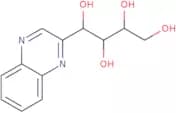
CAS:<p>2-(1',2',3',4'-Tetrahydroxybutyl)quinoxaline is a chemical compound that is used as a versatile building block in the synthesis of complex compounds. It has been shown to be useful in reactions involving nucleophilic substitution, electrophilic addition, and oxidation. This compound has been used as a reagent for the synthesis of other fine chemicals and as an intermediate for research chemicals and speciality chemicals. 2-(1',2',3',4'-Tetrahydroxybutyl)quinoxaline has CAS No. 80840-09-1 and is soluble in organic solvents. The purity of this product is high, with less than 1% impurities.</p>Formula:C12H14N2O4Purity:Min. 95%Color and Shape:Off-White To Light Brown SolidMolecular weight:250.25 g/mol2,3-Dichloro-5,8-dihydroxy-1,4-naphthalenedione
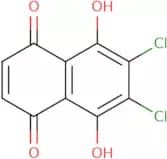
CAS:<p>2,3-Dichloro-5,8-dihydroxy-1,4-naphthalenedione (DDD) is a chemical inhibitor of the proton response pathway. It is an analog of 2,3,7,8-tetrachlorodibenzo-p-dioxin (TCDD). DDD has been shown to enhance the induction of apoptosis in human macrophages and leishmania parasites. This agent also inhibits the growth of some tumor cell lines and enhances the cytotoxicity of other chemotherapeutic drugs. DDD has low bioavailability due to its high lipophilicity and rapid metabolism by esterases and glucuronidases.</p>Formula:C10H4Cl2O4Purity:Min. 95%Color and Shape:Red PowderMolecular weight:259.04 g/molN-a-t-Boc-N-g-trityl-L-asparagine
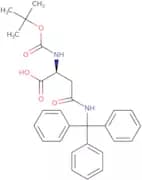
CAS:<p>N-a-t-Boc-N-g-trityl-L-asparagine is a recombinant human protein that has been synthesized in E. coli. It is a peptide with 17β-estradiol at its C terminus, and it binds to the oestrogen receptor α (ERα) via hydrogen bonding interactions. The linker between the asparagine and estradiol is a Boc group that can be removed by protease activity, revealing the active form of 17β-estradiol. ERα ligates to N-a-t-Boc-N-g-trityl L asparagine with high affinity, and this interaction is reversible. The linker also contains a functional group for surface attachment, which may be used to attach this peptide to a solid support or tissue culture substrate for use in cell cultures.<br>br></p>Formula:C28H30N2O5Purity:Min. 95%Color and Shape:White PowderMolecular weight:474.55 g/mol(-)-Bis(pinanediolato)diboron
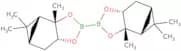
CAS:<p>(-)-Bis(pinanediolato)diboron is a reactive component that can be used as a reagent. It reacts with alkenes to form pinacolboronates, which are useful for the synthesis of complex compounds. (-)-Bis(pinanediolato)diboron is also an intermediate in the synthesis of diboronic acid and pinacolborane. This compound has broad utility as a building block, scaffold, or intermediate in organic synthesis.<br>-Pinanediolato boron is also a versatile building block that can be used to synthesize many other chemical compounds. For example, it can be used as an intermediate to synthesize (-)-pinanediol and 3-hydroxy-1-methylpyridinium iodide (3HMPI), which are speciality chemicals.<br>-Pinanediolato boron is also an excellent building block for organic synthesis due to its ability</p>Formula:C20H32B2O4Purity:Min. 95%Color and Shape:White SolidMolecular weight:358.09 g/mol2,2'-Dimethylazoxybenzene
CAS:<p>2,2'-Dimethylazoxybenzene is the active chemical in this product. It has been shown to be a reactive molecule that can undergo electron reduction. It is also an acidic compound that reacts with amines and carbon nanotubes to form azobenzene and nitrotoluene respectively. The mechanism of the reaction is not well understood but it is thought that a molecule with a double bond adjacent to the azoxy group may react with one of the hydrogen atoms on the double bond causing elimination of nitrogen gas and formation of azobenzene or nitrotoluene.</p>Formula:C14H14N2OPurity:Min. 95%Color and Shape:PowderMolecular weight:226.27 g/mol2,4,6-Trimethoxybenzoic acid methyl ester
CAS:<p>2,4,6-Trimethoxybenzoic acid methyl ester is a yellow crystalline solid that can be dissolved in acetone, chloroform, ether, and benzene. It has a molecular weight of 164.3 g/mol and its chemical name is 2,4,6-trimethoxybenzoic acid methyl ester. It has a melting point of 144 °C and can be found in the hexanones group. This product is manufactured in Australia and its registry number is 135949-06-8.</p>Formula:C11H14O5Purity:Min. 95%Molecular weight:226.23 g/mol



![Sulfosuccinimidyl 3-[[2-(biotinamido)ethyl] dithio]propionate sodium salt](/_next/image/?url=https%3A%2Fstatic.cymitquimica.com%2Fproducts%2F3D%2Fthumb-webp%2FFS27965.webp&w=3840&q=75)