Pharmaceutical Standards
Pharmaceutical standards are a comprehensive set of reference materials essential for ensuring the safety, efficacy, and quality of pharmaceutical products. This category includes standards for active pharmaceutical ingredients (APIs), which are the core components responsible for therapeutic effects. Additionally, it covers compounds and metabolites relevant to both the pharmaceutical and veterinary industries, providing benchmarks for the accurate measurement and analysis of these substances. Nitrosamine control standards are crucial for detecting and mitigating potentially harmful nitrosamines in drug formulations. Toxicology standards help assess the safety and potential adverse effects of pharmaceutical compounds. Furthermore, enzyme activators and inhibitors standards are vital for research and development, enabling precise studies of biochemical pathways and drug mechanisms. These pharmaceutical standards are indispensable tools for regulatory compliance, quality control, and research, ensuring that pharmaceutical products meet stringent safety and effectiveness criteria.
Subcategories of "Pharmaceutical Standards"
- APIs for research and impurities(273,482 products)
- Enzyme Activators and Inhibitors(2,827 products)
- Nitrosamines(2,606 products)
- Pharmaceutical and Veterinary Compounds and Metabolites(2,602 products)
- Toxicology(13,652 products)
Found 7836 products of "Pharmaceutical Standards"
Sort by
Purity (%)
0
100
|
0
|
50
|
90
|
95
|
100
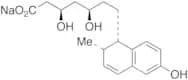
(BetaR,DeltaR,1S,2S)-1,2-Dihydro-β,δ,6-trihydroxy-2-methyl-1-naphthaleneheptanoic Acid Sodium Salt (Pravastatin Impurity)
CAS:Controlled Product<p>Applications Pravastatin impurity.<br>References Muramatsu, S., et al.: Biol. Pharm. Bull., 20, 1199 (1997), Serajuddin, A., et al.: J. Pharm. Sci., 88, 696 (1999),<br></p>Formula:C18H23O5·NaColor and Shape:NeatMolecular weight:342.363-Hydroxy Loratadine
CAS:Controlled Product<p>Applications An intermediate for the preparation of 3-Hydroxy Desloratadine.<br></p>Formula:C22H23ClN2O3Color and Shape:NeatMolecular weight:398.884-Nitrophenyl Propionate
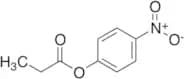
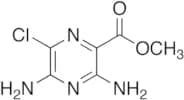
CAS:Controlled Product<p>Applications 4-Nitrophenyl propionate (cas# 1956-06-05) is a useful research chemical.<br></p>Formula:C9H9NO4Color and Shape:NeatMolecular weight:195.1723,5-Diamino-6-chloropyrazine-2-carboxylic Acid Methyl Ester
CAS:Controlled ProductFormula:C6H7ClN4O2Color and Shape:NeatMolecular weight:202.60Desisopropyl Atrazine-d5
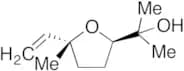
CAS:Controlled Product<p>Applications A labelled metabolite of Atrazine (ATR) (A794600).<br>References Compton, D., et al.: Eur. J. Pharmacol., 110, 157 (1985), Das, P., et al.: Toxicol. Sci., 59, 127 (2001), Das, P., et al.: Life Sci., 73, 3123 (2003), Coban, A., et al.: J. Neurochem., 100, 1177 (2007),<br></p>Formula:C52H5H3ClN5Color and Shape:Off-WhiteMolecular weight:178.63trans-Linalool Oxide
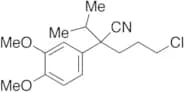
CAS:<p>Applications trans-Linalool Oxide is a derivative of Linalool (L465950), which is a terpene alcohol common in various flowers and spice plants. trans-Linalool Oxide is also an isomer of cis-Linalool Oxide, which has been employed to assess the effect of vine on the glycosylated flavour procurers in grapes.<br> Not a dangerous good if item is equal to or less than 1g/ml and there is less than 100g/ml in the package<br>References Baratta, M. T., et al.: J Essent Oil Res 10, 618 (1998); Bureau, S. M., et al.: J. Agric. Food Chem. 48, 1290 (2000)<br></p>Formula:C10H18O2Color and Shape:NeatMolecular weight:170.255-Chloro-2-(3,4-dimethoxyphenyl)-2-isopropylvaleronitrile
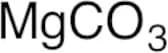
CAS:Controlled Product<p>Applications Intermediate for synthesis of verapamil and analogs.<br></p>Formula:C16H22ClNO2Color and Shape:NeatMolecular weight:295.80Magnesium Carbonate
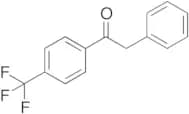
CAS:Controlled Product<p>Applications Magnesium Carbonate is a chemical reagent used in the production of magnesium oxide in the synthesis of ceramics.<br>References Seabra, M. et al.: Mat. Res. Bull., 37, 255 (2002); Kumar, T. et al.: Biomat., 21, 1623 (2000);<br></p>Formula:CO3·MgColor and Shape:White To Off-WhiteMolecular weight:84.312-Phenyl-4’-trifluoromethylacetophenone
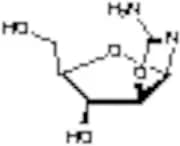
CAS:Controlled Product<p>Applications 2-Phenyl-4’-trifluoromethylacetophenone, is used in the preparation of arylketones via palladium-tedicyp-catalyzed Heck reaction.<br>References Battace, A., et al.: Eur. J. Org. Chem., 19, 3122 (2007)<br></p>Formula:C15H11F3OColor and Shape:NeatMolecular weight:264.242O,N-Aminomethanylylidene-β-D-arabinofuranose
CAS:Controlled Product<p>Applications O,N-Aminomethanylylidene-β-D-arabinofuranose (cas# 27963-98-0) is a compound useful in organic synthesis.<br></p>Formula:C6H10N2O4Color and Shape:NeatMolecular weight:174.15Diamino-5-phenylthiazole Hydrobromide
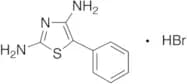
CAS:Controlled Product<p>Applications Diamino-5-phenylthiazole Hydrobromide is an phenylthiazole derivative used in the preparation of antiallergic and antiinflammatory agents.<br> Not a dangerous good if item is equal to or less than 1g/ml and there is less than 100g/ml in the package<br>References Ban, M. et al.: Bioorg. Med. Chem., 6, 1069 (1998);<br></p>Formula:C9H9N3S·BrHColor and Shape:NeatMolecular weight:272.16Edoxaban Tosylate Monohydrate
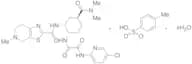
CAS:<p>Applications Edoxaban is an anticoagulant drug which acts as a direct factor Xa inhibitor.<br>References Ruff, C., et al.: Am. Heart J., 160, 635 (2010); Ogata, K., et al.: J. Clin. Pharm., 50, 73 (2010)<br></p>Formula:C31H38ClN7O7S2•xH2OColor and Shape:White To Off-WhiteMolecular weight:720.26N-Acetyl-4-aminosalicylic Acid
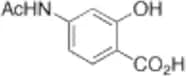
CAS:Controlled Product<p>Impurity Metoclopramide EP Impurity H<br>Applications N-Acetyl-4-aminosalicylic Acid (Metoclopramide EP Impurity H) is hydroxybenzoic acid that is a versatile reactant used in the preparation of salicylanilide derivatives as inhibitors of the protein tyrosine kinase epidermal growth factor receptor.<br>References Liechti, C., et al.: Eur. J. Med. Chem., 39, 11 (2004);<br></p>Formula:C9H9NO4Color and Shape:Off WhiteMolecular weight:195.17Boldenone Propionate
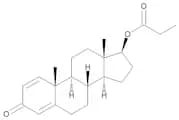
CAS:Controlled Product<p>Applications Boldenone Propionate is a metabolite of Boldenone (B675100), which is an anabolic steroid.<br>References Watanabe, K., et al.: J. Appl. Bacteriol., 62, 151 (1987) ; Liu, W., et al.: J. Ind. Microbiol., 13, 167 (1994) ; Barthakur, S., et al.: J. Basic Microbiol., 36, 383 (1996); Grinenko, G., et al.: Pharmaceut. Chem. J., 36, 510 (2002) ; de Brabander, H., et al.: Food Addit. Contam., 21, 515 (2004); Le Bizec, B., et al.: Steroids, 71, 1078 (2006);<br></p>Formula:C22H30O3Color and Shape:Off-WhiteMolecular weight:342.479-Bromoanthracene
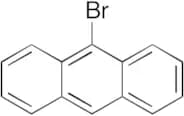
CAS:Controlled Product<p>Applications 9-Bromoanthracene is an intermediate in the synthesis of 9-substituted derivative of the polycyclic aromatic hydrocarbon (PAH) anthracene (A678400).<br>References Corream A., et al.: J. Am. Chem. Soc., 136, 1062 (2014)<br></p>Formula:C14H9BrColor and Shape:Light YellowMolecular weight:257.132-(4’-Chlorobenzoyl)benzoic Acid
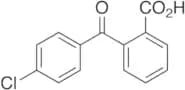
CAS:Controlled Product<p>Applications 2-(4’-Chlorobenzoyl)benzoic Acid (cas# 85-56-3) is a compound useful in organic synthesis.<br></p>Formula:C14H9ClO3Color and Shape:NeatMolecular weight:260.6722-Hydroxy-4’,5-diacetamido-diphenyl Ether
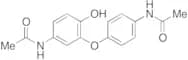
CAS:Controlled Product<p>Stability Hygroscopic<br>Applications 2-Hydroxy-4’,5-diacetamido-diphenyl Ether is used in the synthesis of novel benzimidazoles as potent inhibitors of TIE-2 anf VEGFR-2 tyrosine kinase receptors. Angiogenesis therapeutic agent.<br>References Hasegawa, M. et al.: J. Med. Chem., 50, 4453 (2007);<br></p>Formula:C16H16N2O4Color and Shape:NeatMolecular weight:300.311,2,5,6-Tetramethylnaphthalene
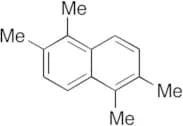
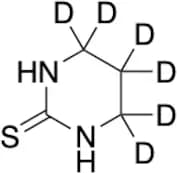
CAS:Controlled Product<p>Applications 1,2,5,6-Tetramethylnaphthalene is a polycyclic aromatic hydrocarbon that has been found in petroleum.<br> Not a dangerous good if item is equal to or less than 1g/ml and there is less than 100g/ml in the package<br>References Forster, P.G., et. al.: J. Chromatogr., 483, 384 (1989)<br></p>Formula:C14H16Color and Shape:NeatMolecular weight:184.2771,3-Propylene-d6 Thiourea
CAS:Controlled Product<p>Applications 1,3-Propylene-d6 Thiourea (CAS# 1219802-05-7) is a useful isotopically labeled research compound.<br></p>Formula:C4H2D6N2SColor and Shape:NeatMolecular weight:122.2223,3'-Dichlorobenzidine Dihydrochloride
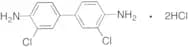
CAS:Controlled Product<p>Stability Hygroscopic<br>Applications 3,3'-Dichlorobenzidine Dihydrochloride, is structurally similar to Benzidine (B121000), and thus is considered a carcinogen. It can be used in the production of azo dyes. Dyes and metabolites, Environmental Testing<br> Not a dangerous good if item is equal to or less than 1g/ml and there is less than 100g/ml in the package<br>References Min, Zh., et al.: Chem. Res. Toxic., 26, 741 (2013); Rainer, F., et al.: Mutation Research, Fundamental and Molecular Mechanisms of Mutagenesis, 691, 27 (2010);<br></p>Formula:C12H10Cl2N2·2ClHColor and Shape:NeatMolecular weight:326.054-Aminohippuric-d4 Acid
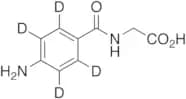
CAS:Controlled Product<p>Applications Labelled 4-Aminohippuric Acid is used in the measurement of renal plasma flow as a diagnostic tool which may be applied towards kidney disorders.<br>References Phillips, R. et al.: Am. J. Physiol., 152, 523 (1948);<br></p>Formula:C92H4H6N2O3Color and Shape:NeatMolecular weight:198.21Urea-13C
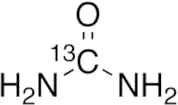
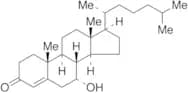
CAS:<p>Applications Labelled Urea. Physiological regulator of nitrogen excretion in mammals; synthesized in the liver as an end-product of protein catabolism and excreted in urine. Also occurs normally in skin. Emollient; diuretic.<br>References Demetriou, A., et al.: Science, 233, 1190 (1986); Aebischer, P., et al.: Nat. Med., 2, 696(1996); Prakash, S., et al.: Biotechnol. Bioeng., 46, 621(1995);<br></p>Formula:CH4N2OColor and Shape:NeatMolecular weight:61.057α-Hydroxy-4-cholesten-3-one
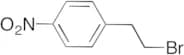
CAS:<p>Applications 7α-Hydroxy-4-cholesten-3-one is a metabolite of Cholesterol (C432501).<br>References Connor, W., et al.: J, Clin. Invest., 48, 1363 (1969), Nestel, P., et al.: Metabolism, 24, 189 (1975), Ellegard, L., et al.: Eur. J. Clin. Nutr., 45, 451 (1991), Pedersen, A., et al.: J. Lipid Res., 41, 1901 (2000),<br></p>Formula:C27H44O2Color and Shape:NeatMolecular weight:400.644-Nitrophenethyl Bromide
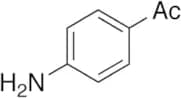
CAS:Controlled ProductFormula:C8H8BrNO2Color and Shape:Off White To Light YellowMolecular weight:230.064-Aminoacetophenone
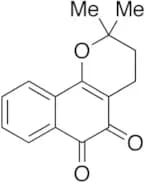
CAS:Controlled Product<p>Applications A novel utilization of aminophenone derivative in toxicology, for treating intoxications with cyanogenic toxic substances.<br>References Donoghue, N., et al.: Eur. J. Biochem., 60, 1 (1975), Chen, Y., et al.: J. Bacteriol., 170, 781 (1988),<br></p>Formula:C8H9NOColor and Shape:Yellow SolidMolecular weight:135.16β-Lapachone (>90%)
CAS:Controlled Product<p>Applications β-Lapachone is a naturally occurring quinone obtained from the bark of the lapacho tree (Tabebuia avellanedae) with cancer chemopreventive properties. Induces apoptosis in HL-60 and human prostate cancer cells.<br>References Renslo, A., et al.: Nat. Chem. Biol., 2, 701 (2006), Hopkins, A., et al.: Nat. Chem. Biol., 4, 682 (2008), Stuart, K., et al.: J. Clin. Invest., 118, 1301 (2008), Martin, R., et al.: Science, 25, 1680 (2009),<br></p>Formula:C15H14O3Purity:>90%Color and Shape:Orange SolidMolecular weight:242.27Cetylpyridinium Chloride Monohydrate
CAS:Controlled Product<p>Applications Cetylpyridinium chloride monohydrate is used to study the mechanisms of bacterial and virus inactivation by cationic quaternary ammonium detergents.<br> Not a dangerous good if item is equal to or less than 1g/ml and there is less than 100g/ml in the package<br></p>Formula:C21H38N·Cl·H2OColor and Shape:Off-WhiteMolecular weight:358.008-Thioguanosine
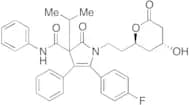
CAS:Controlled Product<p>Stability Hygroscopic<br>Applications 8-Thioguanosine (cas# 26001-38-7) is a useful research chemical.<br></p>Formula:C10H13N5O5SColor and Shape:NeatMolecular weight:315.35-(4-Fluorophenyl)-2,3-dihydro-3-(1-methylethyl)-2-oxo-N,4-diphenyl-1-[2-tetrahydro-4-hydroxy-6-oxo-2H-pyran-2-yl]ethyl]-1H-pyrrole-3-carboxamide
CAS:Controlled Product<p>Applications 5-(4-Fluorophenyl)-2,3-dihydro-3-(1-methylethyl)-2-oxo-N,4-diphenyl-1-[2-tetrahydro-4-hydroxy-6-oxo-2H-pyran-2-yl]ethyl]-1H-pyrrole-3-carboxamide is a photodegradation product of Atorvastatin (A791750).<br>References Cermola, F., et al.: Tetrahedron., 62, 7390 (2006);<br></p>Formula:C33H33FN2O5Color and Shape:NeatMolecular weight:556.62Glufosinate-d3 Hydrochloride
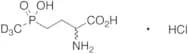
CAS:Controlled Product<p>Stability Very Hygroscopic<br>Applications Labelled Glufosinate (G596952). Used as a herbicide.<br>References Abbas, H., et al.: J. Agric. Food Chem., 50, 5246<br></p>Formula:C52H3H9NO4P·ClHColor and Shape:White To Light BeigeMolecular weight:220.61Glycyl-L-tyrosine
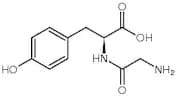
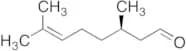
CAS:Controlled Product<p>Applications Glycyl-L-tyrosine<br></p>Formula:C11H14N2O4Color and Shape:NeatMolecular weight:238.24(-)-Citronellal
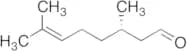
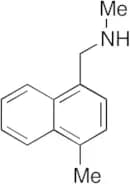
CAS:Controlled Product<p>Applications (-)-Citronellal is the s-isomer of (R)-Citronellal (C525025), a natural insect repellant. (-)-Citronellal (a monoterpene) was found to activate human olfactory receptor OR1A2 at the mRNA and protein levels resulting in reduced cell proliferation and reduced hepatocellular carcinoma progression.<br>References Massberg, D., et al.: Arch. Biochem. Biophys., 566, 100 (2015);<br></p>Formula:C10H18OColor and Shape:NeatMolecular weight:154.25Methyl(4-methylnaphthalen-1-ylmethyl)amine
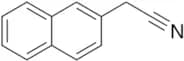
CAS:Controlled Product<p>Applications Methyl(4-methylnaphthalen-1-ylmethyl)amine is a reagent in the preparation of heterocyclic compounds as enoyl-acyl carrier protein reductase FabI inhibitors and antibacterial agents.<br>References Stuetz, A., et al.: J. Med. Chem., 29, 112 (1986); Berman, J., et al.: PCT Int. Appl., 2004:515512 (2004)<br></p>Formula:C13H15NColor and Shape:NeatMolecular weight:185.262-Naphthylacetonitrile
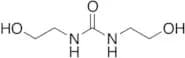
CAS:Controlled Product<p>Applications 2-Naphthylacetonitrile (cas# 7498-57-9) is a useful research chemical.<br></p>Formula:C12H9NColor and Shape:NeatMolecular weight:167.21NN'-Bis(2-hydroxyethyl)urea
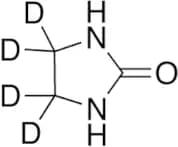
CAS:<p>Applications NN'-Bis(2-hydroxyethyl)urea (cas# 15438-70-7) is a useful research chemical.<br></p>Formula:C5H12N2O3Color and Shape:NeatMolecular weight:148.16Ethylene Urea-d4
CAS:Controlled Product<p>Applications Ethylene Urea-d4 (cas# 62740-68-5) is a compound useful in organic synthesis.<br></p>Formula:C32H4H2N2OColor and Shape:NeatMolecular weight:90.12Stigmasta-3,5-diene
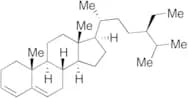
CAS:<p>Applications Stigmasta-3,5-diene is one of the components found in vegetable oil after refining.<br>References Lanzon, A., et al.: J. Am. Oil Chemist Soc., 71, 285 (1994); Cert, A., et al.: Food Chem., 49, 287 (1994)<br></p>Formula:C29H48·C28H46Color and Shape:NeatMolecular weight:779.363-(4-Chlorophenyl)glutaric Anhydride
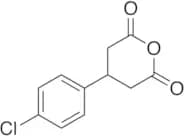
CAS:Controlled Product<p>Stability Moisture Sensitive<br>Applications 3-(4-Chlorophenyl)glutaric Anhydride (cas# 53911-68-5) is a compound useful in organic synthesis.<br></p>Formula:C11H9ClO3Color and Shape:Off-WhiteMolecular weight:224.648-Oxo-2’-deoxyguanosine-13C,15N2
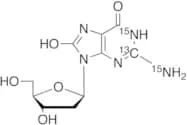
CAS:Controlled Product<p>Applications A marker compound indicative of DNA damage associated with mutagenesis and carcinogenesis. Can induce differentiation of Friend murine erythroleukemia cells in vitro.<br>References Ueda, T., et al.: Chem. Pharm. Bull., 26, 2122 (1978), Jiang, F., et al.: Nature, 183, 382 (1996),<br></p>Formula:C913CH13N315N2O5Color and Shape:NeatMolecular weight:286.223-Hydroxybutyrylcarnitine Chloride
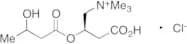
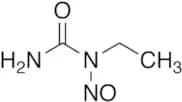
CAS:Controlled Product<p>Stability Hygroscopic<br>Applications 3-Hydroxybutyrylcarnitine is a reagent used to study acylcarnitine profile in thyroid disease.<br>References Wong, S., et al.: Clinical Biochem., 46, 180 (2013); Alu, F., et al.: Heredity, 110, 253 (2013); Adam, B., et al.: Clinical Biochem., 44, 1445 (2011)<br></p>Formula:C11H22ClNO5Color and Shape:Colourless To Light YellowMolecular weight:283.75N-Nitroso-N-ethyl Urea (Contains 40% water, 1.8 % AcOH)
CAS:Controlled Product<p>Stability Temperature Sensitive<br>Applications Precursor of Diazoethane<br> Not a dangerous good if item is equal to or less than 1g/ml and there is less than 100g/ml in the package<br>References 1. Chemistry--A European Journal, 15(12), 2923-2931, (2009), Journal of the American Chemical Society, 129(19), 6210-6215, (2007).<br></p>Formula:C3H7N3O2Color and Shape:NeatMolecular weight:117.11(+)-Citronellal
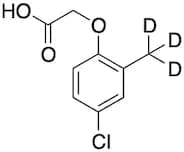
CAS:Controlled Product<p>Applications (+)-Citronellal is a monoterpene compound that is formed by the metabolism of plants. (+)-Citronellal is a natural insect repellant, and is the main component of citronellal oil. (+)-Citronellal is also used as a starting material in the one pot synthesis of (-)-Menthol (M218875).<br>References Kwon, Y., et al.: Curr. Biol., 20, 1672 (2010); Lenardão, E., et al.: Tetrahedron, 63, 6671 (2007); Milone, C., et al.: Appl. Catal. A-Gen., 199, 239 (2000)<br></p>Formula:C10H18OPurity:>90%Color and Shape:NeatMolecular weight:154.25(4-Chloro-2-methylphenoxy)acetic Acid-d3
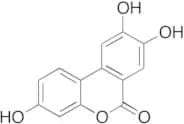
CAS:Controlled Product<p>Applications (4-Chloro-2-methylphenoxy)acetic Acid-d3 is the deuterated version of (4-Chloro-2-methylphenoxy)acetic Acid (C369470), which is a herbicide.<br> Not a dangerous good if item is equal to or less than 1g/ml and there is less than 100g/ml in the package<br>References Elliott, B., et al.: Mutagenesis, 20, 3 (2005); Pfleeger, T., et al.: Environ. Toxicol. Chem., 30, 455 (2010);<br></p>Formula:C9H6D3ClO3Color and Shape:NeatMolecular weight:203.64Urolithin C
CAS:<p>Stability Hygroscopic<br>Applications Urolithin C is used in biological studies to evaluate the metabolite antioxidant activity.<br>References Ishimoto, H., et. al.: Bioorg. Med. Chem. Lett., 21, 5901 (2011);<br></p>Formula:C13H8O5Color and Shape:NeatMolecular weight:244.22-Naphthylamine-d7
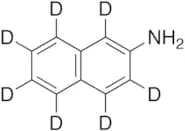
CAS:Controlled Product<p>Applications It is listed as a known human carcinogen. Used in manufacturing of dyes, as antioxidant in rubber.<br> Not a dangerous good if item is equal to or less than 1g/ml and there is less than 100g/ml in the package<br>References IARC Monographs, 4, 97 (1974),<br></p>Formula:C102H7H2NColor and Shape:NeatMolecular weight:150.23Chlorophyll a (Technical Grade)
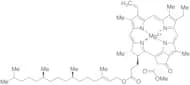
CAS:<p>Stability Light Sensitive<br>Applications Chlorophyll A is a photosynthetic pigment that is essential for photosynthesis of eukaryotes and cyanobacteria, acting as a primary donor in the electron transport chain. Dyes and metabolites.<br>References Prasad, K., et al.: Curr. Res. Chem., 3, 98 (2011); Shanab, S.M., et al.: Int. J. Electrochem. Sci., 6, 3017 (2011); Ajayan, K.V., et al.: Biores. Techol., 102, 7591 (2011); Felming, I.: Nature, 216, 151 (1967); Woodward, R.B. et al.: Tetrahedron, 46, 7599 1990); Chen, M. et al.: Sciemce, 319, 1318 (2010); Gitelson, A.A. et al.: Rem. Sens. Environ., 69, 296 (1999);<br></p>Formula:C55H72MgN4O5Color and Shape:Green To BlackMolecular weight:893.497-Methoxy-1-naphthaleneacetamide
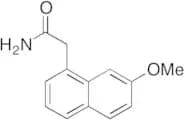
CAS:Controlled Product<p>Applications 7-Methoxy-1-naphthaleneacetamide, can be used for the synthesis of the analogs of Melatonin (M215000), containing naphthalene moiety instead of indole nucleus, having high affinity for the melatonin receptor. Agomelatine Impurity 6<br>References Tang, J. D., et al.: Org. Prep. Proc. Int., 41, 164 (2009); Sndrieux Y. J., et al.: J. Med. Chem., 35, 1484 (1992);<br></p>Formula:C13H13NO2Color and Shape:NeatMolecular weight:215.25Glycochenodeoxycholic Acid 3-Sulfate Disodium Salt
CAS:<p>Stability Hygroscopic<br>Applications A bile salt formed in the liver from chenodeoxycholate and glycine, usually as the sodium salt. It acts as a detergent to solubilize fats for absorption and is itself absorbed. It is a cholagogue and choleretic.<br>References Parmentier, G. , et al.: Steroids, 30, 583 (1977), Tserng, K.Y., et al.: Lipids, 13, 479 (1978),<br></p>Formula:C26H41NNa2O8SColor and Shape:White To Off-WhiteMolecular weight:573.65Troglitazone Sulfate Ammonium Salt
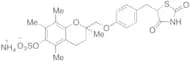
CAS:Controlled Product<p>Stability Hygroscopic<br>Applications Troglitazone Sulfate is the major metabolite of Troglitazone (T892500), a hypoglycemic agent with cholestatic effect.<br>References Ciaraldi, T.P., et al.: Metabolism, 39, 1056 (1990); Kuzuya, T., et al.: Diabetes Res. Clin. Pract., 11, 147 (1991); Kellerer, M., et al.: Diabetes, 43, 447 (1994); Adachi, Y., et al.: Mol. Pharmacol., 67, 923 (2005);<br></p>Formula:C24H30N2O8S2Color and Shape:NeatMolecular weight:538.634’-Hydroxyphenprocoumon
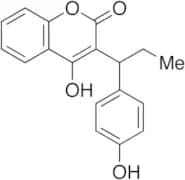
CAS:Controlled Product<p>Applications 4’-Hydroxyphenprocoumon is a metabolite of the oral anticoagulant Phenprocoumon (P318820).<br>References De Vries, J. et al.: J. Chrom. Biomed. Appl., 529, 479 (1990);<br></p>Formula:C18H16O4Color and Shape:NeatMolecular weight:296.32