Pharmaceutical Standards
Subcategories of "Pharmaceutical Standards"
- APIs for research and impurities(276,499 products)
- Enzyme Activators and Inhibitors(2,829 products)
- Nitrosamines(2,627 products)
- Pharmaceutical and Veterinary Compounds and Metabolites(2,900 products)
- Toxicology(13,513 products)
Found 7977 products of "Pharmaceutical Standards"
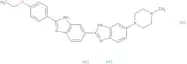
Hoechst 33342
CAS:2'-(4-Ethoxyphenyl)-5-(4-methyl-1-piperazinyl)-2,5'-bi-1H-benzimidazole trihydrochloride (EPMB) is a DNA binding agent that is used in tumor detection and research into apoptosis. It has been shown to inhibit the activity of p-glycoprotein, which is an efflux pump protein, and Bcl-2 protein. EPMB has also been shown to cause apoptosis in human squamous cell carcinoma cells in a concentration dependent manner. This compound has shown potential as a treatment for cancer because it inhibits the ability of cancer cells to proliferate by binding to the NMDA receptor.
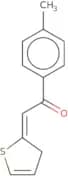
Formula:C27H28N6O·3HCl·xH2OPurity:Min. 95%Color and Shape:Yellow PowderMolecular weight:561.93 g/mol2'(2-Thienylidene)-4-methylacetophenone
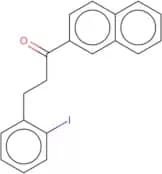
CAS:2'(2-Thienylidene)-4-methylacetophenone is a chemical intermediate that is a useful scaffold for the synthesis of complex compounds. This compound has been used as an intermediate in the preparation of many pharmaceuticals, such as 2-thienylidene-4-methylbenzoic acid, which has anti-inflammatory properties. 2'(2-Thienylidene)-4-methylacetophenone can also be used to synthesize other compounds. It is a versatile building block and a valuable reagent that can be used in research and development.Formula:C13H12OSPurity:Min. 95%Molecular weight:216.3 g/mol2-Naphthyl-3-(2-iodophenyl)propanone
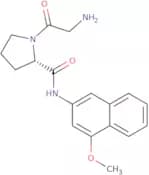
CAS:2-Naphthyl-3-(2-iodophenyl)propanone (IPA) is a chemical intermediate that can be used in the synthesis of pharmaceuticals, agrochemicals, and other organic chemicals. IPA is soluble in common solvents such as water, ethanol, ether, and acetone. It is also stable to air and light. IPA has been shown to react with aniline under basic conditions to form 2-naphthylacetanilide. This reaction component can be used in the synthesis of complex compounds such as carboxylic acid derivatives and amides.Formula:C19H15IOPurity:Min. 95%Molecular weight:386.23 g/molGly-pro-4-methoxy-beta-naphthylamide
CAS:Gly-pro-4-methoxy-beta-naphthylamide is a synthetic substrate that is used to measure the activity of human plasma phosphatases. Gly-pro-4-methoxy-beta-naphthylamide is synthesized in an organic solvent and then reacted with diazonium salt to form a glycosylated aminophosphonic acid. The product is purified by chromatography and identified by mass spectrometry. Gly-pro-4-methoxy beta naphthylamide has been shown to inhibit the growth of cancer cells in vitro, as well as having antiinflammatory properties. This drug also has been shown to be effective in treating patients with severe hyperbilirubinemia who are undergoing hematopoietic stem cell transplantation.Formula:C18H21N3O3Purity:Min. 95%Molecular weight:327.38 g/molEthyl 3-aminocinnamate
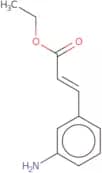
CAS:Ethyl 3-aminocinnamate is a versatile building block for the synthesis of complex compounds. It is also a useful intermediate for the synthesis of reaction components, such as antihistamines and antigens. Ethyl 3-aminocinnamate can be used to synthesize speciality chemicals, such as research chemicals and reagents. This compound has high purity and is a useful scaffold for the preparation of related compounds.Formula:C11H13NO2Purity:Min. 95%Molecular weight:191.23 g/mol2-Isopropylnaphthalene
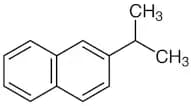
CAS:Formula:C13H14Purity:>95.0%(GC)Color and Shape:Colorless to Light yellow clear liquidMolecular weight:170.263,6-Dinitro-1,8-naphthalenedicarboxylicanhydride
CAS:3,6-Dinitro-1,8-naphthalenedicarboxylic anhydride is a fine chemical that is used as a building block in the synthesis of other compounds. It is also used as a reagent and can be found in research chemicals with CAS No. 3807-80-5. 3,6-Dinitro-1,8-naphthalenedicarboxylic anhydride is versatile and has many uses as a reaction component. The compound can be used to produce complex compounds or scaffolds that are useful in research.Formula:C12H4N2O7Purity:Min. 95%Color and Shape:Beige PowderMolecular weight:288.17 g/mol(1S)-3,3'-Bis(1,1-dimethylethyl)-5,5',6,6'-tetramethyl-[1,1'-biphenyl]-2,2'-diol
CAS:(1S)-3,3'-Bis(1,1-dimethylethyl)-5,5',6,6'-tetramethyl-[1,1'-biphenyl]-2,2'-diol is a reaction component that is used in the synthesis of complex compounds. It has been shown to be useful as a reagent and as a scaffold for high quality research chemicals. This compound is also used in the synthesis of versatile building blocks and fine chemicals.Formula:C24H34O2Purity:Min. 95%Color and Shape:White PowderMolecular weight:354.53 g/molNaphthol AS-MX
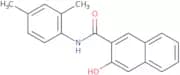
CAS:Naphthol AS-MX is a dye that binds to the polyanionic sites of collagen in the basement membrane of blood capillaries. It is used as a histological stain for collagen in tissue sections and can be used as a model system for studying infectious diseases. The monoclonal antibody (MAb) reacts with the epitope on the surface of the bacteria, which is then detected by an enzyme-labeled MAb. This reaction results in a colored precipitate that indicates the presence of antibodies against the bacterial antigen.Formula:C19H17NO2Purity:Min. 95%Molecular weight:291.34 g/mol2-Bromo-2-phenylacetophenone
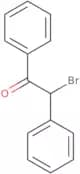
CAS:2-Bromo-2-phenylacetophenone is a drug that has been used in the treatment of brain disorders. It is also an antioxidant that prevents radiation damage to the brain by absorbing radiation energy and dissipating it as heat. 2-Bromo-2-phenylacetophenone has shown neuroprotective effects in animals by inhibiting the activity of cyclooxygenase (COX)-2, which is related to cancer and inflammation. This substance can be synthesized by reacting sodium carbonate or hydroxide with an alkanoic acid in the presence of trifluoroacetic acid. The reaction products are separated from unreacted reactants and other impurities by solid phase synthesis, purified, and characterized using nuclear magnetic resonance spectra.
Formula:C14H11BrOPurity:Min. 95%Color and Shape:Off-White To Light Brown SolidMolecular weight:275.14 g/molThiourea
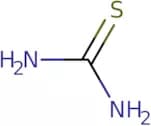
CAS:Thiourea is a chemical compound that is used as a fungicide, herbicide, and anti-fouling agent in water treatment plants. It has been shown to have an inhibitory effect on the growth of some cancer cells. Thiourea also has a negative charge and can be used to adsorb proteins and other organic compounds onto its surface. This property can be exploited for analytical purposes, such as determining the concentration of protein in human serum or wastewater treatment. In addition, thiourea has been shown to have a strong affinity for divalent cations such as Ca2+, Mg2+, Mn2+, Fe2+, Cu2+, Zn2+, Cd2+, Pb2+ etc. These ions are necessary for the activity of enzymes involved in energy metabolism and redox potentials. Thiourea is also known to bind with nucleic acids by electrostatic interactions with phosphate groups on the ribose sugar backbone of DNA or RNA molecules,
Formula:CH4N2SPurity:(Titration) Min. 98%Color and Shape:PowderMolecular weight:76.12 g/mol3-(Trimethylsilyl)-2-naphthyl trifluoromethanesulfonate
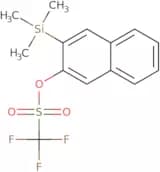
CAS:3-(Trimethylsilyl)-2-naphthyl trifluoromethanesulfonate is a synthetic molecule that is used to synthesize benzofurans. 3-(Trimethylsilyl)-2-naphthyl trifluoromethanesulfonate is activated by reaction with N-bromosuccinimide, which creates an electrophilic carbon center. This electrophilic center reacts with nucleophiles such as alcohols, amines, and thiols to form a new bond. The product of this reaction is benzoylated, which can then undergo further reactions to form other compounds. X-ray crystallography has been used to characterize the structure of 3-(trimethylsilyl)-2-naphthyl trifluoromethanesulfonate.Formula:C14H15F3O3SSiPurity:Min. 95%Color and Shape:Colorless Clear LiquidMolecular weight:348.41 g/mol4,6-Bis(octylthiomethyl)-o-cresol
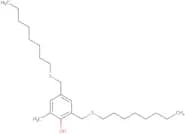
CAS:4,6-Bis(octylthiomethyl)-o-cresol is a synthetic, long-acting, and developable plasticizer. It is used to make polystyrene more flexible and improve its impact resistance. This chemical has been shown to be compatible with a wide range of polymers, including polycarbonate and polyethylene. 4,6-Bis(octylthiomethyl)-o-cresol is used in the manufacture of plastics that are exposed to organic acids and phosphites for extended periods of time in order to optimize their properties. The use of this chemical can lead to improved processability and reduced costs.Formula:C25H44OS2Purity:Min. 98 Area-%Color and Shape:White Solidified MassMolecular weight:424.75 g/mol1-(3-Fluoro-4-methoxyphenyl)-2-nitropropene
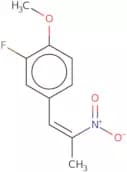
CAS:1-(3-Fluoro-4-methoxyphenyl)-2-nitropropene is a chemical compound with the molecular formula CHNO. It is a high quality reagent that is useful for preparing complex compounds, scaffolds and building blocks for use in research and development. 1-(3-Fluoro-4-methoxyphenyl)-2-nitropropene is a fine chemical that can be used as a versatile building block in reactions.Formula:C10H10FNO3Purity:Min. 95%Molecular weight:211.19 g/molalpha-Naphthamide
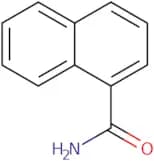
CAS:Alpha-naphthamide is a high-resistance antimicrobial agent that belongs to the group of benzalkonium chloride. It is used in disinfectant products and has been shown to be effective against invertebrates such as mosquitoes and leeches. Alpha-naphthamide binds to the dinucleotide phosphate and inhibits enzyme activities by acting as an alkylsulfonyl and cytosolic Ca2+ inhibitor, leading to cell death. Alpha-naphthamide has also been shown to inhibit multidrug efflux pump activity in bacterial cells, which may be due to its structural similarity with c1-c6.Formula:C11H9NOPurity:Min. 95%Color and Shape:SolidMolecular weight:171.2 g/molFmoc-3-iodo-L-tyrosine
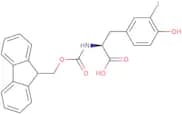
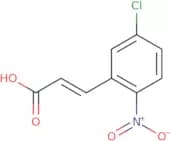
CAS:Fmoc-3-iodo-L-tyrosine is a fine chemical that belongs to the category of versatile building blocks. It can be used as a reagent, speciality chemical, and useful scaffold in the synthesis of complex compounds. Fmoc-3-iodo-L-tyrosine is a high quality material with a purity of 98%. It has been used as an intermediate for research chemicals and useful building blocks.Formula:C24H20NO5IPurity:Min. 97.5 Area-%Color and Shape:PowderMolecular weight:529.32 g/mol5-Chloro-2-nitrocinnamic acid
CAS:5-Chloro-2-nitrocinnamic acid is a fine chemical with a CAS number of 20357-28-2. It is a versatile building block that can be used as a reaction component or intermediate in the synthesis of more complex compounds. The high purity and quality of 5-Chloro-2-nitrocinnamic acid makes it an ideal reagent for research purposes, and it can be used as a building block for the synthesis of useful scaffolds.
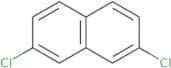
Formula:C9H6ClNO4Purity:Min. 95%Molecular weight:227.6 g/mol2,7-Dichloronaphthalene
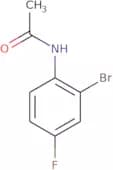
CAS:2,7-Dichloronaphthalene is a chlorinated organic chemical that has been used as an insecticide and acaricide. It is metabolized by cytochrome P-450 to form 2,7-dichloronaphthalene oxide, which is then converted to 2,7-dichloronaphthoic acid. This chemical can accumulate in adipose tissue and the liver of animals exposed to it. It also bioconcentrates in aquatic organisms and biomagnifies in food chains. 2,7-Dichloronaphthalene is not acutely toxic because it does not readily penetrate the skin or respiratory tract. Chronic exposure by ingestion or inhalation can cause adverse effects on the central nervous system, cardiac system, and blood cells. The most toxic effect of 2,7-dichloronaphthalene is its carcinogenic potential for humans and animals.Formula:C10H6Cl2Purity:Min. 95%Color and Shape:White PowderMolecular weight:197.06 g/mol2'-Bromo-4'-fluoroacetanilide
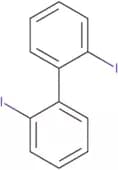
CAS:2'-Bromo-4'-fluoroacetanilide is a synthetic derivative of acetanilide that is used in the treatment of diabetes mellitus. It has been shown to have antidiabetic properties as well as to inhibit the formation of nitrosamines, which are carcinogenic compounds. The synthesis of 2'-bromo-4'-fluoroacetanilide involves the addition of bromine and sodium hydrogen to acetylated acetanilide. This reaction occurs in a reaction vessel at an elevated temperature, with the solvent being an organic solvent. The final product is isolated by distillation and purified by recrystallization or column chromatography. Molecular docking analysis has shown that 2'-bromo-4'-fluoroacetanilide binds to ATP synthase, which is involved in gluconeogenesis and glycolysis, leading to its ability to inhibit glucose production in cells.Formula:C8H7BrFNOPurity:Min. 95%Molecular weight:232.05 g/mol2,2'-Diiodobiphenyl
CAS:2,2'-Diiodobiphenyl is a preparative reagent that can be used to prepare diazonium salts. It is prepared by reacting an alkynyl group with an activatable probe. The product of this reaction has the same reactivity as the parent compound, but with a different spatial orientation and chemical properties. The 2,2'-diiodophenyl can be used for the preparation of carbazoles and transfer reactions. The following are some examples of 2,2'-diiodophenyl compounds: -Ethane-1,1'-dibromo-2,2'-diiodobiphenyl -Carbazole-4-carboxaldehyde -Naphthalene-1,5-dicarboxaldehydeFormula:C12H8I2Purity:Min. 95%Color and Shape:PowderMolecular weight:406 g/mol


![(1S)-3,3'-Bis(1,1-dimethylethyl)-5,5',6,6'-tetramethyl-[1,1'-biphenyl]-2,2'-diol](/_next/image/?url=https%3A%2Fstatic.cymitquimica.com%2Fproducts%2F3D%2Fthumb-webp%2FFB167175.webp&w=3840&q=75)