


Pharmaceutical Standards
Pharmaceutical standards are a comprehensive set of reference materials essential for ensuring the safety, efficacy, and quality of pharmaceutical products. This category includes standards for active pharmaceutical ingredients (APIs), which are the core components responsible for therapeutic effects. Additionally, it covers compounds and metabolites relevant to both the pharmaceutical and veterinary industries, providing benchmarks for the accurate measurement and analysis of these substances. Nitrosamine control standards are crucial for detecting and mitigating potentially harmful nitrosamines in drug formulations. Toxicology standards help assess the safety and potential adverse effects of pharmaceutical compounds. Furthermore, enzyme activators and inhibitors standards are vital for research and development, enabling precise studies of biochemical pathways and drug mechanisms. These pharmaceutical standards are indispensable tools for regulatory compliance, quality control, and research, ensuring that pharmaceutical products meet stringent safety and effectiveness criteria.
Subcategories of "Pharmaceutical Standards"
- APIs for research and impurities(273,482 products)
- Enzyme Activators and Inhibitors(2,827 products)
- Nitrosamines(2,606 products)
- Pharmaceutical and Veterinary Compounds and Metabolites(2,602 products)
- Toxicology(13,652 products)
Found 7836 products of "Pharmaceutical Standards"
Sort by
Purity (%)
0
100
|
0
|
50
|
90
|
95
|
100
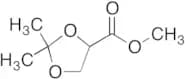
2,2-Dimethyl-(1,3) dioxolane-4-carboxylic Acid Methyl Ester
CAS:Controlled ProductFormula:C7H12O4Color and Shape:NeatMolecular weight:160.168N-Benzoyl-3-methoxytyrosine
CAS:Controlled Product<p>Applications N-Benzoyl-3-methoxytyrosine is an intermediate used in the synthesis of rac 3-O-Methyl DOPA (M303805), which is an impurity of Levodopa (D533751). A useful marker that can be used to screen for the absense of Aromatic L-amino acid decarboxylase (AADC).<br>References Tabar, et al.: Pharmacol. Biochem. Behav., 33, 139 (1989), De Souza Silva, et al.: J. Neurochem., 68, 233 (1997), Feigin, A., et al.: Neurology, 57, 2083 (2001), Perera, A., et al.: J. Labelled Comp. Radiopharm., 46, 389 (2003)<br></p>Formula:C17H17NO5Color and Shape:NeatMolecular weight:315.321Gallacetophenone 3’,4’-Dimethyl Ether
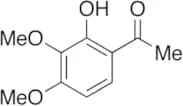
CAS:Controlled Product<p>Applications Gallacetophenone 3’,4’-Dimethyl ether is a phenolic compound with potential 2,2-diphenyl-1-picrylhydrazyl (DPPH) radical-scavenging activity.<br>References Zheng, C.-D. et al.: Nat. Prod. Comm., 5, 1759 (2010);<br></p>Formula:C10H12O4Color and Shape:NeatMolecular weight:196.23,3'-bis(Trifluoromethyl)benzophenone
CAS:Controlled Product<p>Applications 3,3'-BIS(TRIFLUOROMETHYL)BENZOPHENONE (cas# 1868-00-4) is a useful research chemical.<br></p>Formula:C15H8F6OColor and Shape:NeatMolecular weight:318.214Milbemycin A3 oxime
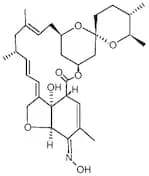
CAS:Controlled ProductFormula:C31H43NO7Color and Shape:NeatMolecular weight:541.68Jatrorrhizine Iodide
CAS:Controlled Product<p>Applications Jatrorrhizine iodide, is an alkaloid extract from the Berberidaceae family of plants displaying antioxidant activity.<br>References Ruiz, A. et al.: J. Agri. Food Chem., 62, 12407 (2014); Kim, J. et al.: Bioorg. Med. Chem., 22, 6047 (2014);<br></p>Formula:C20H20NO4·IColor and Shape:NeatMolecular weight:465.28Ranolazine-d8 Dihydrochloride
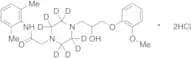
CAS:Controlled ProductFormula:C24H25D8N3O4• 2(HCl)Color and Shape:NeatMolecular weight:435.59 + 2(36.46)Histatin 5
CAS:<p>Histatin 5 is a peptide that has been shown to have antimicrobial activity against Candida albicans, Candida glabrata, and Cryptococcus albicans. It is believed to exert its effect by binding to copper ions and inhibiting the mitochondrial functions of the pathogen. Histatin 5 also has pro-apoptotic properties and may be used as an experimental treatment for infectious diseases caused by opportunistic fungal strains.</p>Formula:C133H195N51O33Purity:Min. 95%Molecular weight:3,036.3 g/molAlfentanil hydrochloride
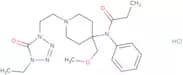
CAS:Controlled Product<p>Alfentanil is an opioid analgesic that is used for the treatment of severe or acute pain. It is a potent synthetic analog of fentanyl, which is an opioid analgesic that is used for the treatment of short-term (acute) and long-term (chronic) pain. Alfentanil has been shown to have a high affinity for α1-acid glycoprotein, which has been associated with drug interactions and blood sampling. Alfentanil also has chemical stability in experimental models and does not interact with nonsteroidal anti-inflammatory drugs. This drug may have a matrix effect on the concentration of cortisol in the blood.</p>Formula:C21H33ClN6O3Purity:Min. 95%Molecular weight:452.98 g/molδ6-Testosterone
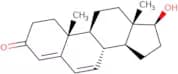
CAS:Controlled Product<p>Delta6-Testosterone is a natural steroid hormone that belongs to the group of steroid drugs. It is a potent androgen, or male sex hormone, which stimulates the development and maintenance of male sexual characteristics, including the growth of prostate gland and seminal vesicles. The effects of Delta6-testosterone are mediated by binding to and activating the Androgen Receptor (AR). The effects may also be increased when Delta6-testosterone binds to AR in combination with other hormones such as estradiol.<br>Delta6-Testosterone is metabolized by the liver into testosterone through the cytochrome p450 enzyme system. This process begins with conversion of Delta6-testosterone into 6alpha-dihydrotestosterone (DHT) by 5a-reductase. DHT can then be converted into testosterone by 3beta-hydroxysteroid dehydrogenase/3alpha-hydroxysteroid dehydrogenase (3betaHSD) or 17beta hyd</p>Formula:C19H26O2Purity:Min. 95%Molecular weight:286.41 g/molDecapreno-b-carotene
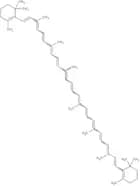
CAS:<p>Decapreno-b-carotene is a carotenoid extracted from the oil of the seeds of the plant, Schizochytrium limacinum. This product has been shown to be an effective antioxidant that can protect cells against oxidative damage. The high-performance liquid chromatography technique was used for quantification and separation. The extract was then injected onto a high performance liquid chromatograph, which separates it according to its chemical properties. Decapreno-b-carotene is found in almost all organisms and is a precursor for vitamin A production in animals.</p>Formula:C50H68Purity:Min. 95%Color and Shape:SolidMolecular weight:669.07 g/molNelfinavir hydroxy-tert-butylamide
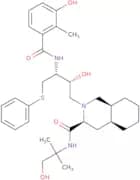
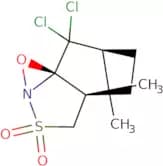
CAS:<p>Nelfinavir is an antiviral agent that is used to treat HIV/AIDS. It is a protease inhibitor that inhibits the action of the virus in cells by binding to specific enzymes, thus preventing the destruction of human cells by the virus. Nelfinavir also prevents cancer cell growth and has shown anticancer activity in animal models and humans. This drug binds to fatty acids, making it more difficult for the body to eliminate this substance. The half-life of nelfinavir is prolonged in patients with hepatic failure or renal failure. Nelfinavir can be used as a chemotherapeutic agent in infants because it does not cross the blood-brain barrier.</p>Formula:C32H45N3O5SPurity:Min. 95%Molecular weight:583.78 g/mol(+)-(8,8-Dichlorocamphorylsulfonyl)oxaziridine
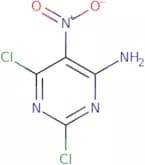
CAS:<p>Please enquire for more information about (+)-(8,8-Dichlorocamphorylsulfonyl)oxaziridine including the price, delivery time and more detailed product information at the technical inquiry form on this page</p>Formula:C10H13Cl2NO3SPurity:Min. 95%Molecular weight:298.19 g/mol2,6-Dichloro-5-nitropyrimidin-4-amine
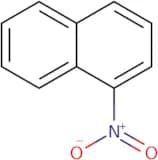
CAS:<p>2,6-Dichloro-5-nitropyrimidin-4-amine is a chlorinating agent that reacts with aliphatic and aromatic amines to form substituted pyrimidines. The substitution pattern of the product depends on the regioselectivity of the reaction. 2,6-Dichloro-5-nitropyrimidin-4-amine is one of the few chlorinating agents that react with propylamine. Substitution at position 2 of the purine ring has been found to be more selective than substitution at position 6. The 2,6-dichloropyrimidine can also be used as a nitro group source in chemical synthesis or as an intermediate in production of other compounds.</p>Formula:C4H2Cl2N4O2Purity:Min. 95%Color and Shape:SolidMolecular weight:208.99 g/mol1-Nitronaphthalene
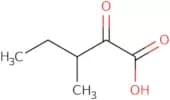
CAS:<p>1-Nitronaphthalene is a nitrobenzene derivative that has been used as an intermediate in the synthesis of pharmaceuticals, dyes, and other organic compounds. 1-Nitronaphthalene is classified as a hazardous substance due to its carcinogenicity and toxicity. In particular, it can cause irritation and burns on skin contact and may be fatal if swallowed. The toxicity profile of 1-nitronaphthalene has been studied in rats, mice, guinea pigs, rabbits, hamsters, and dogs. It was found to have moderate acute oral toxicity in rats but no significant acute toxicity in mice or dogs. 1-Nitronaphthalene also had little effect on p450 activity or enzyme activities in rats.</p>Formula:C10H7NO2Purity:Min. 95%Color and Shape:Yellow Clear LiquidMolecular weight:173.17 g/mol(±)-3-Methyl-2-oxovaleric acid
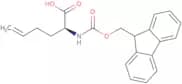
CAS:<p>(±)-3-Methyl-2-oxovaleric acid is a fatty acid that is found in the mitochondria of liver cells and other tissues. It is an intermediate in the citric acid cycle and can be converted into acetyl-CoA, which is used for energy production. (±)-3-Methyl-2-oxovaleric acid has been shown to cause necrotic cell death when it binds to the mitochondrial membrane potential and causes a loss of ATP production. This results in a lack of energy for the cell, leading to cell death. (±)-3-Methyl-2-oxovaleric acid has also been shown to inhibit protein synthesis by decreasing uptake and increasing creatine kinase activity. This inhibition leads to decreased body formation and tissue culture growth in vitro. In vivo, (±)-3-Methyl-2-oxovaleric acid causes primary sclerosing cholangitis, a disease characterized by inflammation of bile ducts that</p>Formula:C6H10O3Purity:Min. 95%Color and Shape:White PowderMolecular weight:130.14 g/mol(S)-N-Fmoc-2-(3'-butenyl)glycine
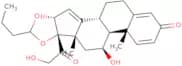
CAS:<p>Please enquire for more information about (S)-N-Fmoc-2-(3'-butenyl)glycine including the price, delivery time and more detailed product information at the technical inquiry form on this page</p>Formula:C21H21NO4Purity:Min. 95%Color and Shape:White PowderMolecular weight:351.4 g/mol14,15-Dehydro budesonide
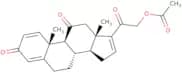
CAS:<p>Please enquire for more information about 14,15-Dehydro budesonide including the price, delivery time and more detailed product information at the technical inquiry form on this page</p>Formula:C25H32O6Purity:Min. 95%Molecular weight:428.52 g/mol21-Hydroxy-pregna-1,4,16-triene-3,11,20-trione 21-acetate
CAS:Controlled Product<p>Please enquire for more information about 21-Hydroxy-pregna-1,4,16-triene-3,11,20-trione 21-acetate including the price, delivery time and more detailed product information at the technical inquiry form on this page</p>Formula:C23H26O5Purity:Min. 95%Molecular weight:382.45 g/molDiethyl[2-(4-nitrophenoxy)ethyl]amine
CAS:Controlled Product<p>Please enquire for more information about Diethyl[2-(4-nitrophenoxy)ethyl]amine including the price, delivery time and more detailed product information at the technical inquiry form on this page</p>Formula:C12H18N2O3Purity:Min. 95%Molecular weight:238.28 g/mol






![Diethyl[2-(4-nitrophenoxy)ethyl]amine](/_next/image/?url=https%3A%2Fstatic.cymitquimica.com%2Fproducts%2F3D%2Fthumb-webp%2FFD21808.webp&w=3840&q=75)