Pharmaceutical Standards
Pharmaceutical standards are a comprehensive set of reference materials essential for ensuring the safety, efficacy, and quality of pharmaceutical products. This category includes standards for active pharmaceutical ingredients (APIs), which are the core components responsible for therapeutic effects. Additionally, it covers compounds and metabolites relevant to both the pharmaceutical and veterinary industries, providing benchmarks for the accurate measurement and analysis of these substances. Nitrosamine control standards are crucial for detecting and mitigating potentially harmful nitrosamines in drug formulations. Toxicology standards help assess the safety and potential adverse effects of pharmaceutical compounds. Furthermore, enzyme activators and inhibitors standards are vital for research and development, enabling precise studies of biochemical pathways and drug mechanisms. These pharmaceutical standards are indispensable tools for regulatory compliance, quality control, and research, ensuring that pharmaceutical products meet stringent safety and effectiveness criteria.
Subcategories of "Pharmaceutical Standards"
- APIs for research and impurities(273,300 products)
- Enzyme Activators and Inhibitors(2,827 products)
- Nitrosamines(2,606 products)
- Pharmaceutical and Veterinary Compounds and Metabolites(2,577 products)
- Toxicology(13,652 products)
Found 7836 products of "Pharmaceutical Standards"
Sort by
Purity (%)
0
100
|
0
|
50
|
90
|
95
|
100
zeta-Carotene
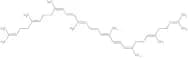
CAS:<p>Zeta-carotene is a carotenoid pigment found in plants. It is a precursor to vitamin A and can be converted by the body into retinol, which can then be used in the eye. Zeta-carotene has been shown to inhibit the growth of cancer cells through transcriptional regulation of genes involved in lipid metabolism and cell proliferation. This carotenoid also has antioxidant properties that may help protect against cardiovascular diseases. In addition, zeta-carotene has been shown to have a positive effect on plant physiology because it is an important intermediate for photosynthesis.</p>Formula:C40H60Purity:Min. 95%Color and Shape:Yellow PowderMolecular weight:540.9 g/mol3-Nitropropionic acid
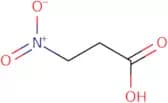
CAS:<p>3-Nitropropionic acid (3NPA) is a mitochondrial toxin that causes neuronal death by inhibiting complex enzyme activities and inducing reactive oxygen species production. 3NPA also alters mitochondrial membrane potential and induces pro-apoptotic protein expression, leading to neuronal cell death. 3NPA has been shown to be effective in the treatment of experimental models of infectious diseases, such as rat sepsis and human HIV infection, by reducing the number of activated T cells and CD4+ T cells. 3NPA also exhibits anti-inflammatory properties by inhibiting the inflammatory responses of monocytes/macrophages and neutrophils.</p>Formula:C3H5NO4Purity:Min. 95%Color and Shape:PowderMolecular weight:119.08 g/molCholesterol Isopropyl Carbonate
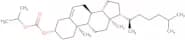
CAS:Controlled Product<p>Cholesterol Isopropyl Carbonate is an inorganic, high melting coating that is used to enhance the properties of microcapsules. This material is a solid at room temperature and can be applied to particles such as liposomes, polymers, and nanoparticles. Cholesterol Isopropyl Carbonate has a particle size range of 500-2,000 nm and contains functional groups such as carboxylic acids. Treatment methods for this product include heating with thermal energy or irradiation with optical energy.</p>Purity:Min. 95%3-(4'-Methoxy-3'-sulfonamidophenyl)-2-propylamine, hydrochloride
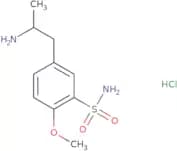
CAS:Controlled Product<p>Please enquire for more information about 3-(4'-Methoxy-3'-sulfonamidophenyl)-2-propylamine, hydrochloride including the price, delivery time and more detailed product information at the technical inquiry form on this page</p>Formula:C10H16N2O3S•HClPurity:Min. 95%Color and Shape:PowderMolecular weight:280.77 g/molIbuprofen Sorbitol Ester - (Mixture of Diastereomers)
<p>Please enquire for more information about Ibuprofen Sorbitol Ester - (Mixture of Diastereomers) including the price, delivery time and more detailed product information at the technical inquiry form on this page</p>Formula:C19H30O7Purity:Min. 95%Molecular weight:370.44 g/mol4'-Chloroacetophenone
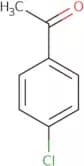
CAS:<p>4'-Chloroacetophenone is a chemical substance that is used in the synthesis of other substances. It has been shown to be an effective tool for cell-specific reactions, such as methyl ketones and benzaldehyde. 4'-Chloroacetophenone reacts with hydrochloric acid and palladium complexes to produce electron reduction, which leads to the activation of methyl ketones. This reaction provides a method for synthesizing molecules with a carbonyl group. The isolated yield of this reaction is dependent on the reaction solution temperature and concentration. The mechanism of this reaction appears to be Suzuki coupling reaction.</p>Formula:C8H7ClOPurity:Min. 95%Color and Shape:Clear Colourless To Pale Yellow LiquidMolecular weight:154.59 g/mol14,15-Dehydro budesonide
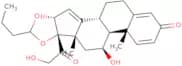
CAS:<p>Please enquire for more information about 14,15-Dehydro budesonide including the price, delivery time and more detailed product information at the technical inquiry form on this page</p>Formula:C25H32O6Purity:Min. 95%Molecular weight:428.52 g/mol1,2-Epoxy-3-(4-nitrophenoxy)propane
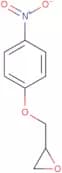
CAS:<p>1,2-Epoxy-3-(4-nitrophenoxy)propane is an epoxide that is a reactive intermediate that participates in a number of reactions, including the formation of disulfide bonds. It has been shown to have genotoxic effects and to be toxic to polymorphonuclear leucocytes. The compound can also inhibit detoxification enzymes, which may make it useful as a biomarker for environmental exposure to xenobiotics. 1,2-Epoxy-3-(4-nitrophenoxy)propane has also been shown to be a potential anti-cancer agent in gene therapy studies. This compound inhibits energy metabolism by inhibiting the enzyme glyceraldehyde 3 phosphate dehydrogenase (GAPDH).</p>Formula:C9H9NO4Purity:Min. 95%Molecular weight:195.17 g/mol5,6,7,8-Tetrahydronaphthalene-1-carbaldehyde
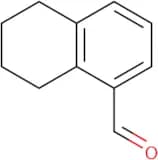
CAS:<p>Please enquire for more information about 5,6,7,8-Tetrahydronaphthalene-1-carbaldehyde including the price, delivery time and more detailed product information at the technical inquiry form on this page</p>Formula:C11H12OPurity:Min. 95%Color and Shape:Clear LiquidMolecular weight:160.21 g/molCholesterol n-Octyl Carbonate
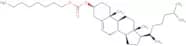
CAS:Controlled Product<p>Please enquire for more information about Cholesterol n-Octyl Carbonate including the price, delivery time and more detailed product information at the technical inquiry form on this page</p>Purity:Min. 95%Amoxicillin dimer tri-sodium salt (penicilloic acid form) - mixture of diastereomers
<p>Please enquire for more information about Amoxicillin dimer tri-sodium salt (penicilloic acid form) - mixture of diastereomers including the price, delivery time and more detailed product information at the technical inquiry form on this page</p>Formula:C32H27N6Na3O11S2Purity:Min. 95%Molecular weight:804.69 g/molCholesterol Heptyl Carbonate
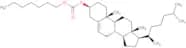
CAS:Controlled Product<p>Cholesterol heptyl carbonate is a cholesteric liquid crystal with a high melting point, which can be used as a coating for pharmaceutical tablets and other products. Cholesteric liquid crystals are composed of molecules that have different shapes in the solid phase and in the liquid phase, forming an ordered structure. The conformational state of the molecule determines the optical properties of cholesteric liquid crystals. This product has an average particle diameter of around 200 nm and is made from organic solvent. The treatment method for this product is not specified, but it may be treated by heating with thermal energy or using optical energy to create a cross-linked polymer network.</p>Purity:Min. 95%9,10-Anthracenediyl-bis(methylene)dimalonic acid
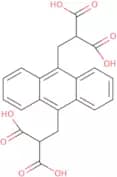
CAS:<p>9,10-Anthracenediyl-bis(methylene)dimalonic acid (ADMA) is a fluorescent probe that is used to measure the levels of ADMA in cells. This compound is able to bind to cell nuclei, which can then be detected by fluorescence microscopy. ADMA has been shown to be useful as a marker for cancer and other diseases such as diabetes or Alzheimer's disease. The detection sensitivity of ADMA can be increased by combining it with heparin, which binds strongly to this molecule and increases its solubility in water. The use of ADMA as an imaging agent has been reported in several clinical studies.</p>Formula:C22H18O8Purity:Min. 95%Color and Shape:PowderMolecular weight:410.37 g/mol3-O-Methyl norbuprenorphine
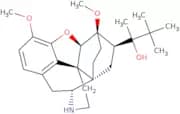
CAS:Controlled Product<p>Please enquire for more information about 3-O-Methyl norbuprenorphine including the price, delivery time and more detailed product information at the technical inquiry form on this page</p>Formula:C26H37NO4Purity:Min. 95%Molecular weight:427.58 g/molSalbutamol sulphate impurity B
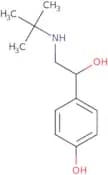
CAS:<p>Salbutamol sulphate impurity B is a substance that is an impurity in salbutamol sulfate. It is a white crystalline powder and is soluble in organic solvents. Salbutamol sulfate impurity B can be detected by liquid chromatography, which separates the substances based on their solubility in different phases. The substances are detected at a specific wavelength, and it is possible to identify peaks of the substances on the chromatogram synchronously. Salbutamol sulfate impurity B can be found as a part of other medicines or substances by using this detection method.</p>Formula:C12H19NO2Purity:Min. 95%Molecular weight:209.28 g/mol3',4'-(Methylenedioxy)butyrophenone
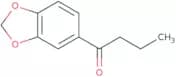
CAS:Controlled Product<p>3',4'-(Methylenedioxy)butyrophenone is a compound that has been shown to exist in four different conformations. It has been shown to form hydrogen bonds and chains with itself, as well as hydrogen bonds with other molecules. The crystal structure of 3',4'-(methylenedioxy)butyrophenone has been determined, and it's conformation has been shown to be dependent on the nature of the solvent.</p>Formula:C11H12O3Purity:Min. 95%Molecular weight:192.21 g/molNoratropine
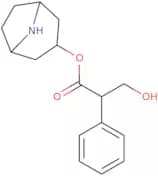
CAS:<p>Noratropine is a drug that belongs to the group of anticholinergic drugs. It is used as a pharmaceutical preparation for the treatment of urinary incontinence and other conditions that are caused by overactivity of the bladder muscles. Noratropine has been shown to have a significant effect on symptoms such as increased urination, urgency, frequency, and nocturia. In addition, it reduces the amount of urine produced at night and during the day. Noratropine can be found in pueraria lobata (Kudzu) and angelicae dahuricae (Angelica). These plants contain natural compounds with anticholinergic properties. Noratropine can also be synthesized from benzalkonium chloride and n-oxide. The synthesis involves two steps: first, benzalkonium chloride reacts with an alcohol to form an acid which then reacts with n-oxide to produce noratropine. This compound can also be obtained from tissue</p>Formula:C16H21NO3Purity:Min. 95%Molecular weight:275.34 g/mol3-Fluoro-4-hydroxybenzoic acid methyl ester
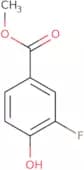
CAS:<p>Please enquire for more information about 3-Fluoro-4-hydroxybenzoic acid methyl ester including the price, delivery time and more detailed product information at the technical inquiry form on this page</p>Formula:C8H7O3FPurity:Min. 95%Molecular weight:170.14 g/molD,L-Alanosine sodium salt
<p>Please enquire for more information about D,L-Alanosine sodium salt including the price, delivery time and more detailed product information at the technical inquiry form on this page</p>Formula:C3H6N3NaO4Purity:Min. 95%Molecular weight:171.09 g/molN-(Aminocarbonyl)aspartic acid
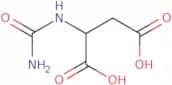
CAS:<p>N-Aminocarbonyl-L-aspartic acid (NACD) is a molecule that is found in urine samples. It can be used as a biomarker to detect cancer, HIV infection, and many other diseases. The presence of NACD has been correlated with the development of acidosis, which is characterized by an increase in the pH of body fluids. The following are a few examples of how this product might be described on an eCommerce site: Rifapentine is an anti-tuberculosis drug that belongs to the class of rifamycins. It is the most active of the rifamycins for the treatment of tuberculosis. Rifapentine inhibits bacterial growth by binding to DNA-dependent RNA polymerase, thereby preventing transcription and replication. The high frequency of human activity has been shown using a patch-clamp technique on human erythrocytes. This active form is metabolized through</p>Formula:C5H8N2O5Purity:Min. 95%Color and Shape:PowderMolecular weight:176.13 g/mol