Pharmaceutical Standards
Pharmaceutical standards are a comprehensive set of reference materials essential for ensuring the safety, efficacy, and quality of pharmaceutical products. This category includes standards for active pharmaceutical ingredients (APIs), which are the core components responsible for therapeutic effects. Additionally, it covers compounds and metabolites relevant to both the pharmaceutical and veterinary industries, providing benchmarks for the accurate measurement and analysis of these substances. Nitrosamine control standards are crucial for detecting and mitigating potentially harmful nitrosamines in drug formulations. Toxicology standards help assess the safety and potential adverse effects of pharmaceutical compounds. Furthermore, enzyme activators and inhibitors standards are vital for research and development, enabling precise studies of biochemical pathways and drug mechanisms. These pharmaceutical standards are indispensable tools for regulatory compliance, quality control, and research, ensuring that pharmaceutical products meet stringent safety and effectiveness criteria.
Subcategories of "Pharmaceutical Standards"
- APIs for research and impurities(273,753 products)
- Enzyme Activators and Inhibitors(2,827 products)
- Nitrosamines(2,606 products)
- Pharmaceutical and Veterinary Compounds and Metabolites(2,603 products)
- Toxicology(13,652 products)
Found 7836 products of "Pharmaceutical Standards"
Sort by
Purity (%)
0
100
|
0
|
50
|
90
|
95
|
100
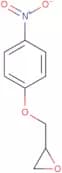
1,2-Epoxy-3-(4-nitrophenoxy)propane
CAS:<p>1,2-Epoxy-3-(4-nitrophenoxy)propane is an epoxide that is a reactive intermediate that participates in a number of reactions, including the formation of disulfide bonds. It has been shown to have genotoxic effects and to be toxic to polymorphonuclear leucocytes. The compound can also inhibit detoxification enzymes, which may make it useful as a biomarker for environmental exposure to xenobiotics. 1,2-Epoxy-3-(4-nitrophenoxy)propane has also been shown to be a potential anti-cancer agent in gene therapy studies. This compound inhibits energy metabolism by inhibiting the enzyme glyceraldehyde 3 phosphate dehydrogenase (GAPDH).</p>Formula:C9H9NO4Purity:Min. 95%Molecular weight:195.17 g/molrac-5,6,7,8-tetrahydro-6-(propylamino)-1-naphthalenol
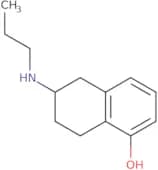
CAS:Controlled Product<p>Rotigotine is a substance that belongs to the class of active compounds. It has been shown to have optical activity, but this property is not well understood. Rotigotine is a racemic mixture with two enantiomers, which are mirror images of each other. The optical rotation of rac-5,6,7,8-tetrahydro-6-(propylamino)-1-naphthalenol is given as +28°. This property can be determined by measuring the angle of rotation when light passes through the substance in solution in contact with a polarizer and analyzer.</p>Formula:C13H19NOPurity:Min. 95%Molecular weight:205.3 g/molδ-Hexalactone
CAS:<p>Delta hexalactone is a fatty acid that has been shown to have antagonistic properties against bacterial growth. It has been tested for its antibacterial activity and shown to be active against human pathogens, including mycobacterium. Delta hexalactone is also used as an analytical method in order to detect the presence of glycol ethers.</p>Formula:C6H10O2Purity:Min. 95%Color and Shape:Clear LiquidMolecular weight:114.14 g/mol3-(4'-Methoxy-3'-sulfonamidophenyl)-2-propylamine, hydrochloride
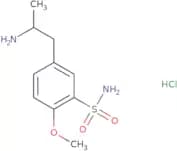
CAS:Controlled Product<p>Please enquire for more information about 3-(4'-Methoxy-3'-sulfonamidophenyl)-2-propylamine, hydrochloride including the price, delivery time and more detailed product information at the technical inquiry form on this page</p>Formula:C10H16N2O3S•HClPurity:Min. 95%Color and Shape:PowderMolecular weight:280.77 g/molCefalexin monohydrate impurity F
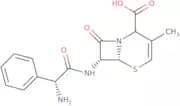
CAS:<p>Please enquire for more information about Cefalexin monohydrate impurity F including the price, delivery time and more detailed product information at the technical inquiry form on this page</p>Formula:C16H17N3O4S·2H2OPurity:Min. 95%Molecular weight:383.42 g/mol9-Fluoro-11b,21-dihydroxy-16a-methylpregna-1,4-diene-3,20-dione
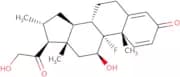
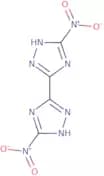
CAS:Controlled Product<p>9-Fluoro-11b,21-dihydroxy-16a-methylpregna-1,4-diene-3,20-dione is a potent antiandrogen that is used to treat alopecia areata and other skin disorders. 9-Fluoro-11b,21-dihydroxy-16a-methylpregna-1,4-diene-3,20-dione has been shown to have an inhibitory effect on the growth of skin tumors in mice. This drug also has a protective effect against chemical stability. It binds to fatty acids and epidermal growth factor (EGF), which may be related to its ability to regulate transcriptional processes and inflammatory skin diseases.</p>Formula:C22H29FO4Purity:Min. 95%Molecular weight:376.46 g/mol5,5'-Dinitro-2H,2'H-3,3'-bi-1,2,4-triazole
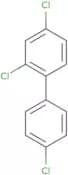
CAS:Controlled Product<p>Please enquire for more information about 5,5'-Dinitro-2H,2'H-3,3'-bi-1,2,4-triazole including the price, delivery time and more detailed product information at the technical inquiry form on this page</p>Formula:C4H2N8O4Purity:Min. 95%Molecular weight:226.11 g/mol2,4,4’-Trichlorobiphenyl
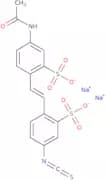
CAS:Controlled Product<p>2,4,4’-Trichlorobiphenyl is a polychlorinated biphenyl congener. It has been shown to have an adverse effect on the central nervous system, causing neurotoxicity. 2,4,4’-Trichlorobiphenyl has been used as a model system for the study of the effects of environmental toxins on mitochondrial membrane potential and lipid peroxidation. 2,4,4’-Trichlorobiphenyl binds to fatty acids in mitochondria and inhibits fatty acid β-oxidation. The inhibition of fatty acid oxidation leads to increased levels of protocatechuic acid in the serum and liver tissue. 2,4,4’-Trichlorobiphenyl has also been found to be toxic to aquatic organisms such as fish and shrimp at low concentrations.</p>Formula:C12H7Cl3Purity:Min. 95%Molecular weight:257.54 g/mol4-Acetamido-4'-isothiocyanatostilbene-2,2'-disulfonic acid, sodium salt
CAS:<p>4-Acetamido-4'-isothiocyanatostilbene-2,2'-disulfonic acid, sodium salt (AITC-S) is a stilbene derivative with inhibitory properties. It has been shown to inhibit the uptake of camp in rat ventricular myocytes and caco-2 cells as well as the release of camp from rat renal proximal tubules. AITC-S also inhibits the transport of camp into the cells. The mechanism by which AITC-S inhibits uptake is not yet known, but it may be due to competition for a common carrier or an effect on intracellular metabolism. This compound has also been shown to have an acute ischemic protective effect on rats when administered before reperfusion following coronary artery occlusion.</p>Formula:C17H12N2Na2O7S3Purity:Min. 95%Molecular weight:498.46 g/mol4-Aminobicyclo[2.2.2]octane-1-carboxylic acid methyl ester
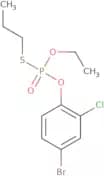
CAS:<p>Please enquire for more information about 4-Aminobicyclo[2.2.2]octane-1-carboxylic acid methyl ester including the price, delivery time and more detailed product information at the technical inquiry form on this page</p>Formula:C10H17NO2Purity:Min. 95%Molecular weight:183.25 g/molProfenofos
CAS:<p>Profenofos is a water-soluble organophosphate that can be used as a pesticide. It has been shown to have synergic effects with other pesticides, such as malathion and carbaryl. Profenofos has been studied for its toxicological properties in vitro and in vivo. These studies have shown that the lowest dose at which there are adverse effects on biochemical properties is 0.1 mg/kg of body weight. The mode of action of profenofos includes inhibition of esterases, glutathione reductase, and cytochrome P450 enzymes. This enzyme inhibition leads to an accumulation of acetylcholine in the synaptic cleft, which causes muscle paralysis and death from respiratory failure. Profenofos also affects cardiac function by blocking potassium channels, leading to heart rate changes and arrhythmias. Profenofos can be identified using chromatographic analysis or electrochemical impedance spectroscopy (EIS). EIS is</p>Formula:C11H15BrClO3PSPurity:Min. 95%Color and Shape:Clear LiquidMolecular weight:373.63 g/mol(4-Fluoro-3-Nitrophenyl)Acetonitrile
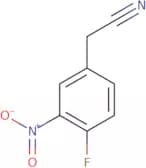
CAS:<p>4-Fluoro-3-nitrophenylacetonitrile is a monomer that can be synthesised from the reaction of carbamic acid and diphenyl ether. It is chiral, stereoselective and nucleophilic. 4-Fluoro-3-nitrophenylacetonitrile can also be synthesised by reacting fluoroacetamide with sodium cyanide in water, forming the corresponding amide, which reacts with acetonitrile to form the nitro compound. The anti-cancer properties of 4-fluoro-3 nitrophenylacetonitrile have been studied in vitro and in vivo. This substance has been shown to inhibit growth of cancer cells and induce apoptosis. In addition, this substance has been used as a synthetic strategy for dihydroisoquinolines, which are important for their anti-cancer properties.</p>Formula:C8H5FN2O2Purity:Min. 95%Molecular weight:180.14 g/mol2,6-Bis(hydroxymethyl)-p-cresol
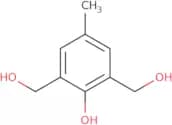
CAS:<p>2,6-Bis(hydroxymethyl)-p-cresol (BHMC) is a cross-linking agent that reacts with the hydroxyl groups of polymers to form covalent bonds. This reaction is irreversible and has been shown to be effective in thermal expansion applications. BHMC is insoluble in water and so can be used as a proton donor for the synthesis of polymer hydrogels. BHMC has also been used as a molecular modeling probe for studying protein structure and function. This compound reacts with nucleophiles by nucleophilic attack on the carbonyl carbon atom, producing an intermediate that tautomerizes to the corresponding enone. The reaction mechanism involves formation of a tetranuclear transition state followed by acid catalysis. Functional groups such as -OH, -NH2, or -COOH are required for this reaction to occur. NMR spectra have shown that there are three different chemical structures</p>Formula:C9H12O3Purity:Min. 95%Color and Shape:PowderMolecular weight:168.19 g/molEstradiol 3-valerate
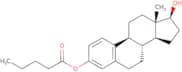
CAS:Controlled Product<p>Please enquire for more information about Estradiol 3-valerate including the price, delivery time and more detailed product information at the technical inquiry form on this page</p>Formula:C23H32O3Purity:Min. 95%Color and Shape:PowderMolecular weight:356.5 g/molDiethyl[2-(4-nitrophenoxy)ethyl]amine
CAS:Controlled Product<p>Please enquire for more information about Diethyl[2-(4-nitrophenoxy)ethyl]amine including the price, delivery time and more detailed product information at the technical inquiry form on this page</p>Formula:C12H18N2O3Purity:Min. 95%Molecular weight:238.28 g/molEdoxaban Impurity 2
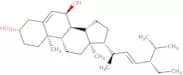
CAS:<p>Please enquire for more information about Edoxaban Impurity 2 including the price, delivery time and more detailed product information at the technical inquiry form on this page</p>Purity:Min. 95%7α-Hydroxystigmasterol
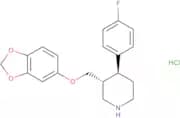
CAS:Controlled Product<p>Please enquire for more information about 7alpha-Hydroxystigmasterol including the price, delivery time and more detailed product information at the technical inquiry form on this page</p>Purity:Min. 95%Ent-paroxetine hydrochloride
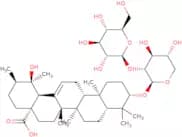
CAS:Controlled Product<p>Please enquire for more information about Ent-paroxetine hydrochloride including the price, delivery time and more detailed product information at the technical inquiry form on this page</p>Formula:C19H21ClFNO3Purity:Min. 95%Color and Shape:PowderMolecular weight:365.83 g/molIlexsaponin B1
CAS:<p>Ilexsaponin B1 is a saponin, which is a bioactive compound derived from the genus Ilex, commonly found in certain holly plants. This compound is structurally characterized by its glycosidic bonds, which consist of a sugar moiety linked to a triterpenoid or steroid aglycone, contributing to its amphiphilic nature. The source of Ilexsaponin B1 is typically extracted from the leaves or roots of Ilex species through a series of solvent extraction and chromatographic techniques.</p>Purity:Min. 95%(R)-(-)-3-Hydroxybutyric acid methyl ester
CAS:<p>(R)-(-)-3-Hydroxybutyric acid methyl ester is a monocarboxylic acid that is metabolized by phosphofructokinase and other enzymes to produce the corresponding 3-hydroxybutyrate. This compound is synthesized from tiglic acid, which can be obtained from corynebacterium. The production of (R)-(-)-3-Hydroxybutyric acid methyl ester can be optimized by using a biotransformation process. This process includes enzymatic reactions and chemical transformations, such as hydroxylation, carbonylation, and stereoselective synthesis. The metabolic pathway for this compound has been studied using a DNA microarray analysis.</p>Formula:C5H10O3Purity:Min. 95%Molecular weight:118.13 g/mol


![4-Aminobicyclo[2.2.2]octane-1-carboxylic acid methyl ester](/_next/image/?url=https%3A%2Fstatic.cymitquimica.com%2Fproducts%2F3D%2Fthumb-webp%2FFA44258.webp&w=3840&q=75)
![Diethyl[2-(4-nitrophenoxy)ethyl]amine](/_next/image/?url=https%3A%2Fstatic.cymitquimica.com%2Fproducts%2F3D%2Fthumb-webp%2FFD21808.webp&w=3840&q=75)