Pharmaceutical Standards
Pharmaceutical standards are a comprehensive set of reference materials essential for ensuring the safety, efficacy, and quality of pharmaceutical products. This category includes standards for active pharmaceutical ingredients (APIs), which are the core components responsible for therapeutic effects. Additionally, it covers compounds and metabolites relevant to both the pharmaceutical and veterinary industries, providing benchmarks for the accurate measurement and analysis of these substances. Nitrosamine control standards are crucial for detecting and mitigating potentially harmful nitrosamines in drug formulations. Toxicology standards help assess the safety and potential adverse effects of pharmaceutical compounds. Furthermore, enzyme activators and inhibitors standards are vital for research and development, enabling precise studies of biochemical pathways and drug mechanisms. These pharmaceutical standards are indispensable tools for regulatory compliance, quality control, and research, ensuring that pharmaceutical products meet stringent safety and effectiveness criteria.
Subcategories of "Pharmaceutical Standards"
- APIs for research and impurities(273,753 products)
- Enzyme Activators and Inhibitors(2,827 products)
- Nitrosamines(2,606 products)
- Pharmaceutical and Veterinary Compounds and Metabolites(2,603 products)
- Toxicology(13,652 products)
Found 7836 products of "Pharmaceutical Standards"
Sort by
Purity (%)
0
100
|
0
|
50
|
90
|
95
|
100
γ-Butyrobetaine hydrochloride
CAS:<p>Gamma-butyrobetaine hydrochloride (GBB) is a metabolite of gamma-butyrobetaine, which is found in the human body. GBB is synthesized from lysine and methionine through an enzymatic pathway that starts with the conversion of lysine to homocysteine. GBB is then converted to gamma-butyrobetaine by methylating the hydroxyl group on its terminal carbon. GBB can be found in urine samples as well as in carnitine and fatty acid metabolism. It has been shown to have an inhibitory effect on creatine kinase and can be used to diagnose metabolic disorders such as carnitine deficiency or prognosis following a heart attack.</p>Formula:C7H16ClNO2Purity:Min. 95%Color and Shape:PowderMolecular weight:181.66 g/molε-Carotene
CAS:<p>Epsilon-Carotene is a carotenoid that is found in plants. It is synthesized from beta-carotene through the action of enzymes called beta-carotene ketolases. Epsilon-Carotene can be cleaved by enzymes to produce lycopene and beta-cryptoxanthin. The biosynthesis of Epsilon-Carotene has been studied in a number of clinical studies, including the effect on human tissues and the prevention of cancer. Epsilon-Carotene has also been shown to have anti-inflammatory properties, which may be due to its ability to inhibit prostaglandin synthesis.</p>Formula:C40H56Purity:Min. 95%Molecular weight:536.87 g/molHistatin 5
CAS:<p>Histatin 5 is a peptide that has been shown to have antimicrobial activity against Candida albicans, Candida glabrata, and Cryptococcus albicans. It is believed to exert its effect by binding to copper ions and inhibiting the mitochondrial functions of the pathogen. Histatin 5 also has pro-apoptotic properties and may be used as an experimental treatment for infectious diseases caused by opportunistic fungal strains.</p>Formula:C133H195N51O33Purity:Min. 95%Molecular weight:3,036.3 g/molGibberellic acid methyl ester
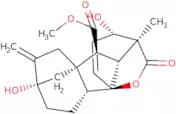
CAS:<p>Gibberellic acid methyl ester is a specialized plant growth regulator, which is synthetically derived from the naturally occurring gibberellins found in plants. These gibberellins are vital phytohormones that regulate various aspects of growth and development in higher plants. Gibberellic acid methyl ester functions by mimicking these natural gibberellins, interacting with plant cellular processes to stimulate and enhance growth. Its mode of action involves promoting cell elongation, division, and differentiation, thereby accelerating plant growth and influencing the lifecycle.</p>Formula:C20H24O6Purity:Min. 95%Molecular weight:360.4 g/mol2,3-Dichloro-5-nitropyridine
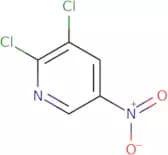
CAS:<p>2,3-Dichloro-5-nitropyridine (2,3-DNP) is an antidiabetic drug that has been shown to improve insulin sensitivity in animals. It is a sample preparation reagent that can be used to validate the use of γ-aminobutyric acid (GABA) as a linker for the immobilization of proteins on solid supports. 2,3-DNP is also used as an adipose tissue marker to study obesity and insulin resistance. This drug has been shown to increase choline levels in the liver by inhibiting its export and increasing its synthesis by phosphorylation of serine hydroxymethyltransferase. 2,3-DNP also increases fatty acid synthesis by activating acetyl coenzyme A carboxylase and inhibiting carnitine palmitoyl transferase I. 2,3-DNP has also been shown to decrease food intake and body weight gain in db/db mice</p>Formula:C5H2Cl2N2O2Purity:Min. 95%Color and Shape:PowderMolecular weight:192.99 g/mol24,25-Dihydroxy vitamin D2
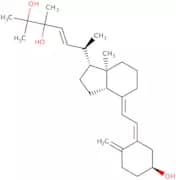
CAS:<p>24,25-Dihydroxy vitamin D2 is a form of vitamin D that has been shown to be effective in the treatment of biliary cirrhosis and neonatal cirrhosis. It is synthesized from 25-hydroxyvitamin D3 by the enzyme 24-hydroxylase. The assay sensitivity for this compound is 10 ng/mL. This form of vitamin D has been shown to have an effect on serum bilirubin levels in patients with biliary cirrhosis. 24,25-Dihydroxy vitamin D2 can also be used to treat patients with chronic renal failure who are deficient in vitamin D3. The plasma concentration of 24,25-dihydroxyvitamin D2 is lower than that of 25-hydroxyvitamin D2 and 1,25-dihydroxyvitamin D2 because it is more rapidly metabolized by the liver.</p>Formula:C28H44O3Purity:Min. 98 Area-%Color and Shape:PowderMolecular weight:428.65 g/molL-Methionine tert-butyl ester hydrochloride
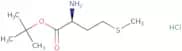
CAS:<p>L-Methionine tert-butyl ester hydrochloride is a peptide that is used for the treatment of lysosomal storage diseases. It is a metabolic precursor for polypeptides and may be useful for the treatment of tissue damage due to elimination. L-Methionine tert-butyl ester hydrochloride has been shown to have a stable half-life in murine studies, and it is eliminated primarily by the kidneys. Radiometabolites with short half-lives are found in blood and urine samples following intravenous administration. The elimination rate of L-Methionine tert-butyl ester hydrochloride can be calculated by measuring the radioactivity in urine over time.</p>Formula:C9H19NO2S•HClPurity:Min. 95%Color and Shape:PowderMolecular weight:241.78 g/molBeclomethasone-21-Aldehyde
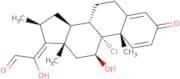
CAS:Controlled Product<p>Please enquire for more information about Beclomethasone-21-Aldehyde including the price, delivery time and more detailed product information at the technical inquiry form on this page</p>Formula:C22H27ClO4Purity:Min. 95%Color and Shape:PowderMolecular weight:390.9 g/molBoc-L-aspartic acid 4-tert-butyl ester
CAS:<p>Boc-L-aspartic acid 4-tert-butyl ester is a synthetic aminoacylase that is used in the synthesis of ergosterol. It is an efficient and economical reagent for the preparation of esters of aspartic acid, which are used in fungal antifungal agents. Boc-L-aspartic acid 4-tert-butyl ester has been shown to have various physiological functions, including the ability to inhibit ergosterol synthesis by inhibiting the enzyme polymeric ergosterol synthase in fungi. This compound can also be used to synthesize n-substituted aspartates.</p>Formula:C13H23NO6Purity:Min. 95 Area-%Color and Shape:PowderMolecular weight:289.32 g/molO-tert-Butyl-L-threonine tert-butyl ester
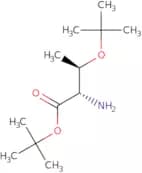
CAS:<p>O-tert-Butyl-L-threonine tert-butyl ester is a bactericidal antibiotic that belongs to the class of galacturonic acid. It inhibits bacterial growth by binding to the enzyme transpeptidase, which is crucial in crosslinking peptidoglycan chains. This antibiotic has been shown to have antibacterial activity against bacteria such as Staphylococcus aureus and Streptococcus pyogenes. O-tert-Butyl-L-threonine tert-butyl ester has been used for the production of lactic acid from glucose in bioreactors. The lactic acid can be used for the production of polymers, and the fermentation process can be done using either yeast or bacteria, such as pastoris or trifluoroacetic acid. The reaction time is typically between 4 and 6 hours, at a temperature of 25 °C with an acid catalyst such as hydrochloric acid</p>Formula:C12H25NO3Purity:Min. 98%Color and Shape:Slightly Yellow Clear LiquidMolecular weight:231.33 g/mol2-(4-Bromophenyl)-2,2'-dimethylacetic acid
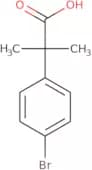
CAS:<p>2-Bromo-2-(4-bromophenyl)-2,2'-dimethylacetic acid (2bpd) is the sodium salt of 2-(4-bromophenyl)-2,2'-dimethylacetic acid. It is a metabolite of terfenadine and thionyl chloride. 2bpd has been shown to be an inhibitor of the histamine H1 receptor. This drug is also a brominated derivative of 2-amino-2-methyl-1-propanol, which has been shown to be an inhibitor of the histamine H1 receptor.</p>Formula:C10H11BrO2Purity:Min. 95%Molecular weight:243.1 g/molDiphenylsulfone-3,3'-disulfonic Acid Disodium Salt
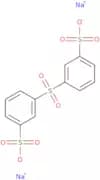
CAS:<p>Please enquire for more information about Diphenylsulfone-3,3'-disulfonic Acid Disodium Salt including the price, delivery time and more detailed product information at the technical inquiry form on this page</p>Purity:Min. 95%Haloperidol Impurity D
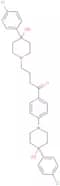
CAS:<p>Please enquire for more information about Haloperidol Impurity D including the price, delivery time and more detailed product information at the technical inquiry form on this page</p>Formula:C32H36Cl2N2O3Purity:Min. 95%Molecular weight:567.55 g/mol2,4,6-Trichloro-5-nitropyrimidine
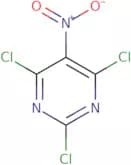
CAS:<p>2,4,6-Trichloro-5-nitropyrimidine is a purine derivative that inhibits the cell proliferation of cancer cells. It has been shown to inhibit the activity of kinases and to induce apoptosis in human cancer cells in vitro. This drug also has antiproliferative potential against erythrocytes and is being investigated as a treatment for renal disease. 2,4,6-Trichloro-5-nitropyrimidine shows inhibitory effects on the phosphorylation of roscovitine by ATP and may be used to treat patients with glomerulonephritis. 2,4,6-Trichloro-5-nitropyrimidine can be synthesized from 2,4,6-trichloropyrimidinethiol and nitric acid according to the following equation: CClNO + HNO → CClNOH + NO 2 Cl + 3 HNO</p>Formula:C4Cl3N3O2Purity:Min. 97 Area-%Molecular weight:228.42 g/molL-Tyrosine hydrochloride
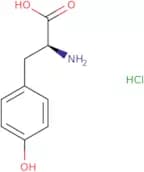
CAS:<p>L-Tyrosine hydrochloride is a pharmaceutical preparation that has been used clinically in the treatment of infectious diseases, cancer, and autoimmune diseases. Tyrosine is an amino acid with a hydroxyl group on its side chain. Tyrosine can be synthesized from phenylalanine by hydroxylation of the phenolic group and decarboxylation of the carboxylic acid group. It is also a precursor to catecholamines and other important biological molecules. L-Tyrosine hydrochloride is used as an intermediate in the production of monoclonal antibodies for use in cancer research. In addition, it has been shown to be an effective inhibitor of virus replication when combined with ester hydrochloride, which prevents the release of progeny virus particles from infected cells.</p>Formula:C9H11NO3·HClPurity:Min. 95%Molecular weight:217.65 g/molIsomethadone hydrochloride
CAS:Controlled Product<p>Isomethadone hydrochloride is the drug substance in a solid oral dosage form. It is an active substance that can be used to treat inflammatory diseases and target tissue. Isomethadone hydrochloride is a type of natural polymer with a metal ion as its active ingredient. The absorption mechanism for this drug is not known, but it appears to work by causing dysfunction in the membranes of cells. Isomethadone hydrochloride has been shown to cause addiction in animals and humans, and may have potential toxic effects on liver function. Symptoms of Isomethadone hydrochloride overdose include: <br>-Nausea and vomiting<br>-Constipation<br>-Loss of appetite<br>-Headache<br>-Drowsiness <br>-Confusion <br>-Muscle spasms <br>-Tremors and seizures</p>Formula:C21H28ClNOPurity:Min. 95%Molecular weight:345.91 g/mol2-[4-(tert-Butyldimethylsilyloxymethyl)-2-nitrophenoxy]acetic Acid
CAS:<p>Please enquire for more information about 2-[4-(tert-Butyldimethylsilyloxymethyl)-2-nitrophenoxy]acetic Acid including the price, delivery time and more detailed product information at the technical inquiry form on this page</p>Formula:C15H23NO6SiPurity:Min. 95%Molecular weight:341.43 g/mol(+)-B-Chlorodiisopinocampheylborane - 60-65% in Hexane
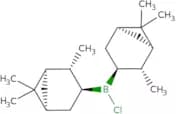
CAS:<p>(+)-B-Chlorodiisopinocampheylborane is a chiral organoboron reagent that can be used for the enantioselective synthesis of amines. It is prepared from the reaction of chlorodiphenyl borane with (+)-diaminobenzene in hexane. The product can be purified by column chromatography or recrystallization. (+)-B-Chlorodiisopinocampheylborane can also be used in the synthesis of other compounds, such as pyrroles and pantolactones. It is an excellent catalyst for the dehydration of primary amines to give unsymmetrical ketones. This reagent has been shown to be effective in asymmetric hydrogenation reactions, such as the reduction of chiral secondary alcohols, and is also capable of catalyzing aldol reactions.</p>Formula:C20H34BClPurity:Min. 95%Color and Shape:Clear LiquidMolecular weight:320.75 g/molMexiletine
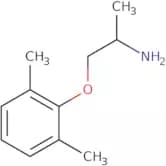
CAS:<p>Mexiletine is a drug that belongs to the class of drugs called antiarrhythmics. It is used for the treatment of ventricular arrhythmias and for removing cardiac conduction abnormalities. Mexiletine acts by inhibiting the release of calcium ions from the sarcoplasmic reticulum, which leads to a reduction in excitability of the heart muscle. Mexiletine has been shown to have a matrix effect on bacterial DNA, which may be due to its ability to bind with dinucleotide phosphate or its inhibitory effects on hypersensitivity syndrome. Mexiletine also has an effect on cardiac tissue, leading to decreased contractility and increased relaxation time. The mechanism by which mexiletine leads to these effects is not well understood but may be related to its ability to interact with ion channels in myocardial cells or alter protein function in these cells. Mexiletine has been shown to have some drug interactions, such as with other drugs that are metabolized through cy</p>Formula:C11H17NOPurity:Min. 95%Color and Shape:Yellow Clear LiquidMolecular weight:179.26 g/mol4b-Hydroxy cholesterol
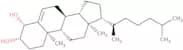
CAS:Controlled Product<p>4b-Hydroxy cholesterol is a sterol that is found in human serum and rat liver microsomes. It has been shown to be a potent inducer of CYP3A4, which is an important enzyme in the metabolism of many drugs. 4b-Hydroxy cholesterol has also been shown to induce transcriptional regulation by binding to the sterol regulatory element binding protein (SREBP) and activating it. This activation results in the increased production of cholesterol and other sterols by upregulating transcription of genes that are involved in cholesterol synthesis. 4b-Hydoxy cholesterol has been shown to have anti-inflammatory properties due to its inhibition of triclosan and clinical studies show that it can reduce serum levels of total cholesterol and low density lipoprotein (LDL) cholesterol in women.</p>Formula:C27H46O2Purity:Min. 95%Molecular weight:402.65 g/mol





![2-[4-(tert-Butyldimethylsilyloxymethyl)-2-nitrophenoxy]acetic Acid](/_next/image/?url=https%3A%2Fstatic.cymitquimica.com%2Fproducts%2F3D%2Fthumb-webp%2FFB60313.webp&w=3840&q=75)