Pharmaceutical Standards
Subcategories of "Pharmaceutical Standards"
- APIs for research and impurities(276,118 products)
- Enzyme Activators and Inhibitors(2,829 products)
- Nitrosamines(2,617 products)
- Pharmaceutical and Veterinary Compounds and Metabolites(2,919 products)
- Toxicology(13,573 products)
Found 7922 products of "Pharmaceutical Standards"
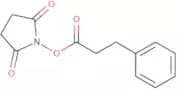
Hydrocinnamic acid N-hydroxysuccinimide ester
CAS:Please enquire for more information about Hydrocinnamic acid N-hydroxysuccinimide ester including the price, delivery time and more detailed product information at the technical inquiry form on this pageFormula:C13H13NO4Purity:Min. 95%Color and Shape:PowderMolecular weight:247.25 g/molTropicamide
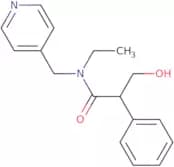
CAS:Tropicamide is a cholinergic agent that is used as a short-term mydriatic, or eye dilator, for diagnostic purposes. It belongs to the group of nonsteroidal anti-inflammatory drugs and has been shown to have a stable complex with benzalkonium chloride. Tropicamide has been shown to affect the signal pathways in cells, leading to an increase in IL-2 receptor expression. This drug also affects locomotor activity and has been studied as a potential treatment for murine sarcoma virus. Tropicamide is administered intravenously and can cause side effects such as blurred vision, nausea, vomiting and convulsions. Tropicamide may be given together with phenylephrine in order to reduce these side effects.Formula:C17H20N2O2Purity:Min. 95%Color and Shape:PowderMolecular weight:284.35 g/mol3-(4-methoxy-1-naphthyl)acrylic acid
CAS:Please enquire for more information about 3-(4-methoxy-1-naphthyl)acrylic acid including the price, delivery time and more detailed product information at the technical inquiry form on this pagePurity:Min. 95%Indirubin-3'-monoxime
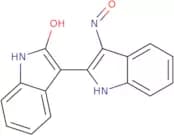
CAS:Inhibitor of YB-1 nuclear translocation; anti-cancerFormula:C16H11N3O2Purity:Min. 95%Color and Shape:PowderMolecular weight:277.28 g/mol2,2'-Dimethylbenzophenone
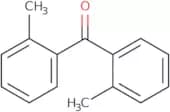
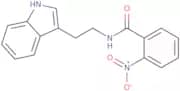
CAS:2,2'-Dimethylbenzophenone (DMBP) is an organic compound that is used as a photoresist for semiconductor manufacturing. DMBP is soluble in many organic solvents and reacts with sodium hydroxide to form the sodium salt of 2,2'-dimethylbenzophenone. It has been shown that DMBP readily undergoes metathesis reactions with a variety of olefins. The metathesis reaction is an acid-catalyzed reaction that involves the transfer of two hydrogen atoms from the olefin to the double bond carbon atom of DMBP. The mechanism by which this occurs is not fully understood, but it may involve a one-step mechanism where the olefin binds to the carbonyl group and then reacts with one of the other groups on DMBP.Formula:C15H14OPurity:Min. 95%Molecular weight:210.27 g/molN-(2-Indol-3-ylethyl)(2-nitrophenyl)formamide
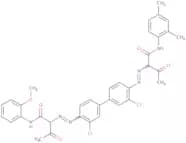
CAS:Please enquire for more information about N-(2-Indol-3-ylethyl)(2-nitrophenyl)formamide including the price, delivery time and more detailed product information at the technical inquiry form on this pageFormula:C17H15N3O3Purity:Min. 95%Color and Shape:PowderMolecular weight:309.32 g/molPigment Yellow 127
CAS:Please enquire for more information about Pigment Yellow 127 including the price, delivery time and more detailed product information at the technical inquiry form on this page
Purity:Min. 95%2-Bromocinnamic acid
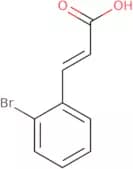
CAS:2-Bromocinnamic acid is a synthetic compound that inhibits the reactions of arylating agents with tissues. It has cytotoxic activity and can be used in the treatment of alzheimer's disease. The synthesis of 2-bromocinnamic acid begins with anhydrous acetonitrile, which is heated to form an anhydrous salt. This salt is then dissolved in water and treated with potassium iodide and sodium nitrite. The resultant mixture undergoes a series of reactions to produce 2-bromocinnamic acid, including the addition of molybdenum as a catalyst. The reaction also produces byproducts that are removed by extraction or distillation. Finally, it undergoes a chromophore change from yellow to red in the presence of air due to oxidation by atmospheric oxygen.
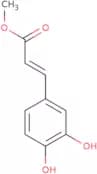
Formula:C9H7BrO2Purity:Min. 95%Molecular weight:227.05 g/molMethyl caffeate
CAS:Naturally produced by plant Solanum torvum Swartz. fruit (Turkey berry), methyl caffeate has proven to have antimicrobial, anticancer activity. Chemically an alkyl caffeate ester, methyl caffeate has been produced through various synthetic routes for a more sustainable approach.Formula:C10H10O4Purity:Min. 95%Color and Shape:PowderMolecular weight:194.18 g/mol1,3-Bis(4-chlorophenyl)urea
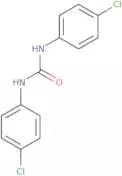
CAS:Triclocarban is a chlorinated aromatic compound that is widely used as a biocide in wastewater treatment. Triclocarban can be found in water, soil, and human and animal wastes. The analytical method for triclocarban is based on the reaction of the analyte with 1,3-bis(4-chlorophenyl)urea to form a red product that can be measured spectrophotometrically at 630 nm. Triclosan is another chlorinated aromatic compound that may contaminate water sources due to its use as an antimicrobial agent and deodorant. Triclosan has also been shown to have mutagenic properties. It has been shown to inhibit microbial growth by binding to nucleophilic sites on enzymes in the cell membrane or by forming stable complexes with metal ions necessary for cellular metabolism.Formula:C13H10Cl2N2OPurity:Min. 98 Area-%Color and Shape:White Off-White PowderMolecular weight:281.14 g/mol4-Chloro-2-fluorocinnamic acid
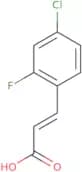
CAS:4-Chloro-2-fluorocinnamic acid is a chemical intermediate that can be used as a building block for the synthesis of other compounds. It has been shown to be useful in the preparation of pharmaceuticals, agrochemicals, and dyestuffs. This chemical has many uses in research, such as being used as a reactant in organic synthesis or as a reagent for derivitization. 4-Chloro-2-fluorocinnamic acid is also an important intermediate for the production of more complex compounds. 4-Chloro-2-fluorocinnamic acid is a versatile building block that can be used in the preparation of many fine chemicals, with its versatility making it an important scaffold for drug discovery.Formula:C9H6ClFO2Purity:Min. 95%Color and Shape:PowderMolecular weight:200.59 g/mol7,12-Dimethylbenz[a]anthracene
CAS:Controlled Product7,12-Dimethylbenz[a]anthracene is a potent carcinogen that can cause skin tumor formation and cancer in various organs. It is a powerful inhibitor of protein synthesis. 7,12-Dimethylbenz[a]anthracene binds to the DNA polymerase enzyme and blocks the incorporation of nucleotides into the growing DNA strand. This prevents the synthesis of proteins from DNA templates, inhibiting protein synthesis and cell division. The compound also inhibits inflammation by blocking the production of prostaglandins.Formula:C20H16Purity:Min. 98 Area-%Color and Shape:PowderMolecular weight:256.34 g/mol2-Hydroxy atorvastatin lactone
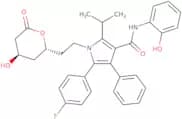
CAS:2-Hydroxyatorvastatin lactone is a prodrug of atorvastatin, which is an HMG-CoA reductase inhibitor. It is used to lower cholesterol and triglycerides in the blood. The drug is administered as a tablet, capsule, or liquid and can be taken with or without food. 2-Hydroxyatorvastatin lactone is metabolized by cytochrome P450 enzymes in the liver to produce active atorvastatin. This metabolism may be inhibited by other drugs that are also metabolized by cytochrome P450 enzymes, such as erythromycin and ketoconazole. 2-Hydroxyatorvastatin lactone has been shown to have an inhibition constant (Ki) of 0.5 μM for human liver microsomes and plasma concentrations of 1 μM or higher are required for therapeutic effect.
Formula:C33H33FN2O5Purity:Min. 95%Color and Shape:Off-White Slightly Yellow PowderMolecular weight:556.62 g/mol3,4-Dibenzyloxycinnamic acid
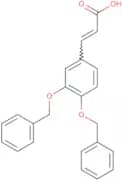
CAS:3,4-Dibenzyloxycinnamic acid is a reagent that is used in the synthesis of complex compounds. It can be used as a useful intermediate in the production of fine chemicals and has been shown to be a useful scaffold or building block for research chemicals. This compound is versatile and can be utilized as a reaction component in the manufacture of speciality chemicals. 3,4-Dibenzyloxycinnamic acid is also classified as a speciality chemical because it has not been widely used commercially but is still highly sought after by researchers.Formula:C23H20O4Purity:Min. 95%Color and Shape:PowderMolecular weight:360.4 g/molAluminiumHydroxybis[2,2'-methylen-bis(4,6-di-tert-butylphenyl)phosphate]
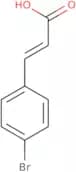
CAS:Please enquire for more information about AluminiumHydroxybis[2,2'-methylen-bis(4,6-di-tert-butylphenyl)phosphate] including the price, delivery time and more detailed product information at the technical inquiry form on this pageFormula:C58H85AlO9P2Purity:Min. 95%Color and Shape:PowderMolecular weight:1,015.22 g/mol4-Bromocinnamic acid
CAS:4-Bromocinnamic acid is a plant metabolite that is found in the leaves of plants belonging to the family Capparaceae. It can be extracted from these leaves using methanol as a solvent and then purified by column chromatography. 4-Bromocinnamic acid has been shown to have antitumor properties and has been studied in a model system for prostate cancer cells. This molecule also has the ability to hydrogen bond with other molecules, including dopamine, which is important for its anti-cancer activity.Formula:C9H7BrO2Purity:Min. 95%Color and Shape:PowderMolecular weight:227.05 g/molAcriflavine hydrochloride
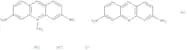
CAS:Acriflavine hydrochloride is a drug that belongs to the class of acridines, which are used as antiseptics and disinfectants. Acriflavine has been shown to have significant cytotoxic effects on mammalian cells, with a high degree of DNA binding activity. It binds to DNA in the nucleus and interferes with replication and transcription. Acriflavine hydrochloride inhibits cell division by binding to the kinetoplast (a region of mitochondrial DNA) during mitosis. This drug also has an effect on cell metabolism, decreasing ATP production and increasing lactate production in mitochondria. Acriflavine hydrochloride also prevents the formation of reactive oxygen species, which can lead to cellular damage.Formula:C27H28Cl4N6Purity:Min. 95%Color and Shape:Yellow PowderMolecular weight:578.36 g/molLoxoprofen sodium
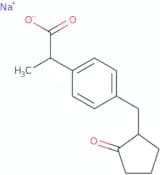
CAS:Inhibitor of prostaglandin production; non-steroidal COX inhibitorFormula:C15H17NaO3Purity:Min. 98 Area-%Color and Shape:PowderMolecular weight:268.28 g/mol(+)-Limonene oxide,mixture of cis/trans isomers
CAS:Limonene oxide is a mixture of cis/trans isomers that belongs to the group of aziridines. It can be produced by catalytic ring-opening polymerization, or by copolymerization with other monomers. Limonene oxides are obtained as a mixture of cis and trans isomers. The trans isomer has been reported to have a shorter reaction time and higher selectivity than the cis isomer. Limonene oxide can be used in the production of polycarbonates, which are used in many different products such as containers for food and drink, packaging materials, and electronics. Limonene oxide can also be used for the synthesis of epoxides and n-oxides. These compounds are used in medical applications such as anti-cancer drugs, antibiotics, antifungals, antivirals, contraceptives, and more.Formula:C10H16OPurity:Min. 95%Molecular weight:152.23 g/mol3-Bodipy-propanoic acid methyl ester
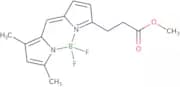
CAS:3-Bodipy-propanoic acid methyl ester is a fluorescent probe that binds to the endoplasmic reticulum. It has been used in cancer diagnosis, as well as for the detection of chloride and ligand binding. 3-BPA has been shown to be a useful tool in the study of protein synthesis and cell binding. This compound is unmodified and has a broad spectrum of applications.Formula:C15H17BF2N2O2Purity:Min. 95%Molecular weight:306.12 g/mol


![7,12-Dimethylbenz[a]anthracene](/_next/image/?url=https%3A%2Fstatic.cymitquimica.com%2Fproducts%2F3D%2Fthumb-webp%2FFD22356.webp&w=3840&q=75)
![AluminiumHydroxybis[2,2'-methylen-bis(4,6-di-tert-butylphenyl)phosphate]](/_next/image/?url=https%3A%2Fstatic.cymitquimica.com%2Fproducts%2F3D%2Fthumb-webp%2FFA150593.webp&w=3840&q=75)