Pharmaceutical Standards
Pharmaceutical standards are a comprehensive set of reference materials essential for ensuring the safety, efficacy, and quality of pharmaceutical products. This category includes standards for active pharmaceutical ingredients (APIs), which are the core components responsible for therapeutic effects. Additionally, it covers compounds and metabolites relevant to both the pharmaceutical and veterinary industries, providing benchmarks for the accurate measurement and analysis of these substances. Nitrosamine control standards are crucial for detecting and mitigating potentially harmful nitrosamines in drug formulations. Toxicology standards help assess the safety and potential adverse effects of pharmaceutical compounds. Furthermore, enzyme activators and inhibitors standards are vital for research and development, enabling precise studies of biochemical pathways and drug mechanisms. These pharmaceutical standards are indispensable tools for regulatory compliance, quality control, and research, ensuring that pharmaceutical products meet stringent safety and effectiveness criteria.
Subcategories of "Pharmaceutical Standards"
- APIs for research and impurities(274,914 products)
- Enzyme Activators and Inhibitors(2,827 products)
- Nitrosamines(2,605 products)
- Pharmaceutical and Veterinary Compounds and Metabolites(2,871 products)
- Toxicology(13,652 products)
Found 7836 products of "Pharmaceutical Standards"
Sort by
Purity (%)
0
100
|
0
|
50
|
90
|
95
|
100
1,8-Dinitropyrene
CAS:1,8-Dinitropyrene is a genotoxic and mutagenic potential agent. It has been shown to induce nitric oxide synthase activity in rat liver microsomes, which may be due to its ability to activate the redox potential of the cells. 1,8-Dinitropyrene also induces enzyme activities such as p450 and nitroreductase in rat liver microsomes. This chemical has an analytical detection limit of 0.05 ppm and can be used as a marker for environmental exposure. 1,8-Dinitropyrene is genotoxic and carcinogenic in rats but not mice. It has been shown to induce mutations at the thymidine position of calf-thymus DNA and is potent inducer of genetic mutation in vitro.Formula:C16H8N2O4Purity:Min. 95%Color and Shape:PowderMolecular weight:292.25 g/mol2,4,6-Trichloro-5-nitropyrimidine
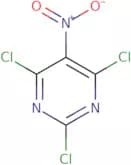
CAS:<p>2,4,6-Trichloro-5-nitropyrimidine is a purine derivative that inhibits the cell proliferation of cancer cells. It has been shown to inhibit the activity of kinases and to induce apoptosis in human cancer cells in vitro. This drug also has antiproliferative potential against erythrocytes and is being investigated as a treatment for renal disease. 2,4,6-Trichloro-5-nitropyrimidine shows inhibitory effects on the phosphorylation of roscovitine by ATP and may be used to treat patients with glomerulonephritis. 2,4,6-Trichloro-5-nitropyrimidine can be synthesized from 2,4,6-trichloropyrimidinethiol and nitric acid according to the following equation: CClNO + HNO → CClNOH + NO 2 Cl + 3 HNO</p>Formula:C4Cl3N3O2Purity:Min. 97 Area-%Molecular weight:228.42 g/molAcriflavine neutral
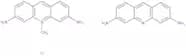
CAS:Acriflavine is a chemical agent that inhibits the growth of bacteria by binding to nuclear DNA and disrupting the synthesis of proteins. Acriflavine has been shown to be effective in treating infections caused by wild-type strains of bacteria, but has little effect on resistant mutants. It also has little effect on bacterial cells that are not actively growing (i.e., in the stationary phase). Acriflavine binds to DNA and acts as a crosslinking agent, which prevents transcription and replication. This drug also inhibits mitochondrial functions. Acriflavine is commonly used in combination with benzalkonium chloride or other antimicrobial agents because it does not have any bactericidal effects when used alone.END>>Purity:Min. 95%Color and Shape:Orange To Red Brown SolidMolecular weight:259.73 g/mol21-Acetoxy-11b-hydroxy-16a,17a-propylmethylenedioxpregna-1,4-diene-3,20-dione
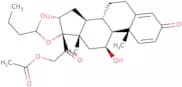
CAS:Controlled ProductPlease enquire for more information about 21-Acetoxy-11b-hydroxy-16a,17a-propylmethylenedioxpregna-1,4-diene-3,20-dione including the price, delivery time and more detailed product information at the technical inquiry form on this pageFormula:C27H36O7Purity:Min. 95%Color and Shape:PowderMolecular weight:472.57 g/mol2-(Benzylmethylamino)-3',4'-dihydroxyacetophenone
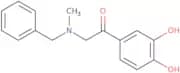
CAS:Controlled ProductPlease enquire for more information about 2-(Benzylmethylamino)-3',4'-dihydroxyacetophenone including the price, delivery time and more detailed product information at the technical inquiry form on this pageFormula:C16H17NO3Purity:Min. 95%Molecular weight:271.31 g/mol1-Naphthoyl chloride
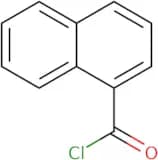
CAS:1-Naphthoyl chloride is a metabolite of 1-naphthol. It has been used in the synthesis of steroidal alkaloids, including the anti-inflammatory drug indomethacin and the anesthetic ketamine. 1-Naphthoyl chloride is also a precursor to synthetic cannabinoids, which are substances that have effects similar to those of cannabis but are not derived from marijuana. It binds to receptors on cells that are sensitive to cannaboids. The binding causes changes in cell function and can lead to psychological effects such as paranoia and hallucinations. The detection sensitivity of 1-naphthoyl chloride can be increased by using fluorescence detectors or gravimetric analysis.Formula:C11H7ClOPurity:Min. 95%Color and Shape:Clear LiquidMolecular weight:190.63 g/molIsoamyl cinnamate
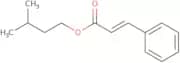
CAS:Isoamyl cinnamate is a synthetic compound that is used as an intermediate for the production of detergents. It has been shown to inhibit the growth of yeast and fungi, such as Cryptococcus neoformans and Candida glabrata. Isoamyl cinnamate also has anti-microbial properties that may be related to its ability to produce propionate, which can kill bacteria in urine samples. This compound is not known to bioaccumulate or cause toxicity in humans at normal doses.Formula:C14H18O2Purity:Min. 95%Color and Shape:Clear LiquidMolecular weight:218.29 g/molGabapentin related compound A
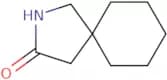
CAS:<p>Gabapentin related compound A is a gamma-aminobutyric acid analogue that has been shown to reduce diabetic neuropathy in vivo. It binds to the GABA-B receptor, which is a ligand-gated chloride channel. Gabapentin related compound A produces a rapid increase in chloride ion conductance and hyperpolarization of neurons, leading to its neuroprotective effect. The chemical stability of this drug has been investigated by hydrolysis with hydrochloric acid under various conditions. The reaction mechanism for gabapentin related compound A is similar to that of gabapentin, but it has an analog structure that confers additional stability.</p>Formula:C9H15NOPurity:Min. 95%Color and Shape:White To Off-White SolidMolecular weight:153.22 g/molDiphenylsulfone-3,3'-disulfonic Acid Disodium Salt
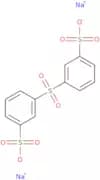
CAS:<p>Please enquire for more information about Diphenylsulfone-3,3'-disulfonic Acid Disodium Salt including the price, delivery time and more detailed product information at the technical inquiry form on this page</p>Purity:Min. 95%9-cisRetinol
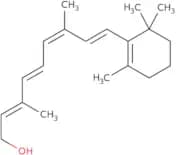
CAS:<p>9-cisRetinol is a form of vitamin A that plays an important role in the synthesis of lipids and proteins. It has been shown to inhibit acid formation in the liver and to stimulate growth in some types of cancer cells. 9-cisRetinol is converted to all-trans retinoic acid, which is a nuclear hormone receptor that regulates gene expression. It also has been shown to be effective in clinical studies for the treatment of congenital amaurosis and cancer. 9-cisRetinol can inhibit phospholipase A2, which prevents the release of arachidonic acid from membrane phospholipids, as well as inhibit prostaglandin synthesis. The optimum pH for 9-cisRetinol activity is between 7 and 8.</p>Formula:C20H30OPurity:Min. 95%Molecular weight:286.45 g/mol3',4'-(Methylenedioxy)butyrophenone
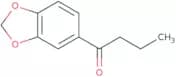
CAS:Controlled Product<p>3',4'-(Methylenedioxy)butyrophenone is a compound that has been shown to exist in four different conformations. It has been shown to form hydrogen bonds and chains with itself, as well as hydrogen bonds with other molecules. The crystal structure of 3',4'-(methylenedioxy)butyrophenone has been determined, and it's conformation has been shown to be dependent on the nature of the solvent.</p>Formula:C11H12O3Purity:Min. 95%Molecular weight:192.21 g/mol3',5'-Dibromo-2'-hydroxyacetophenone
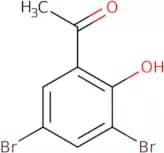
CAS:Please enquire for more information about 3',5'-Dibromo-2'-hydroxyacetophenone including the price, delivery time and more detailed product information at the technical inquiry form on this pageFormula:C8H6Br2O2Purity:Min. 95%Molecular weight:293.94 g/molTropinone
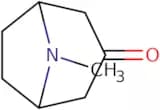
CAS:<p>Tropinone is a polycyclic aromatic hydrocarbon that is found in plant cells. Tropinone exhibits enzyme activities, such as catalase and peroxidase activity, which are important for plant physiology. Tropinone has also been shown to have anti-cancer properties. Platinum-based chemotherapy drugs bind to the tropinone molecule, which inhibits the enzymes that allow cancer cells to grow and multiply. The specific antibody binds to the tropinone molecule by recognizing a carbohydrate group on the molecule's surface, while hydroxyl groups on the tropinones react with trifluoromethanesulfonic acid in water to form ester hydrochloride. This reaction is dependent on pH level and optimum ph is around 7-9.</p>Formula:C8H13NOPurity:Min. 98%Color and Shape:White PowderMolecular weight:139.19 g/mol7-Methoxy-1,2,3,4-tetrahydronaphthalen-2-ylamine hydrochloride
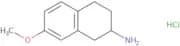
CAS:Controlled ProductPlease enquire for more information about 7-Methoxy-1,2,3,4-tetrahydronaphthalen-2-ylamine hydrochloride including the price, delivery time and more detailed product information at the technical inquiry form on this pageFormula:C11H15NO•HClPurity:Min. 95%Molecular weight:213.7 g/mol2-Bromo-4'-nitroacetophenone
CAS:2-Bromo-4'-nitroacetophenone is a chemical compound that has been shown to be active in enzyme inhibition experiments. It has been found to inhibit the activity of histidine decarboxylase, which catalyzes the conversion of histidine to histamine, and uv absorption. 2-Bromo-4'-nitroacetophenone binds to the active site of P450 enzymes, inhibiting their catalytic activity. This compound also inhibits fatty acid oxidation by binding to fatty acid hydroxylase and hydrogen bonds with tyrosine residues in proteins. 2-Bromo-4'-nitroacetophenone is structurally similar to 2-bromoacetophenone, which has been shown to have antihistaminic properties.Formula:C8H6BrNO3Purity:Min. 95%Color and Shape:PowderMolecular weight:244.04 g/mol2-Naphthol
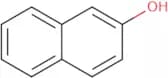
CAS:<p>2-Naphthol is an organic compound with the chemical formula C10H7O. It is a derivative of naphthalene, and is produced by the condensation of two molecules of malonic acid in the presence of a reducing agent such as sodium borohydride. 2-Naphthol is used as a pesticide and as a chemical intermediate in the production of other chemicals. 2-Naphthol has been shown to be toxic to humans and animals; it may cause liver damage, kidney damage, and skin irritation. The acute oral LD50 for rats is 690 mg/kg body weight. 2-Naphthol binds to cell receptors that are involved in a variety of physiological processes including heme transport, phagocytosis, oxidative burst, chemotaxis, and respiratory burst. This binding inhibits these functions leading to cell death.</p>Formula:C10H8OPurity:Min. 95%Color and Shape:White To Yellow To Pink To Light Brown SolidMolecular weight:144.17 g/mol(aR)-a-[[[2-(4-Nitrophenyl)ethyl]amino]methyl]benzenemethanol
CAS:<p>(aR)-a-[[[2-(4-Nitrophenyl)ethyl]amino]methyl]benzenemethanol is a chiral, carbonyl compound that has been used in the synthesis of mirabegron. It is synthesized by reacting an amide with a hydrochloric acid salt. The product yield of (aR)-a-[[[2-(4-Nitrophenyl)ethyl]amino]methyl]benzenemethanol is high and it does not react with aluminium or amide impurities. This compound can be used for the industrial synthesis of mirabegron, which is a drug for the treatment of urinary incontinence. The reduction reaction and hydrolysis reactions are both important to this process.</p>Purity:Min. 95%Cefdinir related compound B
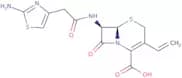
CAS:Please enquire for more information about Cefdinir related compound B including the price, delivery time and more detailed product information at the technical inquiry form on this pageFormula:C14H14N4O4S2Purity:Min. 95%Molecular weight:366.42 g/molS-Ethylisothio urea, hydrobromide
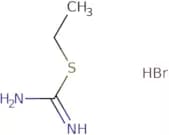
CAS:S-Ethylisothio urea, hydrobromide is a nitric oxide (NO) synthase inhibitor that prevents the conversion of arginine to NO. It has been shown to inhibit protein synthesis in cells, which may be due to its ability to inhibit guanylate cyclase and intracellular calcium concentrations. S-Ethylisothio urea, hydrobromide has been used in experimental models as an anti-inflammatory drug for the treatment of autoimmune diseases like rheumatoid arthritis. This compound also blocks the production of NO by inhibiting the oxygen transport system in the lungs, which is required for redox potential. S-Ethylisothio urea, hydrobromide is a cyclase inhibitor that prevents the conversion of dehydroascorbic acid to ascorbic acid. It can be used as an antioxidant by scavenging reactive oxygen species and preventing oxidative damage.Formula:C3H9BrN2SPurity:Min. 95%Molecular weight:185.09 g/molMethyl (2,4-dinitrophenyl)acetate
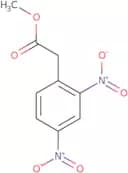
CAS:Please enquire for more information about Methyl (2,4-dinitrophenyl)acetate including the price, delivery time and more detailed product information at the technical inquiry form on this pageFormula:C9H8N2O6Purity:Min. 95%Molecular weight:240.17 g/mol



![(aR)-a-[[[2-(4-Nitrophenyl)ethyl]amino]methyl]benzenemethanol](/_next/image/?url=https%3A%2Fstatic.cymitquimica.com%2Fproducts%2F3D%2Fthumb-webp%2FFN75044.webp&w=3840&q=75)