Pharmaceutical Standards
Subcategories of "Pharmaceutical Standards"
- APIs for research and impurities(277,367 products)
- Enzyme Activators and Inhibitors(2,829 products)
- Nitrosamines(2,663 products)
- Pharmaceutical and Veterinary Compounds and Metabolites(2,891 products)
- Toxicology(13,353 products)
Found 8146 products of "Pharmaceutical Standards"
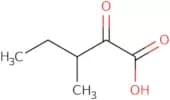
(±)-3-Methyl-2-oxovaleric acid
CAS:(±)-3-Methyl-2-oxovaleric acid is a fatty acid that is found in the mitochondria of liver cells and other tissues. It is an intermediate in the citric acid cycle and can be converted into acetyl-CoA, which is used for energy production. (±)-3-Methyl-2-oxovaleric acid has been shown to cause necrotic cell death when it binds to the mitochondrial membrane potential and causes a loss of ATP production. This results in a lack of energy for the cell, leading to cell death. (±)-3-Methyl-2-oxovaleric acid has also been shown to inhibit protein synthesis by decreasing uptake and increasing creatine kinase activity. This inhibition leads to decreased body formation and tissue culture growth in vitro. In vivo, (±)-3-Methyl-2-oxovaleric acid causes primary sclerosing cholangitis, a disease characterized by inflammation of bile ducts that
Formula:C6H10O3Purity:Min. 95%Color and Shape:White PowderMolecular weight:130.14 g/mol3a-Hydroxy tibolone
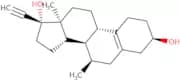
CAS:Controlled ProductTibolone is a synthetic hormone that is used in the treatment of menopausal symptoms and breast cancer. Tibolone has been shown to be an effective treatment for menopausal symptoms, such as hot flashes and vaginal dryness, by providing relief from these symptoms. Tibolone has also been shown to have anti-cancer effects. This drug may be useful for treating breast cancer because it can inhibit the growth of cancer cells by binding to estrogen receptors and blocking estrogen-induced cell proliferation. Tibolone also stimulates angiogenesis, which is the formation of new blood vessels in order to provide nutrients and oxygen to growing tissue. It has been shown that this drug inhibits the synthesis of hepg2 cells in vitro, which are involved in the production of angiogenic factors. Tibolone may also have clinical relevance as a chemopreventive agent against prostate cancer.BR> Tibolone has also been shown to stimulate sulphatase activity in vitro, which may contribute to
Formula:C21H30O2Purity:Min. 95%Molecular weight:314.46 g/molRef: 3D-FH24140
Discontinued product1,3-Dihydroxy-2-naphthoic acid
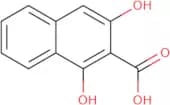
CAS:1,3-Dihydroxy-2-naphthoic acid is an organic compound that belongs to the binaphthyls. It is a white solid that can be obtained by reacting naphthalene with inorganic phosphite in the presence of acidic potassium carbonate. This reaction system produces 1,3-dihydroxy-2-naphthoic acid and potassium biphosphite as byproducts. The reaction time depends on the concentration of reactants. 1,3-Dihydroxy-2-naphthoic acid has acidic properties and can be used as a catalyst for chemical reactions involving carboxylic compounds. This compound has been shown to be effective at treating abdominal pain caused by intestinal inflammation or infection with a carbon source such as carbohydrates (e.g., glucose) or fats (e.g., oleic acid).
Formula:C11H8O4Purity:Min. 95%Molecular weight:204.18 g/molRef: 3D-FD154238
Discontinued product(NZ)-4-chloro-N-[1-[2-(4-nitrophenyl)ethyl]piperidin-2-ylidene]benzenesulfonamide
CAS:Controlled ProductPlease enquire for more information about (NZ)-4-chloro-N-[1-[2-(4-nitrophenyl)ethyl]piperidin-2-ylidene]benzenesulfonamide including the price, delivery time and more detailed product information at the technical inquiry form on this page
Formula:C19H20ClN3O4SPurity:Min. 95%Molecular weight:421.9 g/molRef: 3D-FN154024
Discontinued product7-Amino-4-(trifluoromethyl)coumarin
CAS:7-Amino-4-(trifluoromethyl)coumarin is a coumarin derivative that has been used as a fluorescence probe for the study of enzyme activities. It can be used as a potential biomarker for autoimmune diseases, and has also been shown to have tyrosine kinase domain binding activity. 7-Amino-4-(trifluoromethyl)coumarin can bind to the hydroxyl group in tyrosine residues with high affinity, and binds to the nitrogen atoms in protein kinases with low affinity. This compound is able to form intermolecular hydrogen bonds and steric interactions with peptide hormones.
Formula:C10H6F3NO2Purity:Min. 95%Molecular weight:229.16 g/molRef: 3D-FA74300
Discontinued productL-Aspartic acid alpha-tert-butyl ester
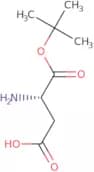
CAS:L-Aspartic acid alpha-tert-butyl ester is a synthetic amino acid that can be used as a substrate for the synthesis of L-cysteine in the presence of selenomethionine. This compound is an auxotroph and cannot be synthesized by the body, so it must be obtained through diet or supplementation. It has been shown to have anti-cancer properties, which may be due to its role in regulating cell proliferation, apoptosis, and angiogenesis. L-Aspartic acid alpha-tert-butyl ester may also inhibit colon cancer cells by preventing them from recycling proteins. This compound was shown to inhibit HCT116 human colon cancer cells in both experimentally and computationally studies. Additionally, this molecule was seen to induce tumor regression in mice with colitis by inhibiting eukaryotic protein synthesis. This inhibition was found to be mediated through a trifluoromethyl group on the molecule's
Formula:C8H15NO4Purity:Min. 95%Color and Shape:PowderMolecular weight:189.21 g/molRef: 3D-FA47669
Discontinued product2,6-Dichloro-5-nitropyrimidin-4-amine
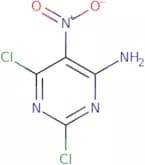
CAS:2,6-Dichloro-5-nitropyrimidin-4-amine is a chlorinating agent that reacts with aliphatic and aromatic amines to form substituted pyrimidines. The substitution pattern of the product depends on the regioselectivity of the reaction. 2,6-Dichloro-5-nitropyrimidin-4-amine is one of the few chlorinating agents that react with propylamine. Substitution at position 2 of the purine ring has been found to be more selective than substitution at position 6. The 2,6-dichloropyrimidine can also be used as a nitro group source in chemical synthesis or as an intermediate in production of other compounds.
Formula:C4H2Cl2N4O2Purity:Min. 95%Color and Shape:SolidMolecular weight:208.99 g/molRef: 3D-FD141087
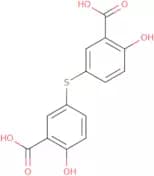
Discontinued product5,5'-Thiodisalicylic Acid
CAS:5,5'-Thiodisalicylic Acid is a reactive functional group with a silver ion. This compound has a hydrochloric acid and hydroxy group that react to form a hydroxyl group with the proton. It also has a nitrogen atom, which can be found in the reactive acidic hydroxyl group of 5,5'-thiodisalicylic acid. The fatty acids are viscosity and carbonyl groups. 5,5'-Thiodisalicylic Acid is an organic compound that reacts with chloride to form patterns.
Purity:Min. 95%Ref: 3D-FT62679
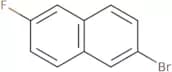
Discontinued product2-bromo-6-fluoronaphthalene
CAS:2-bromo-6-fluoronaphthalene is a molecule that has been shown to be a good electron donor in organic solar cells. It is also an analgesic and antinociceptive agent. 2-Bromo-6-fluoronaphthalene has shown to have antiinflammatory effects and inhibit the production of prostaglandins, which are chemical messengers that induce inflammation. The molecular structure of 2-bromo-6-fluoronaphthalene consists of two bromine atoms attached to two naphthalene rings. The bromine atoms provide strong electron donating properties and the naphthalene rings provide stability for the molecule.
Formula:C10H6BrFPurity:Min. 95%Molecular weight:225.06 g/molRef: 3D-FB105673
Discontinued productp-Cresol
CAS:单酚香气;胶粘剂;密封剂;抗氧化剂;消毒剂
Formula:C7H8OPurity:Min. 95%Color and Shape:Colorless Clear LiquidMolecular weight:108.14 g/molRef: 3D-FC01590
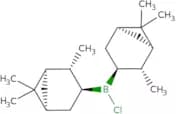
Discontinued product(+)-B-Chlorodiisopinocampheylborane - 60-65% in Hexane
CAS:(+)-B-Chlorodiisopinocampheylborane is a chiral organoboron reagent that can be used for the enantioselective synthesis of amines. It is prepared from the reaction of chlorodiphenyl borane with (+)-diaminobenzene in hexane. The product can be purified by column chromatography or recrystallization. (+)-B-Chlorodiisopinocampheylborane can also be used in the synthesis of other compounds, such as pyrroles and pantolactones. It is an excellent catalyst for the dehydration of primary amines to give unsymmetrical ketones. This reagent has been shown to be effective in asymmetric hydrogenation reactions, such as the reduction of chiral secondary alcohols, and is also capable of catalyzing aldol reactions.Formula:C20H34BClPurity:Min. 95%Color and Shape:Clear LiquidMolecular weight:320.75 g/molChloro[2-(di-tert-butylphosphino)-2',4',6'-triisopropyl-1,1'-biphenyl][2-(2-aminoethyl)phenyl)]palladium(II)
CAS:Controlled ProductChloro[2-(di-tert-butylphosphino)-2',4',6'-triisopropyl-1,1'-biphenyl][2-(2-aminoethyl)phenyl)]palladium(II) is a molecule that inhibits the adenosine receptor in autoimmune diseases and cancer. It also has an inhibitory effect on the membrane transport of glucose, glucosan, and aziridine. This drug can be used to treat inflammatory diseases such as diabetes, asthma, and inflammatory bowel disease. The geometric isomers of this molecule are not identical in shape or size and can have different effects on the body.
Formula:C37H55ClNPPdPurity:Min. 95%Molecular weight:686.69 g/molRef: 3D-FC156938
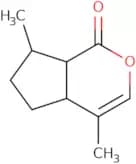
Discontinued productcis-trans Nepetalactone
CAS:荆芥内酯是一种驱虫的化合物,使猫薄荷开花植物能够吸引猫。据信,荆芥内酯可以通过模仿猫的信息素来改变猫的行为。
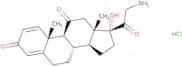
Formula:C10H14O2Purity:Min. 97 Area-%Color and Shape:Colorless Clear LiquidMolecular weight:166.22 g/mol21-Amino-17-hydroxypregna-1,4-diene-3,11,20-trioneHydrochloride
CAS:Controlled ProductPlease enquire for more information about 21-Amino-17-hydroxypregna-1,4-diene-3,11,20-trioneHydrochloride including the price, delivery time and more detailed product information at the technical inquiry form on this pageFormula:C21H28ClNO4Purity:Min. 95%Molecular weight:393.9 g/molRef: 3D-FA150828
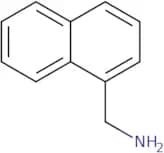
Discontinued product1-(Aminomethyl)naphthalene
CAS:1-(Aminomethyl)naphthalene is a hydrogen bond-forming molecule that has high values of hydrochloric acid. This compound reacts with sodium carbonate to form glycoside derivatives, which have been shown to display light emission. 1-(Aminomethyl)naphthalene can be used in the synthesis of oxytocin and toll-like receptor ligands, as well as other chemical reactions. The carbonyl group found in this molecule is responsible for the reactivity and stability of this compound.
Formula:C10H7CH2NH2Purity:Min. 95%Color and Shape:Clear Colourless To Yellow LiquidMolecular weight:157.21 g/molRef: 3D-FA12539
Discontinued product1-(2-Aminoethyl)-3-Phenylurea Hydrochloride
CAS:Please enquire for more information about 1-(2-Aminoethyl)-3-Phenylurea Hydrochloride including the price, delivery time and more detailed product information at the technical inquiry form on this page
Formula:C9H13N3O·HClPurity:Min. 95%Molecular weight:215.68 g/molRef: 3D-FA53557
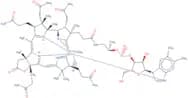
Discontinued productVitamin B12 c-lactone
CAS:Please enquire for more information about Vitamin B12 c-lactone including the price, delivery time and more detailed product information at the technical inquiry form on this page
Formula:C63H85CoN13O15PPurity:Area-% Min. 95 Area-%Molecular weight:1,354.33 g/molRef: 3D-FV167409
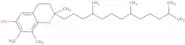
Discontinued productTocopherols
CAS:Tocopherols are fat-soluble vitamins that belong to the family of tocopherols and tocotrienols. Tocopherols have a number of biochemical properties and antioxidant properties. These properties make them important for maintaining energy metabolism in cells, preventing oxidation of other molecules, and protecting the body from damage by reactive oxygen species. Tocopherols are found in a variety of biological sources such as plants, vegetable oils, nuts, grains, fruits and vegetables. The most common form is alpha-tocopherol (a-T). Other forms include gamma-tocopherol (g-T), delta-tocopherol (d-T), beta-tocopherol (b-T), and alpha-tocotrienol (a-TT). Biochemical assays for tocopherols and tocotrienols use p-hydroxybenzoic acid as an analytical reagent. This vitamin can be found in human serum or in
Purity:Min. 95%Ref: 3D-FT168528
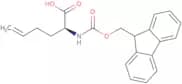
Discontinued product(S)-N-Fmoc-2-(3'-butenyl)glycine
CAS:Please enquire for more information about (S)-N-Fmoc-2-(3'-butenyl)glycine including the price, delivery time and more detailed product information at the technical inquiry form on this page
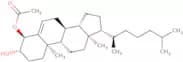
Formula:C21H21NO4Purity:Min. 95%Color and Shape:White PowderMolecular weight:351.4 g/mol4β-Hydroxy cholesterol 4-acetate
CAS:Controlled Product4b-Hydoxy cholesterol 4-acetate is a pleiotropic drug with a wide range of pharmacological activities. It is an inhibitor of the sirtuin family of proteins and may have anti-cancer effects. It has also been shown to be effective in the treatment of depression and myelodysplastic syndrome. The mechanism of action for this agent is not well understood, but it may be due to its ability to inhibit DNA methyltransferases, which would lead to a change in DNA methylation patterns. 4b-Hydroxy cholesterol 4-acetate has also been shown to decrease lipid levels in the blood and increase the activity of liver enzymes that metabolize fatty acids. This drug can also modify lamellar bodies and short-chain fatty acids by inhibiting the enzyme ATP citrate lyase, which catalyzes citrate cleavage into acetyl CoA and oxaloacetate.
Formula:C29H48O3Purity:Min. 95%Molecular weight:444.69 g/molRef: 3D-FH23949
Discontinued product

![(NZ)-4-chloro-N-[1-[2-(4-nitrophenyl)ethyl]piperidin-2-ylidene]benzenesulfonamide](/_next/image/?url=https%3A%2Fstatic.cymitquimica.com%2Fproducts%2F3D%2Fthumb-webp%2FFN154024.webp&w=3840&q=75)


![Chloro[2-(di-tert-butylphosphino)-2',4',6'-triisopropyl-1,1'-biphenyl][2-(2-aminoethyl)phenyl)]pal…](/_next/image/?url=https%3A%2Fstatic.cymitquimica.com%2Fproducts%2F3D%2Fthumb-webp%2FFC156938.webp&w=3840&q=75)