Pharmaceutical Standards
Pharmaceutical standards are a comprehensive set of reference materials essential for ensuring the safety, efficacy, and quality of pharmaceutical products. This category includes standards for active pharmaceutical ingredients (APIs), which are the core components responsible for therapeutic effects. Additionally, it covers compounds and metabolites relevant to both the pharmaceutical and veterinary industries, providing benchmarks for the accurate measurement and analysis of these substances. Nitrosamine control standards are crucial for detecting and mitigating potentially harmful nitrosamines in drug formulations. Toxicology standards help assess the safety and potential adverse effects of pharmaceutical compounds. Furthermore, enzyme activators and inhibitors standards are vital for research and development, enabling precise studies of biochemical pathways and drug mechanisms. These pharmaceutical standards are indispensable tools for regulatory compliance, quality control, and research, ensuring that pharmaceutical products meet stringent safety and effectiveness criteria.
Subcategories of "Pharmaceutical Standards"
- APIs for research and impurities(274,920 products)
- Enzyme Activators and Inhibitors(2,827 products)
- Nitrosamines(2,606 products)
- Pharmaceutical and Veterinary Compounds and Metabolites(2,871 products)
- Toxicology(13,652 products)
Found 7836 products of "Pharmaceutical Standards"
Sort by
Purity (%)
0
100
|
0
|
50
|
90
|
95
|
100
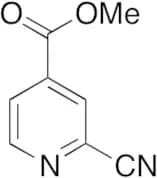
2-Cyano-4-pyridinecarboxylic Acid Methyl Ester
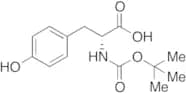
CAS:Controlled ProductFormula:C8H6N2O2Color and Shape:NeatMolecular weight:162.145N-Boc-D-tyrosine
CAS:Controlled Product<p>Applications N-Boc-D-tyrosine is an N-Boc-protected form of D-Tyrosine (T899970). D-Tyrosine is an unnatural isomer of L-Tyrosine (T899975) that inhibits metabolic activity of Bacillus subtilis. It is known to exhibit antimetabolic effects on rats as well, inhibiting growth and development. D-Tyrosine is also a chiral precursor to biosynthesized inhibitors that have antiinflammatory effects in humans.<br>References Champney, W. & Jensen, R.: J. Bacteriol., 98, 205 (1969); Friedman, M.: Nut. Toxicol. Conseq. Food Proc., No vol. given, 447 (1991); Hansford, K., et al.: Chembiochem, 4, 181 (2003)<br></p>Formula:C14H19NO5Color and Shape:NeatMolecular weight:281.33-Acetyl-1,6-naphthyridin-2(1H)-one
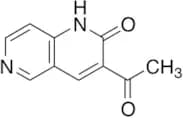
CAS:Controlled Product<p>Applications 3-Acetyl-1,6-naphthyridin-2(1H)-one (cas# 52816-63-4) is a useful research chemical.<br></p>Formula:C10H8N2O2Color and Shape:NeatMolecular weight:188.194,4’-Oxydibenzenesulfonyl Chloride
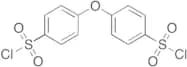
CAS:Controlled Product<p>Stability Moisture Sensitive<br>Applications 4,4’-Oxydibenzenesulfonyl Chloride is useful as an intermediate for blowing agents for rubber or resin.<br>References Sato, N., et al.: Jpn. Kokai Tokkyo Koho, JP 60156662 A 19850816 (1985); Crowley, R.P., et al.: U.S. US 3829500 A 19740813 (1974)<br></p>Formula:C12H8Cl2O5S2Color and Shape:NeatMolecular weight:367.222,2'-(2-Hydroxy-1,3-phenylene)bis(propan-2-ol-d12)
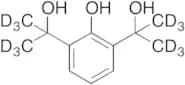
CAS:Controlled ProductFormula:C12D12H6O3Color and Shape:NeatMolecular weight:222.344Chloromethyl Laurate
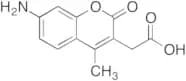
CAS:<p>Applications Chloromethyl Laurate is used as a reagent in the synthesis of levofloxacin derivatives as potential antitumor agents. Also used as a reagent in the synthesis of prodrugs of Norbormide (N661150).<br>References Korolyov, A., et al.: Bioorg. Med. Chem., 18, 8537 (2010); Rennison, D., et al.: Bioorg. Med. Chem., 20, 3997 (2012)<br></p>Formula:C13H25ClO2Color and Shape:NeatMolecular weight:248.797-Amino-4-methyl-3-coumarinylacetic acid
CAS:Controlled Product<p>Applications 7-Amino-4-methyl-3-coumarinylacetic acid is a blue fluorophore useful for immunofluorescence and peptide labeling.<br></p>Formula:C12H11NO4Color and Shape:NeatMolecular weight:233.22Methylamine-d5 DCl
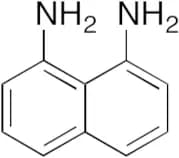
CAS:Controlled Product<p>Applications Methylamine-d5 DCl (CAS# 14779-55-6) is a useful isotopically labeled research compound.<br>Chemical Name: Methylamine-d5 DCl (CAS# 14779-55-6) is a useful isotopically labeled research compound.<br></p>Formula:CD6ClNColor and Shape:NeatMolecular weight:73.551,8-Diaminonaphthalene
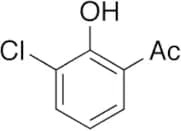
CAS:Controlled Product<p>Stability Air Sensitive<br>Applications 1,8-Diaminonaphthalene is used as a reagent/ligand in the synthesis of transition metal tetraazamacrocyclic complexes as potent antimicrobial and antioxidant agents.<br>References Rathi, P. and Singh, D.P.: Pharma Chemica, 6, 203 (2014)<br></p>Formula:C10H10N2Color and Shape:NeatMolecular weight:158.202’-Hydroxy-3-chloroacetophenone
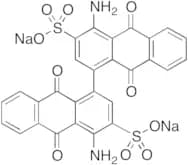
CAS:Controlled Product<p>Applications 2’-Hydroxy-3-chloroacetophenone (cas# 3226-34-4) is a compound useful in organic synthesis.<br></p>Formula:C8H7ClO2Color and Shape:NeatMolecular weight:170.59Disodium 4,4'-Diaminodianthraquinone 3,3'-disulfonate
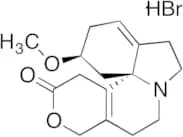
CAS:Controlled Product<p>Applications Dye precursor and a potential building block for laboratory research.<br>References Jia, Di, et al.: Guisuanyan Tongbao, 20(Suppl.), 20-21 (2001)<br></p>Formula:C28H14N2Na2O10S2Color and Shape:NeatMolecular weight:648.528Dihydro-β-erythroidine Hydrobromide
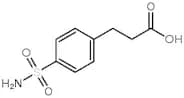
CAS:Controlled ProductFormula:C16H21NO3·BrHColor and Shape:NeatMolecular weight:356.255p-Aminosulfonyldihydrocinnamic Acid
CAS:Controlled Product<p>Applications p-Aminosulfonyldihydrocinnamic acid<br></p>Formula:C9H11NO4SColor and Shape:NeatMolecular weight:229.25rac-cis-N-Desmethyl Sertraline-d3 Hydrochloride
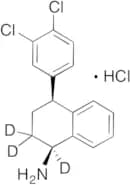
CAS:Controlled Product<p>Applications rac-cis-N-Desmethyl Sertraline-d3 hydrochloride is a labelled metabolite of rac-cis-N-Desmethyl sertraline hydrochloride (D292100). N-Desmethyl sertraline is significantly less active analogue as compared to the methylated compound, sertraline.<br>References Welch, W.M., et al.: J. Med. Chem. 27, 1508 (1984)<br></p>Formula:C16H13D3Cl3NColor and Shape:NeatMolecular weight:331.682,4-Bis(1-methylethyl)phenyl Diphenyl Ester Phosphoric Acid-d10
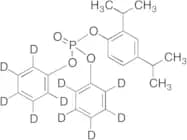
CAS:Controlled ProductFormula:C24D10H17O4PColor and Shape:NeatMolecular weight:420.5043,6-Dimethyl-4-phenyl-2-Pyridinecarboxylic Acid Methyl Ester
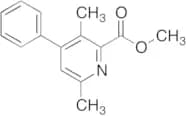
CAS:Controlled ProductFormula:C15H15NO2Color and Shape:NeatMolecular weight:241.2855-Iodovanillin
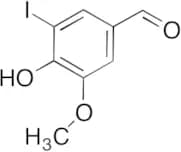
CAS:Controlled Product<p>Applications 5-Iodovanillin is used in laccase catalyzed synthesis of iodinated phenolic compounds with antifungal activity. Molecular modeling studies of interaction between plasmid DNA (pBR322) and dendritic antioxidants.<br>References Ihssen, J., et al.: PLoS One, 9, e89924 (2014); Chhetri, P., et al.: J. Cancer Sci.Ther., 3, 220 (2011)<br></p>Formula:C8H7IO3Color and Shape:NeatMolecular weight:278.04D-erythro-Sphingosine-C19-1-phosphate
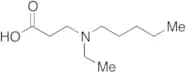
CAS:Controlled ProductFormula:C19H40NO5PColor and Shape:NeatMolecular weight:218.292N-Ethyl-N-pentyl-β-alanine
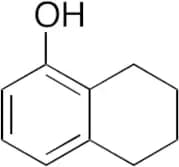
CAS:Controlled Product<p>Applications N-Ethyl-N-pentyl-β-alanine is a compound useful in organic synthesis.<br></p>Formula:C10H21NO2Color and Shape:NeatMolecular weight:187.2795,6,7,8-Tetrahydro-1-naphthalenol
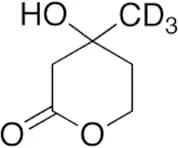
CAS:Controlled Product<p>Applications 5,6,7,8-Tetrahydro-1-naphthalenol was used as a reagent in the synthesis of phosphonamidate and phosphonodiamidate prodrugs of adefovir and tenofovir which are used in the treatment of HIV infections. Also used in the synthesis of tetrahydronaphthalene-1-ol derivatives which were found to be promising potent antitumor agents.<br>References Pertusati, F., et al.: Eur. J. Med. Chem., 78, 259 (2014); Dong, Y., et al.: Bioorg. Med. Chem. Lett., 19, 6289 (2009);<br></p>Formula:C10H12OColor and Shape:NeatMolecular weight:148.2D,L-Mevalonic Acid Lactone-d3
CAS:Controlled Product<p>Stability Hygroscopic<br>Applications A labelled metabolite from endophytes of the medicinal plant Erythrina crista-galli.<br>References Stadler, M., et al.: Planta Med., 60, 128 (1994), Kopcke, B., et al.: Phytochemistry, 60, 709 (2002), Chu, M., et al.: J. Nat. Prod., 66, 1527 (2003), Weber, D., et al.: J. Antibiot., 57, 559 (2004),<br></p>Formula:C62H3H7O3Color and Shape:NeatMolecular weight:133.16(Z)-10-Tetradecenyl Acetate
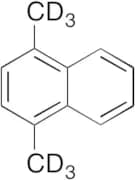
CAS:Controlled ProductFormula:C16H30O2Color and Shape:NeatMolecular weight:291.3031,4-Di(methyl-d3)-naphthalene
CAS:Controlled Product<p>Applications 1,4-Di(methyl-d3)-naphthalene has been used in the preparation of di(trideuteriomethyl)naphthalene derivatives. 1,4-Di(methyl-d3)-naphthalene is a labeled analogue of 1,4-Dimethylnaphthalene (D476380), a polycyclic aromatic hydrocarbon (PAH) that has been found to retard the development of epidermoid carcinomas in hamster buccal pouch and alter the genes associated with the maintenance of a G1/S phase block possibly through the induction of the cell cycle inhibitors KRP1 and KRP2 in potatoes.<br>References Dizabo, P., et. al.: J. Labelled Compd., 2, 272 (1966); Malament, D.S., Shklar, G.: Carcinogenesis, 2, 723 (1981); Campbell, M.A., et. al.: Fuct. Interg. Genomics, 12, 533 (2012); Andrysik, Z., et. al.: Mutat. Res-Fund. Mol. M., 714, 53 (2011)<br></p>Formula:C12H6D6Color and Shape:NeatMolecular weight:162.261-Bromo-4-fluoronaphthalene
CAS:Controlled Product<p>Applications 1-Bromo-4-fluoronaphthalene is the starting material for the synthesis of Fluorobenzo[c]fluoren (F588435) which is a polycyclic aromatic hydrocarbon used in materials science extensively due to utility in organic electronics, light emitting diodes and solar cells.<br>References Hwang, S. et al.: Org. Lett., 11, 20 (2009);<br></p>Formula:C10H6BrFColor and Shape:NeatMolecular weight:225.06rac-Naproxen-13C3
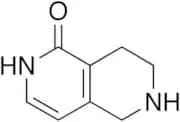
CAS:Controlled ProductFormula:C3C11H14O3Color and Shape:NeatMolecular weight:233.2375,6,7,8-Tetrahydro-2,6-naphthyridin-1(2H)-one
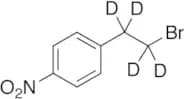
CAS:Controlled ProductFormula:C8H10N2OColor and Shape:NeatMolecular weight:150.178β-(p-Nitrophenyl)ethyl Bromide-d4
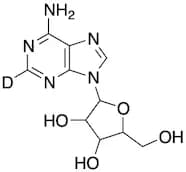
CAS:Controlled Product<p>Applications β-(p-Nitrophenyl)ethyl Bromide-d4 (cas# 1794971-35-9) is a compound useful in organic synthesis.<br></p>Formula:C8H4D4BrNO2Color and Shape:NeatMolecular weight:234.08Adenosine-2-d1
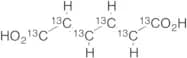
CAS:Controlled Product<p>Applications Adenosine-2-d1 (CAS# 109923-50-4) is a useful isotopically labeled research compound.<br></p>Formula:C10H12DN5O4Color and Shape:NeatMolecular weight:268.25trans,trans-Muconic Acid-13C6
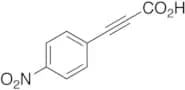
CAS:Controlled Product<p>Applications trans,trans-Muconic Acid-13C6 is labelled trans,trans-Muconic Acid (M791001) which is a metabolite found in urine, which determines biological exposure index for workers exposed to Benzene.<br>References Chapman, D., et al.: Drug Metab. Dispos., 18, 929 (1990),<br></p>Formula:C6H6O4Color and Shape:NeatMolecular weight:148.065(4-Nitrophenyl)propiolic Acid
CAS:Controlled Product<p>Applications (4-Nitrophenyl)propiolic Acid (cas# 2216-24-2) is a compound useful in organic synthesis.<br></p>Formula:C9H5NO4Color and Shape:NeatMolecular weight:191.143-[3-(Trifluoromethyl)cyclohexyl]propanoic Acid Methyl Ester
CAS:Controlled ProductFormula:C11H17F3O2Color and Shape:NeatMolecular weight:238.251,2-Naphthalic Anhydride
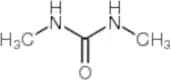
CAS:Controlled Product<p>Stability Moisture Sensitive<br>Applications 1,2-NaphthalicAnhydride (cas# 5343-99-7) is a useful research chemical.<br></p>Formula:C12H6O3Color and Shape:NeatMolecular weight:198.17N,N'-Dimethylurea
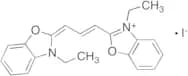
CAS:Controlled Product<p>Applications N,N'-Dimethylurea<br></p>Formula:C3H8N2OColor and Shape:NeatMolecular weight:88.113,3'-Diethyloxacarbocyanine Iodide
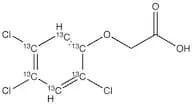
CAS:Controlled ProductFormula:C21H21N2O2•IColor and Shape:NeatMolecular weight:333.40 + (126.90)2,4,5-Trichlorophenoxyacetic Acid-13C6
CAS:Controlled Product<p>Applications Labelled 2,4,5-trichlorophenoxyacetic acid is suitable for plant cell culture testing. Post-emergence herbicide.<br>References Smith, J., et al.: Science, 203, 1090 (1979), Salunkhe, C., et al.: Plant Cell Reports, 18, 670 (1999), Jheng, F., et al.: Plant Sci., 170, 1133 (2006),<br></p>Formula:C2C6H5Cl3O3Color and Shape:NeatMolecular weight:261.44N-(3-Fluorophenyl)-N-methyl-N-[(tetrahydro-3-furanyl)methyl]-urea
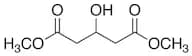
CAS:Controlled ProductFormula:C13H17FN2O2Color and Shape:NeatMolecular weight:252.2853-Hydroxyglutaric Acid Dimethyl Ester
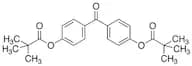
CAS:Controlled Product<p>Applications Glutaric Acid derivative<br>References Higashi, K., et al.: Chem. Pharm. Bull., 40, 1042 (1992), Wilde, J., et al.: Eur. J. Biochem., 221, 463 (1994),<br></p>Formula:C7H12O5Color and Shape:NeatMolecular weight:176.174,4’-Bis(trimethylacetoxy)benzophenone
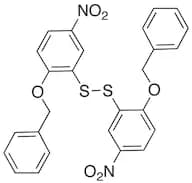
CAS:Controlled Product<p>Applications 4,4’-Bis(trimethylacetoxy)benzophenone (cas# 112004-83-8) is a compound useful in organic synthesis.<br>References Miyano, M., et al.: J. Med. Chem., 31, 1052 (1988),<br></p>Formula:C23H26O5Color and Shape:NeatMolecular weight:382.45Bis(2-benzyloxy-3-nitrophenyl)disulfide
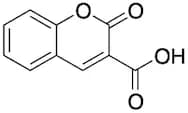
CAS:Controlled Product<p>Applications Bis(2-benzyloxy-3-nitrophenyl)disulfide (cas# 37398-25-7) is a compound useful in organic synthesis.<br></p>Formula:C26H20N2O6S2Color and Shape:NeatMolecular weight:520.58Coumarin-3-carboxylic acid
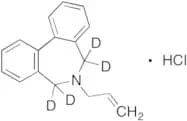
CAS:Controlled Product<p>Applications Coumarin-3-carboxylic acid (cas# 531-81-7) is a compound useful in organic synthesis.<br> Not a dangerous good if item is equal to or less than 1g/ml and there is less than 100g/ml in the package<br></p>Formula:C10H6O4Color and Shape:NeatMolecular weight:190.15Azapetine-d4 Hydrochloride
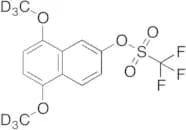
CAS:Controlled ProductFormula:C17D4H13N·HClColor and Shape:NeatMolecular weight:275.8095,8-Dimethoxy-2-naphthalenol Triflate-d6
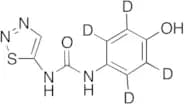
CAS:Controlled ProductFormula:C13D6H5F3O5SColor and Shape:NeatMolecular weight:342.321N-4-Hydroxyphenyl-N'-1,2,3-thiadiazol-5-ylurea-d4
CAS:Controlled Product<p>Applications N-4-Hydroxyphenyl-N'-1,2,3-thiadiazol-5-ylurea-d4 is labelled N-4-Hydroxyphenyl-N'-1,2,3-thiadiazol-5-ylurea (H949385) which is a substrate of cytokinin O-glucosyltransferase with position specificity related to receptor recognition. It is a metabolite of Thidiazuron (T344275) which is a non-purine containing urea derivative with cytokinin activity.<br>References Mok, M., et al.: Plant Physio., 137, 1057(2005); Benezet, H., et al.: Trans. Missouri Academy. Sci., 14, 75 (1980); Orlikowska, T., et al.: Plant Cell Tissue Org. Cult., 59, 95 (1999), Ray, T., et al.: Mol. Biol., 6, 35 (2005), Kanwar, J., et al.: Hort Sci., 2008, 35, 35 (2008),<br></p>Formula:C9D4H4N4O2SColor and Shape:NeatMolecular weight:240.275N-Cyclohexyl-N’-[2-(tert-butyl)amino-3-hydroxypropoxy]phenylurea
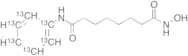
CAS:Controlled Product<p>Applications Byproduct of Talinolol synthesis.<br></p>Formula:C20H33N3O3Color and Shape:NeatMolecular weight:363.494Suberoylanilide Hydroxamic Acid-13C6
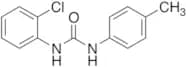
CAS:Controlled Product<p>Applications is the labeled form of Suberoylanilide Hydroxamic Acid (S688700), which is a potent, selective, cell permeable histone deacetylase inhibitor (HDAC), displays anti-angiogenic activity by interfering with VEGF signaling in human umbilical vein endothelial cells (HUVECs) and induces differentiation in human breast cancer cells. Also it is a potent histone deacetylase inhibitor.<br>References Richon, V.M., et al.: Proc. Natl. Acad.Sci. USA, 95, 3003 (1988), Munster, P.N., et al.: Cancer Res., 61, 8492 (2001), Deroanne, C.F., et al.: Oncogene, 21, 247 (2002)<br></p>Formula:C6C8H20N2O3Color and Shape:NeatMolecular weight:270.2761-(2-Chlorophenyl)-3-(P-tolyl)urea
CAS:Controlled ProductFormula:C14H13ClN2OColor and Shape:NeatMolecular weight:260.719






![3-[3-(Trifluoromethyl)cyclohexyl]propanoic Acid Methyl Ester](/_next/image/?url=https%3A%2Fstatic.cymitquimica.com%2Fproducts%2FTR%2Fthumb-webp%2FT796550.webp&w=3840&q=75)

![N-(3-Fluorophenyl)-N-methyl-N-[(tetrahydro-3-furanyl)methyl]-urea](/_next/image/?url=https%3A%2Fstatic.cymitquimica.com%2Fproducts%2FTR%2Fthumb-webp%2FF592850.webp&w=3840&q=75)
![N-Cyclohexyl-N’-[2-(tert-butyl)amino-3-hydroxypropoxy]phenylurea](/_next/image/?url=https%3A%2Fstatic.cymitquimica.com%2Fproducts%2FTR%2Fthumb-webp%2FC987995.webp&w=3840&q=75)