Pharmaceutical Standards
Pharmaceutical standards are a comprehensive set of reference materials essential for ensuring the safety, efficacy, and quality of pharmaceutical products. This category includes standards for active pharmaceutical ingredients (APIs), which are the core components responsible for therapeutic effects. Additionally, it covers compounds and metabolites relevant to both the pharmaceutical and veterinary industries, providing benchmarks for the accurate measurement and analysis of these substances. Nitrosamine control standards are crucial for detecting and mitigating potentially harmful nitrosamines in drug formulations. Toxicology standards help assess the safety and potential adverse effects of pharmaceutical compounds. Furthermore, enzyme activators and inhibitors standards are vital for research and development, enabling precise studies of biochemical pathways and drug mechanisms. These pharmaceutical standards are indispensable tools for regulatory compliance, quality control, and research, ensuring that pharmaceutical products meet stringent safety and effectiveness criteria.
Subcategories of "Pharmaceutical Standards"
- APIs for research and impurities(274,948 products)
- Enzyme Activators and Inhibitors(2,827 products)
- Nitrosamines(2,606 products)
- Pharmaceutical and Veterinary Compounds and Metabolites(2,879 products)
- Toxicology(13,652 products)
Found 7836 products of "Pharmaceutical Standards"
Sort by
Purity (%)
0
100
|
0
|
50
|
90
|
95
|
100
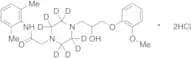
Ranolazine-d8 Dihydrochloride
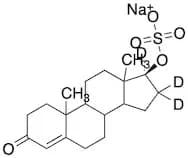
CAS:Controlled ProductFormula:C24H25D8N3O4• 2(HCl)Color and Shape:NeatMolecular weight:435.59 + 2(36.46)Sodium Testosterone-16,16,17-d3 Sulfate
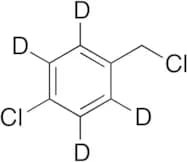
CAS:Controlled ProductFormula:C19D3H24O5S·NaColor and Shape:NeatMolecular weight:393.493-Chloro-6-(chloromethyl)benzene-1,2,4,5-d4
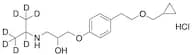
CAS:Controlled Product<p>Applications 3-Chloro-6-(chloromethyl)benzene-1,2,4,5-d4 is an isotope-labeled analog of 4-Chlorobenzyl Chloride (C364730), which is a benzylchloride derivative used in the preparation of various biologically active compounds such as bronchodilators and antibacterial agents.<br>References Adams, M. et al.: Synth. Comm., 29, 2419 (1999); Foroumadi, A. et al.: Arch. Pharm. Res., 30, 138 (2007);<br></p>Formula:C7H2D4Cl2Color and Shape:NeatMolecular weight:165.05(±)-Betaxolol-d7 HCl (iso-propyl-d7)
CAS:Controlled Product<p>Applications (±)-Betaxolol-d7 HCl (iso-propyl-d7) (CAS# 1219802-92-2) is a useful isotopically labeled research compound.<br></p>Formula:C18H23D7ClNO3Color and Shape:NeatMolecular weight:350.93Dapoxetine-d6 Hydrochloride
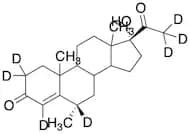
CAS:Controlled Product<p>Applications Labelled Dapoxetine (D185700). Selective serotonin reuptake inhibitor (SSRI).<br>References Feret, B., et al.: Formulary, 40, 227 (2005),<br></p>Formula:C21H18D6ClNOColor and Shape:NeatMolecular weight:347.914-Pregnen-6α-methyl-17-ol-3,20-dione-2,2,4,6,21,21,21-d7
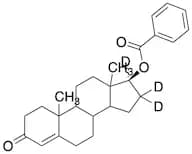
CAS:Controlled ProductFormula:C22D7H25O3Color and Shape:NeatMolecular weight:351.54Testosterone-16,16,17-d3 Benzoate
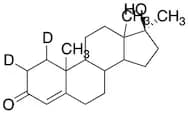
CAS:Controlled ProductFormula:C26H29D3O3Color and Shape:NeatMolecular weight:395.564-Androsten-17α-methyl-17β-ol-3-one-1,2-d2
CAS:Controlled Product<p>Applications 4-Androsten-17alpha-methyl-17beta-ol-3-one-1,2-d2 is a useful isotopically labeled compound of 17α-Methyl Testosterone (M326400)<br></p>Formula:C20H28D2O2Color and Shape:NeatMolecular weight:304.47Methylamine-d5 DCl
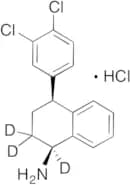
CAS:Controlled Product<p>Applications Methylamine-d5 DCl (CAS# 14779-55-6) is a useful isotopically labeled research compound.<br>Chemical Name: Methylamine-d5 DCl (CAS# 14779-55-6) is a useful isotopically labeled research compound.<br></p>Formula:CD6ClNColor and Shape:NeatMolecular weight:73.55rac-cis-N-Desmethyl Sertraline-d3 Hydrochloride
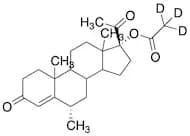
CAS:Controlled Product<p>Applications rac-cis-N-Desmethyl Sertraline-d3 hydrochloride is a labelled metabolite of rac-cis-N-Desmethyl sertraline hydrochloride (D292100). N-Desmethyl sertraline is significantly less active analogue as compared to the methylated compound, sertraline.<br>References Welch, W.M., et al.: J. Med. Chem. 27, 1508 (1984)<br></p>Formula:C16H13D3Cl3NColor and Shape:NeatMolecular weight:331.684-Pregnen-6α-methyl-17-ol-3,20-dione 17-Acetate-d3
CAS:Controlled ProductFormula:C24H31D3O4Color and Shape:NeatMolecular weight:393.57Tetramethylurea
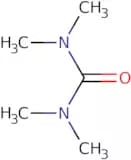
CAS:<p>Tetramethylurea is a versatile compound that has various applications in different fields. It is commonly used as a monophosphate donor in biochemical reactions and as a reagent for the synthesis of L-sorbose and histidine. In addition, tetramethylurea is employed in the production of herbicides, as well as in the synthesis of zirconium oxide nanoparticles.</p>Formula:C5H12N2OPurity:Min. 95%Molecular weight:116.16 g/molD,L-Threo-b-hydroxy aspartic acid
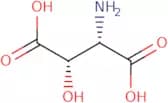
CAS:<p>D,L-Threo-b-hydroxy aspartic acid is a stereoselective synthetic amino acid that has been used to study the uptake and hydrolysis of D,L-threo-b-hydroxy aspartic acid by rat brain synaptosomes. It has also been used in the synthesis of an L-alanine analogue with the same stereochemistry at the chiral center. The stereoselective synthesis of this compound is achieved by epimerization reaction using d-alanine as a starting material. Threo bhda has been shown to inhibit glutamate release from neurons and stimulate GABA release in synaptosomes, which may be due to its ability to bind to ion channels. Threo bhda has also been found to inhibit the binding of radioactive thymidine to calf thymus DNA with a high degree of stereoselectivity.</p>Formula:C4H7NO5Purity:Min. 95%Molecular weight:149.1 g/molCalcitonin N-Terminal Flanking Peptide (human)
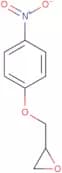
CAS:Please enquire for more information about Calcitonin N-Terminal Flanking Peptide (human) including the price, delivery time and more detailed product information at the technical inquiry form on this pageFormula:C264H426N74O97SPurity:Min. 95%Molecular weight:6,220.71 g/mol1,2-Epoxy-3-(4-nitrophenoxy)propane
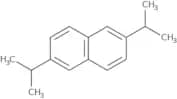
CAS:<p>1,2-Epoxy-3-(4-nitrophenoxy)propane is an epoxide that is a reactive intermediate that participates in a number of reactions, including the formation of disulfide bonds. It has been shown to have genotoxic effects and to be toxic to polymorphonuclear leucocytes. The compound can also inhibit detoxification enzymes, which may make it useful as a biomarker for environmental exposure to xenobiotics. 1,2-Epoxy-3-(4-nitrophenoxy)propane has also been shown to be a potential anti-cancer agent in gene therapy studies. This compound inhibits energy metabolism by inhibiting the enzyme glyceraldehyde 3 phosphate dehydrogenase (GAPDH).</p>Formula:C9H9NO4Purity:Min. 95%Molecular weight:195.17 g/mol2,6-Diisopropylnaphthalene
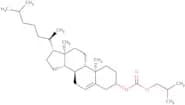
CAS:Epidermal growth factor (EGF) is a polypeptide hormone that stimulates mitosis and cell growth. In some cases, it can act as an autocrine or paracrine hormone. Epidermal growth factor is used to stimulate the renewal of cells in the skin and mucous membranes. It also has been shown to have anti-inflammatory properties, which may be due to its ability to inhibit the release of inflammatory mediators such as prostaglandins and leukotrienes. 2,6-Diisopropylnaphthalene (2,6-DNP) is an antimicrobial agent that binds to the cell nucleus and inhibits transcription and translation of DNA into RNA by binding to RNA polymerase II. This binding prevents formation of transcription complexes with the cell factor necessary for transcription. 2,6-DNP has been shown to reduce disease activity in patients with inflammatory bowel disease in a clinical trial when used alone or in combination with other agents. TheFormula:C16H20Purity:Min. 95%Molecular weight:212.33 g/molCholesterol Isobutyl Carbonate
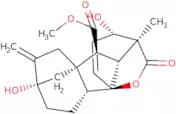
CAS:Controlled Product<p>Cholesterol Isobutyl Carbonate is a high melting organic solvent that has been used to prepare microcapsules. It can be used as a coating material for the preparation of inorganic particles, and it has been shown to have the ability to modify molecules by attaching functional groups. The diameter of cholesterol iso butyl carbonate particles is around 100 nm.</p>Purity:Min. 95%Gibberellic acid methyl ester
CAS:Gibberellic acid methyl ester is a specialized plant growth regulator, which is synthetically derived from the naturally occurring gibberellins found in plants. These gibberellins are vital phytohormones that regulate various aspects of growth and development in higher plants. Gibberellic acid methyl ester functions by mimicking these natural gibberellins, interacting with plant cellular processes to stimulate and enhance growth. Its mode of action involves promoting cell elongation, division, and differentiation, thereby accelerating plant growth and influencing the lifecycle.Formula:C20H24O6Purity:Min. 95%Molecular weight:360.4 g/mol24,25-Dihydroxy vitamin D2
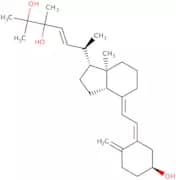
CAS:<p>24,25-Dihydroxy vitamin D2 is a form of vitamin D that has been shown to be effective in the treatment of biliary cirrhosis and neonatal cirrhosis. It is synthesized from 25-hydroxyvitamin D3 by the enzyme 24-hydroxylase. The assay sensitivity for this compound is 10 ng/mL. This form of vitamin D has been shown to have an effect on serum bilirubin levels in patients with biliary cirrhosis. 24,25-Dihydroxy vitamin D2 can also be used to treat patients with chronic renal failure who are deficient in vitamin D3. The plasma concentration of 24,25-dihydroxyvitamin D2 is lower than that of 25-hydroxyvitamin D2 and 1,25-dihydroxyvitamin D2 because it is more rapidly metabolized by the liver.</p>Formula:C28H44O3Purity:Min. 98 Area-%Color and Shape:PowderMolecular weight:428.65 g/molL-Methionine tert-butyl ester hydrochloride
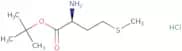
CAS:L-Methionine tert-butyl ester hydrochloride is a peptide that is used for the treatment of lysosomal storage diseases. It is a metabolic precursor for polypeptides and may be useful for the treatment of tissue damage due to elimination. L-Methionine tert-butyl ester hydrochloride has been shown to have a stable half-life in murine studies, and it is eliminated primarily by the kidneys. Radiometabolites with short half-lives are found in blood and urine samples following intravenous administration. The elimination rate of L-Methionine tert-butyl ester hydrochloride can be calculated by measuring the radioactivity in urine over time.Formula:C9H19NO2S•HClPurity:Min. 95%Color and Shape:PowderMolecular weight:241.78 g/mol