Pharmaceutical Standards
Pharmaceutical standards are a comprehensive set of reference materials essential for ensuring the safety, efficacy, and quality of pharmaceutical products. This category includes standards for active pharmaceutical ingredients (APIs), which are the core components responsible for therapeutic effects. Additionally, it covers compounds and metabolites relevant to both the pharmaceutical and veterinary industries, providing benchmarks for the accurate measurement and analysis of these substances. Nitrosamine control standards are crucial for detecting and mitigating potentially harmful nitrosamines in drug formulations. Toxicology standards help assess the safety and potential adverse effects of pharmaceutical compounds. Furthermore, enzyme activators and inhibitors standards are vital for research and development, enabling precise studies of biochemical pathways and drug mechanisms. These pharmaceutical standards are indispensable tools for regulatory compliance, quality control, and research, ensuring that pharmaceutical products meet stringent safety and effectiveness criteria.
Subcategories of "Pharmaceutical Standards"
- APIs for research and impurities(274,920 products)
- Enzyme Activators and Inhibitors(2,827 products)
- Nitrosamines(2,606 products)
- Pharmaceutical and Veterinary Compounds and Metabolites(2,871 products)
- Toxicology(13,652 products)
Found 7836 products of "Pharmaceutical Standards"
Sort by
Purity (%)
0
100
|
0
|
50
|
90
|
95
|
100
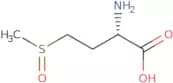
L-Methionine sulfoxide
CAS:<p>Methionine sulfoxide is a methionine that has been oxidized to methionine sulfoxide. Methionine sulfoxides are produced through protein oxidation, which is the chemical process of reacting with oxygen in the air or other compounds to form an organic peroxide and superoxide radical. Methionine sulfoxides are found in proteins and are formed as a result of oxidative stress on cells and tissues. The rate constant for the conversion of methionine to methionine sulfoxide is 0.01983 min-1 at pH 7, 25°C. There are two methods of detection: chemiluminescence method and chromatographic analysis. In addition, methionine sulfoxides have natural antioxidant properties that can be used to treat diseases such as Alzheimer's disease and Parkinson's disease, as well as cancer treatments. Methionine sulfoxides have been shown to have a significant effect on wild-type strains of bacteria, reducing their growth rates</p>Formula:C5H11NO3SPurity:Min. 98 Area-%Color and Shape:White PowderMolecular weight:165.21 g/mol2,4,6-Trichloro-5-nitropyrimidine
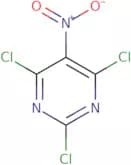
CAS:<p>2,4,6-Trichloro-5-nitropyrimidine is a purine derivative that inhibits the cell proliferation of cancer cells. It has been shown to inhibit the activity of kinases and to induce apoptosis in human cancer cells in vitro. This drug also has antiproliferative potential against erythrocytes and is being investigated as a treatment for renal disease. 2,4,6-Trichloro-5-nitropyrimidine shows inhibitory effects on the phosphorylation of roscovitine by ATP and may be used to treat patients with glomerulonephritis. 2,4,6-Trichloro-5-nitropyrimidine can be synthesized from 2,4,6-trichloropyrimidinethiol and nitric acid according to the following equation: CClNO + HNO → CClNOH + NO 2 Cl + 3 HNO</p>Formula:C4Cl3N3O2Purity:Min. 97 Area-%Molecular weight:228.42 g/molAlfentanil hydrochloride
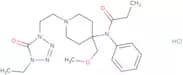
CAS:Controlled Product<p>Alfentanil is an opioid analgesic that is used for the treatment of severe or acute pain. It is a potent synthetic analog of fentanyl, which is an opioid analgesic that is used for the treatment of short-term (acute) and long-term (chronic) pain. Alfentanil has been shown to have a high affinity for α1-acid glycoprotein, which has been associated with drug interactions and blood sampling. Alfentanil also has chemical stability in experimental models and does not interact with nonsteroidal anti-inflammatory drugs. This drug may have a matrix effect on the concentration of cortisol in the blood.</p>Formula:C21H33ClN6O3Purity:Min. 95%Molecular weight:452.98 g/molDiphenylsulfone-3,3'-disulfonic Acid Disodium Salt
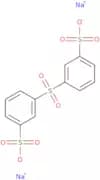
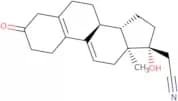
CAS:<p>Please enquire for more information about Diphenylsulfone-3,3'-disulfonic Acid Disodium Salt including the price, delivery time and more detailed product information at the technical inquiry form on this page</p>Purity:Min. 95%(17α)-17-Hydroxy-3-oxo-19-norpregna-5(10),9(11)-diene-21-nitrile
CAS:Controlled ProductPlease enquire for more information about (17α)-17-Hydroxy-3-oxo-19-norpregna-5(10),9(11)-diene-21-nitrile including the price, delivery time and more detailed product information at the technical inquiry form on this pageFormula:C20H25NO2Purity:Min. 95%Color and Shape:PowderMolecular weight:311.42 g/molDibutyltin dilaurate
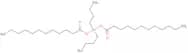
CAS:<p>Dibutyltin dilaurate is a chemical substance that is used as a stabilizer in polyvinyl chloride (PVC) and polyurethane. It has been shown to react with potassium dichromate, methyl ethyl ketone, and plasma mass spectrometry. Dibutyltin dilaurate is not acutely toxic, but can be hazardous when exposed to high levels of it over a long period of time. The main route of exposure is through inhalation of the vapor or skin contact with the liquid form. In animal studies, dibutyltin dilaurate has been shown to cause liver damage and kidney toxicity.</p>Formula:C32H64O4SnPurity:Min. 95 Vol-%Molecular weight:631.56 g/molTestosterone 3-(O-carboxymethyl)oxime
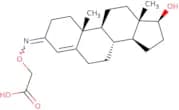
CAS:Controlled Product<p>Testosterone 3-(O-carboxymethyl)oxime is an inactive prodrug of testosterone. It is a potent and selective inhibitor of angiotensin II that causes vasodilation by blocking the conversion of angiotensin I to angiotensin II. Testosterone 3-(O-carboxymethyl)oxime has been shown to be effective in lowering blood pressure in patients with congestive heart failure, although it may cause side effects such as dizziness, headache, and nausea. This drug can also be used to treat prostate cancer because it inhibits the production of testosterone and reduces serum levels of luteinizing hormone. Testosterone 3-(O-carboxymethyl)oxime can also be used for diagnostic purposes as a marker for polycystic ovary syndrome (PCOS).</p>Formula:C21H31NO4Purity:Min. 95%Molecular weight:361.48 g/mol1-(2-Hydroxyethyl)-3,3-dimethylindolino-6'-nitrobenzopyrylospiran
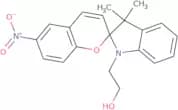
CAS:<p>Please enquire for more information about 1-(2-Hydroxyethyl)-3,3-dimethylindolino-6'-nitrobenzopyrylospiran including the price, delivery time and more detailed product information at the technical inquiry form on this page</p>Purity:Min. 95%3-O-Acetyl-26-hydroxy cholesterol
CAS:Controlled ProductPlease enquire for more information about 3-O-Acetyl-26-hydroxy cholesterol including the price, delivery time and more detailed product information at the technical inquiry form on this pageFormula:C29H48O3Purity:Min. 95%Molecular weight:444.69 g/mol4-(4-Nitrophenoxy)aniline
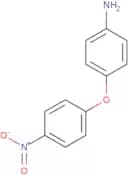
CAS:<p>4-(4-Nitrophenoxy)aniline is a synthetic drug that is used as a substrate for the cytochrome P450 system. It has been shown to be metabolized by the liver in two steps, forming reduction products and interacting with thiourea. This drug also has functional groups which are active in the group p2 of the periodic table, such as diphenyl ethers and aminophenols. 4-(4-Nitrophenoxy)aniline can be used to probe the interaction between an enzyme and its substrate.</p>Formula:C12H10N2O3Purity:Min. 95%Molecular weight:230.22 g/molDibenz[a,h]anthracene
CAS:<p>Dibenz[a,h]anthracene is a polycyclic aromatic hydrocarbon that has been classified as a human carcinogen. It is used in the analytical method for determining the presence of epoxides. Dibenz[a,h]anthracene has been shown to cause skin cancer in mice. This agent binds to DNA and forms covalent adducts with guanine residues. Dibenz[a,h]anthracene also causes short-term exposure to skin cancer in rats exposed to subcutaneous tumors and has been shown to cause tumorigenesis studies in mice.</p>Formula:C22H14Purity:Min. 95%Molecular weight:278.35 g/mol1,2,3,4-Tetrahydronaphthalen-2-amine hydrobromide
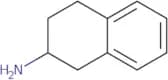
CAS:Controlled Product<p>1,2,3,4-Tetrahydronaphthalen-2-amine hydrobromide (THNA) is an amine that inhibits the enzyme tyrosine hydroxylase. This inhibition leads to a decrease in the synthesis of dopamine and norepinephrine. THNA has been shown to have inhibitory properties on locomotor activity, acid complex formation, and aminotransferases. It also exhibits receptor binding and agonist binding site activity. One study found that THNA had no effect on rat striatal tissue. The drug has been shown to be effective in metabolic disorders such as obesity.</p>Formula:C10H13NPurity:Min. 95%Molecular weight:147.22 g/molCefdinir related compound B
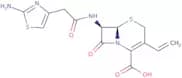
CAS:Please enquire for more information about Cefdinir related compound B including the price, delivery time and more detailed product information at the technical inquiry form on this pageFormula:C14H14N4O4S2Purity:Min. 95%Molecular weight:366.42 g/molCholesterol Isobutyl Carbonate
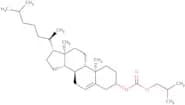
CAS:Controlled Product<p>Cholesterol Isobutyl Carbonate is a high melting organic solvent that has been used to prepare microcapsules. It can be used as a coating material for the preparation of inorganic particles, and it has been shown to have the ability to modify molecules by attaching functional groups. The diameter of cholesterol iso butyl carbonate particles is around 100 nm.</p>Purity:Min. 95%(S)-N-Fmoc-2-(3'-butenyl)glycine
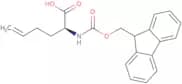
CAS:<p>Please enquire for more information about (S)-N-Fmoc-2-(3'-butenyl)glycine including the price, delivery time and more detailed product information at the technical inquiry form on this page</p>Formula:C21H21NO4Purity:Min. 95%Color and Shape:White PowderMolecular weight:351.4 g/mol(+)-(8,8-Dichlorocamphorylsulfonyl)oxaziridine
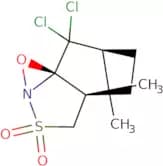
CAS:<p>Please enquire for more information about (+)-(8,8-Dichlorocamphorylsulfonyl)oxaziridine including the price, delivery time and more detailed product information at the technical inquiry form on this page</p>Formula:C10H13Cl2NO3SPurity:Min. 95%Molecular weight:298.19 g/molPravastatin 1,1,3,3-tetramethylbutylamine
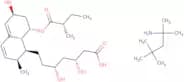
CAS:<p>Please enquire for more information about Pravastatin 1,1,3,3-tetramethylbutylamine including the price, delivery time and more detailed product information at the technical inquiry form on this page</p>Formula:C31H55NO7Purity:Min. 95%Molecular weight:553.77 g/molNaphthalen-2-ethanol
CAS:<p>Naphthalen-2-ethanol is a primary alcohol that has been synthesized and immobilized onto boron nitride. It can be used as a synthetic reaction rate indicator. Naphthalen-2-ethanol is soluble in organic solvents such as methanol, which can be used to determine the concentration of methanol in solution by observing the change in absorbance at 230 nm. This compound has functional groups such as carbinols, which are characterized by their high reactivity and ability to form esters, ethers, amides, or nitriles. Naphthalen-2-ethanol also reacts with lipases to produce polyamines and with chromatography to produce substitutive nomenclature.</p>Formula:C12H12OPurity:Min. 95%Molecular weight:172.22 g/molNelfinavir hydroxy-tert-butylamide
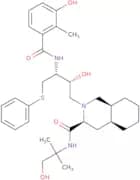
CAS:<p>Nelfinavir is an antiviral agent that is used to treat HIV/AIDS. It is a protease inhibitor that inhibits the action of the virus in cells by binding to specific enzymes, thus preventing the destruction of human cells by the virus. Nelfinavir also prevents cancer cell growth and has shown anticancer activity in animal models and humans. This drug binds to fatty acids, making it more difficult for the body to eliminate this substance. The half-life of nelfinavir is prolonged in patients with hepatic failure or renal failure. Nelfinavir can be used as a chemotherapeutic agent in infants because it does not cross the blood-brain barrier.</p>Formula:C32H45N3O5SPurity:Min. 95%Molecular weight:583.78 g/mol1-Nitronaphthalene
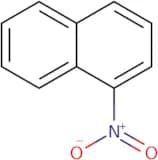
CAS:<p>1-Nitronaphthalene is a nitrobenzene derivative that has been used as an intermediate in the synthesis of pharmaceuticals, dyes, and other organic compounds. 1-Nitronaphthalene is classified as a hazardous substance due to its carcinogenicity and toxicity. In particular, it can cause irritation and burns on skin contact and may be fatal if swallowed. The toxicity profile of 1-nitronaphthalene has been studied in rats, mice, guinea pigs, rabbits, hamsters, and dogs. It was found to have moderate acute oral toxicity in rats but no significant acute toxicity in mice or dogs. 1-Nitronaphthalene also had little effect on p450 activity or enzyme activities in rats.</p>Formula:C10H7NO2Purity:Min. 95%Color and Shape:Yellow Clear LiquidMolecular weight:173.17 g/mol


![Dibenz[a,h]anthracene](/_next/image/?url=https%3A%2Fstatic.cymitquimica.com%2Fproducts%2F3D%2Fthumb-webp%2FFD62414.webp&w=3840&q=75)