Pharmaceutical Standards
Pharmaceutical standards are a comprehensive set of reference materials essential for ensuring the safety, efficacy, and quality of pharmaceutical products. This category includes standards for active pharmaceutical ingredients (APIs), which are the core components responsible for therapeutic effects. Additionally, it covers compounds and metabolites relevant to both the pharmaceutical and veterinary industries, providing benchmarks for the accurate measurement and analysis of these substances. Nitrosamine control standards are crucial for detecting and mitigating potentially harmful nitrosamines in drug formulations. Toxicology standards help assess the safety and potential adverse effects of pharmaceutical compounds. Furthermore, enzyme activators and inhibitors standards are vital for research and development, enabling precise studies of biochemical pathways and drug mechanisms. These pharmaceutical standards are indispensable tools for regulatory compliance, quality control, and research, ensuring that pharmaceutical products meet stringent safety and effectiveness criteria.
Subcategories of "Pharmaceutical Standards"
- APIs for research and impurities(274,914 products)
- Enzyme Activators and Inhibitors(2,827 products)
- Nitrosamines(2,605 products)
- Pharmaceutical and Veterinary Compounds and Metabolites(2,871 products)
- Toxicology(13,652 products)
Found 7836 products of "Pharmaceutical Standards"
Sort by
Purity (%)
0
100
|
0
|
50
|
90
|
95
|
100
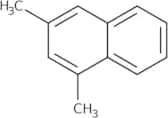
1,3-Dimethylnaphthalene
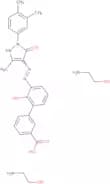
CAS:<p>1,3-Dimethylnaphthalene is a chemical intermediate that is used for the synthesis of perfumes and pharmaceuticals.</p>Formula:C12H12Purity:Min. 95%Molecular weight:156.22 g/molEltrombopag olamine
CAS:Eltrombopag olamine is an orally active drug that belongs to the class of thiazolidinones. It has been used for the treatment of thrombocytopenia in patients with chronic liver disease and myelodysplastic syndrome. Eltrombopag olamine inhibits platelet aggregation by binding to glycoprotein IIb/IIIa receptors on the surface of platelets. The drug is a prodrug that is metabolized in vivo to its active form, eltrombopag. This conversion is catalysed by CYP3A4 and CYP2D6 enzymes and can be inhibited by drugs that inhibit these enzymes, such as trifluoroacetic acid and hydroxyl group-containing compounds. Eltrombopag olamine binds to erythrocytes, which may be due to its ability to form intramolecular hydrogen bonds with nitrogen atoms. The synthesis of eltFormula:C25H22N4O4•(C2H7NO)2Purity:Min. 95%Color and Shape:PowderMolecular weight:564.63 g/molValeric acid hydrazide
CAS:Valeric acid hydrazide (VAH) is a monoclonal antibody that binds to the receptor molecule. The binding of VAH to the receptor molecule leads to a change in the reaction mechanism and prevents the initiation of an immune response. This drug has been shown to have therapeutic properties in a number of autoimmune diseases, such as rheumatoid arthritis and multiple sclerosis, by blocking the production of TNF-α and other inflammatory cytokines. Valeric acid hydrazide also shows biological properties against cancerous cells. It inhibits the growth factor activity, which is believed to be responsible for tumor formation and growth. This agent may also inhibit angiogenesis by preventing endothelial cell proliferation and migration.Formula:C5H12N2OPurity:Min. 95%Molecular weight:116.16 g/mol4-(4-Nitrophenoxy)butanoic acid
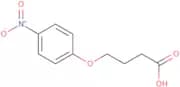
CAS:Controlled Product<p>Please enquire for more information about 4-(4-Nitrophenoxy)butanoic acid including the price, delivery time and more detailed product information at the technical inquiry form on this page</p>Formula:C10H11NO5Purity:Min. 95%Molecular weight:225.2 g/mol(NZ)-4-chloro-N-[1-[2-(4-nitrophenyl)ethyl]piperidin-2-ylidene]benzenesulfonamide
CAS:Controlled Product<p>Please enquire for more information about (NZ)-4-chloro-N-[1-[2-(4-nitrophenyl)ethyl]piperidin-2-ylidene]benzenesulfonamide including the price, delivery time and more detailed product information at the technical inquiry form on this page</p>Formula:C19H20ClN3O4SPurity:Min. 95%Molecular weight:421.9 g/molD-Aspartic acid b tert-butyl ester
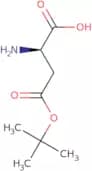
CAS:<p>D-Aspartic acid b tert-butyl ester (DATB) is an antimicrobial agent that has been shown to inhibit the growth of drug-resistant bacteria. DATB has been shown to be active against both gram-positive and gram-negative bacteria, with a selectivity for those with a peptidoglycan cell wall. DATB inhibits the synthesis of amide and peptide bonds and has been shown to have a wide range of uses in the production of antibiotics, such as carbamates and natural products.</p>Formula:C8H15NO4Purity:Min. 95%Color and Shape:PowderMolecular weight:189.21 g/molN,N-Diethylaminoethyl 2,2-diphenylvalerate hydrochloride
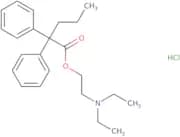
CAS:Controlled ProductN,N-Diethylaminoethyl 2,2-diphenylvalerate hydrochloride is a depressant drug that inhibits the growth of bacteria by inhibiting fatty acid synthesis. It has been shown to inhibit group P2 enzymes that are involved in the production of fatty acids. In this way, it inhibits the formation and release of ATP, which is essential for bacterial growth. N,N-Diethylaminoethyl 2,2-diphenylvalerate hydrochloride also has inhibitory properties against bacteria that cause infectious diseases. This drug is effective against Hl-60 cells and can be used as a diagnostic tool for detection sensitivity and detection time.Formula:C23H32ClNO2Purity:Min. 95%Molecular weight:389.96 g/molN-(Aminocarbonyl)aspartic acid
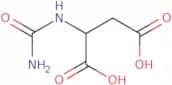
CAS:N-Aminocarbonyl-L-aspartic acid (NACD) is a molecule that is found in urine samples. It can be used as a biomarker to detect cancer, HIV infection, and many other diseases. The presence of NACD has been correlated with the development of acidosis, which is characterized by an increase in the pH of body fluids. The following are a few examples of how this product might be described on an eCommerce site: Rifapentine is an anti-tuberculosis drug that belongs to the class of rifamycins. It is the most active of the rifamycins for the treatment of tuberculosis. Rifapentine inhibits bacterial growth by binding to DNA-dependent RNA polymerase, thereby preventing transcription and replication. The high frequency of human activity has been shown using a patch-clamp technique on human erythrocytes. This active form is metabolized throughFormula:C5H8N2O5Purity:Min. 95%Color and Shape:PowderMolecular weight:176.13 g/mol1-(2-Nitrophenyl)-1,2-ethanediol
CAS:1-(2-Nitrophenyl)-1,2-ethanediol is a chemical that has been shown to inhibit the glutamate-induced increase in cytosolic Ca2+ concentration. It also prevents the loss of membrane integrity and protects against cell death by inhibiting apoptosis. 1-(2-Nitrophenyl)-1,2-ethanediol also inhibits amp-activated protein kinase activity and increases ATP production. These effects may be due to its ability to reduce intracellular Ca2+ levels and prevent Ca2+ overload in mitochondria. 1-(2-Nitrophenyl)-1,2-ethanediol has been shown to have a protective effect on isolated heart cells and ventricular myocytes from hypoxia/reoxygenation injury and is an effective model system for investigating biochemical properties of glutamate excitotoxicity.Formula:C8H9NO4Purity:Min. 95%Color and Shape:PowderMolecular weight:183.16 g/mol4-Fluorotropacocaine
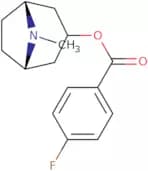
CAS:Controlled Product<p>4-Fluorotropacocaine is a synthetic, serotonergic compound that has been shown to have similar effects in the brain as diazepam. 4-Fluorotropacocaine has been postulated to be a supplement and is thought to have neuroprotective properties. It binds to serotonin receptors and inhibits the reuptake of serotonin by neurons. This inhibition causes an increase in the level of serotonin in the synaptic cleft, which can lead to symptoms such as nausea, vomiting, and headache. 4-Fluorotropacocaine may also inhibit dopamine reuptake leading to symptoms such as hallucinations, delusions, and confusion. Structural analogs of 4-fluorotropacocaine are often used in research studies because they can be synthesized with various substitutions on the benzene ring.</p>Formula:C15H18FNO2Purity:Min. 95%Molecular weight:263.31 g/mol24,25-Dihydroxy vitamin D2
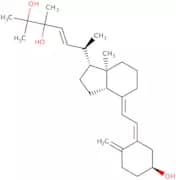
CAS:<p>24,25-Dihydroxy vitamin D2 is a form of vitamin D that has been shown to be effective in the treatment of biliary cirrhosis and neonatal cirrhosis. It is synthesized from 25-hydroxyvitamin D3 by the enzyme 24-hydroxylase. The assay sensitivity for this compound is 10 ng/mL. This form of vitamin D has been shown to have an effect on serum bilirubin levels in patients with biliary cirrhosis. 24,25-Dihydroxy vitamin D2 can also be used to treat patients with chronic renal failure who are deficient in vitamin D3. The plasma concentration of 24,25-dihydroxyvitamin D2 is lower than that of 25-hydroxyvitamin D2 and 1,25-dihydroxyvitamin D2 because it is more rapidly metabolized by the liver.</p>Formula:C28H44O3Purity:Min. 98 Area-%Color and Shape:PowderMolecular weight:428.65 g/molBeclomethasone-21-Aldehyde
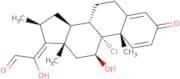
CAS:Controlled ProductPlease enquire for more information about Beclomethasone-21-Aldehyde including the price, delivery time and more detailed product information at the technical inquiry form on this pageFormula:C22H27ClO4Purity:Min. 95%Color and Shape:PowderMolecular weight:390.9 g/mol4-(2-Chloro-4-nitrophenyl)piperazine-1-carboxamide
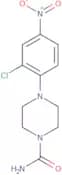
CAS:<p>Please enquire for more information about 4-(2-Chloro-4-nitrophenyl)piperazine-1-carboxamide including the price, delivery time and more detailed product information at the technical inquiry form on this page</p>Formula:C11H13ClN4O3Purity:Min. 95%Molecular weight:284.7 g/molN-Cyano-N',S-dimethylisothiourea
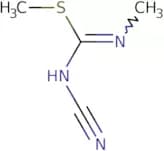
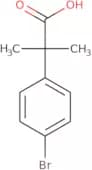
CAS:<p>Please enquire for more information about N-Cyano-N',S-dimethylisothiourea including the price, delivery time and more detailed product information at the technical inquiry form on this page</p>Formula:C4H7N3SPurity:Min. 95%Molecular weight:129.18 g/mol2-(4-Bromophenyl)-2,2'-dimethylacetic acid
CAS:<p>2-Bromo-2-(4-bromophenyl)-2,2'-dimethylacetic acid (2bpd) is the sodium salt of 2-(4-bromophenyl)-2,2'-dimethylacetic acid. It is a metabolite of terfenadine and thionyl chloride. 2bpd has been shown to be an inhibitor of the histamine H1 receptor. This drug is also a brominated derivative of 2-amino-2-methyl-1-propanol, which has been shown to be an inhibitor of the histamine H1 receptor.</p>Formula:C10H11BrO2Purity:Min. 95%Molecular weight:243.1 g/mol9-cisRetinol
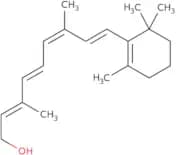
CAS:<p>9-cisRetinol is a form of vitamin A that plays an important role in the synthesis of lipids and proteins. It has been shown to inhibit acid formation in the liver and to stimulate growth in some types of cancer cells. 9-cisRetinol is converted to all-trans retinoic acid, which is a nuclear hormone receptor that regulates gene expression. It also has been shown to be effective in clinical studies for the treatment of congenital amaurosis and cancer. 9-cisRetinol can inhibit phospholipase A2, which prevents the release of arachidonic acid from membrane phospholipids, as well as inhibit prostaglandin synthesis. The optimum pH for 9-cisRetinol activity is between 7 and 8.</p>Formula:C20H30OPurity:Min. 95%Molecular weight:286.45 g/mola,O-Dimethyl serotonin
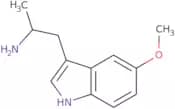
CAS:Controlled Product<p>a,O-Dimethyl serotonin is a monoamine compound that is synthesized by the enzymatic decarboxylation of 5-hydroxytryptophan. It has been shown to increase dopamine levels and inhibit the enzyme activity of serotonin in mice. This drug also binds to 5-ht2 receptors and induces the release of serotonin from nerve cells. A linear calibration curve was obtained using bufotenin as a standard. This drug has been used in analytical toxicology for determining the uptake of serotonin into human lung tissue and its effect on 5-ht1a receptors. In addition, a study was conducted with perennial ryegrass to determine whether this drug inhibits plant toxin synthesis. The results showed that it did not have an inhibitory effect on plant toxins and may even promote their synthesis.</p>Formula:C12H16N2OPurity:Min. 95%Molecular weight:204.27 g/molHaloperidol Impurity D
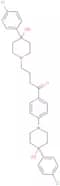
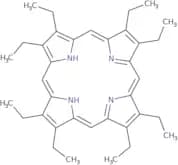
CAS:<p>Please enquire for more information about Haloperidol Impurity D including the price, delivery time and more detailed product information at the technical inquiry form on this page</p>Formula:C32H36Cl2N2O3Purity:Min. 95%Molecular weight:567.55 g/mol2,3,7,8,12,13,17,18-Octaethylporphyrin
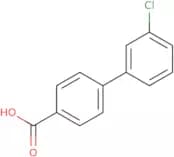
CAS:2,3,7,8,12,13,17,18-Octaethylporphyrin (OEP) is a porphyrin with an octaethyl chain that has been shown to have a high fluorescence quantum yield. It can be synthesized by reacting malonic acid with 2,3-diamino-6-nitrophenol and the reaction mechanism is the same as for hematoporphyrin. The absorption spectrum of OEP shows a maximum at 330 nm and the emission spectrum peaks at 450 nm. The conformational properties of OEP are similar to those of hematoporphyrin. X-ray crystal structures show that the nitrogen atoms in OEP form a planar configuration that is different from other porphyrins. 2,3,7,8,12,13,17,18-Octaethylporphyrin (OEP) is a porphyrin with an octaethylFormula:C36H46N4Purity:Min. 95%Molecular weight:534.78 g/mol3'-Chloro-biphenyl-4-carboxylic acid
CAS:<p>Please enquire for more information about 3'-Chloro-biphenyl-4-carboxylic acid including the price, delivery time and more detailed product information at the technical inquiry form on this page</p>Purity:Min. 95%


![(NZ)-4-chloro-N-[1-[2-(4-nitrophenyl)ethyl]piperidin-2-ylidene]benzenesulfonamide](/_next/image/?url=https%3A%2Fstatic.cymitquimica.com%2Fproducts%2F3D%2Fthumb-webp%2FFN154024.webp&w=3840&q=75)