Pharmaceutical Standards
Pharmaceutical standards are a comprehensive set of reference materials essential for ensuring the safety, efficacy, and quality of pharmaceutical products. This category includes standards for active pharmaceutical ingredients (APIs), which are the core components responsible for therapeutic effects. Additionally, it covers compounds and metabolites relevant to both the pharmaceutical and veterinary industries, providing benchmarks for the accurate measurement and analysis of these substances. Nitrosamine control standards are crucial for detecting and mitigating potentially harmful nitrosamines in drug formulations. Toxicology standards help assess the safety and potential adverse effects of pharmaceutical compounds. Furthermore, enzyme activators and inhibitors standards are vital for research and development, enabling precise studies of biochemical pathways and drug mechanisms. These pharmaceutical standards are indispensable tools for regulatory compliance, quality control, and research, ensuring that pharmaceutical products meet stringent safety and effectiveness criteria.
Subcategories of "Pharmaceutical Standards"
- APIs for research and impurities(274,914 products)
- Enzyme Activators and Inhibitors(2,827 products)
- Nitrosamines(2,605 products)
- Pharmaceutical and Veterinary Compounds and Metabolites(2,871 products)
- Toxicology(13,652 products)
Found 7836 products of "Pharmaceutical Standards"
Sort by
Purity (%)
0
100
|
0
|
50
|
90
|
95
|
100
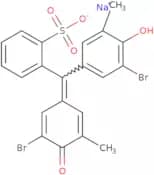
Bromocresol purple sodium salt
CAS:<p>Bromocresol purple sodium salt is a dye that emits light when it is irradiated with light of a particular wavelength. It has been used to detect amniotic fluid contamination in the laboratory and as an absorber in polymer films. Bromocresol purple sodium salt absorbs ultraviolet and visible light, which causes it to emit red light. The molecules of bromocresol purple sodium salt are long-chain triazoles, which absorb water vapor and emit infrared radiation. This property can be used to detect the presence of alkali metals. The luminescent property of bromocresol purple sodium salt can be enhanced by adding an alkali metal, such as potassium or lithium chloride, to the solution where it is dissolved.</p>Formula:C21H15Br2O5S·NaPurity:Min. 95%Molecular weight:562.2 g/molAcetyl-D-methionine
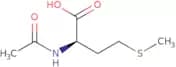
CAS:<p>Acetyl-D-methionine is a type strain that belongs to the class of amino acids. It is necessary for protein synthesis and can be found in dietary concentrations. Acetyl-D-methionine has been shown to have enzyme activities, such as malonic acid formation and racemase activity, which are dependent on the bacterial strain. Acetyl-D-methionine has been demonstrated to be able to form a chelate with copper ions, which may contribute to its antimicrobial properties. Acetyl-D-methionine has been shown to inhibit the growth of Stenotrophomonas maltophilia in vitro and in vivo. Acetyl-D-methionine also inhibits the growth of Sprague Dawley rats infected with S. maltophilia when administered intravenously or orally.</p>Formula:C7H13NO3SPurity:Min. 95%Molecular weight:191.25 g/mol2-(2-Sulfoethyl)pseudourea
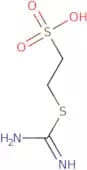
CAS:<p>2-(2-Sulfoethyl)pseudourea is a substance that is found in the body as an intermediate product of the urea cycle. It is also used as a protective agent for beet sugar and other food products. 2-(2-Sulfoethyl)pseudourea has been shown to be effective against malonic acid, tricine, and arginine. The reaction with malonic acid yields 2-sulfoethylmalonic acid, which can then be oxidized by tricine to yield 2-sulfoethylglyoxal. This substance also reacts with arginine to produce 2-sulfoethylaminoadipic semialdehyde.</p>Formula:C3H8N2O3S2Purity:Min. 95%Molecular weight:184.24 g/molErythrosin B
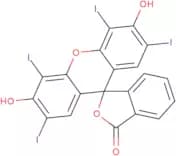
CAS:Erythrosin B is a fluorescent dye that is used in biological research. It has been shown to have cytotoxic effects on human leukemia cells (HL-60) and cytotoxic effects on human lymphocytes. The toxicities of this compound are dependent on the concentration and the duration of exposure, as well as the type of biological sample. Erythrosin B can be used to detect DNA damage in cells by using an analytical method called matrix effect synchronous fluorescence. This dye appears to be genotoxic in vitro and in vivo, but its long-term toxicity is unknown. Erythrosin B has antimicrobial properties against gram-positive bacteria and fungi, but it does not have any activity against Gram negative bacteria or viruses.Formula:C20H8I4O5Purity:Min. 95%Color and Shape:PowderMolecular weight:835.89 g/mol1-Tosy-3-(1-naphthoyl)pyrrole
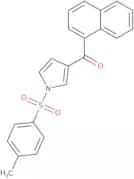
CAS:Controlled ProductPlease enquire for more information about 1-Tosy-3-(1-naphthoyl)pyrrole including the price, delivery time and more detailed product information at the technical inquiry form on this pageFormula:C22H17NO3SPurity:Min. 95%Molecular weight:375.44 g/mol9-Chloro-11beta,17,21-trihydroxy-16beta-methylpregna-1,4-diene-3,20-dione 17-valerate
CAS:Controlled Product<p>Prednisolone is a synthetic corticosteroid that is used in the treatment of a number of lung diseases, including asthma. Prednisolone is used to decrease the inflammation and swelling around the airways and lungs. Prednisolone is used to treat certain skin conditions, such as eczema and dermatitis. This drug also decreases the activity of the immune system by inhibiting production of substances that cause inflammation. The onset of action for prednisolone is typically one day with a duration of up to two weeks. It has been shown to be more effective when taken orally than when applied topically. It may be taken with or without food and can be given as an oral or an intravenous dose. Prednisolone tablets must be dissolved in water before they are placed under the tongue (sublingual). The tablets will dissolve quickly under the tongue, releasing prednisolone into your bloodstream. Enteric-coated tablets should not be crushed or chewed</p>Formula:C27H37ClO6Purity:Min. 95%Molecular weight:493.03 g/molErythropoietin - lyophilized powder
CAS:Erythropoietin is a hormone that stimulates the production of red blood cells, and is used for patients with anemia. It is a recombinant human erythropoietin (rhEPO) that has been produced by genetic engineering. Erythropoietin binds to receptors on the surface of many types of cells, including those in the bone marrow. This binding stimulates the production of red blood cells from precursor cells in the bone marrow, and increases oxygen-carrying capacity in blood. The half-life of erythropoietin is approximately 36 hours. This drug also can be used to reduce high blood pressure and improve responsiveness to other drugs that are given intravenously. Erythropoietin can cause an increase in asialoglycoprotein levels in serum, which may be due to its effects on hepatocytes or erythrocytes.Purity:(Capillary Zone Electrophoresis) Min. 98.0%Ilexsaponin B1
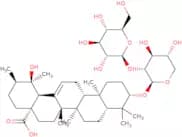
CAS:<p>Ilexsaponin B1 is a saponin, which is a bioactive compound derived from the genus Ilex, commonly found in certain holly plants. This compound is structurally characterized by its glycosidic bonds, which consist of a sugar moiety linked to a triterpenoid or steroid aglycone, contributing to its amphiphilic nature. The source of Ilexsaponin B1 is typically extracted from the leaves or roots of Ilex species through a series of solvent extraction and chromatographic techniques.</p>Purity:Min. 95%17-Hydroxy-19-nor-17alpha-pregna-4,6-dien-20-yn-3-one acetate
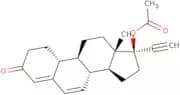
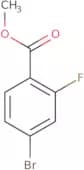
CAS:<p>Please enquire for more information about 17-Hydroxy-19-nor-17alpha-pregna-4,6-dien-20-yn-3-one acetate including the price, delivery time and more detailed product information at the technical inquiry form on this page</p>Formula:C22H26O3Purity:Min. 95%Color and Shape:Off-white to pale yellowsolid.Molecular weight:338.44 g/mol4-Bromo-2-fluorobenzoic acid methyl ester
CAS:4-Bromo-2-fluorobenzoic acid methyl ester is a synthetic chemical that is used as a drug substance in the synthesis of pharmaceuticals. It is also a reagent for organic synthesis, specifically cross coupling reactions. 4-Bromo-2-fluorobenzoic acid methyl ester can be used to introduce an alkyl group into a molecule, which can then be used in other synthetic reactions. This chemical has been shown to inhibit prolyl hydroxylase (PHD), which is an enzyme that catalyzes the conversion of proline to hydroxyproline. 4-Bromo-2-fluorobenzoic acid methyl ester also inhibits the Bcl-2 family proteins, including bcl2, bclxl and bax, which are known to play a role in apoptosis. 4-Bromo-2-fluorobenzoic acid methyl esterFormula:C8H6BrFO2Purity:Min. 95%Molecular weight:233.03 g/mol9-Fluoro-11b,21-dihydroxy-16a-methylpregna-1,4-diene-3,20-dione
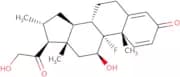
CAS:Controlled Product9-Fluoro-11b,21-dihydroxy-16a-methylpregna-1,4-diene-3,20-dione is a potent antiandrogen that is used to treat alopecia areata and other skin disorders. 9-Fluoro-11b,21-dihydroxy-16a-methylpregna-1,4-diene-3,20-dione has been shown to have an inhibitory effect on the growth of skin tumors in mice. This drug also has a protective effect against chemical stability. It binds to fatty acids and epidermal growth factor (EGF), which may be related to its ability to regulate transcriptional processes and inflammatory skin diseases.Formula:C22H29FO4Purity:Min. 95%Molecular weight:376.46 g/molCalcitonin N-Terminal Flanking Peptide (human)
CAS:<p>Please enquire for more information about Calcitonin N-Terminal Flanking Peptide (human) including the price, delivery time and more detailed product information at the technical inquiry form on this page</p>Formula:C264H426N74O97SPurity:Min. 95%Molecular weight:6,220.71 g/mol1,8-Dinitropyrene
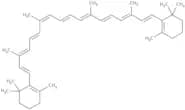
CAS:1,8-Dinitropyrene is a genotoxic and mutagenic potential agent. It has been shown to induce nitric oxide synthase activity in rat liver microsomes, which may be due to its ability to activate the redox potential of the cells. 1,8-Dinitropyrene also induces enzyme activities such as p450 and nitroreductase in rat liver microsomes. This chemical has an analytical detection limit of 0.05 ppm and can be used as a marker for environmental exposure. 1,8-Dinitropyrene is genotoxic and carcinogenic in rats but not mice. It has been shown to induce mutations at the thymidine position of calf-thymus DNA and is potent inducer of genetic mutation in vitro.Formula:C16H8N2O4Purity:Min. 95%Color and Shape:PowderMolecular weight:292.25 g/mol13-cis-β-Carotene
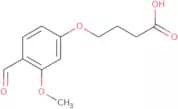
CAS:<p>13-cis-b-Carotene is a carotenoid that has been classified as a provitamin. It is not active in humans but it can be converted to b-carotene, an active form of vitamin A. 13-Cis-b-Carotene is found in plant foods such as carrots and sweet potatoes and can be used for the prevention of atherosclerosis and heart disease. 13-Cis-b-Carotene has been shown to have antiatherogenic effects by inhibiting the oxidation of LDL cholesterol and may also inhibit the proliferation of cancer cells. The conversion of 13-cis-b-carotene to b-carotene occurs through a number of reactions, including beta oxidation, desaturation, and hydrolysis by esterases or glucuronidases.</p>Formula:C40H56Purity:Min. 95%Color and Shape:PowderMolecular weight:536.87 g/mol4-(4-Formyl-3-methoxyphenoxy)butanoic acid
CAS:Controlled Product4-(4'-Formyl-3'-methoxyphenoxy)butanoic acid is a carboxylate that can be used as a preloaded reagent for the synthesis of peptides, proteins, and other organic molecules. 4-(4'-Formyl-3'-methoxyphenoxy)butanoic acid has been shown to be an efficient linker for solid-phase peptide synthesis. 4-(4'-Formyl-3'-methoxyphenoxy)butanoic acid is labile to hydrolysis and so should be stored in an organic solvent such as dimethylsulfoxide. The carboxylate group is readily available in the form of its sodium salt, which can be synthesized by reacting sodium acetate with formaldehyde.Formula:C12H14O5Purity:Min. 95%Color and Shape:PowderMolecular weight:238.24 g/molSodium naphthenate
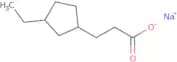
CAS:Sodium naphthenate is a sodium salt that is used as an intermediate in the production of polyvinyl chloride. It can be obtained by reacting ethylene diamine with sodium hydroxide and carbon dioxide. The reaction takes place at high temperatures and pressure, forming a solution of sodium carbonate, which is then hydrolyzed to form sodium naphthenate. This compound has been shown to have a low solubility in water and it can be purified by recrystallization or distillation. Sodium naphthenate is soluble in organic solvents such as acetone or chloroform. It has also been shown to be useful as a model system for studying transfer reactions between polycarboxylic acids and fatty acids, which are important processes in the manufacture of polyester resins.Formula:C10H17NaO2Color and Shape:Off-White PowderMolecular weight:192.23 g/mol2-Amino-3,4-dihydro-7-methoxy-2H-1-naphthalenone, hydrochloride
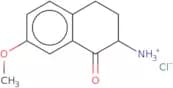
CAS:Controlled ProductPlease enquire for more information about 2-Amino-3,4-dihydro-7-methoxy-2H-1-naphthalenone, hydrochloride including the price, delivery time and more detailed product information at the technical inquiry form on this pageFormula:C11H14ClNO2Purity:Min. 95%Molecular weight:227.69 g/mol2-bromo-6-fluoronaphthalene
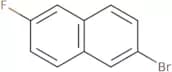
CAS:<p>2-bromo-6-fluoronaphthalene is a molecule that has been shown to be a good electron donor in organic solar cells. It is also an analgesic and antinociceptive agent. 2-Bromo-6-fluoronaphthalene has shown to have antiinflammatory effects and inhibit the production of prostaglandins, which are chemical messengers that induce inflammation. The molecular structure of 2-bromo-6-fluoronaphthalene consists of two bromine atoms attached to two naphthalene rings. The bromine atoms provide strong electron donating properties and the naphthalene rings provide stability for the molecule.</p>Formula:C10H6BrFPurity:Min. 95%Molecular weight:225.06 g/molCholesterol propionate
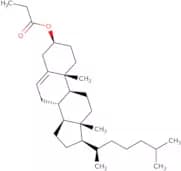
CAS:Controlled Product<p>Cholesterol Propionate is a monolayer film-forming polymer that forms a polymeric matrix when combined with water. The thermal expansion of this material is dependent on the concentration of cholesterol propionate and can be used as a target tissue for multi-walled carbon nanotubes (MWCNTs). In addition, Cholesterol Propionate has been shown to have light emission properties due to its hydroxyl group and fatty acid content. The phase transition temperature of the material is dependent on the concentration of benzoate in the formulation. When it reaches the phase transition temperature, cholesteryl benzoate undergoes a phase change from crystalline to liquid at room temperature. This property can be used to activate MWCNTs within Cholesterol Propionate films, which then emit light.</p>Formula:C30H50O2Purity:Min. 95%Molecular weight:442.7 g/mol20a-Hydroxy cholesterol
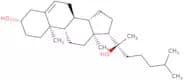
CAS:Controlled Product<p>20a-Hydroxy cholesterol is a model system for studying the effects of hydroxylation on fatty acid metabolism. The addition of one hydroxyl group to the 20 carbon position in cholesterol leads to an analog, 20a-hydroxycholesterol. This compound has been shown to inhibit the enzyme activities of 3-hydroxyacyl coenzyme A dehydrogenase and acyl coenzyme A:cholesterol acyltransferase. The inhibition of these enzymes leads to decreased production of both prostaglandin E2 and leukotriene B4, which are pro-inflammatory mediators. 20a-Hydroxycholesterol has also been found to be effective in treating skin cancer and adrenocortical carcinoma by inhibiting lipid synthesis, thereby reducing cell proliferation rates.</p>Formula:C27H46O2Purity:Min. 95%Molecular weight:402.65 g/mol