Pharmaceutical Standards
Subcategories of "Pharmaceutical Standards"
- APIs for research and impurities(277,208 products)
- Enzyme Activators and Inhibitors(2,829 products)
- Nitrosamines(2,649 products)
- Pharmaceutical and Veterinary Compounds and Metabolites(2,894 products)
- Toxicology(13,378 products)
Found 8108 products of "Pharmaceutical Standards"
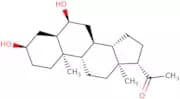
5β-Pregnan-3α,6α-diol-20-one
CAS:Controlled Product5β-Pregnan-3α,6α-diol-20-one is an anticoagulant that inhibits the action of thrombin. It has been shown to inhibit the inflammatory response in a number of autoimmune diseases and inflammatory disorders. This drug also has a nitro group, which can be reduced to an hydroxyl group by reaction with sodium nitrite or other reducing agents. The antimicrobial properties of 5β-pregnan-3α,6α-diol-20-one are thought to be due to its ability to form particle aggregates with magnetic particles. These aggregates have an inhibitory effect on bacterial growth.Formula:C21H34O3Purity:Min. 95%Color and Shape:PowderMolecular weight:334.49 g/molRef: 3D-FP67238
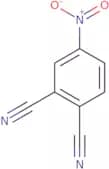
Discontinued product4-Nitrophthalonitrile
CAS:4-Nitrophthalonitrile is a chemical substance that can be synthesized by the reaction of sodium carbonate with 3,4,5-trimethoxybenzyl alcohol. It can also be prepared using nitro phenol and sodium hydroxide. 4-Nitrophthalonitrile has been shown to have high photochemical activity in the presence of light. The frequency shift of its infrared spectrum is indicative of a nucleophilic addition reaction mechanism. 4-Nitrophthalonitrile has been used as an intermediate for producing other chemicals, such as herbicides and pharmaceuticals.
Formula:C8H3N3O2Purity:Min. 95%Color and Shape:White PowderMolecular weight:173.13 g/molRef: 3D-FN36858
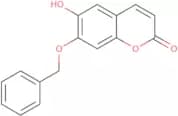
Discontinued product6,7-Dihydroxycoumarin-7-benzyl ether
CAS:6,7-Dihydroxycoumarin-7-benzyl ether is an antioxidant compound with a variety of uses. It has been shown to have clastogenic effects in in vitro tests. 6,7-Dihydroxycoumarin-7-benzyl ether has also been used as a screening tool for antioxidants and has found use in the fields of medicine and natural sources. The chemical structure of 6,7-dihydroxycoumarin-7-benzyl ether is heterocyclic aromatic rings with two hydroxyl groups at positions 6 and 7 on the coumarin nucleus. This molecule has prooxidant activity and can be described using chemical descriptors such as molecular weight and logP values.
Formula:C16H12O4Purity:Min. 95%Molecular weight:268.26 g/molRef: 3D-FD159105
Discontinued product3,3',5-Triiodo thyroacetic acid
CAS:3,3',5-Triiodo thyroacetic acid is a synthetic thyroid hormone that acts as a thyroid hormone receptor agonist. It binds to the thyroid hormone receptor, leading to the activation of other transcription factors and increased synthesis of proteins. 3,3',5-Triiodo thyroacetic acid has been shown to increase the metabolic rate in rats by increasing the expression of epidermal growth factor in skin cells and signal transduction in nerve cells. This drug also causes an increase in transcriptional regulation and protein synthesis. 3,3',5-Triiodo thyroacetic acid does not have any known side effects or toxicity.
Formula:C14H9I3O4Purity:Min. 95%Color and Shape:White Off-White PowderMolecular weight:621.93 g/molL-Noradrenaline bitartrate monohydrate
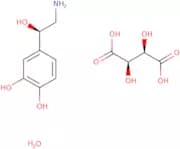
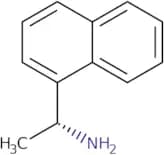
CAS:L-Noradrenaline is the major precursor of norepinephrine, a neurotransmitter that regulates blood pressure and heart rate. L-Noradrenaline bitartrate monohydrate is a potent vasopressor drug that has been shown to increase blood pressure. The effects in animals are biphasic, with an initial pressor phase followed by a second phase with vasodilator effects. L-Noradrenaline bitartrate monohydrate has been shown to stimulate transcription of proteins, such as model protein and dopamine receptor D1 (D1R). This stimulation has been shown to be mediated through the activation of protein kinase C (PKC) and Ca2+/calmodulin-dependent protein kinase II (CaMKII). It has also been shown to have antioxidant effects in the presence of hydroxyl radicals. L-Noradrenaline bitartrate monohydrate can cause symptoms such as nausea, vomiting, and diarrhea in humans at high doses.Formula:C12H19NO10Purity:Min. 98 Area-%Color and Shape:PowderMolecular weight:337.28 g/mol(R)-(+)-1,1-Naphthyl ethylamine
CAS:(R)-(+)-1,1-Naphthyl ethylamine is a molecule that belongs to the class of chromatographic compounds. It has a carbonyl group, which is a substrate for amine modifiers and other chemical reactions. (R)-(+)-1,1-Naphthyl ethylamine can be used as a model system for epidermal growth factor (EGF) and chelate rings. The molecule has been shown to have growth factor activity, which may be due to its ability to bind to EGF receptors on cells.
Formula:C12H13NPurity:Min. 95%Color and Shape:PowderMolecular weight:171.24 g/molRef: 3D-FN11785
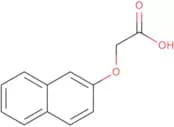
Discontinued product2-Naphthoxyacetic acid
CAS:2-Naphthoxyacetic acid is a chemical compound that has been shown to be a matrix effect agent in the kidney bean extract. It is also used as a nutrient solution in synchronous fluorescence and hydroxyl group. 2-Naphthoxyacetic acid can be used as an analytical method for sodium citrate, dispersive solid-phase extraction, nitrogen atoms, and acid complex. The optical sensor can be used for low light surface methodology. Fluoroacetic acid is a chemical compound that has been shown to have analytical properties similar to 2-Naphthoxyacetic acid.
Formula:C12H10O3Purity:Min 98%Color and Shape:PowderMolecular weight:202.21 g/molRef: 3D-FN34496
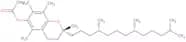
Discontinued productDL-a-Tocopherol acetate - powder
CAS:DL-a-Tocopherol acetate is a synthetic vitamin E compound that is used in the treatment of eye disorders and other conditions. It is an antioxidant that inhibits lipid peroxidation by scavenging free radicals. DL-a-Tocopherol acetate has been shown to inhibit the activity of protein kinase C, which plays a role in cancer, inflammation and apoptosis. This compound also inhibits the activity of toll-like receptor 4, which may be useful in treating infectious diseases, and scavenges anion radicals.
Formula:C31H52O3Purity:Min. 50 Area-%Color and Shape:Clear LiquidMolecular weight:472.74 g/molRef: 3D-FT146270
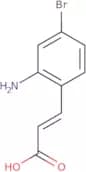
Discontinued product2-Amino-4-bromocinnamic acid
CAS:2-Amino-4-bromocinnamic acid is a fine chemical with a CAS number of 914636-63-8. It is used in the synthesis of complex compounds and useful building blocks, as well as in research. This compound has been shown to be an intermediate for the preparation of derivatives with potential pharmaceutical applications, such as antihistamines, antipsychotics, and antibiotics. 2-Amino-4-bromocinnamic acid is also an important reagent for organic syntheses.
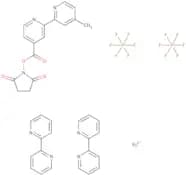
Formula:C9H8BrNO2Purity:Min. 98 Area-%Color and Shape:PowderMolecular weight:242.07 g/molBis(2,2'-bipyridine)-4'-methyl-4-carboxybipyridine-ruthenium N-succinimidyl ester-bis(hexafluorophosphate)
CAS:Bis(2,2'-bipyridine)-4'-methyl-4-carboxybipyridine-ruthenium N-succinimidyl ester-bis(hexafluorophosphate) is a molecule that inhibits the activity of matrix metalloproteinases. It binds to the active site of the enzyme and blocks its activity. This drug has been shown to be effective in inhibiting the activity of MMPs in cells, but not in tissue culture because it does not cross cell membranes. Bis(2,2'-bipyridine)-4'-methyl-4-carboxybipyridine-ruthenium N-succinimidyl ester-bis(hexafluorophosphate) has also been shown to have a low detection limit and can detect low levels of matrix metalloproteinase activity in cells.
Formula:C36H29F12N7O4P2RuPurity:Min. 95%Color and Shape:PowderMolecular weight:1,014.66 g/molRef: 3D-FB29197
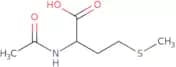
Discontinued productN-Acetyl-DL-methionine
CAS:N-Acetyl-DL-methionine is an amide of the amino acid methionine and acetyl coenzyme A. It has a number of biological properties including being a precursor to protein synthesis, a regulator of fatty acid metabolism, and an inhibitor of glutamate pyruvate transaminase. It can be found in bacterial strains as well as in human serum. N-Acetyl-DL-methionine is synthesized by the reaction of methylamine with acetyl coenzyme A in the presence of ammonia or other nitrogenous bases. The chemical structure of this compound consists of two nitrogen atoms and an acetyl group bonded to a carbon atom that is attached to a methyl group and another carbon atom that forms part of an amide bond with the amino acid methionine. This molecule has been observed using nmr spectroscopic data to form hydrogen bonds with proteins.
Formula:C7H13NO3SPurity:Min. 95%Color and Shape:PowderMolecular weight:191.25 g/molRef: 3D-FA10863
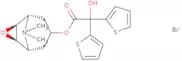
Discontinued productTiotropium bromide
CAS:Muscarinic antagonist; bronchodilator
Formula:C19H22BrNO4S2Purity:Min. 95%Color and Shape:PowderMolecular weight:472.42 g/molRef: 3D-FT28288
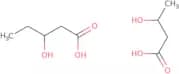
Discontinued productPoly(3-hydroxybutyric acid-co-3-hydroxyvaleric acid)
CAS:Poly(3-hydroxybutyric acid-co-3-hydroxyvaleric acid) is a biodegradable polymer that has been shown to have high water vapor permeability and low values for water uptake and swelling. The polymer is also biocompatible, with no cytotoxicity or hemolysis. Poly(3-hydroxybutyric acid-co-3-hydroxyvaleric acid) was synthesized by ring opening polymerization of 3-hydroxybutyric acid and 3-hydroxyvaleric acid. The polymer has shown synergistic effects when used in combination with other polymers, such as polyvinyl alcohol. Poly(3-hydroxybutyric acid-co-3-hydroxyvaleric acid) can be used in tissue culture as a scaffold for the growth of animal cells.
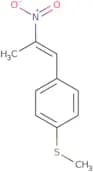
Color and Shape:Powder1-(4-(Methylthio)phenyl)-2-nitropropene
CAS:Please enquire for more information about 1-(4-(Methylthio)phenyl)-2-nitropropene including the price, delivery time and more detailed product information at the technical inquiry form on this page
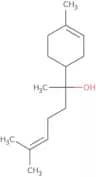
Formula:C10H11NO2SPurity:Min. 95%Color and Shape:PowderMolecular weight:209.27 g/mola-Bisabolol
CAS:Bisabolol is a sesquiterpene lactone that is found in plants such as chamomile and rose. Bisabolol has been shown to have amoebicidal activity in vitro, as well as antiinflammatory activity. Bisabolol has also been shown to have mitochondrial membrane potential-modulating effects and to inhibit the growth of human cancer cells. Bisabolol can act intracellularly by inhibiting protein synthesis, which may lead to apoptosis. It also inhibits the production of pro-inflammatory cytokines, such as TNF-α and IL-1β, which are involved in tumorigenesis. Bisabolol can also bind to polymyxin B and form a complex that is more effective than polymyxin B alone at killing bacteria.
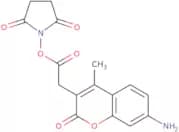
Formula:C15H26OPurity:Min. 95%Color and Shape:Colorless Clear LiquidMolecular weight:222.37 g/mol7-Amino-4-methyl-3-coumarinacetic acid N-succinimidyl ester
CAS:7-Amino-4-methyl-3-coumarinacetic acid N-succinimidyl ester is a synthetic amino acid with a reactive carboxylic acid group. It is used as a crosslinker in biochemistry and has been shown to have biological properties in plants. 7-Amino-4-methyl-3-coumarinacetic acid N-succinimidyl ester reacts with the acidic groups of proteins, DNA, or RNA, and is an important component of some second order rate constants. This chemical is also used for the neutralization of histological stains such as haematoxylin.
Formula:C16H14N2O6Purity:Min. 90 Area-%Color and Shape:PowderMolecular weight:330.29 g/molRef: 3D-FA170610
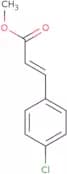
Discontinued productMethyl 4-chlorocinnamate
CAS:Methyl 4-chlorocinnamate is an aryl chloride that is synthesized by the reaction of methoxyethyl chloride with cinnamic acid derivatives. It has bacteriostatic activity against a variety of bacteria species, including staphylococcus and candida glabrata. Methyl 4-chlorocinnamate reacts with amine groups in proteins to form amides, which are strong inhibitors of protein synthesis. This compound also inhibits the growth of Candida glabrata by inhibiting phosphonates, which are essential for cell division.
Formula:C10H9ClO2Purity:Min. 95%Molecular weight:196.63 g/molRef: 3D-FM71222
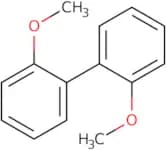
Discontinued product2,2'-Dimethoxybiphenyl
CAS:2,2'-Dimethoxybiphenyl is a thermoplastic that is exothermic, making it useful in the production of polyketones. It can be used as a linker to form covalent bonds with monomers and polymers. 2,2'-Dimethoxybiphenyl has been used as a monomer to produce polyethers and polyesters. This compound has many chemical stability properties, which makes it suitable for use in polymer synthesis. It also can react with nucleophiles such as amines to form ether linkages. 2,2'-Dimethoxybiphenyl has kinetic properties that are faster than those of other ketones but slower than those of other ether-linked compounds. The activation energy for its reaction is low, making it an effective monomer for polymerization reactions.
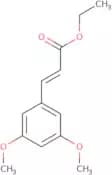
Formula:C14H14O2Purity:Min. 95%Color and Shape:PowderMolecular weight:214.26 g/mol3,5-Dimethoxycinnamic acid methyl ester
CAS:Please enquire for more information about 3,5-Dimethoxycinnamic acid methyl ester including the price, delivery time and more detailed product information at the technical inquiry form on this pageFormula:C12H14O4Purity:Min. 95%Molecular weight:222.24 g/molRef: 3D-FD67492
Discontinued product2-Naphthyl myristate
CAS:2-Naphthyl myristate is a proteolytic enzyme that hydrolyzes proteins. It has been shown to have lipolytic and phosphatase activities. The enzyme is active at a wide range of pH values, from 4.0 to 8.0, and can be inhibited by sodium taurocholate, which inhibits pancreatic lipase activity. 2-Naphthyl myristate has been used for the diagnosis of pancreatitis in humans, as it increases serum amino acid levels in patients with this condition. 2-Naphthyl myristate is an amidase that cleaves amide bonds and degrades proteins into amino acids. It also has an esterase activity that converts long chain fatty acids to their corresponding acid or alcohol form. The enzyme was first isolated from the genus Mycobacterium but has since been found in other genera such as Clostridium perfringens and Bacillus cereus.
Formula:C24H34O2Purity:Min. 95%Color and Shape:PowderMolecular weight:354.53 g/mol