Pharmaceutical Standards
Subcategories of "Pharmaceutical Standards"
- APIs for research and impurities(277,208 products)
- Enzyme Activators and Inhibitors(2,829 products)
- Nitrosamines(2,649 products)
- Pharmaceutical and Veterinary Compounds and Metabolites(2,894 products)
- Toxicology(13,378 products)
Found 8108 products of "Pharmaceutical Standards"
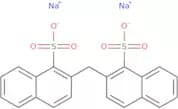
Disodium methylenebisnaphthalenesulfonate
CAS:Disodium methylenebisnaphthalenesulfonate is an organic compound that belongs to the group of bisnaphthyl-sulfones. It is a white solid with a melting point of 236°C. Disodium methylenebisnaphthalenesulfonate is used as a reagent in organic synthesis and as a building block for other compounds. The compound has been shown to be useful in the synthesis of 2-amino-5-methyl-1,3,4-thiadiazole derivatives, which are important building blocks for pharmaceuticals. Disodium methylenebisnaphthalenesulfonate can also be used as a scaffold for complex compounds with new or unknown structures.
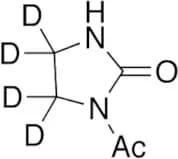
Formula:C21H16O6S2·2NaPurity:Min. 95%Color and Shape:Beige To Brown SolidMolecular weight:474.46 g/molN-Acetylethylene Urea-d4
CAS:Controlled ProductApplications N-Acetylethylene Urea-d4 (cas# 1189701-94-7) is a compound useful in organic synthesis.
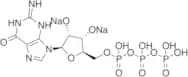
Formula:C5H4H4N2O2Color and Shape:NeatMolecular weight:132.15Guanosine-5'-triphosphate Disodium Salt (~85%)
CAS:Controlled ProductApplications Guanosine-5'-triphosphate disodium salt (CAS# 56001-37-7) is a nucleotide used in the preparation of photoreactive GTP affinity probes, and in inhibitors of eukaryotic initiation factor eIF-4E.
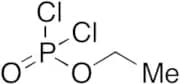
References George Cisar, E. A.; J. Am. Chem. Soc., 135, 4676 (2013); Ghosh, P.; et al.: Bioorg. Med. Chem. Lett., 16, 750 (2006).Formula:C10H14N5O14P3Na2Purity:~85%Color and Shape:NeatMolecular weight:567.14Ethyl Dichlorophosphate
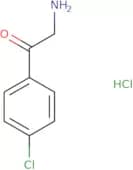
CAS:Controlled ProductFormula:C2H5Cl2O2PColor and Shape:White to Off-White SolidMolecular weight:162.942-Amino-4'-chloroacetophenone hydrochloride
CAS:Controlled Product2-Amino-4'-chloroacetophenone hydrochloride is a cytotoxic compound that inhibits the polymerization of tubulin. It has been shown to have cytotoxic effects and inhibit the growth of cancer cells in vitro at low micromolar concentrations. 2-Amino-4'-chloroacetophenone hydrochloride is a member of the cytotoxic class of compounds and can be used to slow or stop cell division by inhibiting the production of proteins vital for cell division, such as tubulin. This effect is due to its ability to bind to the beta subunit of tubulin, which disrupts its structure and prevents polymerization from occurring.
Formula:C8H8ClNO•HClPurity:Min. 95%Color and Shape:PowderMolecular weight:206.07 g/molRef: 3D-FA55395
Discontinued product5-Methyl-2-nitropyridine
CAS:Please enquire for more information about 5-Methyl-2-nitropyridine including the price, delivery time and more detailed product information at the technical inquiry form on this page
Formula:C6H6N2O2Purity:Min. 95%Color and Shape:PowderMolecular weight:138.12 g/molRef: 3D-FM32781
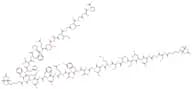
Discontinued productBiotinyl-(Cys1,Lys(biotinyl)18)-Calcitonin (human) trifluoroacetate salt
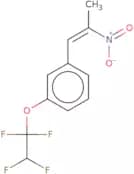
CAS:Please enquire for more information about Biotinyl-(Cys1,Lys(biotinyl)18)-Calcitonin (human) trifluoroacetate salt including the price, delivery time and more detailed product information at the technical inquiry form on this pageFormula:C171H254N44O49S5Purity:Min. 95%Molecular weight:3,870.44 g/mol3'-(Tetrafluoroethoxy)-beta-methyl-beta-nitrostyrene
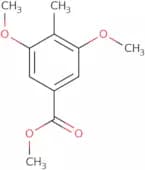
CAS:3'-(Tetrafluoroethoxy)-beta-methyl-beta-nitrostyrene is a versatile building block that can be used as a reaction component for the synthesis of more complex compounds. This compound is also known to have speciality chemical and research chemical properties. 3'-(Tetrafluoroethoxy)-beta-methyl-beta-nitrostyrene has been shown to be an effective reagent for the synthesis of high quality complex compounds.Formula:C11H9F4NO3Purity:Min. 95%Molecular weight:279.19 g/mol3,5-Dimethoxy-4-methylbenzoic acid methyl ester
CAS:3,5-Dimethoxy-4-methylbenzoic acid methyl ester (DMMBME) is a synthetic compound that is used as an immunogen to generate antibodies against fungal proteins. DMMBME is specifically used to identify the presence of bryoria and australian fungi in plants. The chemical structure of DMMBME can be oxidized by depsidones, which leads to the production of reactive oxygen species that are believed to be responsible for the oxidative coupling of target proteins. This reaction can be catalyzed by a number of enzymes such as nidulin, which is found in plant roots.
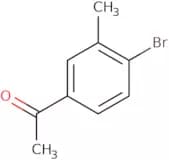
Formula:C11H14O4Purity:Min. 95%Color and Shape:PowderMolecular weight:210.23 g/mol4'-Bromo-3'-methylacetophenone, 75%
CAS:4'-Bromo-3'-methylacetophenone, 75% is a high quality reagent that is a useful intermediate for the synthesis of complex compounds. It has CAS No. 37074-40-1 and can be used as a fine chemical or speciality chemical in research. This product is also a versatile building block that can be used as an intermediate in reactions and as a reaction component.
Formula:C9H9BrOPurity:Min. 95%Molecular weight:213.07 g/molRef: 3D-FB106406
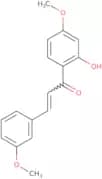
Discontinued product3,4'-Dimethoxy-2'-hydroxychalcone
CAS:3,4'-Dimethoxy-2'-hydroxychalcone is a reaction component and useful scaffold for the synthesis of complex compounds. This chemical is an intermediate in the synthesis of various pharmaceuticals, such as anti-tuberculosis drugs, cancer chemotherapeutics and antibiotics. 3,4'-Dimethoxy-2'-hydroxychalcone has been shown to be a versatile building block that can be used to synthesize both natural products and pharmaceuticals. This compound also has a wide range of applications in the production of fine chemicals.
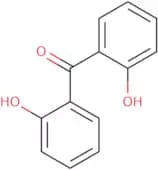
Formula:C17H16O4Purity:Min. 95%Molecular weight:284.31 g/mol2,2'-Dihydroxybenzophenone
CAS:2,2'-Dihydroxybenzophenone is a light-absorbing compound that belongs to the class of dibenzophenones. It has been shown to have cancer-cell inhibitory effects and its anti-tumor effects are due to its ability to inhibit DNA synthesis in tumor cells. 2,2'-Dihydroxybenzophenone has been shown to bind with proteins through hydrogen bonding interactions at the carbonyl group and the hydroxy group. It also has a strong absorption band in the UV region, which makes it useful for UV curing of polymers. This compound can be used as an antioxidant in food products because it does not react with other molecules.
Formula:C13H10O3Purity:Min. 95%Color and Shape:SolidMolecular weight:214.22 g/molrec Neurotrophin-3 (human)
Please enquire for more information about rec Neurotrophin-3 (human) including the price, delivery time and more detailed product information at the technical inquiry form on this page
Purity:Min. 95%Ref: 3D-FR108522
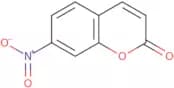
Discontinued product7-Nitrocoumarin
CAS:7-Nitrocoumarin is an agent that inhibits the growth of protozoa by inhibiting enzyme activities, specifically those involved in glycolysis. It has been shown to be a potent inhibitor of surface proteins and functional assays. 7-Nitrocoumarin is also active against trophozoites in vitro. The compound has been shown to be nontoxic to mammalian cells, with a constant of 0.3 μM for inhibition of resazurin reduction. The mechanism of action for 7-nitrocoumarin is not well understood, but it may involve oxidation products such as nitro groups, which are indicated by the prefix '7-'.
Formula:C9H5NO4Purity:Min. 95%Color and Shape:PowderMolecular weight:191.14 g/molRef: 3D-FN26298
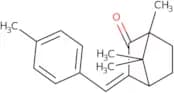
Discontinued product3-(4-Methylbenzylidene)camphor
CAS:3-(4-Methylbenzylidene)camphor is a chemical compound that has two isomers, alpha and beta. It can be found in biological samples, such as human urine or wastewater, and can be used for the treatment of skin cancer. 3-(4-Methylbenzylidene)camphor is prepared by extraction from a dry sample with an organic solvent. The extraction process requires a hydroxyl group to react with the dry sample and create a liquid. The resulting liquid is then evaporated to leave behind the extract. The kinetic data of 3-(4-Methylbenzylidene)camphor was determined by measuring its rate of reaction with an analytical method. The rate of reaction increased as the concentration increased to a constant value at high concentrations, which suggests that it may have some occlusive properties in humans due to its tendency to bind to plasma proteins.
Formula:C18H22OPurity:Min. 95%Color and Shape:White PowderMolecular weight:254.37 g/molRef: 3D-FM25793
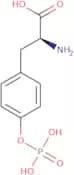
Discontinued productO-Phospho-L-tyrosine
CAS:O-Phospho-L-tyrosine is a phosphorylated form of L-tyrosine. It is used as an immunogen in the production of monoclonal antibodies. O-Phospho-L-tyrosine has also been shown to inhibit the enzyme indole alkaloids, which are responsible for the development of oral pathogens. The dephosphorylation of O-Phospho-L-tyrosine by tyrosine phosphatases leads to its conversion back to L-tyrosine. This compound can be detected by chromatographic analysis and is commonly used in analytical methods to identify natural compounds.
Formula:C9H12NO6PPurity:Min. 95%Color and Shape:PowderMolecular weight:261.17 g/molRef: 3D-FP27018
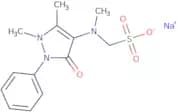
Discontinued productDipyrone
CAS:Dipyrone is an anti-inflammatory and analgesic drug that belongs to the group of non-steroidal anti-inflammatory drugs. It has been shown to inhibit the production of prostaglandins, which are involved in inflammation, by inhibiting cyclooxygenase. The polymerase chain reaction (PCR) method is a biochemical technique used to amplify a segment of DNA, typically for use as a genetic marker or for cloning a particular gene. A PCR assay can be used to detect the presence of bacterial DNA in a sample. Dipyrone has been shown to possess chemiluminescence activity, which is indicative of its ability to bind with DNA. This binding inhibits transcription and replication and may be responsible for the toxic effects on epidermal cells observed in animal studies. Dipyrone also has been shown to have anti-inflammatory activities through its inhibition of cyclooxygenase and its ability to inhibit neutrophil migration and function.
Formula:C13H16N3NaO4SPurity:Min. 95%Color and Shape:White SolidMolecular weight:333.34 g/molRef: 3D-FD22539
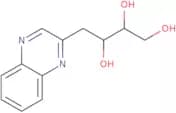
Discontinued product2-(2',3',4'-Trihydroxybutyl)quinoxaline
CAS:2-(2',3',4'-Trihydroxybutyl)quinoxaline is a model system for the glyoxal-glycolaldehyde reaction. This reaction is important in the formation of organic acids and hydroxycarbonyl compounds. The kinetic of this reaction has been studied using glyoxal, glycolaldehyde, and hydroxycarboxylic acid as substrates. Reaction intermediates were identified by multiresponse techniques. Kinetic parameters were determined by modelling and kinetic experiments at different temperatures and concentrations.
Formula:C12H14N2O3Purity:Min. 95%Color and Shape:Off-White PowderMolecular weight:234.25 g/molRef: 3D-FT28497
Discontinued productSodium sarcosinate - ca. 40% in water
CAS:Sodium sarcosine is a salt of sarcosine with sodium. It has an average molecular weight of 255 and is soluble in water. Sodium sarcosine is used as a biological sample for non-steroidal anti-inflammatory drugs (NSAIDs) in the study of their inhibitory properties against mammalian DNA polymerase. NSAIDs are also used to treat inflammation, pain, and fever by inhibiting prostaglandin synthesis. The rate constant for the reaction between NSAIDs and DNA polymerase was found to be 1.6x10^-4 M^-1s^-1 at 25°C, which is close to the Km value for the reaction. This finding indicates that NSAIDs may be competitive inhibitors of the enzyme, although further experiments are needed to confirm this hypothesis. Using electrochemical impedance spectroscopy, it was found that NSAIDs have a higher affinity for divalent cations than monovalent cations, suggesting that they bind to a site on the
Formula:C3H6NNaO2Purity:Min. 95%Color and Shape:Colorless Clear LiquidMolecular weight:111.08 g/molRef: 3D-FS02729
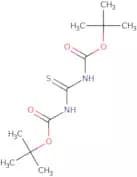
Discontinued productN,N'-Di-(tert-Butoxycarbonyl)thiourea
CAS:N,N'-Di-(tert-Butoxycarbonyl)thiourea is a sterically bulky anion that has been synthesized to interact with amines and amido groups. It has been shown to be a good substrate for p-nitrophenyl phosphate, which is an important molecule in the metabolism of melanoma tumor cells. N,N'-Di-(tert-Butoxycarbonyl)thiourea has also been used as a synthetic building block for conjugates with other molecules. This molecule is able to form supramolecular complexes and may be useful in kinetic studies. The most interesting application of this molecule is its use in the efficient method of removing mercury from water, which is accomplished by oxidation of mercuric chloride by N,N'-Di-(tert-Butoxycarbonyl)thiourea.
Formula:C11H20N2O4SPurity:Min. 95%Color and Shape:PowderMolecular weight:276.35 g/molRef: 3D-FD50724
Discontinued product