Pharmaceutical Standards
Subcategories of "Pharmaceutical Standards"
- APIs for research and impurities(277,367 products)
- Enzyme Activators and Inhibitors(2,829 products)
- Nitrosamines(2,663 products)
- Pharmaceutical and Veterinary Compounds and Metabolites(2,891 products)
- Toxicology(13,353 products)
Found 8146 products of "Pharmaceutical Standards"
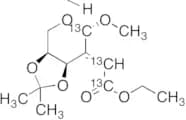
Methyl (2E)-2-Deoxy-2-(2-ethoxy-2-oxoethylidene)-3,4-O-isopropylidene-β-L-erythro-pentopyranoside-13C3
Controlled ProductFormula:C3C10H20O6Color and Shape:NeatMolecular weight:275.272Triethylborane (1.0 M in THF)
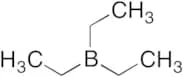
CAS:Controlled ProductApplications Triethylborane reacted with 8-hydroxyquinoline to synthesize three 8--hydroxyquinolato (q) boron compounds B(C2H5)2q (1), BPh2q (2), and B(2-naph)2q (3).
References Wu, Q., et al.: Chem. Mater., 12, 79 (2000).Formula:C6H15BColor and Shape:Single SolutionMolecular weight:97.99α-Ketobutyric Acid-d2 Sodium
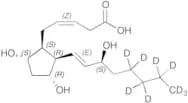
CAS:Controlled ProductFormula:C4D2H3O3·NaColor and Shape:NeatMolecular weight:126.0832,3-Dinor iPF2α-III-d9
CAS:Controlled ProductFormula:C18D9H21O5Color and Shape:NeatMolecular weight:335.483p-Cresol-(methyl-13C)
CAS:Controlled ProductApplications The formation of p-Cresol-(methyl-13C) via phenol methylation at higher temperature from the deactivation of basic catalyst.
Not a dangerous good if item is equal to or less than 1g/ml and there is less than 100g/ml in the package
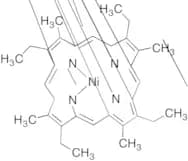
References Borodina, I. B., et al.: Russ. J. Phys. Chem., 80, 892-898 (2006)Formula:CC6H8OColor and Shape:NeatMolecular weight:109.13Etioporphyrin I Nickel
CAS:Controlled ProductFormula:C32H36N4NiColor and Shape:NeatMolecular weight:535.348(-)-γ-Cadinene
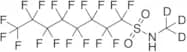
CAS:Controlled ProductFormula:C15H24Color and Shape:ColourlessMolecular weight:204.351N-Methylperfluorooctanesulfonamide-d3 (50μg/mL in Methanol)
CAS:Controlled ProductFormula:C9HD3F17NO2SColor and Shape:Single SolutionMolecular weight:516.19cis-trans Nepetalactone
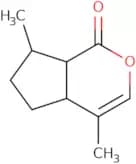
CAS:荆芥内酯是一种驱虫的化合物,使猫薄荷开花植物能够吸引猫。据信,荆芥内酯可以通过模仿猫的信息素来改变猫的行为。
Formula:C10H14O2Purity:Min. 97 Area-%Color and Shape:Colorless Clear LiquidMolecular weight:166.22 g/mol1-Nitronaphthalene
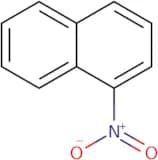
CAS:1-Nitronaphthalene is a nitrobenzene derivative that has been used as an intermediate in the synthesis of pharmaceuticals, dyes, and other organic compounds. 1-Nitronaphthalene is classified as a hazardous substance due to its carcinogenicity and toxicity. In particular, it can cause irritation and burns on skin contact and may be fatal if swallowed. The toxicity profile of 1-nitronaphthalene has been studied in rats, mice, guinea pigs, rabbits, hamsters, and dogs. It was found to have moderate acute oral toxicity in rats but no significant acute toxicity in mice or dogs. 1-Nitronaphthalene also had little effect on p450 activity or enzyme activities in rats.
Formula:C10H7NO2Purity:Min. 95%Color and Shape:Yellow Clear LiquidMolecular weight:173.17 g/molRef: 3D-FN45627
Discontinued productIsovaleryl-Phe-Nle-Sta-Ala-Sta-OH
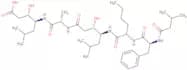
CAS:Isovaleryl-Phe-Nle-Sta-Ala-Sta-OH (IVAS) is a small molecule that has been shown to be an angiotensin system inhibitor. IVAS blocks the binding site of the angiotensin receptor and prevents the activation of this system. This effect is dose dependent and can be used to treat high blood pressure in humans. IVAS is a long-acting drug and has been shown to be effective in primates as well as humans. The drug is rapidly absorbed from the gastrointestinal tract and eliminated by metabolism, mainly through hydrolysis by esterases or glucuronidases, oxidation by cytochrome P450 enzymes, reduction by glutathione reductase, or conjugation with glucuronic acid. IVAS also specifically binds to markers expressed at high levels in Mycobacterium tuberculosis strains (e.g., ESX-1 secretion system protein) and inhibits cell growth in culture.
Formula:C39H65N5O9Purity:Min. 95%Molecular weight:747.96 g/molRef: 3D-FI49358
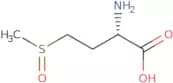
Discontinued productL-Methionine sulfoxide
CAS:Methionine sulfoxide is a methionine that has been oxidized to methionine sulfoxide. Methionine sulfoxides are produced through protein oxidation, which is the chemical process of reacting with oxygen in the air or other compounds to form an organic peroxide and superoxide radical. Methionine sulfoxides are found in proteins and are formed as a result of oxidative stress on cells and tissues. The rate constant for the conversion of methionine to methionine sulfoxide is 0.01983 min-1 at pH 7, 25°C. There are two methods of detection: chemiluminescence method and chromatographic analysis. In addition, methionine sulfoxides have natural antioxidant properties that can be used to treat diseases such as Alzheimer's disease and Parkinson's disease, as well as cancer treatments. Methionine sulfoxides have been shown to have a significant effect on wild-type strains of bacteria, reducing their growth rates
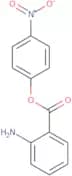
Formula:C5H11NO3SPurity:Min. 98 Area-%Color and Shape:White PowderMolecular weight:165.21 g/mol4-Nitrophenyl Anthranilate
CAS:Controlled Product4-Nitrophenyl anthranilate is a potent inhibitor of serine protease. It is synthesized by reacting an anthranilate with an hydroxyl group in the presence of ultraviolet light, and can be used as a fluorescent probe. 4-Nitrophenyl anthranilate binds to the active site of serine protease, and prevents the hydrolysis of proteins by blocking the cleavage of peptide bonds at the carboxylic acid termini. This compound has been shown to inhibit human serum albumin and cell nuclei in vitro. The reaction mechanism for this compound is unknown, but it is believed that it may involve a photo-induced electron transfer mechanism.
Formula:C13H10N2O4Purity:Min. 95%Color and Shape:PowderMolecular weight:258.23 g/molRef: 3D-FN61994
Discontinued product3,4'-Dihexyl-2,2'-bithiophene
CAS:Please enquire for more information about 3,4'-Dihexyl-2,2'-bithiophene including the price, delivery time and more detailed product information at the technical inquiry form on this page
Purity:Min. 95%Ref: 3D-FD44193
Discontinued product(NZ)-4-chloro-N-[1-[2-(4-nitrophenyl)ethyl]piperidin-2-ylidene]benzenesulfonamide
CAS:Controlled ProductPlease enquire for more information about (NZ)-4-chloro-N-[1-[2-(4-nitrophenyl)ethyl]piperidin-2-ylidene]benzenesulfonamide including the price, delivery time and more detailed product information at the technical inquiry form on this page
Formula:C19H20ClN3O4SPurity:Min. 95%Molecular weight:421.9 g/molRef: 3D-FN154024
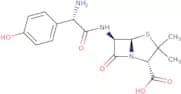
Discontinued productAmoxicillin trihydrate impurity B
CAS:Amoxicillin trihydrate impurity B is an impurity of amoxicillin trihydrate, a penicillin antibiotic. Impurities are substances that are not intentionally added to the drug and may be formed during the manufacturing process. Impurities can affect the quality and safety of drugs, although their presence does not necessarily indicate a problem with the drug. Impurities in amoxicillin trihydrate include clavulanate potassium (impurity A) and heptane-2-carboxylic acid (impurity C). Impurity A is present in small quantities, typically less than 1% of the total amount of amoxicillin trihydrate. Impurity C is present in larger quantities and can make up to 10% of the total amount of amoxicillin trihydrate.
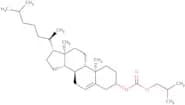
Formula:C16H19N3O5SPurity:Min. 95%Molecular weight:365.41 g/molCholesterol Isobutyl Carbonate
CAS:Controlled ProductCholesterol Isobutyl Carbonate is a high melting organic solvent that has been used to prepare microcapsules. It can be used as a coating material for the preparation of inorganic particles, and it has been shown to have the ability to modify molecules by attaching functional groups. The diameter of cholesterol iso butyl carbonate particles is around 100 nm.
Purity:Min. 95%Ref: 3D-FC61986
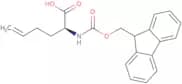
Discontinued product(S)-N-Fmoc-2-(3'-butenyl)glycine
CAS:Please enquire for more information about (S)-N-Fmoc-2-(3'-butenyl)glycine including the price, delivery time and more detailed product information at the technical inquiry form on this page
Formula:C21H21NO4Purity:Min. 95%Color and Shape:White PowderMolecular weight:351.4 g/molNaphthalen-2-ethanol
CAS:Naphthalen-2-ethanol is a primary alcohol that has been synthesized and immobilized onto boron nitride. It can be used as a synthetic reaction rate indicator. Naphthalen-2-ethanol is soluble in organic solvents such as methanol, which can be used to determine the concentration of methanol in solution by observing the change in absorbance at 230 nm. This compound has functional groups such as carbinols, which are characterized by their high reactivity and ability to form esters, ethers, amides, or nitriles. Naphthalen-2-ethanol also reacts with lipases to produce polyamines and with chromatography to produce substitutive nomenclature.
Formula:C12H12OPurity:Min. 95%Molecular weight:172.22 g/molRef: 3D-FN146293
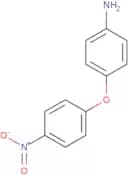
Discontinued product4-(4-Nitrophenoxy)aniline
CAS:4-(4-Nitrophenoxy)aniline is a synthetic drug that is used as a substrate for the cytochrome P450 system. It has been shown to be metabolized by the liver in two steps, forming reduction products and interacting with thiourea. This drug also has functional groups which are active in the group p2 of the periodic table, such as diphenyl ethers and aminophenols. 4-(4-Nitrophenoxy)aniline can be used to probe the interaction between an enzyme and its substrate.
Formula:C12H10N2O3Purity:Min. 95%Molecular weight:230.22 g/molRef: 3D-FN147043
Discontinued product






![(NZ)-4-chloro-N-[1-[2-(4-nitrophenyl)ethyl]piperidin-2-ylidene]benzenesulfonamide](/_next/image/?url=https%3A%2Fstatic.cymitquimica.com%2Fproducts%2F3D%2Fthumb-webp%2FFN154024.webp&w=3840&q=75)