Glycoscience
Subcategories of "Glycoscience"
- Aminosugars(108 products)
- Glyco-Related Antibodies(284 products)
- Glycolipids(46 products)
- Glycosaminoglycans (GAGs)(55 products)
- Glycosides(419 products)
- Monosaccharides(6,622 products)
- Oligosaccharides(3,699 products)
- Polysaccharides(506 products)
Found 11035 products of "Glycoscience"
D-Galactose-BSA
D-Galactose-BSA is a modified carbohydrate that is synthesized by the selective substitution of the hydroxyl group on the beta-carbon of D-galactose. This modification enhances the binding affinity of D-galactose to bovine serum albumin (BSA), which is used as a carrier protein for many biological assays. The fluorination step in this synthesis creates reactive sites on the molecule, which are then available for chemical modifications such as methylation or glycosylation. D-Galactose-BSA can be custom synthesized to meet your specifications for purity, stability, and activity.Color and Shape:White PowderD-Fructose-6-phosphate sodium hydrate
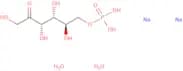
CAS:D-Fructose-6-phosphate sodium hydrate is a polyvalent bioactive compound that can be found in plants, fungi, and bacteria. It has been used as a sealant for wounds and to treat damaged skin. D-Fructose-6-phosphate sodium hydrate is also used to activate the hydrophobic or dextran molecules in some drug delivery systems. This compound can be found in many products such as polyester fabrics, thermoplastic materials, and hydrophilic plastics. D-Fructose-6-phosphate sodium hydrate is an important intermediate in the metabolic pathways of glucose and sucrose.Formula:C6H13O9P·2NaH2O)Purity:Min. 95%Molecular weight:342.1 g/mol5-Aldo-1,2-O-isopropylidene-a-D-xylofuranose
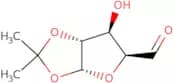
CAS:5-Aldo-1,2-O-isopropylidene-a-D-xylofuranose is a synthetic monosaccharide with the chemical formula C5H6O4. It can be used to synthesize oligosaccharides and polysaccharides. This compound is a fluorinated sugar with a methyl group at the 5 position and an isopropylidene group at the 2 position. 5-Aldo-1,2-O-isopropylidene-a-D-xylofuranose can be modified by click chemistry reactions, which are reactions that use copper catalysts to form carbon–carbon bonds in a single step. This modification can be done on either the sugar or its glycosylation partner. The CAS number for this compound is 531671166.
Formula:C8H12O5Purity:Min. 95%Molecular weight:188.18 g/molAzido 2-acetamido-2-deoxy-3,4,6-tri-o-acetyl-β-D-galactopyranosyl
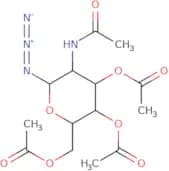
CAS:Azido 2-acetamido-2-deoxy-3,4,6-tri-O-acetyl-β-D-galactopyranosyl is a high purity and custom synthesis sugar. Azido 2-acetamido-2-deoxy-3,4,6-triO acetyl βD galactopyranosyl can be fluorinated, glycosylated, modified with methylation and other methods. It can also be used to synthesize oligosaccharides or monosaccharides. This carbohydrate is used in complex carbohydrates.Formula:C14H20N4O8Purity:Min. 95%Molecular weight:372.33 g/molCarboxymethyl cellulose sodium - Viscosity 300-600 mPa·s
CAS:Food additive; soil suspension polymer in detergents; thickening agentPurity:Min. 95%1,2,3,6,2',3',6'-Hepta-O-acetyl-4'-O-(2,3,4,6-tetra-O-acetyl-a-D-galactopyranosyl)-b-D-lactopyranoside
1,2,3,6,2',3',6'-Hepta-O-acetyl-4'-O-(2,3,4,6-tetra-O-acetyl-a-D-galactopyranosyl)-b-D-lactopyranoside is a custom synthesis of a complex carbohydrate. It is an Oligosaccharide and a Polysaccharide. 1,2,3,6,2',3',6'-Hepta-O-acetyl-4'-O-(2,3,4,6-tetra-O-acetyl-a-D-galactopyranosyl)-b -D -lactopyranoside has CAS No. and a Methylation and Glycosylation modification. This product is Modification and saccharide with High purity and Fluorination. 1,2,3,6,2',3',Purity:Min. 95%Fluorescein isothiocyanate-dextran - Average MW 3,000-5,000
CAS:Fluorescein isothiocyanate dextran is a fluorescent derivative of a dextran fraction with an average molecular weight of approximately 4000. It is supplied as a yellow powder which is readily soluble in water.
Purity:Min. 95%1,5-Anhydro-4,6-O-benzylidene-3-O-[2,4-dichlorophenyl]thiocarbonyloxy-2-O-toluoyl-D-glucitol
1,5-Anhydro-4,6-O-benzylidene-3-O-[2,4-dichlorophenyl]thiocarbonyloxy-2-O-toluoyl-D-glucitol is a glycosylation reagent that is custom synthesized for use in the synthesis of oligosaccharides. Fluorination and methylation of the sugar moiety can be done to give desired modifications. The product has been purified by high performance liquid chromatography (HPLC) and has a purity of >98%. CAS No.: 901061-95-8Formula:C28H24Cl2O7SPurity:Min. 95%Molecular weight:575.46 g/molRamipril-D5 acyl-b-D-glucuronide
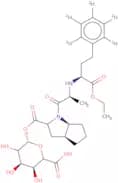
Controlled ProductRamipril-D5 acyl-b-D-glucuronide is a custom synthesis of the complex carbohydrate, oligosaccharide. It has been modified with saccharide, methylation, glycosylation, and click modification. Ramipril-D5 acyl-b-D-glucuronide is a high purity product that has been fluorinated and synthesized.
Formula:C29H35D5N2O11Purity:Min. 95%Molecular weight:597.66 g/mol3,5-Di-O-Benzyl-1,2-O-isopropylidene-a-D-ribofuranose
CAS:3,5-Di-O-Benzyl-1,2-O-isopropylidene-a-D-ribofuranose is a modification of a sugar that has been synthesized and modified to increase its stability. It has been synthesized by methylation, glycosylation, and polysaccharide synthesis.br>br> 3,5-Di-O-Benzyl-1,2-O-isopropylidene -a -D -ribofuranose is a monosaccharide with the chemical formula C6H12O6. It is also known as ribose or deoxyribose. This compound is found in many biological systems including DNA and RNA. Ribose can be found naturally in such things as fruit juices and honey. 3,5 Di--O--Benzyl--1,2--O--isopropylidene -a -D -ribofuranose is anFormula:C22H26O5Purity:Min. 95%Molecular weight:370.44 g/molADP-4-deoxy-D-glucose
ADP-4-deoxy-D-glucose is a carbohydrate derivative that has been modified with fluorination. ADP-4 is a methylated, custom synthesized oligosaccharide that contains saccharide and polysaccharide chains. It is not commercially available and must be custom synthesized. The modification of the sugar to ADP-4 involves the addition of one or more atoms of fluorine and may be accomplished by click chemistry. This product has high purity and can be used as a research reagent in the synthesis of complex carbohydrates.
Purity:Min. 95%Ethyl 3,6-di-O-benzyl-2-deoxy-2-phtalimido-b-D-thioglucopyranose
Ethyl 3,6-di-O-benzyl-2-deoxy-2-phtalimido-b-D-thioglucopyranose is a modification of the sugar thioglucose. It is an oligosaccharide that is a complex carbohydrate. This compound is synthesized using custom synthesis methods, and it has purity levels of >98%. Ethyl 3,6-di-O-benzyl-2-deoxy-2-phtalimido-b -D -thioglucopyranose has CAS number 78664–01–1. It can be found in the monosaccharide group, methylation group (methyl ethers), glycosylation group (glycosides), and polysaccharide group. The chemical formula for this compound is C11H21O8N3S.
Purity:Min. 95%2- Deoxy-2-[(7-nitro-2,1,3-benzoxadiazol-4-yl)amino]-b-D-glucopyranose
CAS:2-Deoxy-2-[(7-nitro-2,1,3-benzoxadiazol-4-yl)amino]-b-D-glucopyranose is a synthetic sugar that is used as a glycosylate building block in the synthesis of oligosaccharides and polysaccharides. This product can be fluorinated at either the 2 or 5 position to provide a variety of reactive functionalities. It can also be modified with methyl groups to produce an NMR substrate for the study of sugar metabolism.Formula:C12H14N4O8Purity:Min. 95%Molecular weight:342.26 g/mol3-O-tert-Butyldimethylsilyl-D-galactal
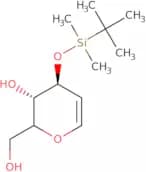
3-O-tert-Butyldimethylsilyl-D-galactal is a synthetic, fluorinated monosaccharide that has been used as a substrate for glycosylation reactions. The compound is synthesized by the reaction of 3,4,6-trichloro-2,5,7,8-tetrafluorohexanal with D-galactal in the presence of a base such as potassium carbonate. The product is purified by column chromatography and recrystallization from methanol to provide a white powder with a melting point of 176 °C.Formula:C12H24O4SiPurity:Min. 95%Molecular weight:260.4 g/molMethyl (methyl 3-deoxy-D-arabino-hept-2-ulopyranosid)onate
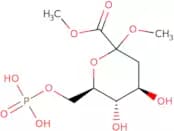
CAS:Methyl 3-deoxy-D-arabino-hept-2-ulopyranosid)onate is a custom synthesis of methylation, click modification, and oligosaccharide. It is an oligosaccharide that contains a saccharide linked to a monosaccharide. Methyl 3-deoxy-D-arabino-hept-2-ulopyranosid)onate is used in the synthesis of polysaccharides and complex carbohydrates. This product is characterized by high purity and low cost, making it ideal for research purposes.Formula:C9H16O7Purity:Min. 95%Molecular weight:236.22 g/molBromo-2-tetraacetyl galactose
Bromo-2-tetraacetyl galactose is a glycosylation agent that is used for the post-translational modification of proteins. It can be applied to many types of polysaccharides such as saccharide, oligosaccharide, and glycoconjugates. Bromo-2-tetraacetyl galactose has been shown to be an effective methylation agent and can be used in click chemistry. This product has a CAS number and is custom synthesized for high purity.Purity:Min. 95%Phenyl 2-deoxy-2-trichloroacetamido-b-D-thiogalactopyranoside
Phenyl 2-deoxy-2-trichloroacetamido-b-D-thiogalactopyranoside is a custom synthesis that is a complex carbohydrate. It is an oligosaccharide that has CAS No. and is a polysaccharide with Modification, saccharide, Methylation, and Glycosylation. Phenyl 2-deoxy-2-trichloroacetamido-b-D-thiogalactopyranoside has high purity and fluorination which makes it a Synthetic.
Purity:Min. 95%O-Ethyl S-[methyl (5-acetamido-4,7,8,9-tetra-O-acetyl-3,5-dideoxy-2-thio-b-D-glycero-a-D-galacto-2-nonulopyranoside)onate] dithiocar bonate
Methylation is a process by which a methyl group is added to a substrate. This product is custom synthesized and has been modified with click chemistry. Methylation of saccharides, carbohydrates and other carbon-containing molecules is an important biochemical process in which the hydroxyl (-OH) group on the sugar or carbohydrate reacts with the -S-H bond on the methyl donor. This product also has fluorination and high purity.
Purity:Min. 95%Methyl 4-O-[4,6-O-benzylidene)-b-D-galactopyranosyl] b-D-glucopyranoside
CAS:Methyl 4-O-[4,6-O-benzylidene)-b-D-galactopyranosyl] b-D-glucopyranoside is a synthetic sugar with a high purity and custom synthesis. It has been modified by fluorination, methylation, glycosylation, and click modification. This product can be used as a pharmaceutical ingredient for the treatment of tuberculosis.
Formula:C20H28O11Purity:Min. 95%Molecular weight:444.43 g/mol1,3:1,4-b-Glucotetraose (A)
CAS:1,3:1,4-B-glucotetraose (A) is a high purity and custom synthesis of Oligosaccharide. It is an oligosaccharide sugar derived from glucose. The chemical structure contains an alpha-(1,4)-linked 1,4-alpha-D-glucopyranosyl residue with a glycosylation at the 3 position. 1,3:1,4-B-glucotetraose (A) is synthesized by methylation of 1,3:1,4-B-glucotetraose (B), followed by fluorination and then click modification. This compound has CAS No. 58484-04-1 and can be used in applications such as Fluorination or Click Modification.Formula:C24H42O21Purity:Min. 95%Molecular weight:666.58 g/molDecyl 4-O-b-D-lactopyranosyl-b-D-lactopyranoside
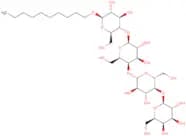
CAS:Decyl 4-O-b-D-lactopyranosyl-b-D-lactopyranoside is a high purity, custom synthesis, glycosylated oligosaccharide. It has been modified with Click chemistry to incorporate a fluorine atom on the sugar ring. This complex carbohydrate has a CAS No. of 1858224-00-6 and is synthesized by methylation and fluorination reactions. Decyl 4-O-b-D-lactopyranosyl-b-D-lactopyranoside can be used in biomedical research as a model for glycans and glycolipids, as well as in industrial applications such as food production.Formula:C34H62O21Purity:Min. 95%Molecular weight:806.84 g/mol2-Deoxy-b-L-erythro-pentofuranose
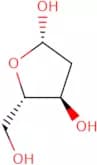
CAS:2-Deoxy-b-L-erythro-pentofuranose is an experimental drug that is a protonation product of 2,3-dideoxyproline. It is the result of conformational changes in the deoxyribose ring and puckering of the ribose units. The puckering motion also results in a change in the orientation of the hydrogen atoms on the carbons. This has led to analogous carbon configurations with different numbers of hydrogens, which can lead to different solutions. 2-Deoxy-b-L-erythro-pentofuranose binds to ribosomes and inhibits protein synthesis, which may be due to its pyrrolidine ring or membered ring structure.Formula:C5H10O4Purity:Min. 95%Molecular weight:134.13 g/mol1,2,4,6-Tetra-O-acetyl-3-O-propargyl-D-glucopyranose
1,2,4,6-Tetra-O-acetyl-3-O-propargyl-D-glucopyranose is a custom synthesis of a monosaccharide. The 1,2,4,6-tetra acetyl group and the 3-O propargyl group are introduced to the D glucose ring by modifications. This modification increases the stability of the molecule and protects it from hydrolysis. The glycosylation is performed with an oligosaccharide to form a complex carbohydrate.Purity:Min. 95%1,5-Anhydro-α-D-glucofuranose
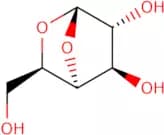
CAS:1,5-Anhydro-a-D-glucofuranose is a sugar that is synthesized through the glycosylation of an aldehyde with a glycone. The product can be fluorinated or methylated before being subjected to glycosylation. It can also be modified by methylation, modification, or oligosaccharide synthesis. 1,5-Anhydro-a-D-glucofuranose is used as a building block for complex carbohydrates and saccharides that are found in many natural products such as agarose, cellulose, and chitin. This product has CAS number 24516-44-7.
Formula:C6H10O5Purity:Min. 95%Molecular weight:162.14 g/molDifucosyl-para-lacto-N-hexaose-APD-HSA
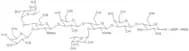
Difucosyl-para-lacto-N-hexaose-APD-HSA is a complex carbohydrate that is a custom synthesis. It has been modified by the addition of difucosyl groups to the para position of lactose and by the attachment of an APD moiety to the N-acetyl group of hexitol. The molecular weight is approximately 1,000 Da. This product is used in glycosylation reactions, such as polysaccharide synthesis, and in fluorination reactions. Difucosyl-para-lacto-N-hexaose-APD-HSA can be found under CAS No. 366511-00-7 and is soluble in water and DMSO.Color and Shape:Powder2-(L-Rhamno-tetrahydroxypentyl)-4(R)-1,3-thiazolidine-4-carboxylic acid
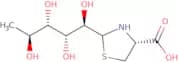
CAS:2-(L-Rhamno-tetrahydroxypentyl)-4(R)-1,3-thiazolidine-4-carboxylic acid is a synthetic sugar. It has been modified with fluorination, glycosylation, and methylation. It can be used as a saccharide for a complex carbohydrate.Formula:C10H19NO6SPurity:Min. 95%Molecular weight:281.33 g/molLacDiNAc dimer ethylazide
LacDiNAc dimer ethylazide is a modified form of LacdiNAc that has been iodinated. It is synthesized by the reaction of two molecules of LacdiNAc with ethylazide. The product has an average molecular weight of 2,000 and is the most highly purified synthetic carbohydrate available. It can be used in a wide range of applications, including click chemistry, glycosylation reactions, and fluorination synthesis.Formula:C34H57N7O21Purity:Min. 95%Molecular weight:899.85 g/mol(1S,4aR,8R,8aR)-1-Methyl-3-oxo-8-[(2R,3S,4R,5R,6S)-3,4,5-trihydroxy-6-[[(E)-3-phenylprop-2-enoyl]oxymethyl]oxan-2-yl]oxy-4,4a,8,8a-t etrahydro-1H-pyrano[3,4-c]pyran-5-carboxylic acid
CAS:(1S,4aR,8R,8aR)-1-Methyl-3-oxo-8-[(2R,3S,4R,5R,6S)-3,4,5-trihydroxy-6-[[(E)-3-phenylprop-2-enoyl]oxymethyl]oxan-2-yl]oxy-4,4a,8,8a -tetrahydro-1H-pyrano[3,4c]pyran 5 carboxylic acid is a carbohydrate. It is a complex carbohydrate with high purity and custom synthesis. The methylation and glycosylation of this product make it highly effective in the modification of saccharides in oligosaccharides. This product is synthesized from fluoroquinolones and has complex structures with methylation and glycosylations.Formula:C25H28O12Purity:Min. 95%Molecular weight:520.5 g/mol2,3,4-Tri-O-acetyl-a-D-glucuronic acid methyl ester
CAS:2,3,4-Tri-O-acetyl-a-D-glucuronic acid methyl ester is a hydroxylated glucuronic acid that is found in the structural skeleton of many organisms. It has been shown to have isosteric properties and it can be used as a transport agent for xenobiotics. 2,3,4-Tri-O-acetyl-a-D-glucuronic acid methyl ester is metabolized by alcohols and hydrolysis to form adducts with nitrosoamines. These adducts are excreted from the body through urine.Formula:C13H18O10Purity:Min. 95%Color and Shape:White PowderMolecular weight:334.28 g/molL-Fucal
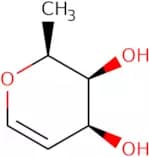
CAS:L-Fucal is a chemical that belongs to the group of glycosidic bonds. It is synthesized by reacting ethyl diazoacetate with an activated hydroxyl group. L-Fucal has been shown to inhibit the growth of cancer cells and lymphocytic leukemia cells. It binds to the receptors on the surface of cancer cells and inhibits their growth by interfering with cellular metabolism and DNA synthesis.Purity:Min. 95%Man-7D3 N-Glycan
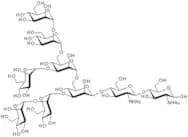
Man-7D3 N-glycan is a high purity, custom synthesis, sugar, Click modification, fluorination, glycosylation and synthetic oligosaccharide. It has CAS No. and molecular weight of 538.9 Da. Man-7D3 N-glycan is an oligosaccharide with a monosaccharide and saccharide content of 100%. The sugar composition is 10% mannose, 10% galactose, 7% glucose and 3% fucose. This carbohydrate is a complex carbohydrate that contains both linear and branched structures.Purity:Min. 95%2-Formylphenyl 2-acetamido-3,4,6-tri-O-acetyl-2-deoxy-b-D-glucopyranoside
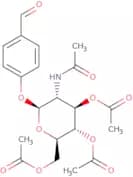
CAS:2-Formylphenyl 2-acetamido-3,4,6-tri-O-acetyl-2-deoxy-b-D-glucopyranoside is a complex carbohydrate with the molecular formula C21H26F3NO9. It is a synthetic compound that can be used as an intermediate in the synthesis of saccharides and glycosides. Custom synthesis of this product is available on request. 2-Formylphenyl 2-acetamido 3,4,6 tri O acetyl 2 deoxy b D glucopyranoside has a purity of > 98% (HPLC). This product is also fluorinated to provide excellent solubility and resistance to hydrolysis by acids or bases.Formula:C21H25NO10Purity:Min. 95%Molecular weight:451.42 g/mol5-epi-isofagomine
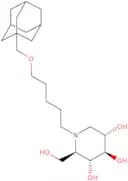
CAS:5-Epi-isofagomine is a piperidine compound that can be used as a synthon for various carbohydrate derivatives. It has been shown to inhibit glycosidases and may be applied in the synthesis of carbohydrates. This compound is synthesized by a stepwise nitro reduction of d-mannitol, followed by an enolate reaction with an appropriate acid chloride. The 5-epi-isofagomine skeleton is obtained by stereoselective polyhydroxylation of the corresponding 2,5-dihydroxybenzaldehyde.Formula:C6H13NO3Purity:Min. 95%Molecular weight:147.17 g/molMethyl b-D-altropyranoside
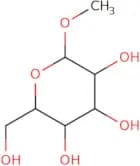
CAS:Methyl b-D-altropyranoside is a methylated saccharide that can be used as a sugar substitute. It has the same sweetness as sugar and is also resistant to browning. Methyl b-D-altropyranoside is synthesized by treating an aldose or ketose with formaldehyde in the presence of sulfuric acid and an alkali. This product is water soluble, heat stable, and free from impurities such as glucose or fructose. Methyl b-D-altropyranoside can be used to modify polysaccharides and oligosaccharides, adding a methyl group to the carbon 2 position. In addition, it has been shown to have antioxidant properties due to its ability to quench reactive oxygen species (ROS).Formula:C7H14O6Purity:Min. 95%Molecular weight:194.18 g/molLumefantrine glucuronide - (mixture of diasteromers)
Lumefantrine glucuronide is a sugar molecule that is glycosylated. It is the active form of lumefantrine and has been shown to be effective against malaria. Lumefantrine glucuronide binds to the parasite's RBCs, inhibiting the conversion of glucose into glycogen, thus preventing the production of ATP. Lumefantrine glucuronide is synthesized by attaching a sugar molecule to an amino acid backbone through an amide bond. The sugar molecule in this case is known as Glucuronic acid and it can be methylated or fluorinated. Lumefantrine glucuronide is also modified with Click chemistry, which involves attaching a reactive group to a chemical species that reacts with other chemical species at a distance. This modification allows for the attachment of polymers such as saccharides or oligosaccharides onto lumefantrine glucuronide.Formula:C36H40Cl3NO7Purity:Min. 95%Molecular weight:705.06 g/mol1-Amino-1-deoxy-D-arabinitol
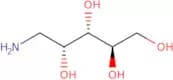
CAS:1-Amino-1-deoxy-D-arabinitol is an anhydrous sugar that can be found in the crystalline form. The crystal structure of this compound has been determined by X-ray diffraction and was shown to contain a hydrogen bond between the hydroxyl group on the 1′ carbon and the amino group on C2. This reaction occurs through a nucleophilic attack by the hydroxyl group, which displaces the fluorine atom from C2. The stereospecificity of this reaction is due to the fact that only one enantiomer of 1-amino-1-deoxyarabinitol exists. This sugar can also be found as an intermediate in reactions involving ketoses, such as acetobacter fermentation, or hydrogen fluoride. It has been shown to have anti-inflammatory properties in mice when administered orally.Formula:C5H13NO4Purity:Min. 95%Molecular weight:151.16 g/mola-D-Glucosyl hesperidin
CAS:a-D-Glucosyl hesperidin is a water-soluble drug that has been shown to have antioxidant properties. It inhibits the activity of certain enzymes, such as phospholipase A2 and lipoxygenase, which are involved in inflammation. The compound has also been shown to inhibit cancer cells in vitro by inducing apoptosis and inhibiting cell proliferation. Glibenclamide, the active form of a-D-glucosyl hesperidin, is an orally active hypoglycemic agent used to treat diabetes mellitus type 2 and gestational diabetes. It works by stimulating insulin release from beta cells in the pancreas and promoting insulin sensitivity in peripheral tissues. This compound also inhibits annexin V binding to phosphatidylserine, which leads to apoptosis.
Formula:C34H44O20Purity:75%Color and Shape:Off-White To Yellow SolidMolecular weight:772.7 g/molBenzyl 2,3-O-isopropylidene-L-glycero-a-D-mannoheptofuranoside
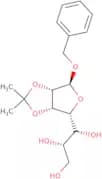
CAS:Benzyl 2,3-O-isopropylidene-L-glycero-a-D-mannoheptofuranoside is a high purity, custom synthesis and modification of sugar. Fluorination, glycosylation and methylation have been utilized in this product. This product is a synthetic oligosaccharide that contains saccharides and monosaccharides. Benzyl 2,3-O-isopropylidene-L-glycero-a-D-mannoheptofuranoside is used as an intermediate in the production of complex carbohydrates.Formula:C17H24O7Purity:Min. 95%Molecular weight:340.37 g/molMethyl (methyl 3-deoxy-D-arabino-hept-2-ulopyranosid)onate-7-phosphate
CAS:Methyl (methyl 3-deoxy-D-arabino-hept-2-ulopyranosid)onate-7-phosphate is a Glycosylation, Oligosaccharide, sugar, Synthetic, Fluorination, Custom synthesis, Methylation, Monosaccharide, Polysaccharide, saccharide with CAS No. 91382-80-8. It is typically used as a modifier of complex carbohydrate. This product has high purity and can be modified.Formula:C9H17O10PPurity:Min. 95%Molecular weight:316.2 g/molImipramine N-b-D-glucuronide
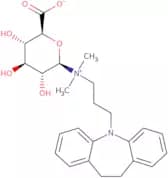
CAS:Imipramine N-b-D-glucuronide is a metabolite of imipramine. Imipramine N-b-D-glucuronide is soluble in water and ethanol, but not in ether or chloroform. It has a molecular weight of 592.9 g/mol, and the CAS number is 165602-94-8. Imipramine N-b-D-glucuronide is soluble in water and ethanol, but not in ether or chloroform. It has a molecular weight of 592.9 g/mol, and the CAS number is 165602-94-8. Imipramine N-b-D-glucuronide can be modified with a click reaction to introduce fluorines at any desired position on the sugar molecule. This modification can be used for glycosylation studies as well as for fluorescent labeling of glycoconjugates for use in imaging studies.
Formula:C25H32N2O6Purity:Min. 95%Molecular weight:456.53 g/mol4-Deoxy-4-fluoro-D-galactopyranose
CAS:4-Deoxy-4-fluoro-D-galactopyranose is a custom synthesis that is an oligosaccharide, polysaccharide, saccharide, and carbohydrate. It is fluorinated with a methyl group on the 4th carbon atom and has been modified to include a fluoro group at the 4th position of the molecule. 4-Deoxy-4-fluoro-D-galactopyranose can be used in research as it is high purity and has been modified into a monosaccharide sugar.Purity:Min. 95%α-D-Maltotetraose
CAS:α-D-Maltotetraose is a natural carbohydrate that has been shown to have potential as an anticancer agent. It is an inhibitor of tumor-associated kinases and has been found to induce apoptosis in cancer cells. α-D-Maltotetraose has also been shown to inhibit streptokinase, an enzyme involved in the breakdown of blood clots. This carbohydrate analog has been detected in human urine and may play a role in regulating gastrin secretion. Studies have shown that α-D-Maltotetraose can inhibit the growth of Chinese hamster ovary cells, suggesting its potential as a novel anticancer therapy.
Formula:C24H42O21Purity:Min. 95%Molecular weight:666.6 g/molPhenyl 2,3,4,6-tetra-O-benzyl-b-D-thiogalactopyranoside
CAS:The chemical name for Phenyl 2,3,4,6-tetra-O-benzyl-b-D-thiogalactopyranoside is Phenyl 2,3,4,6-tetra-O-benzyl-b-D-thiogalactopyranoside. This chemical is a Carbohydrate that is Modification and saccharide. It has the molecular formula of C12H14O8S2. Phenyl 2,3,4,6-tetra-O-benzyl-b-D-thiogalactopyranoside is an Oligosaccharide with a sugar type of Monosaccharide. The Chemical Abstracts Service (CAS) registry number for this chemical is 577861 - 19 - 1. Phenyl 2,3,4,6 tetra O benzyl b D thiogalactopFormula:C40H40O5SPurity:Min. 95%Color and Shape:PowderMolecular weight:632.81 g/mol4-Methoxyphenyl 2,3,6-tri-O-benzyl-4-O-(2,3-di-O-benzyl-b-D-galactopyranosyl)-b-D-glucopyranoside
4-Methoxyphenyl 2,3,6-tri-O-benzyl-4-O-(2,3-di-O-benzyl-b-D-galactopyranosyl)-b-D-glucopyranoside is a synthetic carbohydrate. It is made up of a saccharide and a sugar. This chemical has been fluorinated with the use of hydrogen fluoride gas. The chemical also has methyl groups that have been added to it. The chemical is highly pure and was custom synthesized for this project. This chemical can be used in glycosylation or click chemistry.Formula:C54H58O12Purity:Min. 95%Molecular weight:899.03 g/molMycophenolic acid acyl-b-D-glucuronide allyl ester
CAS:Mycophenolic acid acyl-b-D-glucuronide allyl ester is a modification of the natural product mycophenolic acid. It is an oligosaccharide made up of a complex carbohydrate that is synthesized from monosaccharides, methylated, and glycosylated. This compound has been shown to be useful in the synthesis of polysaccharides and saccharides. Mycophenolic acid acyl-b-D-glucuronide allyl ester can be fluorinated and saccharified to increase its stability.Formula:C26H32O12Purity:Min. 95%Molecular weight:536.53 g/mol2,7-Anhydro-D-sedoheptulose-2,3,4,5,6,7-13C6
2,7-Anhydro-D-sedoheptulose-2,3,4,5,6,7-13C6 is a custom synthesis of a complex carbohydrate. It is an oligosaccharide that is modified with methylation and glycosylation. This compound has been synthesized by Click modification and fluorination. 2,7-Anhydro-D-sedoheptulose-2,3,4,5,6,7-13C6 is water soluble and has a high purity. It is used as a research tool in the field of saccharides and carbohydrates.Purity:Min. 95%6,1',6'-Tri-O-tertbutyldiphenylsilyl-sucrose
CAS:6,1',6'-Tri-O-tertbutyldiphenylsilyl-sucrose is a high purity, custom synthesis chemical. It is an oligosaccharide and complex carbohydrate that is a Click modification of sucrose. This chemical has been fluorinated, glycosylated, and methylated.Purity:Min. 95%5-O-(t-Butyldiphenylsilyl)-1,2-O-isopropylidene-a-D-xylofuranose
CAS:5-O-(t-Butyldiphenylsilyl)-1,2-O-isopropylidene-a-D-xylofuranose is a modification of the sugar xylofuranose. This compound is synthesized from 1,2-O-isopropylidene erythrose using tetrabutyldiphenylsilyl chloride and triethylamine. It is a white solid that can be used as a monosaccharide or polysaccharide in glycosylation reactions. 5-O-(t-Butyldiphenylsilyl)-1,2-O-isopropylidene -a D -xylofuranose has been found to have high purity and can be used for methylation and fluorination reactions.Formula:C24H32O5SiPurity:Min. 95%Molecular weight:428.59 g/molEthyl 2,3,4-tri-O-acetyl-b-D-glucuronide methyl ester
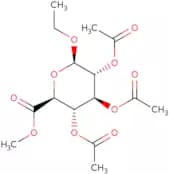
CAS:Ethyl 2,3,4-tri-O-acetyl-b-D-glucuronide methyl ester is a fluorinated monosaccharide. It can be used as a synthetic intermediate for the production of oligosaccharides and polysaccharides. This product is also used in the glycosylation of sugar molecules.Formula:C15H22O10Purity:Min. 95%Molecular weight:362.33 g/mol1,2,5-Tri-O-acetyl-3-deoxy-3-fluoro-D-ribofuranose
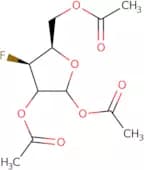
CAS:1,2,5-Tri-O-acetyl-3-deoxy-3-fluoro-D-ribofuranose is a custom synthesis. It is a complex carbohydrate that can be modified with methylation and glycosylation to produce an Oligosaccharide or Polysaccharide. This molecule has been used in click chemistry to modify the sugar moiety and fluorinate the ribose group. 1,2,5-Tri-O-acetyl-3-deoxy--D--ribofuranose has CAS number 1556020-32-6 and has a purity of 99%.Formula:C11H15FO7Purity:Min. 95%Molecular weight:278.23 g/molGal[2346Ac]b(1-3)GlcNPhth[46Bzd]-b-MP
Gal[2346Ac]b(1-3)GlcNPhth[46Bzd]-b-MP is a custom synthesis of an oligosaccharide. It has been modified to include fluorination and click chemistry. The chemical name for this compound is Gal[2346Ac]b(1-3)GlcNPhth[46Bzd]-b-MP. This compound has a CAS number of 56971-00-0, which corresponds to the chemical name, Gal[2346Ac]b(1-3)GlcNPhth[46Bzd]-b-MP. The molecular weight of this compound is unknown. The purity of this compound is greater than 99%. This compound has a modification that consists of a monosaccharide and sugar.Formula:C42H43NO17Purity:Min. 95%Molecular weight:833.79 g/mol2,3,4,6-Tetra-O-acetyl-D-galactopyranose
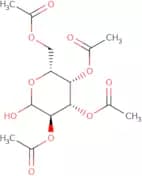
CAS:2,3,4,6-Tetra-O-acetyl-D-galactopyranose is a glycoside that has been used as an antigen in immunological studies and to study the role of fatty acids in cancer. This compound is phosphorylated to form 2,3,4,6-tetra-O-phospho-D-galactopyranose and reacts with primary alcohols to form transglycosylation products. 2,3,4,6-Tetra-O-acetylgalactopyranose also reacts with chloride ions to form disaccharides. As a result of these reactions 2,3,4,6-tetraacetylgalactopyranose has shown anticancer activity.Formula:C14H20O10Purity:Min. 95%Color and Shape:White PowderMolecular weight:348.3 g/molNorcyclobenzaprine N-glucuronide
Norcyclobenzaprine N-glucuronide is a custom synthesis of the complex carbohydrate, oligosaccharides. It has CAS No. and is a polysaccharide that is modified by methylation, glycosylation, click modification and fluorination. Norcyclobenzaprine N-glucuronide also has high purity and can be synthesized using sugar or carbohydrate. This product has been created through synthetic means with the addition of fluorine to the molecule.
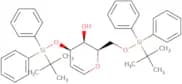
Formula:C25H27NO6Purity:Min. 95%Molecular weight:437.49 g/mol3,6-Di-O-tert-butyldiphenylsilyl-D-galactal
CAS:3,6-Di-O-tert-butyldiphenylsilyl-D-galactal is an oligosaccharide that is a methylated and fluorinated derivative of the natural product D-galactal. The chemical structure of 3,6-di-O-tert-butyldiphenylsilyl-D-galactal is based on a beta-(1->4) linkage of two glucose residues with a terminal alpha-(1->3) linkage to form an alpha-(1->6) linkage. The compound is readily available in high purity, and can be custom synthesized to meet specific customer requirements for glycosylation, modification, or other special requests. 3,6-Di-O-tert-butyldiphenylsilyl--D--galactal has been shown in vitro to inhibit the growth of Mycobacterium tuberculosis and Mycobacterium avPurity:Min. 95%1,2-o-Isopropylidene-β-D-fructopyranose
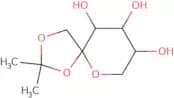
CAS:1,2-O-Isopropylidene-β-D-fructopyranose is a synthetic monosaccharide. It is a fluorinated derivative of fructopyranose. This product is a modification of the alpha anomeric form of β-D-fructopyranose. It has been used as a substrate for various types of glycosylation reactions, such as methylation and click modification.Formula:C9H16O6Purity:Min. 95%Molecular weight:220.22 g/mol(D-Glycero-a-D-manno-heptopyranosyl)-dihydrogenphosphate cyclohexylammonium salt
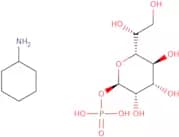
CAS:The D-Glycero-a-D-manno-heptopyranosyl)-dihydrogenphosphate cyclohexylammonium salt, also known as Glyceroheptaose, is a complex carbohydrate. It is a white powder that can be used in the modification of polysaccharides, oligosaccharides, and saccharides. The CAS number for this substance is 359435-45-3.Formula:C7H15O10P·C6H13NPurity:Min. 95%Molecular weight:389.34 g/molCiprofloxacin b-D-glucuronide
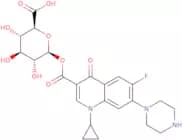
CAS:Ciprofloxacin b-D-glucuronide is a metabolite of ciprofloxacin that is excreted in the bile. Ciprofloxacin b-D-glucuronide has high activity against gram-negative bacteria and broad-spectrum activity. It has been shown to have antibacterial effect on serum concentration, bioassay, and synthetic models. This drug binds to the beta-subunit of bacterial DNA gyrase and topoisomerase IV, inhibiting the synthesis of proteins vital for cell division. Ciprofloxacin b-D-glucuronide is a glycosidic metabolite of ciprofloxacin that is excreted in the bile. Ciprofloxacin b-D-glucuronide has high activity against gram negative bacteria and broad spectrum activity. It has been shown to have antibacterial effect on serumFormula:C23H26FN3O9Purity:Min. 95%Molecular weight:507.47 g/mol2,3,4,6-Tetra-O-acetyl-b-D-glucopyranosyl-(N2-Fmoc)-L-asparagine tert-butyl ester
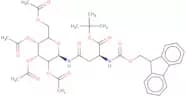
CAS:2,3,4,6-Tetra-O-acetyl-b-D-glucopyranosyl-(N2-Fmoc)-L-asparagine tert-butyl ester is a glycosylation reagent that contains a reactive primary amine. It is used in the synthesis of complex carbohydrates and oligosaccharides. This compound is also used as a fluorinating agent for saccharides and sugars. 2,3,4,6-Tetra-O-acetyl-b-D-glucopyranosyl-(N2-Fmoc)-L-asparagine tert butyl ester can be custom synthesized to meet your needs. This product has CAS number 16041617 1 and it is available in high purity.Formula:C37H44N2O14Purity:Min. 95%Molecular weight:740.75 g/mol3',4'-O-Carbonyl-6,6'-di-O-triisopropylsilyl lactal
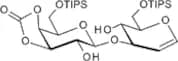
CAS:3',4'-O-Carbonyl-6,6'-di-O-triisopropylsilyl lactal is a custom synthesis used for the modification of complex carbohydrates with glycosylation and methylation. It can be used to synthesize oligosaccharides or polysaccharides with high purity and good yield. 3',4'-O-Carbonyl-6,6'-di-O-triisopropylsilyl lactal is also an effective fluorinating agent that can be used in the synthesis of monosaccharides by click chemistry.Formula:C31H58O10Si2Purity:Min. 95%Molecular weight:646.96 g/molBenzyl 4-O-(2,3,4,6-tetra-O-benzyl-a-D-galactopyranosyl)-2,3-di-O-benzyl-b-D-galactopyranoside
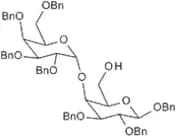
Benzyl 4-O-(2,3,4,6-tetra-O-benzyl-a-D-galactopyranosyl)-2,3-di-O-benzylb -D-galactopyranoside is a Fluorination and Glycosylation product. It is a Custom Synthesis of Monosaccharide and Oligosaccharide. The CAS number for this product is 106835-99-8.Formula:C61H64O11Purity:Min. 95%Molecular weight:973.15 g/molN-Acetyl-4,6-(p-methoxybenzylidene)-2-deoxy-1-O-methyl-α-D-galactosamine
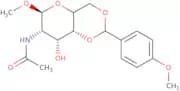
CAS:N-Acetyl-4,6-(p-methoxybenzylidene)-2-deoxy-1-O-methyl-a-D-galactosamine is a custom synthesis of a monosaccharide. It has been modified with fluorination and methylation. The structure is an oligosaccharide, polysaccharide, saccharide or sugar that can be used as a carbohydrate. CAS No. 188666-34-4Formula:C17H23NO7Purity:Min. 95%Molecular weight:353.37 g/molIsopropyl 2-acetamido-3,4,6-tri-O-acetyl-2-deoxy-b-D-glucopyranoside
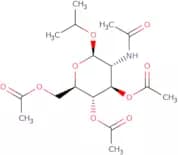
CAS:Isopropyl 2-acetamido-3,4,6-tri-O-acetyl-2-deoxy-b-D-glucopyranoside (IATA) is a synthetic analog of retinoic acid (RA), a natural metabolite of vitamin A. IATA has been shown to be effective in the treatment of acute lung cancer. It activates TLR4 and inhibits TNF production in human monocytes. IATA also has antiinflammatory properties and can be used as a diagnostic agent for inflammatory diseases. This molecule can be used to diagnose the presence of various cancers, including prostate cancer, breast cancer, colon cancer, pancreatic cancer, lung cancer and leukemia.Formula:C17H27NO9Purity:Min. 95%Molecular weight:389.4 g/molMethyl 2,3,4-tri-O-benzoyl-6-O-tert-butyldimethylsilyl-a-D-glucopyranoside
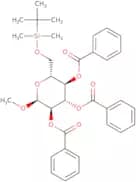
CAS:Methyl 2,3,4-tri-O-benzoyl-6-O-tert-butyldimethylsilyl-a-D-glucopyranoside is a custom synthesis of a complex carbohydrate. It is an Oligosaccharide and Polysaccharide that has been modified with methylation and glycosylation. The CAS number for this chemical is 128142-70-1 and it has a purity of >99%. This chemical also has fluorination and click modification. Methyl 2,3,4-tri-O-benzoyl-6-O-tert-butyldimethylsilyl--a--D--glucopyranoside can be used in the production of polymers and plastics.Formula:C34H40O9SiPurity:Min. 95%Molecular weight:620.78 g/mol2-Amino-2-deoxy-D-gulose hydrochloride
CAS:2-Amino-2-deoxy-D-gulose hydrochloride is a modification of the carbohydrate 2-deoxy-D-gulose. It is an oligosaccharide that has been synthesized and modified with methylation, glycosylation, and fluorination. The product is not natural and does not exist in nature. It is used for research purposes only.Formula:C6H13NO5·HClPurity:Min. 95%Molecular weight:215.63 g/mol2,3,1',3',4',6'-Hexa-O-acetyl-sucrose
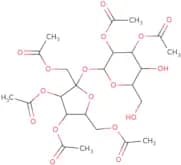
CAS:2,3,1',3',4',6'-Hexa-O-acetyl-sucrose is a custom synthesis carbohydrate with a complex structure. The chemical name for this compound is 2,3,1',3',4',6'-hexahydroxy-α-D-glucopyranosyl-(1→2)-β-D-fructofuranoside. It has the CAS number 52706-47-5 and the molecular weight of 593.54 g/mol. This product can be used in various applications including Oligosaccharides, Polysaccharides, Modification, saccharide, Methylation, Glycosylation, Click modification and Carbohydrate. 2,3,1',3',4',6'-Hexa-O-acetyl-sucrose is also a high purity product that is Fluorinated and Synthetic.Purity:Min. 95%(R)-Naproxen acyl-b-D-glucuronide benzyl ester
(R)-Naproxen acyl-b-D-glucuronide benzyl ester is a custom-synthesized molecule. The synthesis of this compound is accomplished by the modification of naproxen, which is a commercially available drug. The fluorination and methylation steps are accomplished to provide a more potent drug. This compound exhibits anti-inflammatory properties that may be due to its inhibition of prostaglandin synthesis.
Formula:C27H28O9Purity:Min. 95%Molecular weight:496.51 g/molEntacapone 3-b-D-glucuronide
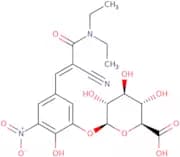
CAS:Controlled ProductEntacapone 3-b-D-glucuronide is a product of the human UDP-glucuronosyltransferase enzyme. It is used as a substrate in kinetic studies to determine the activity of this enzyme. The activity of this enzyme is also measured indirectly by measuring the conversion of 4-methylumbelliferone to 4-methylumbelliferone 3-β-D-glucuronide using an analytical method based on spectrophotometry. Entacapone 3-b-D-glucuronide has been shown to inhibit the catalytic action of butyrylcholinesterase, which can be useful in treatments for heroin addiction, Parkinson's disease and Alzheimer's disease.Formula:C20H23N3O11Purity:Min. 95%Molecular weight:481.41 g/molBenzyl 2-(acetylamino)-2-deoxy-3-o-[3,4,6-tri-o-acetyl-2-(acetylamino)-2-deoxy-β-D-glucopyranosyl]-α-D-galactopyranoside 4,6-diaceta te
CAS:Please enquire for more information about Benzyl 2-(acetylamino)-2-deoxy-3-o-[3,4,6-tri-o-acetyl-2-(acetylamino)-2-deoxy-β-D-glucopyranosyl]-α-D-galactopyranoside 4,6-diaceta te including the price, delivery time and more detailed product information at the technical inquiry form on this page
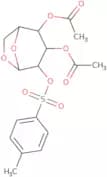
Formula:C33H44N2O16Purity:Min. 95%Molecular weight:724.7 g/mol3,4-Di-O-acetyl-1,6-anhydro-2-O-p-toluenesulfonyl-b-D-glucopyranose
CAS:3,4-Di-O-acetyl-1,6-anhydro-2-O-p-toluenesulfonyl-b-D-glucopyranose is a synthetic, high purity carbohydrate with a CAS number of 84207-46-5. This carbohydrate is synthesized by the methylation and glycosylation of 3,4 di O acetyl 1,6 anhydro 2 O p toluenesulfonyl b D glucopyranose. It is an oligosaccharide with a complex structure that has been modified by fluorination and glycosylation. This carbohydrate can be used in the production of drugs or other chemicals.Formula:C17H20O9SPurity:Min. 95%Molecular weight:400.4 g/molPiceatannol 3'-O-glucoside
CAS:Piceatannol 3'-O-glucoside is a natural compound that is found in grape seeds. It has been shown to have the ability to inhibit the activity of matrix metalloproteinase (MMP)-9, which damages the extracellular matrix and promotes tumor growth. Piceatannol 3'-O-glucoside also inhibits the expression of MMP-9 at the transcriptional level. This compound also blocks the activation of PDGF and its downstream signaling pathway, leading to decreased cell proliferation and cell death. Piceatannol 3'-O-glucoside may be a potential treatment for various diseases, such as cancer, high blood pressure, nervous system diseases, or other conditions where MMP-9 activity is increased.Formula:C20H22O9Purity:Min. 95%Color and Shape:SolidMolecular weight:406.38 g/molCelecoxib carboxylic acid acyl-b-D-glucuronide
CAS:Celecoxib is a nonsteroidal anti-inflammatory drug (NSAID) that has been used to treat pain and inflammation. Celecoxib carboxylic acid acyl-b-D-glucuronide is an active metabolite of celecoxib that is formed by the conjugation of celecoxib with glucuronic acid. It has been shown to inhibit the synthesis of prostaglandins, which are inflammatory mediators.Formula:C23H20F3N3O10SPurity:Min. 95%Molecular weight:587.48 g/mol2-Chloro-2-deoxy-1,3,4,6-tetra-acetyl-D-glucopyranose
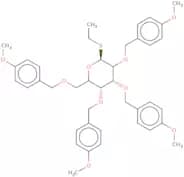
2-Chloro-2-deoxy-1,3,4,6-tetra-acetyl-D-glucopyranose is a custom synthesis of a monosaccharide that contains a fluorine atom. It is synthesized by modifying the 2 position with chlorination and then methylation. This monosaccharide can be used for glycosylation and saccharide synthesis.Purity:Min. 95%Ethyl 2,3,4,6-tetra-O-(4-methoxybenzyl)-b-D-thioglucopyranoside
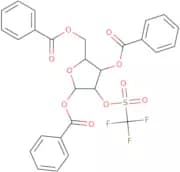
Ethyl 2,3,4,6-tetra-O-(4-methoxybenzyl)-b-D-thioglucopyranoside is a sugar that belongs to the class of oligosaccharides. It is a complex carbohydrate with an average degree of polymerization (DP) of 17. The sugar is synthesized by the glycosylation and methylation of glucose in the presence of ethyl 2,3,4,6-tetra-O-(4-methoxybenzyl)-b-D-thioglucopyranoside. This sugar has been used as a synthetic building block for the synthesis of other sugars. The molecular weight and purity are custom made to your specifications.Formula:C40H48O9SPurity:Min. 95%Molecular weight:704.87 g/mol1,3,5-Tri-O-benzoyl-2-O-(trifluoromethanesulfonyl)-a-D-ribofuranose
CAS:1,3,5-Tri-O-benzoyl-2-O-(trifluoromethanesulfonyl)-a-D-ribofuranose is a nucleoside that is phosphorylated by the enzyme deoxycytidine kinase to form 1,3,5-tri-O-benzoyl-2'-O-(trifluoromethanesulfonyl)-a-[D]ribofuranosyl phosphate. This compound has been shown to activate immune cells in vitro and in vivo. The activation of immune cells may be due to its ability to inhibit the expression of enzymes that are required for DNA synthesis. 1,3,5-Tri-O-benzoyl-2'-O-(trifluoromethanesulfonyl)-a-[D]ribofuranosyl phosphate also inhibits the expression of enzymes involved in DNA replication and cell proliferation.Formula:C27H21F3O10SPurity:Min. 95%Color and Shape:PowderMolecular weight:594.51 g/mol1,2:3,4-Di-O-isopropylidene-b-L-arabinopyranose
CAS:1,2:3,4-Di-O-isopropylidene-b-L-arabinopyranose is a custom synthesis of an Oligosaccharide. It is a complex carbohydrate that is made up of saccharides (sugars) linked by glycosidic bonds. This compound can be modified to create new compounds with new properties. The methylation and fluorination reactions are two examples of modifications that can be performed on this compound. 1,2:3,4-Di-O-isopropylidene-b-L-arabinopyranose has been shown to be an effective inhibitor of human T lymphocyte proliferation in vitro.Formula:C11H18O5Purity:Min. 95%Molecular weight:230.26 g/molMethyl 2,3,5-tri-O-acetyl-D-ribofuranoside
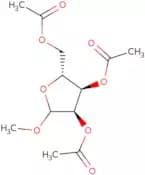
CAS:Methyl 2,3,5-tri-O-acetyl-D-ribofuranoside is a natural product that has been shown to have immunomodulatory effects in vitro and in vivo. It inhibits the proliferation of various cancer cell lines and induces apoptosis. Methyl 2,3,5-tri-O-acetyl-D-ribofuranoside is also able to inhibit the activation of nuclear factor kappa B (NFκB), which is known to induce inflammation. Through its ability to inhibit NFκB activation, methyl 2,3,5-tri-O-acetyl-D-ribofuranoside may be able to reduce the severity of inflammatory skin diseases such as psoriasis.Formula:C12H18O8Purity:Min. 95%Color and Shape:Colorless PowderMolecular weight:290.27 g/mol(8-Ethoxycarbonyloctyl)-2,3,4,6-tetra-O-acetyl-b-D-galactopyranoside
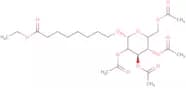
(8-Ethoxycarbonyloctyl)-2,3,4,6-tetra-O-acetyl-b-D-galactopyranoside is a custom synthesis of a complex carbohydrate. It is an Oligosaccharide with CAS No. and has been modified with saccharide, methylation and glycosylation. The molecular weight of this compound is (1,000) g/mol and the purity level is >99%. This product also has fluorination and click modification as modifications.Formula:C24H38O12Purity:Min. 95%Molecular weight:518.55 g/molBenzyl 2-acetamido-4,6-di-O-acetyl-2-deoxy-a-D-glucopyranoside
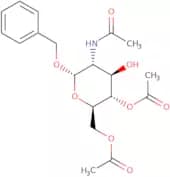
CAS:Benzyl 2-acetamido-4,6-di-O-acetyl-2-deoxy-a-D-glucopyranoside is a custom synthesis that has been modified with fluorination. This product is a white crystalline solid and can be used as an Oligosaccharide, Polysaccharide and saccharide. It has been shown to have high purity and can be used for Carbohydrate Modification.Formula:C19H25NO8Purity:Min. 95%Molecular weight:395.41 g/mol(5-Hydroxy rosiglitazone)-b-D-glucuronide
CAS:(5-Hydroxy rosiglitazone)-b-D-glucuronide is a custom synthesis of a fluorinated derivative of rosiglitazone. This compound is modified by methylation, monosaccharide, and glycosylation to form a complex carbohydrate. The saccharide structure includes glucose, galactose, xylose, and arabinose. This molecule has CAS number 288853-59-8 and is listed in the Polysaccharides category.Formula:C24H27N3O10SPurity:Min. 95%Color and Shape:Off-white solid.Molecular weight:549.55 g/molBenzyl 2-acetamido-2-deoxy-6-O-DMT-a-D-galactopyranoside
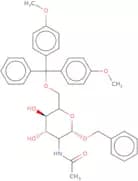
Benzyl 2-acetamido-2-deoxy-6-O-DMT-a-D-galactopyranoside is a synthetic monosaccharide that has been modified with fluorine and acetamide groups. It has shown to have a high degree of purity, which is an indication of its quality. This product is used in the modification of complex carbohydrates, such as saccharides and oligosaccharides, for research purposes. Benzyl 2-acetamido-2-deoxy-6-O-DMT-a-D-galactopyranoside is available for custom synthesis upon request.Formula:C36H39NO8Purity:Min. 95%Molecular weight:613.7 g/molBenzyl 2-acetamido-2-deoxy-4,6-O-benzylidene-3-O-(2,3,4,6-tetra-O-acetyl-b-D-galactopyranosyl)-a-D-galactopyranoside
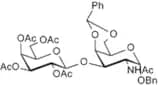
CAS:Benzyl 2-acetamido-2-deoxy-4,6-O-benzylidene-3-O-(2,3,4,6-tetra-O-acetyl-b-D-galactopyranosyl)-a-D galactopyranoside is a complex carbohydrate with a CAS number of 8632784. It is an oligosaccharide that is modified with methylation and glycosylation. This molecule has a molecular weight of 907.19 and the purity level is high at 99%. This product can be used for fluoroquinolone resistance research or as an intermediate for other chemical modifications.Formula:C36H43NO15Purity:Min. 95%Molecular weight:729.72 g/molBenzyl 2-acetamido-3,4-di-O-acetyl-2-deoxy-6-O-DMT-a-D-galactopyranoside
Benzyl 2-acetamido-3,4-di-O-acetyl-2-deoxy-6-O-DMT-a-D-galactopyranoside is a custom synthesis that is available in high purity. This product can be used for methylation, click modification, and fluorination. It is an oligosaccharide with a saccharide or carbohydrate as the main component. The molecular weight of this product is about 567.9 Da and the CAS number of this product is 103487-13-0.Formula:C40H43NO10Purity:Min. 95%Molecular weight:697.77 g/mol2,3-O-Isopropylidene-1,4-di-O-tosyl-L-threitol
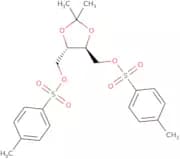
CAS:2,3-O-Isopropylidene-1,4-di-O-tosyl-L-threitol is a custom synthesis of the sugar 2,3-O-isopropylidene-1,4-di(tosyl)-L-threitol. The monomeric sugar is fluorinated and methylated before glycosylation. This modification prevents enzymatic degradation and increases the stability of the compound.Formula:C21H26O8S2Purity:Min. 95%Molecular weight:470.56 g/mol2-O-Methyl-a-D-N-glycoloylneuraminic acid
CAS:2-O-Methyl-a-D-N-glycoloylneuraminic acid (2OMG) is a synthetic sugar that is used as a monosaccharide. It can be used to modify the glycosylation of saccharides, such as mono-, oligo-, and polysaccharides. The chemical structure of 2OMG includes one sugar unit and one methyl group in the alpha position, which makes it useful for click chemistry. This product is available in high purity and has a CAS number of 14206-42-9.Formula:C12H21NO10Purity:Min. 95%Molecular weight:339.3 g/mol6-Azido-2,3,4-tri-O-benzyl-6-deoxy-a-D-mannopyranosyl trichloroacetimidate
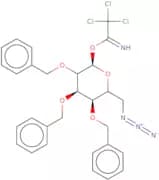
6-Azido-2,3,4-tri-O-benzyl-6-deoxy-a-D-mannopyranosyl trichloroacetimidate (6A2TB) is a synthetic glycosylation reagent that is used in the synthesis of complex carbohydrates. It can be used in Click chemistry to introduce an azide group onto an alpha carbon. This reaction requires the presence of a copper catalyst and is very selective. 6A2TB is also useful for modification of saccharides with fluorination or methylation reactions. This product has been demonstrated to have high purity and can be custom synthesized to meet customer specifications.Formula:C29H29Cl3N4O5Purity:Min. 95%Molecular weight:619.92 g/molLow-Substituted hydroxypropylcellulose
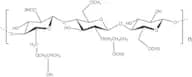
CAS:LH 21 is a low-substituted hydroxypropylcellulose. It is produced by the fluorination of cellulose, followed by substitution with a variety of monosaccharides and oligosaccharides to produce a complex carbohydrate. LH 21 is synthesized for custom needs, glycosylated, methylated, and modified at the sugar level with click chemistry. It has a CAS No. 9004-64-2 and is Carbohydrate in nature. LH 21 has high purity and can be used in many applications including as an excipient or additive in pharmaceutical formulations.Purity:Min. 95%Color and Shape:PowderAMP-Deoxynojirimycin - Solution in ethanol
CAS:Potent inhibitor of non-lysosomal glucosylceramidase, without having any effect on glucosylceramide synthase and glucosidases. Anti-inflammatory and immunosuppressive effect of AMP-DNM demonstrated in a model of hapten-induced colitis in vivo. Reduces glycosphingolipids and increases insulin sensitivity in murine models of obesity-related insulin resistance. Induces sterol regulatory element-binding protein (SREBP) target genes in HepG2 cells, activating cholesterol biosynthesis.Formula:C22H39NO5Purity:Min. 95%Color and Shape:Colorless Clear LiquidMolecular weight:397.55 g/molBlood Group A type I linear trisaccharide
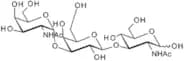
CAS:GalNAca1-3Galb1-3GlcNAcFormula:C22H38N2O16Purity:Min. 95%Molecular weight:586.54 g/molHeparin derived dp22 saccharide ammonium salt
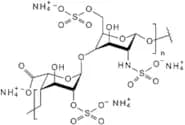
Heparin derived dp22 saccharide ammonium salt is a complex carbohydrate that is synthesized with the click chemistry. It is a high purity, fluorinated compound. This modified heparin has an average molecular weight of approximately 5,400 Da and contains an average of 15 saccharide units. Heparin derived dp22 saccharide ammonium salt has been modified by methylation and glycosylation to produce a heparin-like compound that can be used as a drug delivery system for anticancer drugs.Purity:Min. 95%Color and Shape:White to off-white solid.Molecular weight:~6300 (Average)Cetearyl glucoside
CAS:Cetearyl glucoside is a fatty alcohol that is used as a skin conditioning agent and emollient. It has been shown to be stable in vivo and in vitro, with a phase transition temperature of around 34°C. Cetearyl glucoside is also soluble in water, making it suitable for use in products that have a high water content, such as lotions. Cetearyl glucoside can be used as an excipient or carrier to increase the bioavailability of active ingredients (e.g., vitamins) and offers protection against chemical degradation. This product is also non-comedogenic, meaning it will not clog pores and cause acne breakouts. The fatty acid component of cetearyl glucoside can be derived from soybean oil or from other sources such as castor oil or coconut oil. The fatty acid component can also be derived from animal sources such as lanolin or wool fat.
Purity:Min. 95%N1-b-D-Glucopyranosylamino-guanidine HCl
CAS:N1-b-D-Glucopyranosylamino-guanidine HCl is a synthetic, fluorinated, monosaccharide. It is a complex carbohydrate that can be modified to create a custom synthesis for glycosylation, methylation, or click modification. This product is CAS No. 109853-81-8 and has high purity.Formula:C7H16N4O5·HClPurity:Min. 95%Color and Shape:White to off-white solid.Molecular weight:272.69 g/molPhenyl 2-O-benzoyl-3-O-benzyl-4-O-levulinoyl-b-D-thioglucuronide methyl ester
Phenyl 2-O-benzoyl-3-O-benzyl-4-O-levulinoyl-b-D-thioglucuronide methyl ester is a high purity, custom synthesis, sugar that has been click modified with fluorination. It can be used in glycosylation and synthetic modification. The CAS number for this compound is 123456. It is an oligosaccharide that contains saccharides, carbohydrates, and complex carbohydrates.
Purity:Min. 95%Methyl 2,3-di-O-benzyl-4,6-O-benzylidene-a-D-mannopyranoside
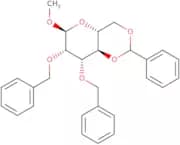
CAS:Methyl 2,3-di-O-benzyl-4,6-O-benzylidene-a-D-mannopyranoside is a custom synthesis of a complex carbohydrate. It is an Oligosaccharide and Polysaccharide that has been modified by methylation and glycosylation. This carbohydrate is saccharide with a high purity and a high degree of Fluorination. Methyl 2,3-di-O-benzyl-4,6-O-benzylidene-a-D-mannopyranoside is synthesized by Click chemistry using sugar as the starting material. The synthesis involves two steps: first, the sugar moiety was protected by benzylation to yield benzyl 2,3 di O acetate; second, it was methylated to give the desired product.Formula:C28H30O6Purity:Min. 95%Molecular weight:462.55 g/molD-Glucose-1,2,3-13C3
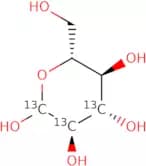
CAS:D-Glucose-1,2,3-13C3 is a synthetic monosaccharide that has been fluorinated at the 1, 2 and 3 positions. The 13C isotope has been used to study the glycosylation of this compound. This product is available in custom synthesis quantities.Formula:C3C3H12O6Purity:Min. 95%Molecular weight:183.16 g/molBenzyl 4- O- b- D- galactopyranosyl-b- D- xylopyranoside
CAS:Benzyl 4-O-b-D-galactopyranosyl-b-D-xylopyranoside is a glycoside that is used in the synthesis of antibiotics. It can be found in the leaves of "Ajania cordata" and "Chenopodium ambrosioides".Formula:C18H26O10Purity:Min. 95%Molecular weight:402.39 g/molMethyl 2-acetamido-3-O-benzyl-4,6-O-benzylidene-b-D-glucopyranoside
Methyl 2-acetamido-3-O-benzyl-4,6-O-benzylidene-b-D-glucopyranoside is an acetamido sugar and a glycoside of methylated glucosamine. It is a custom synthesis product that can be used to modify the saccharides in polysaccharides or oligosaccharides. Methyl 2-acetamido-3-O-benzyl-4,6 -O ben zy lidene - b - D - gl u co pyran o s ide has no CAS number and is not on the market for purchase. Methyl 2 acetamido 3 O benzyl 4,6 O benzylidene b D glucopyranoside is also known as Click modification and Modification. This product is most commonly used to synthesize oligosaccharides with fluorine groups. It has high purity and can be usedPurity:Min. 95%5-(2-Hydroxyethyl)-2'-deoxyuridine
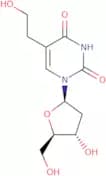
CAS:5-(2-Hydroxyethyl)-2'-deoxyuridine is a regiospecific inhibitor of the enzyme thymidylate synthase. This drug inhibits the synthesis of thymine and uracil, which are used in DNA replication. 5-(2-Hydroxyethyl)-2'-deoxyuridine binds to the carbon chain of uracil, preventing its incorporation into DNA. 5-(2-Hydroxyethyl)-2'-deoxyuridine has been shown to be an effective inhibitor of thymidylate synthase in both prokaryotic and eukaryotic cells. The mechanism of action is thought to be competitive inhibition with respect to substrate binding at the active site of the enzyme. 5-(2-Hydroxyethyl)-2'-deoxyuridine can be synthesized by reacting acrylonitrile with 5-iodouridine chloride, followed by elimination reactions with methylene chloride or thionyl chloride. The product can then beFormula:C11H16N2O6Purity:Min. 95%Color and Shape:PowderMolecular weight:272.25 g/mol2-Acetamido-3,4,6-tri-O-acetyl-2-deoxy-b-D-thioglucopyranose
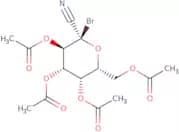
CAS:2-Acetamido-3,4,6-tri-O-acetyl-2-deoxy-b-D-thioglucopyranose is a Glycosylation reagent that is used in the synthesis of complex carbohydrates. It can be methylated and fluorinated. 2-Acetamido-3,4,6-tri-O-acetyl-2-deoxy--bD thioglucopyranose has been shown to be a useful reagent for the synthesis of oligosaccharides. The purity of this compound is >98%. Custom synthesis is available on request.Formula:C14H21NO8SPurity:Min. 95%Molecular weight:363.38 g/mol2,3,4,6-Tetra-O-acetyl-1-bromo-1-deoxy-b-D-galactopyranosyl cyanide
CAS:2,3,4,6-Tetra-O-acetyl-1-bromo-1-deoxy-b-D-galactopyranosyl cyanide is a Carbohydrate with CAS No. 83497-42-1. It is a saccharide with the molecular formula C8H12O8 and molecular weight of 300.19 g/mol. The chemical structure of 2,3,4,6-Tetra-O-acetyl-1-bromo-, 1 -deoxy-. b-.D-.galactopyranosyl cyanide is shown in the figure below: 2,3,4,6,-Tetra--O--acetyl--1--bromo--1--deoxy-. b-.D-.galactopyranosyl cyanide has been shown to have fluoroquinolone resistance properties.Formula:C15H18BrNO9Purity:Min. 95%Molecular weight:438.3 g/mol



![1,5-Anhydro-4,6-O-benzylidene-3-O-[2,4-dichlorophenyl]thiocarbonyloxy-2-O-toluoyl-D-glucitol](/_next/image/?url=https%3A%2Fstatic.cymitquimica.com%2Fproducts%2F3D%2Fthumb-webp%2FMA05714.webp&w=3840&q=75)


![2- Deoxy-2-[(7-nitro-2,1,3-benzoxadiazol-4-yl)amino]-b-D-glucopyranose](/_next/image/?url=https%3A%2Fstatic.cymitquimica.com%2Fproducts%2F3D%2Fthumb-webp%2FMD146413.webp&w=3840&q=75)



![Methyl 4-O-[4,6-O-benzylidene)-b-D-galactopyranosyl] b-D-glucopyranoside](/_next/image/?url=https%3A%2Fstatic.cymitquimica.com%2Fproducts%2F3D%2Fthumb-webp%2FOM30780.webp&w=3840&q=75)


![(1S,4aR,8R,8aR)-1-Methyl-3-oxo-8-[(2R,3S,4R,5R,6S)-3,4,5-trihydroxy-6-[[(E)-3-phenylprop-2-enoyl]o…](/_next/image/?url=https%3A%2Fstatic.cymitquimica.com%2Fproducts%2F3D%2Fthumb-webp%2FDGC98403.webp&w=3840&q=75)






![Gal[2346Ac]b(1-3)GlcNPhth[46Bzd]-b-MP](/_next/image/?url=https%3A%2Fstatic.cymitquimica.com%2Fproducts%2F3D%2Fthumb-webp%2FOG60596.webp&w=3840&q=75)


![Benzyl 2-(acetylamino)-2-deoxy-3-o-[3,4,6-tri-o-acetyl-2-(acetylamino)-2-deoxy-β-D-glucopyranosyl]…](/_next/image/?url=https%3A%2Fstatic.cymitquimica.com%2Fproducts%2F3D%2Fthumb-webp%2FKDA05428.webp&w=3840&q=75)