Glycoscience
Glycoscience is the study of carbohydrates and their derivatives, as well as the interactions and biological functions they participate in. This field of research is crucial for understanding a wide variety of biological processes, including cell recognition, signaling, immune response, and disease development. Glycoscience has important applications in biotechnology, medicine, and the development of new drugs and therapies. At CymitQuimica, we offer a wide selection of high-quality, high-purity products for glycoscience research. Our catalog includes monosaccharides, oligosaccharides, polysaccharides, glycoconjugates, and specific reagents, designed to support researchers in their studies on the structure, function, and applications of carbohydrates in biological systems. These resources are intended to facilitate scientific discoveries and practical applications in various areas of bioscience and medicine.
Subcategories of "Glycoscience"
- Aminosugars(108 products)
- Glyco-Related Antibodies(282 products)
- Glycolipids(46 products)
- Glycosaminoglycans (GAGs)(55 products)
- Glycosides(419 products)
- Monosaccharides(6,624 products)
- Oligosaccharides(3,682 products)
- Polysaccharides(503 products)
Found 11046 products of "Glycoscience"
Sort by
Purity (%)
0
100
|
0
|
50
|
90
|
95
|
100
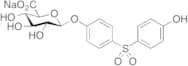
Bis(4-hydroxyphenyl) Sulfone O-β-D-Glucuronide Sodium Salt
Controlled Product<p>Stability Hygroscopic<br>Applications Bis(4-hydroxyphenyl) Sulfone O-β-D-Glucuronide is the glucuronide derivative of Bis(4-hydroxyphenyl) Sulfone (B447390); a compound that is commonly used as a reactant in epoxy reactions. It is also used as a latent thermal catalyst for epoxy resin.<br>References Fu, J.W., et al.: Adv. Mat. Rsch., 266, 1022 (2011); Li, J.X., et al.: Polymers. Adv. Tech., 23, 803 (2012)<br></p>Formula:C18H17NaO10SColor and Shape:NeatMolecular weight:448.38Iron Dextran
CAS:Controlled Product<p>Applications Iron Dextran is used for preventing and treating iron-deficiency anemia of newborn piglets.<br>References Amine, E., et al.: J. Agric. Food Chem., 20, 246 (1972), Caperna, T., et al.: J. Anim. Sci., 67, 654 (1989), Mukhopadhyay, C., et al.: J. Biol. Chem., 275, 21048 (2000),<br></p>Formula:(C6H10O5)nFe(OH)3mColor and Shape:NeatFructoseglutamic Acid Disodium Salt
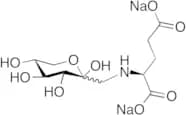
CAS:<p>Stability Very Hygroscopic<br>Applications Fructoseglutamic Acid Disodium Salt is an Amadori compound (derivatives of aminodeoxysugars) that is formed in food (such as dehydrated fruits such as tomatoes and carrots) as a result of the Maillard reactions.<br>References Baltes, W.: Food Chem., 9, 59 (1982); Sanz, M., et al.: J. Agr. Food Chem., 49, 5228 (2001); Wellner, A., et al.: J. Agr. Food Chem., 59, 7992 (2011)<br></p>Formula:C11H17NO9·2NaPurity:>80%Color and Shape:NeatMolecular weight:353.234Raspberry Ketone Glucoside
CAS:Controlled Product<p>Applications Raspberry ketone glucoside (cas# 38963-94-9) is a useful research chemical.<br></p>Formula:C16H22O7Color and Shape:White To Off-WhiteMolecular weight:326.34D-(+)-Cellohexose
CAS:Controlled Product<p>Stability Stable at RT<br>Applications D-(+)-Cellohexose (cas# 2478-35-5) is a compound useful in organic synthesis.<br></p>Formula:C36H62O31Color and Shape:NeatMolecular weight:990.862,5-Anhydro-D-mannitol
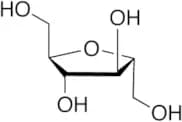
CAS:Controlled Product<p>Applications A carbohydrate metabolism regulator that has been shown to inhibit gluconeogenesis from lactate plus pyruvate and from substrates that enter the gluconeogenic pathway as triose phosphate.<br>References Joet, T., et al.: Biochem. J., 381, 905 (2004), Girardin, E., et al.: J. Biol. Chem., 280, 38059 (2005), Nghiem, N., et al.: App. Biochem. Biotechnol., 141, 335 (2007),<br></p>Formula:C6H12O5Color and Shape:NeatMolecular weight:164.162'-Fucosyllactose (~90%)
CAS:Controlled ProductFormula:C18H32O15Purity:~90%Color and Shape:NeatMolecular weight:488.44Benzyl β-D-Glucopyranoside
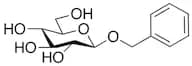
CAS:Controlled Product<p>Applications Benzyl β-D-Glucopyranoside (cas# 4304-12-5) is a compound useful in organic synthesis.<br>References Yoshikawa, M., et al.: Chem. Pharm. Bull., 56, 1297 (2008), Takeda, Y., et al.: J. Nat. Med., 62, 476 (2008),<br></p>Formula:C13H18O6Color and Shape:Off WhiteMolecular weight:270.28N-Acetyllactosamine
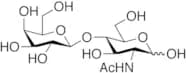
CAS:Controlled Product<p>Stability Hygroscopic<br>Applications N-Acetyllactosamine is used in the expansion of a multi-funcational natural scaffold for the study of structural space of the Galectin-1-Ligand interaction. Also, it is used to identify the impurity as an imidazoline ring structure.<br>References Bertleff-Zieschang, N., et al.: ChemBioChem, 18, 1477-1481 (2017); Duff, R. J., et al.: J. Chromatogr. A, 1501, 61-67 (2017);<br></p>Formula:C14H25NO11Color and Shape:NeatMolecular weight:383.35Isomaltotetraose
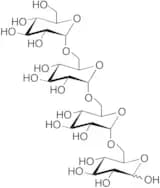
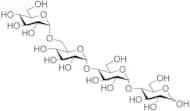
CAS:Controlled Product<p>Applications Isomaltotetraose, can be used for immunizication of hybridoma antibodies. the use of synthetic glycolipids as antigens enables one to study the gene control of antibody responses to glycolipids and to investigate the combining-site specificities of antibodies to a single antigenic determinant.<br>References Lai, E., et al.: Mol. Immunology, 22(9), 1021 (1985); Chen, H. T., et al.: Mol. Immunology, 24(4), 333 (1987);<br></p>Formula:C24H42O21Color and Shape:NeatMolecular weight:666.58D-Erythrulose (~0.3 M in Water, ~90%)
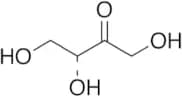
CAS:Controlled Product<p>Applications D-Erythrulose is a tetrose carbohydrate that is used in various self-tanning cosmetics combined with dihydroxyacetone.<br>References Maeda, M., et al.: J. Biochem., 123, 602 (1998); Baykal, A., et al.: Bioorg. Chem., 34, 380 (2006);<br></p>Formula:C4H8O4Purity:~90%Color and Shape:NeatMolecular weight:120.10L-Fucose
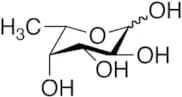
CAS:Controlled Product<p>Applications L-Fucose was isolated from seaweed.<br>References Clark, et al.: J. Biol. Chem., 54, 65 (1922),<br></p>Formula:C6H12O5Color and Shape:WhiteMolecular weight:164.16Lactose-3’-sulfate
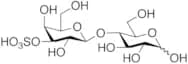
CAS:Controlled Product<p>Stability Very Hygroscopic<br>Applications Lactose-3’-sulfate (cas# 159358-51-7) is a compound useful in organic synthesis.<br></p>Formula:C12H22O14SColor and Shape:Light Brown To BrownMolecular weight:422.36Maltohexaose
CAS:Controlled Product<p>Applications A novel glucosylation enzyme. Standard type oligosaccharide.<br>References Kuriki, T., et al.: J. Biosci. Bioeng., 87, 557 (1999), Meulenbeld, G., et al.: Biotechnol. Bioeng., 70, 363 (2000), Moon, Y., et al.: J. Agric. Food Chem., 54, 1230 (2006),<br></p>Formula:C36H62O31Color and Shape:NeatMolecular weight:990.86Sucrose
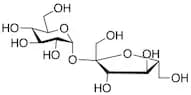
CAS:<p>Stability Hygroscopic<br>Applications Yuanzhen sugar is a polysaccharide polymer, containing a certain amount of fructooligosaccharides.<br>References Watanabe, T., et al.: Biosci. Biotech. Biochem., 72, 3167 (2008), You, Y., et al.: J. Agric. Food Chem., 57, 709 (2009),<br></p>Formula:C12H22O11Color and Shape:WhiteMolecular weight:342.30Tetragalacturonic Acid
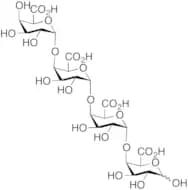
CAS:Controlled Product<p>Applications Tetragalacturonic Acid, is the product of polygalacturonic acid degradation. The mixture of Oligogalacturonic Acids has shown to have shoot growth in cockscomb (Celosia argentea L.) seedlings.<br>References Suzuki, T., et al.: J. Plant Growth Reg., 21, 209 (2003);<br></p>Formula:C24H34O25Color and Shape:NeatMolecular weight:722.516-α-D-Glucopyranosyl Maltotriose
CAS:<p>Stability Hygroscopic<br>Applications Sugar composition of sake.<br>References Giri, N.Y., et al.: Arch. Biochem. Biophysics, 145, 505 (1971a<br></p>Formula:C24H42O21Color and Shape:NeatMolecular weight:666.58D-Arabinose
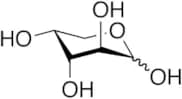
CAS:<p>Applications An inhibitor of the enzyme glucose dehydrogenase.<br>References Cozier, G.E. et al.: Biochem. J., 340, 639 (1999);<br></p>Formula:C5H10O5Color and Shape:White SolidMolecular weight:150.13Muramic Acid
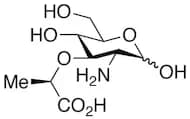
CAS:Controlled Product<p>Applications Amino sugar found (as the N-acetyl derivative) in peptidoglycan, the main skeletal component of the bacterial cell wall. The N-acetyl derivative of muramic acid is an amino sugar that constitutes the peptidoglycan bacterial cell wall of Gram negative and Gram positive bacteria. Muramic acid is used as a chemical marker for the detection of bacterial contamination.<br>References Stout, J., et al.: Soil Biochem., 5, 1 (1981), Chantigny, M., et al.: Soil Biol. Biochem., 32, 1561 (2000), Martens, D., et al.: J. Environ. Qual., 29, 723 (2000),<br></p>Formula:C9H17NO7Color and Shape:Off-WhiteMolecular weight:251.23α-Methylglyceric Acid
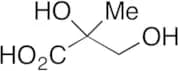
CAS:Controlled Product<p>Applications α-Methylglyceric Acid is a biogenic secondary organic aerosol used in air quality diagnosis.<br>References Ru, P., et. al.: Environ. Sci. Technol., 48, 8491 (2014); Napelenok, S.L., et. al.: Environ. Sci. Technol., 48, 464 (2014); Stone, E.A., et. al.: Environ. Chem., 9, 263 (2012)<br></p>Formula:C4H8O4Color and Shape:NeatMolecular weight:120.1