Glycoscience
Glycoscience is the study of carbohydrates and their derivatives, as well as the interactions and biological functions they participate in. This field of research is crucial for understanding a wide variety of biological processes, including cell recognition, signaling, immune response, and disease development. Glycoscience has important applications in biotechnology, medicine, and the development of new drugs and therapies. At CymitQuimica, we offer a wide selection of high-quality, high-purity products for glycoscience research. Our catalog includes monosaccharides, oligosaccharides, polysaccharides, glycoconjugates, and specific reagents, designed to support researchers in their studies on the structure, function, and applications of carbohydrates in biological systems. These resources are intended to facilitate scientific discoveries and practical applications in various areas of bioscience and medicine.
Subcategories of "Glycoscience"
- Aminosugars(108 products)
- Glyco-Related Antibodies(282 products)
- Glycolipids(46 products)
- Glycosaminoglycans (GAGs)(55 products)
- Glycosides(419 products)
- Monosaccharides(6,624 products)
- Oligosaccharides(3,682 products)
- Polysaccharides(503 products)
Found 11046 products of "Glycoscience"
Sort by
Purity (%)
0
100
|
0
|
50
|
90
|
95
|
100
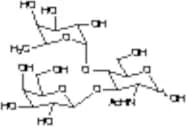
Lewis A Trisaccharide
CAS:Controlled Product<p>Applications Lewis A Trisaccharide is a component of multiplex glycan bead arrays which play a role in various cellular functions.<br>References Dabelsteen, E., et al.: Cancer Research, 48, 181 (1988), Lasky, L.A.: Science, 258, 964 (1992), Mulligan, M.S., et al.: Nature, 364, 149 (1993), Mulligan, M.S., et al.: J. Exp. Med., 178, 623 (1993), Travis, J.: Science, 260, 906 (1993); Purohit, S. et al.: Nat. Comm., 9, 1 (2018);<br></p>Formula:C20H35NO15Color and Shape:NeatMolecular weight:529.49Glutaraldehyde (50% in water)
CAS:<p>Stability Light Sensitive<br>Applications Glutaraldehyde is used to disinfect medical and dental equipment. Glutaraldehyde is also used for industrial water treatment and as a preservative.<br> Not a dangerous good if item is equal to or less than 1g/ml and there is less than 100g/ml in the package<br>References Karnovsky, M.J., et al.: J. Cell Biol., 27, 137 (1965);<br></p>Formula:C5H8O2Color and Shape:ColourlessMolecular weight:100.126-Iodo Diosmin
CAS:<p>Impurity Diosmin EP Impurity D<br>Applications 6-Iodo Diosmin (Diosmin EP Impurity D) is a Diosmin (D485200) impurity.<br></p>Formula:C28H31IO15Color and Shape:Light YellowMolecular weight:734.44Methyl 2,3,4-Tri-O-isobutyryl-D-glucopyranuronate
CAS:Controlled Product<p>Stability Temperature Sensitive<br>Applications Methyl 2,3,4-Tri-O-isobutyryl-D-glucopyranuronate (cas# 1190403-86-1) is a compound useful in organic synthesis.<br></p>Formula:C19H30O10Color and Shape:NeatMolecular weight:418.44Trehalose 6-Phosphate Dipotassium Salt
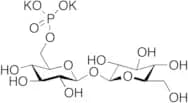
CAS:<p>Stability Hygroscopic<br>Applications Trehalose 6-Phosphate Potassium Salt is an intermediate in the synthesis of D-(+)-Trehalose (T718750), a disaccharide composed of two α-glucose units. D-(+)-Trehalose is used in many processed foods as well as in biopharmaceutical monoclonal antibody formulations. When plants’ sugar levels are low, they reduce their investment in fatty acid synthesis. Trehalose 6-phoshate (T6P) regulates oil synthesis in plants. (Chem. and Eng. News p. 9 Oct. 1, (2018))<br>References Bosquillon, C. et al.: J. Cont. Rel., 99, 357 (2004); Arakawa, T. et al.: Adv. Drug Deliv. Rev., 46, 307 (2001); Singh, S.K. et al.: Pharmac. Res., 28, 873 (2011); Chem. and Eng. News p. 9 Oct. 1, (2018)<br></p>Formula:C12H21K2O14PColor and Shape:White To Light BrownMolecular weight:498.464-O-(α-D-Galactopyranosyl)-D-galactose
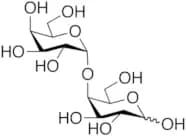
CAS:Controlled Product<p>Stability Hydrogscopic<br>Applications Defines the P blood-group system and it functions as specific ligands towards receptors of uropathogenic E. coli and the Shigella dysenteriae toxin.<br>References Race, R.R., et al.: Bood Groups in Man, 6th Edn., Blackwell, Osford, 1975, Kallenius G., et al.: FEMS Lett., 7, 297 (1983)<br></p>Formula:C12H22O11Color and Shape:NeatMolecular weight:342.304-O-β-Galactopyranosyl-D-mannopyranoside
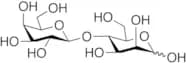
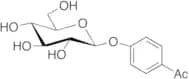
CAS:Formula:C12H22O11Color and Shape:White To BeigeMolecular weight:342.304-Acetylphenyl β-D-Glucopyranoside
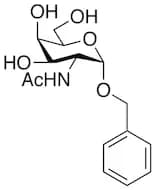
CAS:<p>Applications 4-Acetylphenyl β-D-Glucopyranoside (cas# 530-14-3) is a compound useful in organic synthesis.<br></p>Formula:C14H18O7Color and Shape:NeatMolecular weight:298.29Benzyl 2-Acetamido-2-deoxy-α-D-galactopyranoside
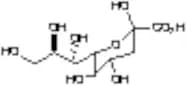
CAS:Controlled Product<p>Stability Hygroscopic<br>Applications A substrate for N-acetyl-ß-D-glucosaminyltransferase. Also an inhibitor of 1-ß-3-galctotransferase. Blocks the apical biosynthetic pathway in polarized HT-29 cells.<br>References Delacour, D., et al.: J. Cell Biol., 169, 491 (2005), Suzuki, O., et al.: Int. J. Oncol., 26, 1063 (2005),<br></p>Formula:C15H21NO6Color and Shape:NeatMolecular weight:311.333-Deoxy-D-glycero-D-galacto-2-nonulosonic Acid
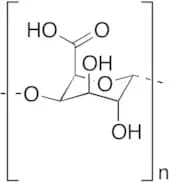
CAS:Controlled Product<p>Stability Hygroscopic<br>Applications A naturally occuring deaminated sialic acid, exclusively located at the non-reducing end of the sialyl chains. KDN is a sialic acid derivative with potential for anticancer activity. KDN has also been seen to be in elevated levels in human prostate cancer cells.<br>References Nadano, D., et al.: J. Biol. Chem., 261, 11550 (1986); Tiralongo, J. et al.: Carb. Mod. Biocatal., 477 (2012); Yabu, M. et al.: Glycobiol., 23, 634 (2013);<br></p>Formula:C9H16O9Color and Shape:NeatMolecular weight:268.22Polygalacturonic Acid (Technical Grade)
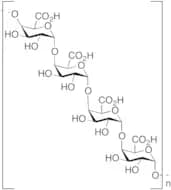
CAS:Controlled Product<p>Applications Polygalacturonic Acid is found in ripe fruits and some vegetables and is a degradation product of pectin in plants.<br>References Aspinall, G., et al.: J. Chem. Soc., 4020 (1958);<br></p>Formula:(C6H10O7)nColor and Shape:NeatMolecular weight:194.14N,N'-Diacetylchitobiose
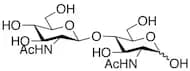
CAS:Controlled Product<p>Stability Hygroscopic<br>Applications An inhibitor of lysozyme, reverses myocardial depression and lessens norepinephrine requirements in Escherichia coli sepsis in dogs.<br>References Lefer, A., et al.: Am. J. Physiol., 213, 492 ( 1967), Parrillo, J., et al.: J. Clin. Invest., 76, 1539 (1985), Mink, S., et al.: J. Mol. Cell. Cardiol ., 35, 265 (2003),<br></p>Formula:C16H28N2O11Color and Shape:NeatMolecular weight:424.40D-chiro-inositol
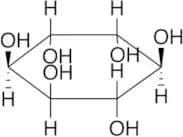
CAS:<p>Applications D-chiro Inositol (cas# 643-12-9) is a compound useful in organic synthesis.<br></p>Formula:C6H12O6Color and Shape:NeatMolecular weight:180.162-Acetamido-3-O-acetyl-2-deoxy-D-glucopyranose
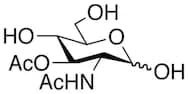
CAS:<p>Applications A useful synthetic intermediate for carbohydrate chemistry.<br></p>Formula:C10H17NO7Color and Shape:NeatMolecular weight:263.24Pectin (Technical Grade)
CAS:Controlled Product<p>Applications Pectin, is a gelatinous polysaccharide that is found in fruits and is extracted for the purpose of creating jams and jellies. In biological studies, pectin from apple and citrus is used to influence potential feed supplements on in vitro total gas production and rumen methanogensis.<br>References Geerkens, C., et al.: J. Agric. Food Chem., 61, 5727 (2013)<br></p>Color and Shape:NeatDiglycerol (Mixture of Isomers)
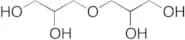
CAS:Controlled Product<p>Applications Diglycerol was used in cosmetic deodorants. It is also a component in thickening and gelatation agents.<br>References Wolf, F., et al.: Eur. Pat. Appl. (1996), EP 691125 A1 19960110.; Yamada, M., et al.: Jpn. Kokai Tokkyo Koho (1980), JP 55025430 A 19800223.<br></p>Formula:C6H14O5Color and Shape:NeatMolecular weight:166.17Benzocaine N-Glucoside (a/b mixture)
CAS:Controlled Product<p>Stability Hygroscopic<br>Applications The N-Glucoside of Benzocaine (B202970) with anesthetic activity. A potential sun-screening agent.<br>References Rybczynska, B. et al.: Parfum. Kosm., 48, 125 (1967); Nikolin, A. et al.: Glas. Hemi. Tehnol. Bosne Herceg., 16, 93 (1968);<br></p>Formula:C15H21NO7Color and Shape:NeatMolecular weight:327.33L-Galactose
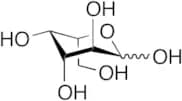
CAS:Controlled Product<p>Applications L-Isomer of D-galactose (G155250), a C-4 epimer of Glucose (G595000) found in milk and sugar beets as well as being synthesized by the body. Potential use in oral therapy for nephrotic syndrome in focal and segmental glomerulosclerosis.<br>References De Smet, E. et al.: Nephrol. Dial. Transplant., 24, 2938 (2009); Kivele, R. et al.: Carb. Pol., 85, 645 (2011);<br></p>Formula:C6H12O6Color and Shape:NeatMolecular weight:180.16