Glycoscience
Glycoscience is the study of carbohydrates and their derivatives, as well as the interactions and biological functions they participate in. This field of research is crucial for understanding a wide variety of biological processes, including cell recognition, signaling, immune response, and disease development. Glycoscience has important applications in biotechnology, medicine, and the development of new drugs and therapies. At CymitQuimica, we offer a wide selection of high-quality, high-purity products for glycoscience research. Our catalog includes monosaccharides, oligosaccharides, polysaccharides, glycoconjugates, and specific reagents, designed to support researchers in their studies on the structure, function, and applications of carbohydrates in biological systems. These resources are intended to facilitate scientific discoveries and practical applications in various areas of bioscience and medicine.
Subcategories of "Glycoscience"
- Aminosugars(108 products)
- Glyco-Related Antibodies(282 products)
- Glycolipids(46 products)
- Glycosaminoglycans (GAGs)(55 products)
- Glycosides(419 products)
- Monosaccharides(6,624 products)
- Oligosaccharides(3,682 products)
- Polysaccharides(503 products)
Found 11046 products of "Glycoscience"
Sort by
Purity (%)
0
100
|
0
|
50
|
90
|
95
|
100
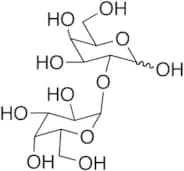
2-O-(α-D-Galactopyranosyl)-D-galactose
CAS:<p>Applications 2-O-(α-D-Galactopyranosyl)-D-galactose is used in determination of antibody potency in blood serum by ELISA<br>References Abramenko, I.V., et al.: Tsitologiya, 35 (5), 91 (1993), Kelly, R.F., et al.: Mol. Microbiol., 10 (3), 615 (1993), Stortz, C.A., et al.: J. Carbohydr. Chem., 13 (2), 235 (1994), Neethling, F.A., et al.: Transplantation, 57 (6), 959 (1994)<br></p>Formula:C12H22O11Color and Shape:NeatMolecular weight:342.30Guar Gum
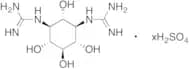
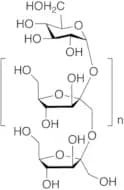
CAS:Controlled Product<p>Stability Hygroscopic<br>Applications Guar gum is a polymeric polysaccharide and a diety fiber, shown to decrease blood cholesterol levels. It is also used in the preparation of polysaccharide hydrogels for modified drug release formulations.<br>References Brown, L.; et al.: Am. J. Clin. Nutr., 69, 30 (1999); Coviello, T.; et al.: J. Controlled Release, 119, 5 (2007).<br></p>Formula:(C18H30O16)nColor and Shape:NeatMolecular weight:n(502.42)Streptidine Sulfate Salt
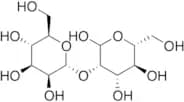
CAS:Controlled Product<p>Applications Streptidine, is a metabolite derivative of Streptomycin (S687500), an antibiotic (antimycobacterial) drug, used for patients suffering from tuberculosis or other infectious diseases.<br>References Granados, O., et al.: Histology and Histopathology, 20(2), 357 (2005);<br></p>Formula:C8H18N6O4xH2SO4Color and Shape:White To Off-WhiteMolecular weight:262.272-O-(a-D-Mannopyranosyl)-D-mannopyranose
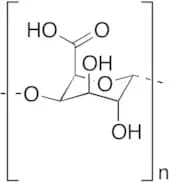
CAS:Controlled Product<p>Applications 2-O-(a-D-Mannopyranosyl)-D-mannopyranose is a component of yeast Candida catenulata that may provide antigenic effects.<br>References Kobayashi, H. et al.: Adv. Microbiol., 3, 222 (2013);<br></p>Formula:C12H22O11Color and Shape:NeatMolecular weight:342.3Polygalacturonic Acid (Technical Grade)
CAS:Controlled Product<p>Applications Polygalacturonic Acid is found in ripe fruits and some vegetables and is a degradation product of pectin in plants.<br>References Aspinall, G., et al.: J. Chem. Soc., 4020 (1958);<br></p>Formula:(C6H10O7)nColor and Shape:NeatMolecular weight:194.14Inulin
CAS:Controlled Product<p>Applications Is a safe plant polysaccharide with a variety of uses in the food and chemical medical industry. It is a functional food, providing functional groups for beneficial bacteria, as well as improving properties of food such as texture, hydration and shelf-life. They are also used for vaccine and drug delivery via soluble storage.<br>References Corradini, C. et al.: Anal. Bioanal. Chem., 405, 4591 (2013); Kumar, S. et al.: Mol. Pharm., 10, 1845 (2013);<br></p>Formula:(C6H10O5)nColor and Shape:NeatN-Acetyl-D-mannosamine
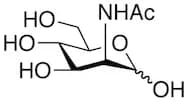
CAS:Controlled Product<p>Stability Hygroscopic<br>Applications A derivative of D-Mannosamine (M167000).<br>References Pukanud, P. et al.: Drug Delivery, 16, 289 (2009);<br></p>Formula:C8H15NO6Color and Shape:NeatMolecular weight:221.21Ethylmalonic Acid
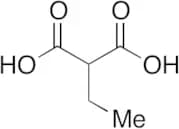
CAS:<p>Applications Ethylmalonic Acid is used as a diagnostic agent used in the diagnosis of Ethylmalonic encephalopathy which is a rare autosomal recessive inborn error of metabolism.<br>References Baertling, F. et al.: Eur. J. Pediat., 173, 1719 (2014); Sudo, Y. et al.: Hu,am Genome Var., 1, 15016 (2014);<br></p>Formula:C5H8O4Color and Shape:NeatMolecular weight:132.12D-(+)-Maltose Monohydrate
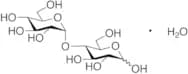
CAS:<p>Applications A disaccharide commonly found in foods and commonly utilized in brewing processes.<br>References Nowak, B., et al.: J. Food Prot., 69, 2183 (2006), Ogata, M., et al.: Biol. Pharm. Bull., 30, 1565 (2007), Bouchard, A., et al.: Eur. J. Pharm. Biopharm., 68, 781 (2008),<br></p>Formula:C12H22O11·H2OColor and Shape:NeatMolecular weight:360.31(-)-3-Dehydro Shikimic Acid
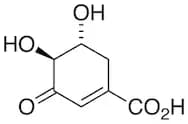
CAS:Controlled Product<p>Stability Temperature Sensitive<br>Applications A metabolite of Shikimic Acid.<br>References Lauhon, C.T. and Bartlett, P.A.: Biochemistry, 33, 14100 (1994), Balasubramanian, S., et al.: Biochemistry, 34, 341 (1995),<br></p>Formula:C7H8O5Color and Shape:NeatMolecular weight:172.14Maltoheptaose
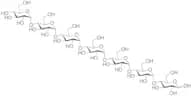
CAS:Controlled Product<p>Applications Maltoheptaose is a maltooligosaccharide consisting of seven glucose units. It has been used as a substrate to study α-amylase transglycosylaion activity.<br>References Kuriki, T., et al.: J. Biosci. Bioeng., 87, 557 (1999), Meulenbeld, G., et al.: Biotechnol. Bioeng., 70, 363 (2000), Moon, Y., et al.: J. Agric. Food Chem., 54, 1230 (2006), Uitdehaag, J.C.M., van Alebeek, G.-J.W.M., van der Veen, B.A., et al. Structures of maltohexaose and maltoheptaose bound at the donor sites of cyclodextrin glycosyltransferase give insight into the mechanisms of transglycosylation activity and cyclodextrin size specificity. Biochemistry 39(26), 7772-7780 (2000).<br></p>Formula:C42H72O36Color and Shape:White To Off-WhiteMolecular weight:1153.001,6-Anhydro-β-D-galactose
CAS:Controlled Product<p>Applications 1,6-Anhydro-β-D-glucopyranose is a carbohydrate contains in liquid smoke flavorings.<br>References Kim, K., et al.: Agric. Biol. Chem., 38, 53 (1974), Guillen, M., et al.: Food Chem., 58, 97 (1997), Guillen, M., et al.: J. Agric. Food Chem., 46, 1276 (1998),<br></p>Formula:C6H10O5Color and Shape:White To BeigeMolecular weight:162.14D-Mannose-6-phosphate Sodium Salt
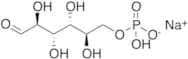
CAS:<p>Applications D-Mannose-6-phosphate sodium salt (cas# 70442-25-0) is a useful research chemical.<br></p>Formula:C6H12NaO9PColor and Shape:NeatMolecular weight:282.12p-Nitrophenyl 2-Acetamido-2-deoxy-3-O-(β-D-galactopyranosyl)-β-D-glucopyranoside
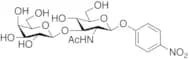
CAS:Controlled Product<p>Applications p-Nitrophenyl 2-Acetamido-2-deoxy-3-O-(β-D-galactopyranosyl)-β-_x000D_D-glucopyranoside (cas# 57467-13-7) is a compound useful in organic synthesis.<br></p>Formula:C20H28N2O13Color and Shape:NeatMolecular weight:504.44L-Iduronic Acid Sodium Salt
CAS:<p>Stability Hygroscopic<br>Applications A constituent of certain mucopolysaccharides.<br>References Hoffman, P., et al.: Science, 124, 1252 (1956), Meyer, K: Biochim et Biophys. Acta, 21, 506 (1956), Cifonelli, J.A., et al.: Federation Proc., 16, 165 (1957), Cifonelli, J.A., et al.: J. Biol. Chem., 233, 541 (1958)<br></p>Formula:C6H9NaO7Color and Shape:Light Orange Colour To Dark BrownMolecular weight:216.122-Acetamido-2-deoxy-β-D-glucopyranosyl Azide
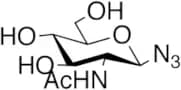
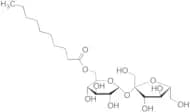
CAS:Controlled ProductFormula:C8H14N4O5Color and Shape:NeatMolecular weight:246.22Sucrose Monocaprate (~90%)
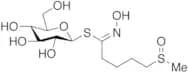
CAS:Controlled Product<p>Applications Sucrose Monocaprate is a potentially useful biochemical also known as sucrose monodecanoate.<br></p>Formula:C22H40O12Purity:~90%Color and Shape:NeatMolecular weight:496.55Desulfo Glucoraphanin
CAS:<p>Applications Glucosinolate analog of Glucoraphanin found in cruciferous vegetables such as broccoli and cauliflower.<br>References Lee, J.G. et al.: Horticult. Env. Biotech., 50, 509 (2009); KIm, J.K. et al.: Food Chem., 119, 423 (2010);<br></p>Formula:C12H23NO7S2Color and Shape:NeatMolecular weight:357.44β-Pseudouridine
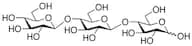
CAS:Controlled Product<p>Applications An isomer of the nucleoside uridine found in all species and in many classes of RNA except mRNA. It is formed by enzymes called Ψ synthases, which post-transcriptionally isomerize specific uridine residues in RNA in a process termed pseudouridylation. Studies suggest that β-Pseudouridine reduces radiation-induced chromosome aberrations in human lymphocytes.<br>References Ferré-D'Amaré A.R. et al.: Curr. Opin. Struct. Biol., 13, 49 (2003); Hamma, T. et al.: Chem. Biol., 13, 1125 (2006); Liang, X.H. et al.: RNA, 8, 237 (2002); Monobe, M. et al.: Mut. Res. Gen. Toxicol. Env. Mutagen., 538, 93 (2003);<br></p>Formula:C9H12N2O6Color and Shape:NeatMolecular weight:244.20D-(+)-Cellotriose
CAS:Controlled Product<p>Stability Hygroscopic<br>Applications D-(+)-Cellotriose (cas# 33404-34-1) is a compound useful in organic synthesis.<br></p>Formula:C18H32O16Color and Shape:NeatMolecular weight:504.44