


Glycoscience
Subcategories of "Glycoscience"
- Aminosugars(108 products)
- Glyco-Related Antibodies(283 products)
- Glycolipids(46 products)
- Glycosaminoglycans (GAGs)(55 products)
- Glycosides(419 products)
- Monosaccharides(6,619 products)
- Oligosaccharides(3,711 products)
- Polysaccharides(505 products)
Found 11027 products of "Glycoscience"
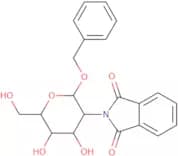
Benzyl 2-deoxy-2-phthalimido-β-D-glucopyranoside
CAS:Benzyl 2-deoxy-2-phthalimido-b-D-glucopyranoside is a custom synthesis that belongs to the group of complex carbohydrates. It is an oligosaccharide or polysaccharide that is modified with methylation, glycosylation, and carbamylation, and has a CAS number of 80035-32-1. This compound has been used in the synthesis of saccharides for the preparation of an antibody drug conjugate. Benzyl 2-deoxy-2-phthalimido-b-D-glucopyranoside is also known as 6Fluoro 3 indoxyl beta D galactopyranoside.Formula:C21H21NO7Purity:Min. 95%Molecular weight:399.39 g/mol2,5-Anhydro-D-mannitol-1-phosphate barium salt hydrate
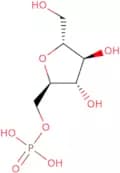
CAS:2,5-Anhydro-D-mannitol-1-phosphate barium salt hydrate is a fluorinated synthetic oligosaccharide. It is a complex carbohydrate that can be modified with the addition of methyl groups or click chemistry. This product is CAS No. 352000-02-3 and has been synthesized with glycosylation and polysaccharide modifications. The chemical formula for this product is C6H14O7P2Ba.Formula:C6H11BaO8P·H2OPurity:Min. 95%Molecular weight:397.46 g/molBenzyl 2-acetamido-3-O-allyl-6-O-benzyl-2-deoxy-a-D-glucopyranoside
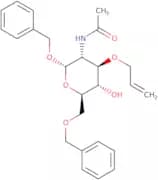
CAS:Benzyl 2-acetamido-3-O-allyl-6-O-benzyl-2-deoxy-aDglucopyranoside is an Oligosaccharide that contains a benzene ring. It has been synthesized by the method of glycosylation and click modification. This product is for research purposes only and should not be used as a food additive, preservative, or dietary supplement.Formula:C25H31NO6Purity:Min. 95%Color and Shape:Off-White Beige PowderMolecular weight:441.52 g/molN-[(4'-Nitrophenyl)-1-propenyl]imino-2,3,4,6-tetra-O-pivaloyl-D-glucopyranoside
N-[(4'-Nitrophenyl)-1-propenyl]imino-2,3,4,6-tetra-O-pivaloyl-D-glucopyranoside is a synthetic polysaccharide. It is a complex carbohydrate that is modified by methylation and glycosylation. The monomeric unit of this polysaccharide is a 6-(nitrophenoxy)hexose. N-[(4'-Nitrophenyl)-1-propenyl]imino-2,3,4,6-tetra-O-pivaloyl-D-glucopyranoside has been shown to have antiviral effects in the past.Formula:C35H50N2O11Purity:Min. 95%Molecular weight:674.78 g/mol2,3,4-Tri-O-acetyl-a-L-fucopyranosyl bromide
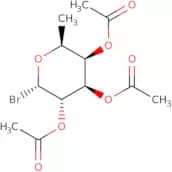
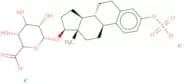
CAS:2,3,4-Tri-O-acetyl-a-L-fucopyranosyl bromide is a modification of the carbohydrate 2,3,4-tri-O-acetyl-a-L-fucopyranose. This compound is a complex carbohydrate that has been custom synthesized for use in glycosylation reactions. The compound is an oligosaccharide with 1 alpha and 3 beta linkage sites. It is a high purity product that can be used to synthesize monosaccharides, methylated sugars, and glycosylations. 2,3,4 Tri-O-acetyl-a-L Fucopyranosyl Bromide has also been fluorinated to produce fluoro derivatives.Formula:C12H17BrO7Color and Shape:PowderMolecular weight:353.16 g/molEstradiol 3-sulfate 17β-glucuronide dipotassium
CAS:Estradiol 3-sulfate 17b-glucuronide dipotassium salt is an estradiol ester that is a metabolite of estradiol. It has been shown to be an intermediate in the synthesis of estrone sulfate and other steroid hormones. Estradiol 3-sulfate 17b-glucuronide dipotassium salt is formed from estradiol by the addition of one molecule of sulfuric acid followed by the addition of glucuronic acid, which results in a salt form. It may also be formed by oxidation of allylic hydroperoxides and photooxygenation in families with oxygenated moieties. Irradiation leads to formation of oxygenated steroids. The alkene reactivity depends on the substitution pattern, the cyclic reactivity depends on the ring size and substitution pattern, and the reactivity with peroxides depends on the position of substitution.
Formula:C24H32O11S•K2Purity:Min. 95%Color and Shape:White to off-white solid.Molecular weight:606.77 g/mol2,6-Dimethyl-b-cyclodextrin - Technical
CAS:This beta-cyclodextrin (β-CD) derivative is a functionalized cyclic oligosaccharide composed of seven glucose units, characterized by a hydrophilic exterior and a lipophilic cavity (bigger than α-CD and smaller than γ-CDs), which allows it to encapsulate various guest molecules. This structural feature facilitates its use in multiple applications, including pharmaceuticals, food enhancement, and cosmetics. In the pharmaceutical industry, it enhances the solubility and stability of poorly water-soluble drugs, improving their bioavailability and efficacy while also masking unpleasant tastes. The food sector utilizes it as a stabilizer for flavors, colors, and nutrients, extending shelf life by protecting sensitive ingredients from degradation. In cosmetics, it serves as a complexing agent for fragrances and active components, ensuring their stability and controlled release. Its use expands to many other fields, including nanotechnology for drug delivery systems, environmental remediation for extracting organic pollutants, textiles for slow-release fragrances, and analytical chemistry for chiral separation.Formula:C56H98O35Purity:Min. 98%Color and Shape:White PowderMolecular weight:1,331.36 g/molMethyl 4,6-O-benzylidene-2,3-di-O-benzyl-a-D-glucopyranoside
CAS:Methyl 4,6-O-benzylidene-2,3-di-O-benzyl-a-D-glucopyranoside is a synthetic compound that is used as an intermediate in the production of other chemicals. The compound has been shown to be resistant to methylation and glycosylation. It has also been modified with a click chemistry reaction and fluorinated. Methyl 4,6-O-benzylidene-2,3-di-O-benzyl-a-D -glucopyranoside is a carbohydrate with a molecular formula of C12H24O14 and a molecular weight of 594.8 g/mol.Formula:C28H30O6Purity:Min. 95%Color and Shape:White PowderMolecular weight:462.53 g/molMethyl 2,4-Di-O-acetyl-3-deoxy-3-fluoro-b-D-xylopyranoside
CAS:Methyl 2,4-Di-O-acetyl-3-deoxy-3-fluoro-b-D-xylopyranoside is a synthetic, fluorinated glycosylation product. It is used in the synthesis of complex carbohydrates, and has been shown to be useful for click modification. This product has been custom synthesized by our company, and can be ordered in high purity.Formula:C10H15FO6Purity:Min. 95%Molecular weight:250.22 g/mol2,3,4,6-Tetra-O-benzyl-b-D-glucopyranosyl Fluoride
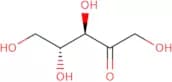
CAS:2,3,4,6-Tetra-O-benzyl-b-D-glucopyranosyl Fluoride (TBG) is a drug that has antibiotic properties. It inhibits bacterial growth by binding to the D-glucose residue in the cell wall of gram positive bacteria, which prevents the synthesis of peptidoglycan and thus inhibits protein synthesis. TBG binds to the hydroxyl group on the stannic chloride to form an insoluble complex. The stannic chloride is then converted into a soluble complex with fluoride ion. TBG can be used as an antibiotic for gram positive bacteria such as Staphylococcus aureus and Streptococcus pyogenes.Formula:C34H35FO5Purity:(%) Min. 96%Color and Shape:PowderMolecular weight:542.64 g/molD-Ribulose, 0.5-1.0 mol/L aqueous solution
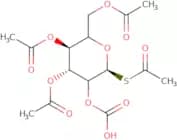
CAS:D-Ribulose is a type of sugar that belongs to the carbohydrate family. It is not metabolized by humans and is used as an energy source by certain bacteria. D-Ribulose is a substrate for bacterial xylitol dehydrogenase, which produces the intermediate xylitol. This product can be used in probiotic bacteria or as an antioxidant compound in biological samples such as coli k-12. D-Ribulose also has conformational properties that are different from other sugars, which may be due to its lack of hydroxyl groups on the ring. The reaction mechanism for this product has been identified and involves hydrogen fluoride (HF) and ribitol dehydrogenase to produce ribulose and hydrogen gas.Formula:C5H10O5Purity:Min. 98 Area-%Color and Shape:PowderMolecular weight:150.13 g/mol2,3,4,6-Tetra-O-acetyl-1-S-acetyl-b-D-thiogalactopyranose
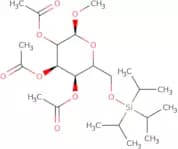
2,3,4,6-Tetra-O-acetyl-1-S-acetyl-b-D-thiogalactopyranose is a synthetic sugar that is used in the synthesis of complex carbohydrates. It has been modified with methylation and acetylation reactions. The CAS number for this compound is 112724-71-8.Formula:C15H20O11SPurity:Min. 95%Molecular weight:408.38 g/molMethyl 2,3,4-tri-O-acetyl-6-O-triisopropylsilyl-a-D-glucopyranoside
CAS:Methyl 2,3,4-tri-O-acetyl-6-O-triisopropylsilyl-a-D-glucopyranoside is a glycosylation product of D-glucose and methyl 2,3,4,6 triacetate. This product is a fluorinated sugar with the following chemical structure:Formula:C22H40O9SiPurity:Min. 95%Molecular weight:476.64 g/molD-Sedoheptulose-7-phosphate barium salt
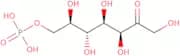
CAS:Substrate of phosphofructokinase; pentose phosphate pathway intermediateFormula:C7H13O10PBaPurity:Min. 75 Area-%Color and Shape:White PowderMolecular weight:425.47 g/mol2,3,4-Tri-O-acetyl-1,6-anhydro-b-D-galactopyranose
CAS:2,3,4-Tri-O-acetyl-1,6-anhydro-b-D-galactopyranose is a sugar that has been modified with fluorination. This modification is done in an effort to increase the solubility of this product. It is also used as the backbone for other sugars in order to create complex carbohydrates or polysaccharides. In addition, 2,3,4-Tri-O-acetyl-1,6-anhydro-b-D-galactopyranose can be methylated and glycosylated in order to modify its properties. This product is available for custom synthesis and has a purity level of 99%.
Formula:C12H16O8Purity:Min. 95%Color and Shape:PowderMolecular weight:288.25 g/mol1,6-Bis- O- Tert.butyldimethylsilyl- 3, 4- O-isopropylidene)-2,5-O-methanesulfonyl-D- mannitol
1,6-Bis-O-tert.butyldimethylsilyl-3,4-O-isopropylidene)-2,5-O-methanesulfonyl-D-mannitol is a sugar that is used as a starting material for the synthesis of glycosides. This compound has been shown to react with click chemistry and undergo fluorination, glycosylation, methylation, and modification reactions. It has been shown to be useful in the synthesis of oligosaccharides and monosaccharides. The chemical formula for 1,6-Bis-O-tert.butyldimethylsilyl-3,4-O-[isopropylidene)-2,5 - O]-methanesulfonyl--D--mannitol is C14H30OSiMesO8S2.Purity:Min. 95%Methyl 3,5-di-O-acetyl-2,4-anhydro-D-arabinonate
Methyl 3,5-di-O-acetyl-2,4-anhydro-D-arabinonate is a custom synthesis of a complex carbohydrate. It is modified with methylation, glycosylation and click modification. This product has been fluorinated to provide high purity and is used in the preparation of other saccharides. Methyl 3,5-di-O-acetyl-2,4-anhydro-D-arabinonate belongs to the category of carbohydrates and sugars. This product is made up of a saccharide that contains three carbon atoms (C3H7O6) and one oxygen atom (O). The chemical formula for this compound is C3H5(COOC2H5)3.Purity:Min. 95%Methyl 4-azido-2,3-di-O-benzoyl-4-deoxy-6-O-trityl-α-D-glucopyranoside
CAS:Methyl 4-azido-2,3-di-O-benzoyl-4-deoxy-6-O-trityl-a-Dglucopyranoside is a synthetic carbohydrate. It is used in the synthesis of complex carbohydrates. Methyl 4-azido-2,3-diObenzoyl4deoxy6OtritylAglucopyranoside is an intermediate in the chemical synthesis of oligosaccharides and polysaccharides. This product is custom synthesized to meet customer specifications.Formula:C40H35N3O7Purity:Min. 95%Color and Shape:White to off-white solid.Molecular weight:669.72 g/mol5-O-tert-Butyldimethylsilyl-2,3-O-isopropylidene-D-ribofuranose
CAS:5-O-tert-Butyldimethylsilyl-2,3-O-isopropylidene-D-ribofuranose is a stereoselective, unsubstituted aryl group. It is used in the synthesis of deodorants and antiperspirants. This compound has been shown to have an effect on perspiration by reducing the amount of sweat produced by the apocrine glands. The mechanism of action may be related to its ability to inhibit c1-c4 esters that are involved in the synthesis of odoriferous substances. 5-O-tert-Butyldimethylsilyl-2,3-O-isopropylidene-D-ribofuranose also inhibits bacterial growth by binding to DNA gyrase and topoisomerase IV, which are enzymes that maintain the integrity of bacterial DNA.Formula:C14H28O5SiPurity:Min. 95%Color and Shape:White PowderMolecular weight:304.45 g/mol(3aS, 6aS) -Dihydro- 2, 2, 6a- trimethyl-furo[3, 4- d] - 1, 3- dioxol- 4(3aH) - one
(3aS, 6aS) -Dihydro-2,2,6a-trimethyl-furo[3,4-d]-1,3-dioxol-4(3aH)-one is a white crystalline powder that is soluble in chloroform and ether. It can be used as a synthetic intermediate for the preparation of other products. It has been shown to be effective in methylation reactions on saccharides and polysaccharides. This product is available with custom synthesis options and can be modified with click chemistry or fluorination. This product is also available with high purity levels and fluorescence properties.Purity:Min. 95%

![N-[(4'-Nitrophenyl)-1-propenyl]imino-2,3,4,6-tetra-O-pivaloyl-D-glucopyranoside](/_next/image/?url=https%3A%2Fstatic.cymitquimica.com%2Fproducts%2F3D%2Fthumb-webp%2FMN08501.webp&w=3840&q=75)





![(3aS, 6aS) -Dihydro- 2, 2, 6a- trimethyl-furo[3, 4- d] - 1, 3- dioxol- 4(3aH) - one](/_next/image/?url=https%3A%2Fstatic.cymitquimica.com%2Fproducts%2F3D%2Fthumb-webp%2FMD170601.webp&w=3840&q=75)