Glycoscience
Glycoscience is the study of carbohydrates and their derivatives, as well as the interactions and biological functions they participate in. This field of research is crucial for understanding a wide variety of biological processes, including cell recognition, signaling, immune response, and disease development. Glycoscience has important applications in biotechnology, medicine, and the development of new drugs and therapies. At CymitQuimica, we offer a wide selection of high-quality, high-purity products for glycoscience research. Our catalog includes monosaccharides, oligosaccharides, polysaccharides, glycoconjugates, and specific reagents, designed to support researchers in their studies on the structure, function, and applications of carbohydrates in biological systems. These resources are intended to facilitate scientific discoveries and practical applications in various areas of bioscience and medicine.
Subcategories of "Glycoscience"
- Aminosugars(108 products)
- Glyco-Related Antibodies(282 products)
- Glycolipids(46 products)
- Glycosaminoglycans (GAGs)(55 products)
- Glycosides(419 products)
- Monosaccharides(6,621 products)
- Oligosaccharides(3,681 products)
- Polysaccharides(503 products)
Found 11041 products of "Glycoscience"
Sort by
Purity (%)
0
100
|
0
|
50
|
90
|
95
|
100
Ethyl 2,4,6-tri-O-acetyl-3-O-benzyl-b-D-thioglucopyranoside
<p>Ethyl 2,4,6-tri-O-acetyl-3-O-benzyl-b-D-thioglucopyranoside is a synthetic carbohydrate with a molecular weight of 592. It has been fluorinated at the C2 position and acetylated at the C3 position. This product is used in the synthesis of oligosaccharides and polysaccharides. It is also used in click chemistry and as an intermediate in carbohydrate modifications and fluorination reactions.</p>Formula:C21H28O8SPurity:Min. 95%Molecular weight:440.51 g/molVarenicline carbamoyl b-D-glucuronide
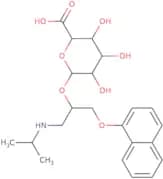
CAS:<p>Varenicline is a glycosylation product with a sugar, which is synthesized by the methylation and fluorination of carbamoyl b-D-glucuronide. This drug is used for the treatment of nicotine dependence in adults. It acts on nicotinic acetylcholine receptors in the brain to reduce cravings and withdrawal symptoms from smoking, as well as increasing the release of dopamine. Varenicline binds to alpha4beta2 nicotinic acetylcholine receptors, which are located in the brain and other organs, such as the stomach and pancreas. The drug has been shown to be effective for smoking cessation when used alone or in combination with nicotine replacement therapy.</p>Formula:C20H21N3O8Purity:Min. 95%Molecular weight:431.4 g/molBlood Group B type II linear trisaccharide amine linker
<p>The linear trisaccharide amine linker is an oligosaccharide that is synthesized by glycosylation of a linear trisaccharide with an amine-containing monosaccharide. The resulting product is then methylated using the Mitsunobu reaction to yield the desired product. This product has been shown to be useful as a linker in complex carbohydrates. It has been shown to have high purity and can be custom synthesized for your specific needs.</p>Purity:Min. 95%6-O-Feruloylsucrose
CAS:<p>6-O-Feruloylsucrose is a phenylpropanoid glycoside that has been shown to inhibit the growth of Gram-positive and Gram-negative bacteria. It is also hepatoprotective and has been shown to have antimicrobial activity against fungi, such as Candida albicans. The 6-O-feruloylsucrose inhibits microbial infections by binding to metal cations, which are essential for bacterial cell wall synthesis. This leads to a decrease in the production of microbial cell walls, inhibiting their growth. 6-O-Feruloylsucrose can be used as an additive in food products or as a preservative in cosmetics.</p>Formula:C22H30O14Purity:Min. 95%Color and Shape:White To Off-White SolidMolecular weight:518.47 g/molEquilin 3-O-b-D-glucuronide sodium salt
CAS:<p>Equilin 3-O-b-D-glucuronide sodium salt is a synthetic, monosaccharide that can be used as a raw material for various glycosylation reactions. This compound is an example of a fluorinated sugar. Equilin 3-O-b-D-glucuronide sodium salt has the CAS number 27610-12-4 and can be custom synthesized to order. It can be modified with a click reaction or other modification techniques to generate desired products. This product is available in high purity and can be used for glycosylation reactions.</p>Formula:C24H27O8·NaPurity:Min. 95%Molecular weight:466.46 g/mol2'-(N-Butylcarboamido)phenyl-2-acetamido-2-deoxy-b-D-glucopyranoside
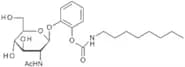
<p>2'-(N-Butylcarboamido)phenyl-2-acetamido-2-deoxy-b-D-glucopyranoside is a custom synthesis that is a complex carbohydrate. It has CAS No. and is modified with methylation, glycosylation, and click modification. The compound is a polysaccharide and fluorinated sugar. The high purity of the product makes it an excellent candidate for further modifications to create other products.</p>Formula:C19H28N2O7Purity:Min. 95%Molecular weight:396.43 g/mol1,3,5-Tri-O-acetyl-2-deoxy-a-D-ribofuranose
CAS:<p>1,3,5-Tri-O-acetyl-2-deoxy-a-D-ribofuranose is a monosaccharide with a modified sugar residue that is obtained by the fluorination of 1,3,5-triacetyl-2,6'-dideoxyglucose. It is a complex carbohydrate that can be used as an additive in food and beverage products. The chemical formula for 1,3,5-triacetyl-2,6'-dideoxyglucose is C10H14O8 and the molecular weight is 392.24 g/mol.</p>Formula:C11H16O7Purity:Min. 95%Molecular weight:260.24 g/molEthyl 2,3,6-tri-O-benzyl-1-thio-β-D-galactopyranoside
CAS:<p>Ethyl 2,3,6-tri-O-benzyl-1-thio-β-D-galactopyranoside is a synthetic monosaccharide that has been used in the synthesis of oligosaccharides and polysaccharides. It has also been used in glycosylation reactions to produce high purity sugar derivatives. It is a fluorinated sugar molecule that can be custom synthesized to order with a high degree of purity. The CAS number for this compound is 152964-77-7.</p>Formula:C29H34O5SPurity:Min. 95%Molecular weight:494.64 g/molGD2-Oligosaccharide-desthiobiotin
<p>Desthiobiotin is a modified form of biotin that binds less tightly to biomolecules like proteins and carbohydrates than it does biotin, while still providing excellent specificity in affinity purification methods (Hirsch, 2002). The structure of GD2-oligosaccharide-desthiobiotin (sodium salt) comprises (GalNAcβ1,4Galβ1,4Glc) of its two sialic acids linked α2,3/α2,8 to the central galactose residue (Ledeen, 2009). The desthiobiotin is attached β to position 1 of the reducing glucose moiety. GD2 ganglioside is expressed at a low concentration in the central nervous system, nerves, skin melanocytes and stem cells in healthy adults. On the other hand, GD2 ganglioside is overexpressed in a number of tumors including: neuroblastoma, melanoma, small cell lung carcinoma and brain tumors. Recently, GD2 ganglioside has been found in low concentration on breast cancer stem cells (CSC) that possess: self-renewal properties (division without disrupting the undifferentiated state) and tumor-initiating capabilities. It has been suggested that GD2 ganglioside may be developed as an effective target antigen for CSC immunotherapy (Fleurence, 2017).</p>Formula:C65H106N10O37·2NaPurity:Min. 95%Color and Shape:PowderMolecular weight:1,665.56 g/mol2,3,4,6-Tetra-O-acetyl-1-bromo-1-deoxy-b-D-galactopyranosyl cyanide
CAS:<p>2,3,4,6-Tetra-O-acetyl-1-bromo-1-deoxy-b-D-galactopyranosyl cyanide is a Carbohydrate with CAS No. 83497-42-1. It is a saccharide with the molecular formula C8H12O8 and molecular weight of 300.19 g/mol. The chemical structure of 2,3,4,6-Tetra-O-acetyl-1-bromo-, 1 -deoxy-. b-.D-.galactopyranosyl cyanide is shown in the figure below:<br>2,3,4,6,-Tetra--O--acetyl--1--bromo--1--deoxy-. b-.D-.galactopyranosyl cyanide has been shown to have fluoroquinolone resistance properties.</p>Formula:C15H18BrNO9Purity:Min. 95%Molecular weight:438.3 g/molHyaluronate rhodamine - Molecular Weight - 20kDa
<p>Fluorogenic substrate is used for detection of hyaluronidase activity. Urinary hyaluronidase activity is elevated in patients with intermediate and high grade bladder cancer; the expression of hyaluronidase and hyaluronan synthase-1 mRNA in malignant tissue can predict bladder cancer metastasis and disease recurrence (Kramer, 2011). These findings underscore the potential utility of the hyaluronidases to serve as biomarkers for bladder cancer. A novel fluorescent substrate labelled with two dyes: fluorescein as a green donor fluorophore, and rhodamine B as a red acceptor fluorophore, was therefore developed to measure hyaluronidase enzyme kinetics (Zhang, 2008). It was then demonstrated that simultaneous measurements of green and red emission of HAâFRET could be used to measure hyaluronidase presence and activity (Fudala, 2011).</p>Purity:Min. 95%3,4,6-Tri-O-acetyl-2-deoxy-D-galactopyranose
<p>3,4,6-Tri-O-acetyl-2-deoxy-D-galactopyranose is a methylated saccharide that is the product of the reaction between 3,4,6-triacetyl-2,3,4,6-tetrapropionyl D galactopyranose and formaldehyde. It has been modified by Click chemistry and can be used for glycosylation reactions. This product is available in high purity and yields a complex carbohydrate that can be synthesised from various carbohydrates.</p>Formula:C12H18O8Purity:Min. 95%Molecular weight:290.27 g/molAmyl 2-acetamido-3,4,6-tri-O-acetyl-2-deoxy-b-D-glucopyranoside
CAS:<p>Amyl 2-acetamido-3,4,6-tri-O-acetyl-2-deoxy-b-D-glucopyranoside is a fluorinated carbohydrate that has been synthesized by glycosylation. This compound is a complex carbohydrate with a high purity and custom synthesis. It is an oligosaccharide that has undergone the click modification and methylation of the sugar. The carbonyl group on the sugar was modified to produce methyl ester or methoxymethyl ether of the sugar in order to provide stability against degradation.</p>Formula:C19H31NO9Purity:Min. 95%Molecular weight:417.45 g/molNeocarrahexadecaose-41,3,5,7,9,11,13,15-octa-O-sulfate sodium salt
CAS:<p>Neocarrahexadecaose-41,3,5,7,9,11,13,15-octa-O-sulfate sodium salt is a carbohydrate that belongs to the group of modified saccharides. It is synthesized by modifying a sugar with fluorine and methylation. Neocarrahexadecaose-41,3,5,7,9,11,13,15-octa-O-sulfate sodium salt is an oligosaccharide with a high purity and custom synthesis. It is a synthetic compound that has been modified in order to create methylated and glycosylated sugars as well as a click modification. This carbohydrate has not yet been tested for toxicity or side effects in humans.</p>Formula:C96H138Na8O97S8Purity:Min. 95%Molecular weight:3,284.51 g/mol3-O-Carboxymethyl-D-glucose
CAS:<p>3-O-Carboxymethyl-D-glucose (3CMG) is a humectant that can be used to replace glycerol in tobacco. 3CMG has the same chemical formula as D-glucose, but it has a hydroxy group at position 3 instead of 2. This structural difference leads to different properties, such as the ability to form hydrogen bonds with water molecules, which makes it an excellent humectant for use in tobacco products. 3CMG is also used in the food industry as a sugar substitute and sweetener due to its low caloric content and increased sweetness.</p>Formula:C8H14O8Purity:Min. 95%Color and Shape:White To Off-White SolidMolecular weight:238.19 g/molC-(2,3,4-Tri-O-acetyl-1-hydroxy-b-D-galactopyranosyl)formamide
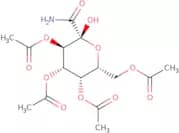
CAS:<p>C-(2,3,4-Tri-O-acetyl-1-hydroxy-b-D-galactopyranosyl)formamide (TRIGAL) is a methylated saccharide that is used to modify polysaccharides. It has been shown to be an effective sugar donor for glycosylation reactions and can be used for the synthesis of complex carbohydrates. TRIGAL is also fluorinated and provides a convenient way to modify oligosaccharides. This product has a high degree of purity and can be custom synthesized with any desired modification.</p>Formula:C12H17NO9Purity:Min. 95%Molecular weight:319.3 g/molN-[(e-N-Benzyloxycarbonylamino)caproyl]-b-D-galactopyranosylamine
CAS:<p>N-[(e-N-Benzyloxycarbonylamino)caproyl]-b-D-galactopyranosylamine is a synthetic glycosaminoglycan. It is an oligosaccharide, which consists of sugar molecules linked together by glycosidic bonds. This product is custom synthesized and the purity is high. It can be used for various purposes, including research, medicine, and food production.</p>Formula:C20H31N3O7Purity:Min. 95%Molecular weight:425.48 g/mol17b-Estradiol 3-O-benzyl 17-(2,3,4-tri-O-acetyl-b-D-glucuronide methyl ester)
CAS:<p>17b-Estradiol 3-O-benzyl 17-(2,3,4-tri-O-acetyl-b-D-glucuronide methyl ester) is a modification of estradiol with an attached sugar. It is synthesized from the carbohydrate complex oligosaccharide. The synthesis starts by attaching an acetyl group to the sugar at the 3 position and then reacting it with benzyl alcohol to form a glycosidic linkage. The synthesis ends with a fluorination and saccharide cleavage.</p>Formula:C38H46O11Purity:Min. 95%Molecular weight:678.77 g/molMaltoundecaose
CAS:<p>Maltoundecaose is a glycogen storage molecule found in barley and other plants. Maltoundecaose is synthesized from maltotetraose by the enzyme isoamylase, which cleaves the alpha-1,4 glycosidic linkage between two glucose molecules. Maltoundecaose can be hydrolyzed by the enzyme maltodextrin phosphorylase to form maltotriose and glucose. Maltotetraose is synthesized from sucrose by UDP-glucose pyrophosphorylase. The enzyme has been shown to have a mutation that leads to an increase in activity, which may be due to its autocatalytic nature. Maltotetraose also has three glucosidic linkages, which are formed between two glucose molecules and one of four different residues: dodecyl, hydroxymethylpentadecyl, octadecyl or hexadecyl. Maltotetraose can be hydrolyzed by</p>Formula:C66H112O56Purity:Min. 95%Color and Shape:PowderMolecular weight:1,801.56 g/molOndansetron 6-D-glucuronide (mixture of isomers)
<p>Ondansetron 6-D-glucuronide is a modified form of the active drug, ondansetron. It is a mixture of two isomers: (2S,3R)-2-(4-methoxybenzoyl) 3-hydroxy-1,6-diphenylhexane and (2S,3S)-2-(4-methoxybenzoyl) 3-hydroxy-1,6-diphenylhexane. Ondansetron 6-D-glucuronide is used as an antiemetic in the prevention of nausea and vomiting caused by cancer chemotherapy and radiation therapy. This compound is custom synthesized for high purity and efficacy in preventing nausea and vomiting. Ondansetron 6D glucuronide binds to the serotonin 5HT3 receptor on the nerve cells in the gastrointestinal tract and brain that control vomiting.</p>Purity:Min. 95%Allo-3a-tetrahydro cortisol 21-O-b-D-glucuronide
CAS:<p>Allo-3a-tetrahydro cortisol 21-O-b-D-glucuronide (A4C21) is a complex carbohydrate with a high degree of modification. The A4C21 is synthesized by the glycosylation and methylation of 3,5,6,7,8,9,10,11-hexahydrodehydrocortisol 21-O-b-D-glucuronide. The synthesis starts with the formation of an acetal between the two hydroxyl groups on one side of the steroid nucleus and two chloroform molecules in order to protect the reactant from further reactions. The reaction product is then subjected to a ketalization reaction with thioglycolic acid to yield an alpha/beta unsaturated ketone which is then reacted with ethylene diamine to produce an amide linkage. This amide linkage is then cleaved to yield an aldol condensation product</p>Formula:C27H42O11Purity:Min. 95%Molecular weight:542.62 g/molMethyl b-L-daunosaminide HCl
CAS:<p>Methyl b-L-daunosaminide HCl is a glycoconjugate that has been custom synthesized by our team. It is a complex carbohydrate that has been modified with glycosylation and methylation groups. Methyl b-L-daunosaminide HCl is an oligosaccharide that contains multiple saccharides linked together in a specific order. It is also fluorinated at the C4 position, which makes it more stable in water. Methyl b-L-daunosaminide HCl has high purity, making it suitable for use in the modification of other compounds or as a research tool for studying glycosylations.</p>Formula:C7H15NO3·HClPurity:Min. 95%Molecular weight:197.66 g/molAldehydo-D-glucose phthalazin-1-yl hydrazone
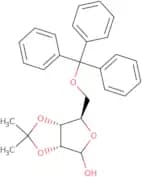
CAS:<p>Aldehydo-D-glucose phthalazin-1-yl hydrazone is a synthetic glycosylation agent that can be used in the synthesis of complex carbohydrates, such as polysaccharides, saccharides and oligosaccharides. It has been shown to be useful for the modification of saccharides and oligosaccharides. This compound can also be used for fluorination reactions, fluoroalkylations, click chemistry reactions, methylations and polymerizations. Aldehydo-D-glucose phthalazin-1-yl hydrazone has not yet been assigned CAS number.</p>Formula:C14H18N4O5Purity:Min. 95%Molecular weight:322.32 g/molBenzyl 2,3-O-isopropylidene-6-O-trityl-5-keto-a-D-mannofuranose
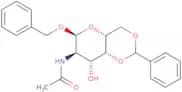
CAS:<p>Benzyl 2,3-O-isopropylidene-6-O-trityl-5-keto-a-D-mannofuranose is a modification of the monosaccharide mannose. It is synthesized by reacting the heterocyclic base benzaldehyde with the appropriate glycosyl acceptor. This modification has been shown to increase the stability of glycans.</p>Formula:C35H34O6Purity:Min. 95%Molecular weight:550.64 g/mol2-Acetamido-4,6-O-benzylidene-2-deoxy-b-D-glucopyranosyl azide
CAS:<p>2-Acetamido-4,6-O-benzylidene-2-deoxy-b-D-glucopyranosyl azide is a synthetic carbohydrate that has been modified with an azide group. This modification allows for the introduction of a variety of different functional groups to be incorporated into the carbohydrate. This synthetic carbohydrate can be used as a sugar or glycosylation acceptor in chemical synthesis, and it is soluble in water. The CAS number for this compound is 168397-51-1.</p>Formula:C15H18N4O5Purity:Min. 95%Molecular weight:334.33 g/molBenzyl b-D-glucopyranosiduronic acid methyl ester triacetate
CAS:<p>Benzyl b-D-glucopyranosiduronic acid methyl ester triacetate is a synthetic sugar that can be modified to produce a wide range of oligosaccharides. It is suitable for glycosylation reactions, such as the synthesis of complex carbohydrates. This compound has high purity and is custom synthesized according to customer specifications. Benzyl b-D-glucopyranosiduronic acid methyl ester triacetate has been fluorinated, methylated, and monosaccharide modifications. These modifications provide this compound with many potential uses in the food industry, medicine, and other industries.</p>Formula:C20H24O10Purity:Min. 95%Molecular weight:424.4 g/molValproic acid b-D-glucuronide
CAS:Controlled Product<p>Valproic acid b-D-glucuronide is a drug that belongs to the group of anticonvulsants. Valproic acid b-D-glucuronide inhibits the activity of glutamate, which is an excitatory neurotransmitter in the brain. It also causes irreversible inhibition of GluCl channels and increases diastolic pressure. Valproic acid b-D-glucuronide has been shown to have anti-inflammatory properties, as it reduces the production of prostaglandins and cytokines. The drug has been used in animal models to study pain perception and chronic pain syndromes such as bone cancer or metabolic disorders. Valproic acid b-D-glucuronide also blocks GABA receptors, causing increased levels of gamma aminobutyric acid (GABA) and dopamine. The drug has been shown to induce a state of deep sleep in rats that are deprived from REM sleep for three weeks.</p>Formula:C14H24O8Purity:Min. 95%Color and Shape:PowderMolecular weight:320.34 g/molN-ω-(2-Acetamido-2-deoxy-b-D-glucopyranosyl)-N-a-Boc-L-asparagine
CAS:<p>N-omega-(2-Acetamido-2-deoxy-b-D-glucopyranosyl)-N-aBocL-asparagine is a custom synthesis of an oligosaccharide that has been modified by fluorination, methylation and Click chemistry. This product is also a monosaccharide, saccharide or carbohydrate that is used in the modification of proteins. It has CAS No. 137255-40-4 and can be used as a synthetic building block for the synthesis of various saccharides with glycosylation reactions.</p>Formula:C17H29N3O10Purity:Min. 95%Molecular weight:435.43 g/molLacto-N-tetraose-BSA
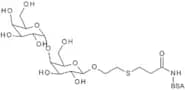
<p>Lacto-N-tetraose-BSA is a carbohydrate that contains four monosaccharides. It has been shown to be an autoantibody in patients with myasthenia gravis and can cause muscle weakness by binding to the muscle protein, actin. Lacto-N-tetraose-BSA has also been found to bind with nerve tissue and may be involved in the development of sclerosis. This carbohydrate is also negatively charged and agglutinates red blood cells. When used for immunofluorescence, it shows a strong reaction against glycoconjugates on the surface of neurons and nerve tissue. Lacto-N-tetraose-BSA binds specifically to bovine serum albumin (BSA) containing antibodies, which are produced by immune cells called B cells. The binding sites are located on the outer part of the molecule, near the sugar residues.</p>Purity:Min. 95%Color and Shape:Powder1-Deoxy-L-altronojirimycin hydrochloride
CAS:<p>L-altronojirimycin is a diterpene glycoside that belongs to the group of natural products that have inhibitory properties against lipid peroxidation. It has been shown to decrease the concentration of 1,2-dipalmitoylglycerophosphocholine (DPPC) in primary cells and reduce the rate of lipid peroxidation in a concentration-dependent manner. L-altronojirimycin inhibits the activity of enzymes such as acetylcholinesterase and phospholipase A2, which are involved in inflammation. This drug has also been shown to have cardioprotective effects and inhibit mutations in cardiac muscle cells. L-altronojirimycin has been tested for its long-term efficacy and shown to be effective against both bowel disease and cardiac effects.</p>Formula:C6H13NO4•HClPurity:Min. 95%Color and Shape:PowderMolecular weight:199.63 g/mol1-Deoxy-L-ribose
CAS:<p>1-Deoxy-L-ribose is a metabolite of acetone. It is a monosaccharide that contains one less oxygen atom than its parent compound. 1-Deoxy-L-ribose is found in the urine and blood of humans and animals. In animals, it can be synthesized from glucose by the enzyme ribose 1-phosphate reductase. This reaction requires an energy source such as ATP or NADH to reduce ribose 1,5-bisphosphate to 1,4-dihydroxyacetone phosphate, which then undergoes spontaneous dehydration to form 1-deoxy-D-ribose.</p>Formula:C5H10O4Purity:Min. 95%Molecular weight:134.13 g/molBis-(5-aldo-1,2-O-isopropylidene-D-xylo-pentofuranose) 5,5':3',5-Cyclic acetal
CAS:<p>Bis-(5-aldo-1,2-O-isopropylidene-D-xylo-pentofuranose) 5,5':3',5-Cyclic acetal is a synthetic saccharide that is used in the synthesis of complex carbohydrates. The compound is composed of an aldohexose and five cyclic acetal groups. It has a molecular weight of 618.11 g/mol and chemical formula C12H24O6. Bis-(5-aldo-1,2-O-isopropylidene-D-xylo-pentofuranose) 5,5':3',5 -cyclic acetal can be synthesized via the click chemistry reaction between 2′,3′,4′,6′,8′,9′ -octahydrobenzoin (1) and 4'-hydroxybutyric acid (2).</p>Purity:Min. 95%Ramipril-D5 acyl-b-D-glucuronide
Controlled Product<p>Ramipril-D5 acyl-b-D-glucuronide is a custom synthesis of the complex carbohydrate, oligosaccharide. It has been modified with saccharide, methylation, glycosylation, and click modification. Ramipril-D5 acyl-b-D-glucuronide is a high purity product that has been fluorinated and synthesized.</p>Formula:C29H35D5N2O11Purity:Min. 95%Molecular weight:597.66 g/molMethyl 6-azido-6-deoxy-2,3-di-O-benzyl-a-D-glucopyranoside
CAS:<p>Methyl 6-azido-6-deoxy-2,3-di-O-benzyl-a-D-glucopyranoside is a custom synthesized compound that belongs to the group of glycosylation. It is an Oligosaccharide, sugar, Synthetic, Fluorination, Custom synthesis, Methylation, Monosaccharide, Polysaccharide and saccharide. This compound has CAS No. 54522-58-6 and a molecular weight of 598.29 g/mol. The purity level is >99% and the modification level is Click modification.</p>Formula:C21H25N3O5Purity:Min. 95%Molecular weight:399.18 g/molMethyl a-D-altropyranoside
CAS:<p>Methyl a-D-altropyranoside is an electrolyte solution that is used for the stabilization and selective separation of glycosides. It has been shown to be effective at diagnosing bacterial infections by selectively binding to glycosylated nucleotides. The methyl group on the molecule is necessary for this function, and therefore it cannot act as a glycosylated nucleotide in its own right. Methyl a-D-altropyranoside may be used to synthesize nucleotides with axial or equatorial configurations, which are not usually found in nature. The yields of these sequences can be increased using this compound.</p>Formula:C7H14O6Purity:Min. 95%Molecular weight:194.18 g/molEthyl b-D-fructofuranoside
CAS:<p>Ethyl b-D-fructofuranoside is a synthetic compound that is used in the synthesis of oligosaccharides and polysaccharides. It can be custom synthesized to suit the needs of the customer. This product is available for sale as a white powder with a purity of at least 99%.</p>Formula:C8H16O6Purity:Min. 95%Molecular weight:208.21 g/molMaltosyl-ascorbic acid
<p>Maltosyl-ascorbic acid is a glycosylated form of ascorbic acid that has been shown to have synergistic effects with thiobarbituric acid and ethanal. Maltosyl-ascorbic acid also exhibits antioxidative activity and is able to inhibit the formation of thiobarbituric acid-reactive substances and α-tocopherol in lipids. Maltosyl-ascorbic acid has been shown to have antioxidant effects in stearothermophilus, which may be due to its ability to reduce lipid peroxidation. Maltosyl-ascorbic acid is also able to inhibit the transfer of alpha-tocopherol from lipoproteins into cells, which may be due to its antioxidative effect.</p>Purity:Min. 95%3,4-Di-O-acetyl-2,6-di-O-(3,4,6-tri-O-acetyl-2-deoxy-2-phthalimido-b-D-glucopyranosyl)-a-D-mannopyranosyl trichloroacetimidate
<p>3,4-Di-O-acetyl-2,6-di-O-(3,4,6-tri-O-acetyl-2-deoxy-2-phthalimido-b-D-glucopyranosyl)-a-D-mannopyranosyl trichloroacetimidate is a modified sugar with the molecular formula of C54H79F14N5O26. It is a complex carbohydrate that can be synthesized and custom made. It has high purity and CAS No., and can be methylated, glycosylated, or polysaccarided. This product can also be fluorinated to produce a saccharide with the molecular formula of C54H79F14N5O26F3.</p>Formula:C52H54Cl3N3O26Purity:Min. 95%Molecular weight:1,243.35 g/molCyanidin-3-O-sophoroside chloride
CAS:<p>Cyanidin-3-O-sophoroside chloride (CAS: 6279-21-6) is a naturally occurring phenolic compound that has been isolated from the roots of Sophora flavescens. This compound is a glycosylated form of protocatechuic acid, which is an organic compound with antioxidant properties. The surface methodology on tissue structure showed that this compound can react with nucleophilic radicals and scavenge free radicals in the presence of chloride ions, which is important for its dietary and medicinal value. COS has also been shown to have anti-inflammatory activities in a model system by inhibiting the production of prostaglandins. COS can be extracted from plants by acidic hydrolysis or preparative high performance liquid chromatography.</p>Formula:C27H31O16ClPurity:Min. 95%Color and Shape:PowderMolecular weight:646.98 g/mol2,3,5-Tri-O-benzyl-L-lyxono-1,4-lactone
<p>Tri-O-benzyl-L-lyxono-1,4-lactone is a methylated saccharide. It can be used as a building block for the synthesis of oligosaccharides and glycosylations. It can also be used as a click modification to modify proteins and polymers.</p>Formula:C26H26O5Purity:Min. 95%Color and Shape:PowderMolecular weight:418.48 g/molDibromodulcitol
CAS:<p>Dibromodulcitol (DBD) is a water soluble compound that is used in analytical chemistry to measure the concentration of bromine. It has been used as a radioprotectant and is also an analog of the natural hormone, epidermal growth factor. DBD can be measured by colorimetric methods or by enzyme-linked immunosorbent assay (ELISA). This chemical is found in wastewater and has been shown to inhibit the growth of cancer cells through its effects on fatty acid metabolism. DBD has also been shown to have pharmacokinetic properties, as it can be detected in biological samples for up to 2 hours after injection.</p>Formula:C6H12Br2O4Purity:Min. 95%Molecular weight:307.97 g/molNGA4 N-Glycan
CAS:<p>NGA4 N-glycan is a monosaccharide that is methylated and glycosylated to form an oligosaccharide. It has a molecular weight of 1205 g/mol. This product can be used in the production of glycoconjugates, which are used in the treatment of cancer and inflammatory diseases.</p>Formula:C66H110N6O46Purity:Min. 95%Color and Shape:PowderMolecular weight:1,723.59 g/mol1,6-Anhydro-b-D-glucofuranose
CAS:<p>B-D-glucofuranose is a natural compound with the molecular formula C6H12O6. It is found in plants, specifically in the seeds of the granatum tree. The calibration of this compound can be done using anions and ion chromatography. B-D-glucofuranose has antibacterial activity against Gram-positive bacteria, but not against Gram-negative bacteria or fungi. It also inhibits fatty acid synthesis and may have nutritional value for humans as a source of 5-hydroxymethylfurfural (HMF). HMF has been shown to inhibit the growth of cancer cells in vitro and induce apoptosis in cancer cells by uv irradiation. Mass spectrometric analysis and spectrometric methods are used to identify this compound.</p>Formula:C6H10O5Purity:Min. 95%Color and Shape:White PowderMolecular weight:162.14 g/mol1,4:3,6-Dianhydro-2,5-di-O-methyl-L-mannitol
<p>1,4:3,6-Dianhydro-2,5-di-O-methyl-L-mannitol is a carbohydrate that belongs to the group of polysaccharides. It is a methylated saccharide that can be modified with Click chemistry or glycosylsation. This product has high purity and can be custom synthesized for specific applications. It is also available in fluorinated form and as a complex carbohydrate.</p>Formula:C8H14O4Purity:Min. 95%Molecular weight:174.19 g/mol3,4-Di-O-benzyl-2,6-di-O-(3,4,6-tri-O-acetyl-2-deoxy-2-phthalimido-b-D-glucopyranosyl)-a-D-mannopyranosyl trichloroacetimidate
<p>3,4-Di-O-benzyl-2,6-di-O-(3,4,6-tri-O-acetyl-2-deoxy-2-phthalimido-b-D-glucopyranosyl)-a-D -mannopyranosyl trichloroacetimidate is a fluorinated monosaccharide that is synthesized by the glycosylation of 2,6 di O-(3,4,6 tri O acetyl 2 deoxy 2 phthalimido b D glucopyranosyl) a D mannopyranosyl chloride with 3,4 di O benzyl 2 chloroacetimidate. The complex carbohydrate has been modified with methylation and click chemistry. It has been shown to be active against Mycobacterium tuberculosis and Mycobacterium avium complex.</p>Formula:C62H62Cl3N3O24Purity:Min. 95%Molecular weight:1,339.52 g/molEthyl a-D-thioglucopyranoside
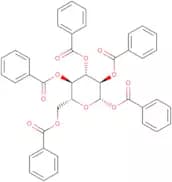
CAS:<p>Ethyl a-D-thioglucopyranoside is an organic compound that is used as a precursor in the synthesis of complex sugars. Ethyl a-D-thioglucopyranoside is an oligosaccharide that contains a methylated and glycosylated sugar. The glycosidic bond in this product can be modified by fluorination to give ethyl 2,3,4,5-tetrafluorothioglucopyranoside.</p>Formula:C8H16O5SPurity:Min. 95%Molecular weight:224.28 g/mol1,2,3,6-Tetra-O-benzoyl-4-deoxy-4-fluoro-a-D-mannopyranose
CAS:<p>1,2,3,6-Tetra-O-benzoyl-4-deoxy-4-fluoro-a-D-mannopyranose is a high purity synthetic carbohydrate that has been modified with methylation and glycosylation. It is an Oligosaccharide that belongs to the Polysaccharide group. This complex carbohydrate is a saccharide with a CAS number of 1309463-38-4. The 1,2,3,6-Tetra-O-benzoyl-4-deoxy--4--fluoro--aD--mannopyranose is a sugar that can be used for Click modification.</p>Formula:C34H27FO9Purity:Min. 95%Molecular weight:598.57 g/molA1 N-Glycan
CAS:<p>A1 N-glycan is a custom synthesis, complex carbohydrate that is an oligosaccharide and polysaccharide. It is modified with saccharides, methylation, glycosylation, and fluorination. A1 N-Glycan has high purity and is custom synthesized to order.</p>Formula:C73H121N5O54Purity:Min. 95%Color and Shape:PowderMolecular weight:1,932.74 g/mol2,3,5-Tri-O-benzoyl-b-D-ribofuranosyl isothiocyanate
CAS:<p>2,3,5-Tri-O-benzoyl-b-D-ribofuranosyl isothiocyanate is a synthetic compound consisting of a benzoyl group attached to the 2' position of the ribose sugar. This modification has been shown to increase the stability of oligosaccharides and complex carbohydrates in aqueous solutions. 2,3,5-Tri-O-benzoyl-b-D-ribofuranosyl isothiocyanate can be used for the fluorination of saccharides and oligosaccharides. It can also be used for glycosylation or methylation reactions with monosaccharides or polysaccharides.</p>Formula:C27H21NO7SPurity:Min. 95%Molecular weight:503.52 g/mol4-Amino-2,6-anhydro-3,4-dideoxy-D-glycero-D-galacto-non-2-enoic acid
CAS:<p>4-Amino-2,6-anhydro-3,4-dideoxy-D-glycero-D-galacto-non-2-enoic acid is a modified oligosaccharide that is used in biochemical and medicinal research. This product can be custom synthesized to order and may be available as an off the shelf product. It has high purity and is available with a monosaccharide or methylated glycosylated saccharide. The CAS number for this product is 263155-12-0.</p>Formula:C9H15NO7Purity:Min. 95%Molecular weight:249.22 g/molSitagliptin carbamoyl b-D-glucuronide
CAS:<p>Sitagliptin carbamoyl b-D-glucuronide is a synthetic drug that has been modified to be sitagliptin, which is an oral antihyperglycemic agent. Sitagliptin carbamoyl b-D-glucuronide has been synthesized through the methylation of a polysaccharide. It is a complex carbohydrate and is soluble in water. This product can be used as an additive to many food items because it does not affect their taste or texture. The CAS number for this product is 940002-59-5. This product is synthesized by the modification of natural saccharides with fluorine gas and it has a high purity level. It can be used as an intermediate in other organic synthesis reactions and its primary use is as a sugar substitute that is not metabolized by human enzymes.</p>Formula:C23H23F6N5O9Purity:Min. 95%Molecular weight:627.45 g/mol1,2,3,4-Tetra-O-acetyl-L-xylopyranose
CAS:<p>1,2,3,4-Tetra-O-acetyl-L-xylopyranose is a custom synthesis product. It is a sugar that is found in glycosaminoglycans and proteoglycans. This product can be customized through the modification of the sugar with fluorination, methylation, acetylation or other modifications. This product has a CAS number of 142130-89-0 and can be synthesized from sucrose using Click chemistry. The chemical name for this compound is 1,2,3,4-Tetra-O-[(trimethylsilyl)acetyl]-L-xylopyranose.</p>Formula:C13H18O9Purity:Min. 95%Molecular weight:318.28 g/molMethyl 2-O-allyl-3,4-di-O-benzyl-a-D-mannopyranoside
CAS:<p>Methyl 2-O-allyl-3,4-di-O-benzyl-a-D-mannopyranoside is an organic compound that belongs to the group of Modification. It is a modified oligosaccharide with a molecular weight of 690.3 g/mol. The modification is an Oligosaccharide, Carbohydrate, complex carbohydrate, Custom synthesis, Synthetic. CAS No. 210297-56-6, High purity, Monosaccharide, Methylation, Glycosylation and Polysaccharide. This molecule has a monosaccharide with the chemical formula C5H11NO5 and a molecular weight of 131.2 g/mol. The fluorination and saccharides are Fluorination and saccharides respectively.</p>Formula:C24H30O6Purity:Min. 95%Molecular weight:414.49 g/mol[UL-13C18]Maltotriose hydrate
<p>Maltotriose hydrate is a synthetic glycosylation product that is synthesized by the fluorination of maltotriose. Maltotriose hydrate is a sugar with a 3-D structure that is similar to maltodextrin, but with one less glucose residue. Maltotriose hydrate can be used in the synthesis of oligosaccharides and polysaccharides and has been shown to have high purity. Maltotriose hydrate can be modified by a variety of reactions, such as methylation, monosaccharide modification, or click chemistry. It has an CAS number and can be custom synthesized for clients' needs.</p>Formula:C18H32O16·xH2OPurity:Min. 95%Color and Shape:White SolidMolecular weight:522.3 g/molMethyl 2,3,6-tri-O-acetyl-4-deoxy-4-fluoro-a-D-galactopyranoside
CAS:<p>Methyl 2,3,6-tri-O-acetyl-4-deoxy-4-fluoro-a-D-galactopyranoside is a modification of the naturally occurring carbohydrate, galactose. It is synthesized from 4-fluoro galactose and acetyl chloride in the presence of sodium methoxide. This compound can be used as an intermediate for the synthesis of oligosaccharides or polysaccharides. Methyl 2,3,6-tri-O-acetylgalactopyranoside is a monosaccharide that has been modified by methylation and glycosylation. It can also be fluorinated to form methyl 2,3,6,-tri-,O-(2'-deoxy)galactopyranoside.</p>Formula:C13H19FO8Purity:Min. 95%Molecular weight:322.28 g/mol7-a,17-a-Dimethyl-5-b-androstane-3-a,17-b-diol glucuronide
<p>7-a,17-a-Dimethyl-5-b-androstane-3-a,17-b-diol glucuronide is a monosaccharide that is found in the brain and liver of humans. It is a synthetic compound that has been modified with methylation and glycosylation. This product also has high purity and can be custom synthesized to meet customer specifications.</p>Formula:C27H43O8·NaPurity:Min. 95%Molecular weight:518.62 g/mol2-Acetamido-4-O-(2-O-benzoyl-3,4,6-tri-O-benzyl-b-D-galactopyranosyl)-1,6-di-O-benzyl-2-deoxy-b-D-glucopyranoside
<p>This is a synthetic sugar that can be used for glycosylation, oligosaccharides, and saccharides. It has been modified with fluorination, methylation, and click chemistry. This product is available in custom synthesis upon request.</p>Formula:C56H59NO12Purity:Min. 95%Molecular weight:938.07 g/molN-Acetyl-D-lactosamine-sp-biotin
<p>N-Acetyl-D-lactosamine-sp-biotin is an oligosaccharide that is synthesized by the condensation of N-acetylglucosamine and sphingosine. It is a complex carbohydrate that can be modified with fluorination, monosaccharide, and polysaccharides. N-Acetyl-D-lactosamine-sp-biotin has been shown to have a high purity and can be used in the synthesis of glycosylation, methylation, or click chemistry.</p>Formula:C33H57N5O15SPurity:Min. 95%Color and Shape:PowderMolecular weight:795.9 g/molGNA2 N-Glycan
<p>GNA2 N-glycan is a custom-synthesized modified oligosaccharide that is a complex carbohydrate. It is a high purity, methylated and glycosylated polysaccharide sugar with fluorination. GNA2 N-glycan has CAS No. 1295-70-1 and is monosaccharide. It has a molecular weight of 266.</p>Purity:Min. 95%Tri-b-GalNAc-gly-C6-DBCO
<p>Tri-b-GalNAc-Gly-C6-DBCO is used for targeted siRNA therapies for liver diseases. This synthetic molecule boasts three terminal beta-N-acetylgalactosamine (GalNAc) sugars (tri-antennary GalNAc) enabling high-affinity binding to the asialoglycoprotein receptor (ASGPR) on hepatocyte surfaces. This specific recognition promotes efficient cellular uptake of these cluster conjugates via ASGPR-mediated endocytosis. Crucially, the presence of a C6 spacer and a dibenzoeylcyclooctynone (DBCO) group allows for the attachment of siRNA molecules through bioorthogonal click chemistry. This versatile approach facilitates the development of targeted siRNA conjugates that can be delivered specifically to hepatocytes for RNA interference (RNAi) applications in the liver.</p>Formula:C84H130N12O30Purity:Min. 95%Molecular weight:1,787.99 g/molTri-b-GalNAc-PEG2000-DSPE
CAS:<p>Tri-b-GalNAc-PEG2000 is a multivalent ligand containing three GalNAc moieties linked to a polyethylene glycol (PEG) spacer designed to selectively bind to the asialoglycoprotein receptor (ASGPR) expressed on hepatocytes. It can be used to create targeted drug delivery vehicles, such as liposomes or lipid nanoparticles, that specifically deliver therapeutic agents to the liver. The multivalent GalNAc ligands have high affinity for ASGPR, allowing for enhanced accumulation of drugs in the target organ while minimizing exposure to non-target tissues. The compound is typically conjugated to a phospholipid, such as 1,2-distearoyl-sn-glycero-3-phosphoethanolamine (DSPE), to create DSPE-PEG2000-triGalNAc. This lipid-based construct can be readily incorporated into liposomes or lipid nanoparticles during formulation, enabling the development of targeted drug delivery systems.</p>Formula:(C2H4O)nC97H180N9O38PH3NPurity:Min. 95%3,4,6-Tri-O-acetyl-2-azido-2-deoxy-D-galactose - non-animal origin
CAS:<p>3,4,6-Tri-O-acetyl-2-azido-2-deoxy-D-galactose (TADA) is a non-animal origin sugar that can be custom synthesized to meet your needs. TADA is modified with fluorination, glycosylation, and methylation to increase its stability and improve its properties. It also has an acetate group at the 3 position of the glucose molecule for easy conjugation with proteins. TADA is used in glycosylations to produce oligosaccharides and monosaccharides.</p>Formula:C12H17N3O8Purity:Min. 98 Area-%Molecular weight:331.28 g/mol3,4,6-Tri-O-benzyl-D-glucofuranose
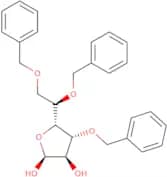
CAS:<p>3,4,6-Tri-O-benzyl-D-glucofuranose is a modification of the natural sugar D-glucose. This modification has been found to be stable against hydrolysis by esterases and other enzymes. It is synthesized in a custom synthesis. 3,4,6-Tri-O-benzyl-D-glucofuranose has been shown to be an effective inhibitor of glycosylation and polysaccharide formation in vitro. It can be used for the preparation of high purity sugars for use in research or as a polymer precursor or monosaccharide. 3,4,6-Tri-O-benzyl-D-glucofuranose is found on the CAS registry with the number 35958-64-6.</p>Purity:Min. 95%Methyl 4-chloro-4-deoxy-a-D-glucopyranoside
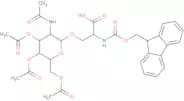
<p>Methyl 4-chloro-4-deoxy-a-D-glucopyranoside is a custom synthesis of an oligosaccharide with a sugar. It is synthesized by the reaction between methyl 4-chloro-4-deoxybenzoate and sodium cyanoborohydride in methanol. The product can be used to modify complex carbohydrates, such as glycosylation, which is the process of adding sugars to proteins or polysaccharides. Methyl 4-chloro-4-deoxyglucopyranoside has a high purity level of 99% and a CAS number of 3126991.</p>Formula:C7H13ClO5Purity:Min. 95%Molecular weight:212.63 g/mol2,3,4,6-Tetra-O-acetyl-a-D-mannopyranosyl-(N2-Fmoc)-L-threonine
CAS:<p>2,3,4,6-Tetra-O-acetyl-a-D-mannopyranosyl-(N2-Fmoc)-L-threonine is a glucosinolate that is derived from the amino acid L-threonine. It has been used in tissue culture and tumor treatment experiments to study the role of glucoraphanin in cancer cell proliferation. 2,3,4,6-Tetra-O-acetyl-a-D-mannopyranosyl-(N2-Fmoc)-L-threonine has been shown to inhibit cardiac and atrial growth in vivo. The biosynthesis of 2,3,4,6 - Tetra - O - acetyl - a - D - mannopyranosyl ( N2 - Fmoc) - L - threonine starts with the conversion of L - threonine to glucoraphanin by an enzyme called</p>Formula:C33H37NO14Purity:Min. 95%Molecular weight:671.66 g/mol1,5-Anhydro-α-D-glucofuranose
CAS:<p>1,5-Anhydro-a-D-glucofuranose is a sugar that is synthesized through the glycosylation of an aldehyde with a glycone. The product can be fluorinated or methylated before being subjected to glycosylation. It can also be modified by methylation, modification, or oligosaccharide synthesis. 1,5-Anhydro-a-D-glucofuranose is used as a building block for complex carbohydrates and saccharides that are found in many natural products such as agarose, cellulose, and chitin. This product has CAS number 24516-44-7.</p>Formula:C6H10O5Purity:Min. 95%Molecular weight:162.14 g/mol6-O-tert-Butyldimethylsilyl-3,4-O-carbonyl-D-galactal
CAS:<p>6-O-tert-Butyldimethylsilyl-3,4-O-carbonyl-D-galactal is a modification of the sugar galactal. It is an oligosaccharide that can be synthesized from galactose and 6-O-tert-butyldimethylsilylchloride. It is used as a starting material for the synthesis of complex carbohydrates, as well as polysaccharides. This product has an average purity of 98% and is available in quantities of 50 grams.</p>Purity:Min. 95%4-Methoxyphenyl 2,4-di-O-benzoyl-3-O-benzyl-6-O-[methyl 5-(acetoxyacetamido)-4,7,8,9-tetra-O-acetyl-3,5-dideoxy-D-glycero-α-D-ga lacto-2-nonulopyranosylonate]-β-D-galactopyranoside
<p>The methylation of a glycosylation is an organic chemistry technique that can be used to modify the chemical structure of a carbohydrate. A glycosylation is the reaction between an alcohol and a sugar, which produces a glycoside. The addition of methyl groups at specific positions on the sugar molecule can lead to improved properties such as increased stability, increased solubility, or increased uptake by cells. This process has been shown to produce compounds with more desirable pharmacological properties than their parent compounds. Click chemistry is a versatile and powerful method for modifying carbohydrates. It involves the use of copper-catalyzed azide-alkyne cycloaddition reactions to form carbon-nitrogen bonds in place of conventional amide linkages in peptides and proteins. Carbohydrates are modified using this method by attaching small molecules such as fluorine atoms onto one or more carbons in the carbohydrate structure. This process can be used to create novel sugars with improved properties including high purity, high stability</p>Formula:C56H61NO23Purity:Min. 95%Molecular weight:1,116.08 g/molLactosyl-b-1,1'-N-octanoyl-L-threo-sphingosine
CAS:<p>Lactosyl-b-1,1'-N-octanoyl-L-threo-sphingosine is a glycosylation agent that is used in the synthesis of complex carbohydrates. This compound has been shown to be stable in aqueous solutions and can be used for the modification of saccharides, oligosaccharides, and polysaccharides. Lactosyl-b-1,1'-N-octanoyl-L-threo-sphingosine is also useful for the fluorination of sugars. The CAS number for this compound is 939036-94-9.</p>Formula:C38H71NO13Purity:Min. 95%Molecular weight:749.97 g/mol2-Furanylmethylbeta-D-glucopyranoside
CAS:<p>2-Furanylmethylbeta-D-glucopyranoside is a glycosylation agent that is used in complex carbohydrate synthesis. It can be synthesized by the addition of two molecules of methyl bromide to 2,3,4-trihydroxybenzoic acid followed by fluorination with sulfur tetrafluoride. This compound can also be modified with an acetate group at the para position on the furan ring. This modification has been shown to increase the binding affinity to polysaccharides and Oligosaccharides. 2-Furanylmethylbeta-D-glucopyranoside is typically supplied as a white powder and is CAS No. 141360-95-4.</p>Formula:C11H16O7Purity:Min. 95%Molecular weight:260.24 g/molPropionyl 3,4,6-tri-O-acetyl-2-acetamido-2-deoxy-b-D-thiogalactopyranoside
CAS:<p>Propionyl 3,4,6-tri-O-acetyl-2-acetamido-2-deoxy-b-D-thiogalactopyranoside is a modification of the natural glycoside, galactose. It is an oligosaccharide that can be synthesized from D-galactose and propionic acid in the presence of triethyl orthoformate. The molecular weight of this compound is 706.07 g/mol. Propionyl 3,4,6-tri-O-acetyl-2-acetamido-2-deoxygalactopyranoside has been shown to inhibit the growth of bacteria by binding to the 50S ribosomal subunit and preventing transcription and replication.</p>Formula:C17H25NO10SPurity:Min. 95%Molecular weight:435.45 g/mol1,2,O-Isopropylidene-6-O-methylsulfonyl-a-D-glucofuranose
CAS:<p>1,2,O-Isopropylidene-6-O-methylsulfonyl-a-D-glucofuranose is a synthetic sugar that is used in the synthesis of oligosaccharides and saccharides. It can be used to synthesize glycosyl groups by methylation or modification. This product has been shown to be useful in the synthesis of complex carbohydrates. 1,2,O-Isopropylidene-6-O-methylsulfonyl-a-D-glucofuranose has a purity of >99%.</p>Formula:C10H18O8SPurity:Min. 95%Molecular weight:298.31 g/mol3-Deoxy-3-fluoro-D-mannose
CAS:<p>3-Deoxy-3-fluoro-D-mannose (3DFM) is a synthetic sugar molecule that acts as an inhibitor of bacterial growth. It binds to the 6-phosphate group of nucleic acids, which prevents the addition of sugar molecules to ribose or deoxyribose groups. 3DFM also inhibits the synthesis of proteins and RNA, which are necessary for bacterial growth. 3DFM is a structural analog of mannose and glucose, and has been shown to be effective against chronic infections caused by bacteria that produce lectins, such as C. difficile. This drug can be used in combination with other antibiotics to enhance their effectiveness.</p>Formula:C6H11FO5Purity:Min. 95%Color and Shape:PowderMolecular weight:182.15 g/mol2C-Hydroxymethyl-2,3:5,6-di-O-isopropylidene-D-talono-1,4-lactone
CAS:<p>2C-Hydroxymethyl-2,3:5,6-di-O-isopropylidene-D-talono-1,4-lactone is a synthetic monosaccharide that is used in the synthesis of oligosaccharides and polysaccharides. It can be fluorinated or methylated to form 2C-Fluoromethyl-2,3:5,6-di-O-(methyl)idene)-D-(talono)-1,4-lactone or 2C-(Methoxy)methyl -2,3:5,6 -di -O-(methyl)idene)-D-(talono)-1,4 -lactone. This product has been shown to have antiviral properties against HIV and influenza A virus.</p>Formula:C13H20O7Purity:Min. 95%Molecular weight:288.29 g/mol2,3,4-Tri-O-benzoyl-L-fucopyranose
CAS:<p>2,3,4-Tri-O-benzoyl-L-fucopyranose is a sugar that belongs to the class of carbohydrates. It is a glycosylation product that has been modified by Click chemistry. This sugar has also been fluorinated and methylated. 2,3,4-Tri-O-benzoyl-L-fucopyranose can be used in the synthesis of oligosaccharides and monosaccharides.</p>Formula:C27H24O8Purity:Min. 95%Molecular weight:476.47 g/molDextran 110, MW: 100,000 to 120,000
CAS:<p>Complex glucan (a 1-6) from Leuconostoc spp.; extender in blood transfusions.</p>Color and Shape:White Powdern-Butyl b-D-fructopyranoside
CAS:<p>n-Butyl b-D-fructopyranoside is a type of monosaccharide that is present in the rhizomes of Lamium. It is an ingredient in traditional Chinese medicine, where it has been used to treat various types of inflammation and pain. <br>n-Butyl b-D-fructopyranoside is a white crystalline powder with a melting point of 137°C. The chemical structure consists of a glucose molecule that has been substituted at the hydroxyl group with butanol. n-Butyl b-D-fructopyranoside has an aromatic odor and tastes sweet and slightly bitter. n-Butyl b-D-fructopyranoside can be found in many plants, including acteoside, glycosidic linarin, and taraxerol from lamium species. This compound can be synthesized systematically by reacting d-mannitol with salicylic acid in the</p>Formula:C10H20O6Purity:Min. 95%Molecular weight:236.26 g/molBenzyl 5-Aldo-2,3-O-isopropylidene-a-D-mannopentenofuranoside
CAS:<p>Benzyl 5-Aldo-2,3-O-isopropylidene-a-D-mannopentenofuranoside is a synthetic carbohydrate that is a modification of the saccharide mannose. This product contains a methylated benzyl group and an acetal linkage to the D-mannopentenofuranose. The fluorination of the C5 position on this sugar provides an additional level of stability to this molecule. This product is custom synthesized and can be modified according to customers' specifications. It has been shown to be stable in water at pH levels between 2 and 12 and can be stored at room temperature for up to two years without degradation.</p>Formula:C15H18O5Purity:Min. 95%Molecular weight:278.3 g/molN-[(e-Benzyloxycarbonylamino)caproyl]-b-L-fucopyranosylamine
CAS:<p>N-[(e-Benzyloxycarbonylamino)caproyl]-b-L-fucopyranosylamine is a high purity, methylated, glycosylated, custom synthesized carbohydrate. It's a complex carbohydrate with an oligosaccharide structure. This product can be used for research purposes.</p>Formula:C20H30N2O7Purity:Min. 95%Molecular weight:410.46 g/mol1,2,3-Tri-O-benzyl-4,6-O-benzylidene-a-D-mannopyranose
CAS:<p>1,2,3-Tri-O-benzyl-4,6-O-benzylidene-a-D-mannopyranose is a custom synthesis of a sugar. It is modified with fluorination, methylation and glycosylation. This sugar has an average molecular weight of 586.5 g/mol and is composed of three monosaccharides: D-(+)-mannose, D-(+)-glucose and D-(+)-galactose. 1,2,3-Tri-O-benzyl-4,6-O-benzylidene--a--D--mannopyranose can be used in the synthesis of oligosaccharides and polysaccharides.</p>Formula:C34H34O6Purity:Min. 95%Molecular weight:538.63 g/molN-Formyl-1-amino-1-deoxy-D-glucitol
CAS:<p>N-Formyl-1-amino-1-deoxy-D-glucitol (NFA) is a custom synthesis that has been modified by fluorination, methylation, and monosaccharide click modification. It is a saccharide with CAS No. 89182-60-5. NFA is a synthetic sugar with complex carbohydrate properties.</p>Purity:Min. 95%4-Methylumbelliferyl 2,3,4-tri-O-benzoyl-6-O-(tert-butyldiphenylsilyl)-b-D-galactopyranoside
CAS:<p>This is a fluorinated monosaccharide that is synthesized by glycosylation. It is a synthetic oligosaccharide with a complex carbohydrate structure, which has been modified with click chemistry. This product has CAS No. 920975-58-2 and can be custom synthesized to meet your needs. It is methylated and high purity and can be used for glycosylation, polysaccharides, or custom synthesis.</p>Formula:C53H48O11SiPurity:Min. 95%Molecular weight:889.03 g/mol6-o-Benzyl D-mannose
CAS:<p>Please enquire for more information about 6-o-Benzyl D-mannose including the price, delivery time and more detailed product information at the technical inquiry form on this page</p>Formula:C12H16O6Purity:Min. 95%Molecular weight:256.25 g/mol1,2,3,4-Tetra-O-acetyl-D-xylopyranose
CAS:<p>1,2,3,4-Tetra-O-acetyl-D-xylopyranose is a molecule that is derived from D-xylose. It has been shown to inhibit the growth of fungi such as T. rubrum and L. candidum by acetylation of l-threonine at the C2 position. This molecule can be recycled and its inhibitory activity can be increased through acetylation of the hydroxymethyl group on the C4 position. The mechanism of inhibition is not known but it may be due to steric hindrance or peracylation.</p>Formula:C13H18O9Purity:Min. 95%Molecular weight:318.28 g/molA2F Glycan, 2-AB labelled
<p>A2F Glycan is an oligosaccharide that is synthesized from 2-AB labelled methylated saccharides. It can be used in the synthesis of polysaccharides and as a click modification. A2F Glycan has a CAS number, which allows for custom synthesis, and it is available in high purity. The glycosylation of this product can be modified to suit the needs of the customer. The fluorination of A2F Glycan helps with the synthesis process and provides a complex carbohydrate with few impurities.</p>Purity:Min. 95%2-Acetamido-6-azido-2,6-dideoxy-D-galactopyranose
CAS:<p>2-Acetamido-6-azido-2,6-dideoxy-D-galactopyranose is a synthetic, unnatural monosaccharide bearing an azido biorthogonal reaction group. This compound can enter the cell and is processed by biosynthetic enzymes, in a manner similar to the natural O-linked N-acetyl-β-D-glucosamine. The glycans produced bear the azido functional group which can be chemically tagged with fluorescent dyes or biotin for visualisation or affinity.</p>Formula:C8H14N4O5Purity:Min. 95%Molecular weight:246.22 g/mol1,2,3,4-Tetra-O-benzyl-b-D-galactopyranoside
CAS:<p>1,2,3,4-Tetra-O-benzyl-b-D-galactopyranoside is a high purity oligosaccharide that can be custom synthesized. It is a complex carbohydrate that can be modified with methylation, glycosylation, and carbonylation. It has CAS No. 35017-04-0 and is a synthetic compound that can be fluorinated or click modified. This product also has high purity and is a synthetic saccharide sugar.</p>Formula:C34H36O6Purity:Min. 95%Molecular weight:540.65 g/molPhenyl 3,6-diazido-2,4-di-O-benzyl-3,6-dideoxy-b-D-thioglucopyranoside
CAS:<p>Phenyl 3,6-diazido-2,4-di-O-benzyl-3,6-dideoxy-b-D-thioglucopyranoside is a custom synthesis. It is a fluorinated sugar that is modified by methylation and monosaccharides. Phenyl 3,6-diazido-2,4-di-O-benzyl-3,6-dideoxy -bD thioglucopyranoside is an oligosaccharide that can be used as a carbohydrate or polysaccharide. It has an CAS number of 68874461 8.</p>Formula:C26H32N6O3SPurity:Min. 95%Molecular weight:508.64 g/molHydroxyethyl Starch (HES) 450/0.7
CAS:<p>Please enquire for more information about Hydroxyethyl Starch (HES) 450/0.7 including the price, delivery time and more detailed product information at the technical inquiry form on this page</p>Formula:(C6H10O5)m•(C2H5O)n2-(L-Fuco-tetrahydroxypentyl)-4(R)-1,3-thiazolidine-4-carboxylic acid
CAS:<p>2-(L-Fuco-tetrahydroxypentyl)-4(R)-1,3-thiazolidine-4-carboxylic acid is a high purity custom synthesis sugar. It has been synthesized by click modification and fluorination of 2-(L-fuco-tetrahydroxypentyl)-4(R)-1,3-thiazolidine-4-carboxylic acid methyl ester. This compound can be used in glycosylation with oligosaccharides, monosaccharides, saccharides and complex carbohydrates.</p>Formula:C10H19NO6SPurity:Min. 95%Molecular weight:281.33 g/mol2-Fluoroethyl a-L-fucopyranoside
<p>2-Fluoroethyl a-L-fucopyranoside is a custom synthesis that belongs to the class of methylated sugar derivatives. It is used as a glycosylation agent and has been shown to be useful in the synthesis of oligosaccharides, polysaccharides, and saccharides. 2-Fluoroethyl a-L-fucopyranoside can be fluorinated by heating with elemental fluorine or chlorine gas in an inert atmosphere. This modification can be used for the synthesis of high purity monosaccharides or sugars.</p>Formula:C8H15FO5Purity:Min. 95%Color and Shape:White to off-white solid.Molecular weight:210.2 g/molN-Acetyl-α-D-glucosamine
CAS:<p>N-Acetyl-a-D-glucosamine is a low energy, vivo animal, chemical biology, expressed, oligosaccharides, acceptor. It is an acetylated amino sugar that can be found in the cell membrane surface of bacteria and is also a protein target for acetylation. In addition to this function, NAG has been shown to be involved in protein synthesis and growth factor activity. It has been used as a substrate for the production of monoclonal antibodies and has been shown to have stereoselective effects on the antibody response.</p>Formula:C8H15NO6Purity:Min. 95%Color and Shape:PowderMolecular weight:221.21 g/mol6-O-Benzyl-D-glucose
CAS:<p>6-O-Benzyl-D-glucose is an aglycon of 6-O-benzylglycosides, which are synthesized from glucose by alkaline hydrolysis in the presence of silver oxide. The benzyl group can be removed by a variety of methods, including treatment with hydrogen chloride gas. 6-O-Benzyl-D-glucose has been used in research to demonstrate that carbohydrates have a common structural feature that can be identified by looking at their molecular structure. This molecule has also been used to study the synthesis and reactivity of benzyl groups.</p>Formula:C13H18O6Purity:Min. 95%Molecular weight:270.28 g/mol4,6-O-Benzylidene-N-Boc-1,5-imino-D-glucitol
CAS:<p>Methylation is a chemical reaction that transfers a methyl group to an organic molecule. It is one of the most common modifications in organic chemistry and can be used to synthesize saccharides and oligosaccharides, as well as to modify polysaccharides. This compound is a glycosylated benzylidene-N-Boc-1,5-imino-D-glucitol, which has been modified by Click chemistry. It was synthesized from 4,6-O-benzylidene-N-Boc-1,5-imino-D-mannitol with a custom synthesis protocol. The final product has high purity and is available for purchase at CAS No. 133697-16-2.</p>Formula:C18H25NO6Purity:Min. 95%Molecular weight:351.39 g/molEthyl 2,3-di-O-benzoyl-b-D-thiogalactopyranoside
CAS:<p>Ethyl 2,3-di-O-benzoyl-b-D-thiogalactopyranoside is a modification of the sugar galactose. It is an oligosaccharide that is a complex carbohydrate with a high purity and CAS No. 154391-05-6. This product is supplied as white powder and can be used in a number of applications including custom synthesis and synthetic chemistry. Ethyl 2,3-di-O-benzoyl-b-D-thiogalactopyranoside can be modified by methylation, glycosylation, and polysaccharide synthesis. The molecule has been fluorinated to create ethyl 2,3,4,5,6-[F]fluorohexanedioate.</p>Purity:Min. 95%5-(Acetylamino)-2,6-anhydro-3,4,5-trideoxy-4-[[(1,1-dimethylethoxy)carbonyl]amino]-D-glycero-D-galacto-non-2-enonic acid
CAS:<p>5-(Acetylamino)-2,6-anhydro-3,4,5-trideoxy-4-[[(1,1-dimethylethoxy)carbonyl]amino]-D-glycero-D-galacto-non-2-enonic acid is an oligosaccharide sugar. It is a complex carbohydrate that contains a methylated glycosylation site and is fluorinated. The CAS number for 5-(Acetylamino)-2,6-anhydro-3,4,5-trideoxy-4-[(1,1dimethylethoxy)carbonyl]amino]-DglyceroDgalacto non 2 enonic acid is 16683074. This product can be custom synthesized to your specifications and has high purity.</p>Formula:C16H26N2O9Purity:Min. 95%Molecular weight:390.39 g/molThiosophorose
CAS:<p>Thiosophorose is a nutrient that is found in microalgae. It is also known as d-arabinose and has been shown to be an inactivating agent for viruses, such as HIV-1. Thiosophorose has been used in skin care products due to its ability to produce fatty acids, which are important for healthy skin. It is also useful for the production of biofuels from microalgae. This molecule can be used to catalyze the reaction between amines and triflates and it is insoluble in water. The viscosity of this compound will increase with increasing temperature.</p>Formula:C12H22O10SPurity:Min. 95%Molecular weight:358.4 g/molNGA4F N-Glycan
CAS:<p>NGA4F N-Glycan is a modification of the N-glycan structure. It is an oligosaccharide composed of a single monosaccharide, methylated and glycosylated to form a polysaccharide with sugar groups on every other carbon. This product can be custom synthesized by our chemists at your request.</p>Formula:C72H120N6O50Purity:Min. 95%Molecular weight:1,869.73 g/mol5-Azido-5-deoxy-1,2-O-isopropylidene-b-D-fructose
CAS:<p>5-Azido-5-deoxy-1,2-O-isopropylidene-b-D-fructose is an oligosaccharide that is custom synthesized to your specifications. This compound has been modified with a methyl group at position C1 and has been fluorinated at C2. It has also undergone glycosylation at the reducing end of the molecule and can be used as a saccharide in the synthesis of complex carbohydrates.</p>Formula:C9H15N3O5Purity:Min. 95%Molecular weight:245.23 g/mol1,4:3,6-Dianhydro- 2- O- methyl-D- glucitol
CAS:<p>1,4:3,6-Dianhydro-2-O-methyl-D-glucitol is a modified sugar that belongs to the group of carbohydrates. It is synthesized by the modification of 1,4:3,6-dianhydro-2,5-diO-methyl D glucitol with methyl iodide and sodium methoxide. The compound is used in pharmaceuticals as an excipient and in cosmetics as a moisturizer. It has been shown to be effective against influenza A virus.</p>Formula:C7H12O4Purity:Min. 95%Molecular weight:160.17 g/mol3,4,6-Tri-O-acetyl-2-azido-2-deoxy-D-galactopyranosyl trichloroimidate
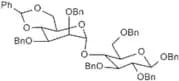
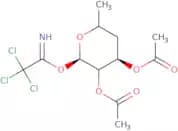
CAS:<p>3,4,6-Tri-O-acetyl-2-azido-2-deoxy-D-galactopyranosyl trichloroimidate is a carbohydrate that is custom synthesized. It is a complex carbohydrate that is modified with methylation and glycosylation. This product has high purity, fluorination, and synthetic properties.</p>Purity:Min. 95%1,2,3,6-Tetra-O-benzyl-4-O-(2,3-di-O-benzyl-4,6-O-benzylidene-a-D-mannopyranosyl)-b-D-glucopyranoside
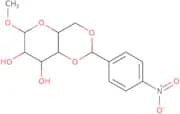
CAS:<p>Tetra-O-benzyl-4-O-(2,3-di-O-benzyl-4,6-O-benzylidene)-a-D-mannopyranosyl)-b-D-glucopyranoside is a carbohydrate that has been modified with fluorination and methylation. It is a saccharide with an oligosaccharide group, which is attached to the 1-, 2-, 3-, 6-, and 4'-positions of the sugar. This product is synthesized by custom synthesis and is available in high purity. Tetra-O-benzyl-4-O-(2,3-di-O--benzyl--4,6--O--benzylidene)-a--D--mannopyranosyl)-b--D--glucopyranoside can be used as a glycosylation or click modification agent.</p>Formula:C61H62O11Purity:Min. 95%Molecular weight:971.14 g/molMethyl 4,6-O-(4-nitrophenyl)methylene-a-D-galactopyranoside
CAS:<p>Methyl 4,6-O-(4-nitrophenyl)methylene-a-D-galactopyranoside is a custom synthesis of a complex carbohydrate. This glycosylation can be modified by methylation and fluorination. The product is available in high purity and has CAS No. 849366-08-1.</p>Purity:Min. 95%D-Mannose-6-phosphate barium salt hydrate
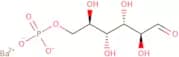
CAS:<p>D-Mannose-6-phosphate barium salt hydrate is a glycosylation agent, which can be used in the synthesis of complex carbohydrates and other saccharides. It is also a methylation agent and can be used to modify polysaccharides. D-Mannose-6-phosphate barium salt hydrate is fluorinated with trifluoromethanesulfonic acid to introduce Fluorination groups, which can then be modified with other reagents. The compound has been shown to have Click modification activity. D-Mannose-6-phosphate barium salt hydrate is a synthetic sugar that can be custom synthesized according to the customer’s requirements. This compound has CAS number 104872-94-8 and is available in high purity, which makes it suitable for use in pharmaceutical applications.</p>Formula:C6H11BaO9P·2H2OPurity:Min. 95%Color and Shape:SolidMolecular weight:395.45 g/mol1,2:4,5-Biscyclohexylidene D-myo-inositol
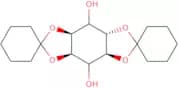
CAS:<p>1,2:4,5-Biscyclohexylidene D-myo-inositol is a synthetic compound that has been found to be more potent than cyclophosphamide in inducing apoptosis in HL-60 cells. It also induces conformation changes in phosphatidylinositol and ferulic acid and inhibits the activity of xanthine oxidase. This compound has shown promising results in terms of its ability to induce conformational changes in phosphatidylinositol and ferulic acid analogues. Further research is needed to determine whether this compound is an effective anticancer agent.</p>Formula:C18H28O6Purity:Min. 95%Molecular weight:340.41 g/molLactose octaacetate
CAS:<p>Lactose octaacetate is a complex carbohydrate that is used in the synthesis of oligosaccharides and polysaccharides. It has been modified by click chemistry to introduce a fluorinated group, which can be useful for fluorinating other molecules. Lactose octaacetate is also used as a precursor for the synthesis of sugar monomers, such as glucose and galactose. This product is available in high purity and with various modifications.</p>Formula:C28H38O19Purity:Min. 95%Molecular weight:678.6 g/molC-(2,3,4,6-Tetra-O-acetyl-1-hydroxy-b-D-galactopyranosyl)formamide
CAS:<p>C-(2,3,4,6-Tetra-O-acetyl-1-hydroxy-b-D-galactopyranosyl)formamide is a modified carbohydrate that has been synthesized and fluorinated. The chemical structure of this carbohydrate is composed of a monosaccharide and an oligosaccharide. This compound has been shown to have many different functions in the body. For example, it has been shown to inhibit the activity of the enzyme phospholipase A2 and to increase the production of prostaglandin E2. C-(2,3,4,6-Tetra-O-acetyl-1-hydroxy-b-D-galactopyranosyl)formamide has also been shown to be effective against methicillin resistant Staphylococcus aureus (MRSA).</p>Formula:C15H21NO11Purity:Min. 95%Molecular weight:391.33 g/molD-Tagatose-6-phosphate lithium salt
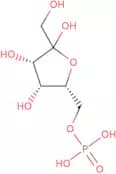
CAS:<p>D-Tagatose-6-phosphate lithium salt is a bacterial strain that belongs to the group of polyols. It is an epimerization product of D-tagatose, which is converted by the enzyme tagatose kinase to D-tagatose-6-phosphate. D-Tagatose-6-phosphate lithium salt can be used as a substrate for the enzymes galactitol dehydrogenase and galactitol 1,2-dioxygenase, which are involved in the metabolism of D-tagatose.</p>Formula:C6H13O9P·xLiPurity:Min. 95%Molecular weight:260.14 g/mol8-Hydroxymirtazapine b-D-glucuronide
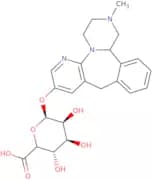
CAS:<p>8-Hydroxymirtazapine b-D-glucuronide is a fluorinated, monosaccharide, synthetic oligosaccharide. It is a complex carbohydrate that has been custom synthesized with glycosylation and polysaccharides. The sugar structure has been modified by methylation and click modification in order to produce a high purity product. CAS No. 155239-47-7</p>Formula:C23H27N3O7Purity:Min. 95%Molecular weight:457.49 g/molMethyl 4-deoxy-2,3-O-isopropylidene-L-threonate
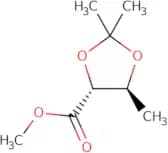
CAS:<p>Methyl 4-deoxy-2,3-O-isopropylidene-L-threonate is a fluorinated sugar that can be synthesized with high purity. It has been used for the synthesis of glycosyls and polysaccharides or for the modification of natural sugars. This compound is an intermediate in the synthesis of complex carbohydrates such as oligosaccharides and polysaccharides. Click chemistry has also been used as a modification to this compound. Methyl 4-deoxy-2,3-O-isopropylidene-L-threonate is a white crystalline solid that is soluble in water and methanol but not in ethanol. It has a melting point of 155°C and a CAS number of 78086-72-3.</p>Formula:C8H14O4Purity:Min. 95%Molecular weight:174.19 g/molVerbascotetraose
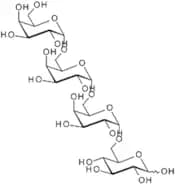
CAS:<p>Verbascotetraose is a disaccharide that is found in plants. Its chemical structure is composed of one glucose molecule and one fructose molecule. Verbascotetraose is produced by the plant tissue through a biosynthetic process, which involves the transfer reactions of phosphorylated hexoses. The resulting product is then converted to stachyose and oligosaccharides by dephosphorylation, glycan synthesis, and chromatographic method.<br>The production of verbascotetraose has been demonstrated in soybean products incubated with cellotriose and glycoside derivatives.</p>Formula:C24H42O21Purity:Min. 95%Molecular weight:666.58 g/mol2-O-Acetyl-1,3,4,6-tetra-O-benzyl-b-D-galactopyranoside
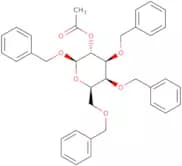
CAS:<p>2-O-Acetyl-1,3,4,6-tetra-O-benzyl-b-D-galactopyranoside is a custom synthesis that belongs to the class of complex carbohydrates. This compound contains a saccharide with a sugar group and is fluorinated at the 2 position. It has been modified by methylation on the C2 position and has an acetyl group on the C3 position.</p>Formula:C36H38O7Purity:Min. 95%Molecular weight:582.68 g/mol4-(Methyl-D3-nitrosamino)-1-(3-pyridyl)-1-butanol-N-b-D-glucuronide
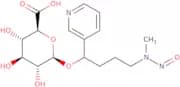
CAS:<p>4-(Methyl-D3-nitrosamino)-1-(3-pyridyl)-1-butanol-N-b-D-glucuronide is a metabolite of the antihypertensive drug methyldopa. It is excreted in urine and its concentration in urine has been found to be higher in women than in men. This difference has been attributed to an increased uptake by the kidneys, which may be due to sex hormones such as estrogen. Studies have shown that 4-(methyl-D3-nitrosamino)-1-(3pyridyl)-1-butanol-NbDglucuronide can be used as a predictive marker for urothelial carcinoma. The compound is also a metabolite of the plant extract nasturtium officinale, which has been found to have anticancer activity against human bladder cancer cells.</p>Formula:C16H21D3N3O8Purity:Min. 95%Molecular weight:389.39 g/mol1,2,3,6-Tetra-O-acetyl-4-O-(2,3,4,6-tetra-O-acetyl-b-D-galactopyranosyl)-D-mannopyranose
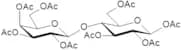
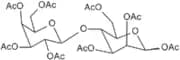
CAS:<p>1,2,3,6-Tetra-O-acetyl-4-O-(2,3,4,6-tetra-O-acetyl-b-D-galactopyranosyl)-D-mannopyranose is a high purity sugar that is custom synthesized. It is fluorinated and then glycosylated with acetate to create 1,2,3,6-Tetra O acetyl 4 O-(2,3,4,6 tetra O acetyl b D galactopyranosyl) D mannopyranose. This sugar can be used for Click modification and has many applications in the field of glycobiology.</p>Formula:C28H38O19Purity:Min. 95%Molecular weight:678.59 g/molMethyl 2-O-allyl-3-O-(2,3,4,6-tetra-O-acetyl-a-D-mannopyranosyl)-a-D-mannopyranoside
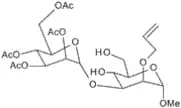
CAS:<p>Methyl 2-O-allyl-3-O-(2,3,4,6-tetra-O-acetyl-a-D-mannopyranosyl)-a-D-mannopyranoside is a modification of the carbohydrate that is synthesized by an acetylation of the mannose residue. It has been synthesized as a potential therapeutic agent for cancer treatment. Methyl 2-O-allyl 3,4,6 tetra O acetyl a D mannoside (MAA) is an oligosaccharide which consists of three monosaccharides: mannose (1), allose (2) and glucose (3). The modification of MAA involves the addition of methyl groups to the allyl group on position 1. This modification can be done through fluorination or methylation. Methylated derivatives have shown anti tumor activity in vivo and in vitro studies. The complex carbohydrate has high purity and</p>Formula:C24H36O15Purity:Min. 95%Molecular weight:564.53 g/molD-Talose-1-13C
CAS:<p>D-Talose-1-13C is a high purity, custom synthesis sugar that has been modified with fluorination and glycosylation. This product is a synthetic, methylated oligosaccharide with an average molecular weight of 635. It is a complex carbohydrate that contains 1 13C isotope and has the CAS number 70849-29-5.</p>Formula:C6H12O6Purity:Min. 95%Molecular weight:181.15 g/molDexibuprofen-acyl-b-D-glucuronide
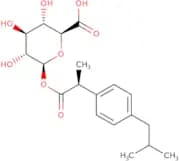
CAS:<p>Dexibuprofen-acyl-b-D-glucuronide is a complex carbohydrate that is synthesized by the acylation of dexibuprofen with b-D-glucuronic acid. The complex is then modified to increase its water solubility and stability. Dexibuprofen-acyl-b-D-glucuronide has been shown to have antiinflammatory activity in mice, which may be due to its ability to inhibit prostaglandin synthesis.</p>Formula:C19H26O8Purity:Min. 95%Molecular weight:382.4 g/molN-(Trifluoroacetyl)-1-desmethyl daunorubicin
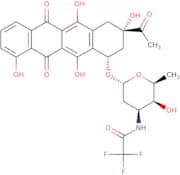
CAS:<p>N-(trifluoroacetyl)-1-desmethyl daunorubicin is an analog of daunorubicin that is synthesized by the click chemistry and fluorination reactions. It contains a trifluoroacetyl group on the 1-position of the desmethyl group, which has been shown to increase its stability in vivo. N-(trifluoroacetyl)-1-desmethyl daunorubicin has been shown to be effective in the treatment of hematological malignancies such as leukemia and lymphoma. This compound is synthesized in high purity and with a purity of greater than 99%. It is also glycosylated and methylated.</p>Formula:C28H26F3NO11Purity:Min. 95%Molecular weight:609.5 g/mol2-Octyldodecyl-D-xylopyranoside
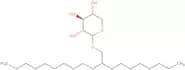
CAS:<p>2-Octyldodecyl-D-xylopyranoside is a synthetic, fluorinated glycosylated monosaccharide. The chemical name for this compound is 2-octyldodecyl-D-xylopyranoside and the CAS number is 423772-95-6. It is a white to off white solid that has Glycosylation and Methylation. This compound can be modified with Click modification and Polysaccharide. It has a molecular weight of 400.25 g/mol and it's molecular formula is C32H62O14F2N2O8S2. 2-Octyldodecyl-D-xylopyranoside can be used as a methyl donor in the synthesis of glycoproteins, glycolipids, glycopeptides, polysaccharides, oligosaccharides, or other complex carbohydrates. It is also used in fluor</p>Formula:C25H50O5Purity:Min. 95%Color and Shape:White solid.Molecular weight:430.66 g/molO-(Methyl b-d-glucopyranosyluronate)-(1,3)-2-amino-2-deoxy-D-galactopyranose HCl
<p>O-(Methyl b-d-glucopyranosyluronate)-(1,3)-2-amino-2-deoxy-D-galactopyranose HCl is a synthetic monosaccharide with a molecular weight of 338.18 g/mol. It has very high purity and can be custom synthesized to suit customer needs. This product is used in glycosylation reactions and as a sugar donor in click chemistry reactions.</p>Purity:Min. 95%Ethyl 2,3,4-tri-O-acetyl-6-azido-6-deoxy-a-D-thiomannopyranoside
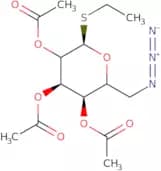
<p>Ethyl 2,3,4-tri-O-acetyl-6-azido-6-deoxy-a-D-thiomannopyranoside is a synthetic sugar that is fluorinated with trifluoromethanesulfonic acid. It has been used in glycosylation reactions, as well as modifications of complex carbohydrates and polysaccharides. This product can be custom synthesized to meet the needs of our customers. Ethyl 2,3,4-tri-O-acetyl-6-azido-6-deoxy -a D -thiomannopyranoside is a high purity chemical with CAS number 181454.</p>Formula:C14H21N3O7SPurity:Min. 95%Molecular weight:375.4 g/mol4-O-(a-D-Galactopyranosyl)-b-D-galactopyranosyl-CETE-BSA Conjugate
<p>This product is a complex carbohydrate that is used in the modification of oligosaccharides and polysaccharides. It is synthesized by reacting 4-O-(a-D-galactopyranosyl)-b-D-galactopyranosyl chloride with bovine serum albumin (BSA) under acidic conditions. The product has a purity of greater than 98% and a molecular weight of approximately 3,000 Daltons.</p>Purity:Min. 95%Molecular weight:77,000 g/mol3-Deoxy-3-fluoro-1,2:5,6-di-O-isopropylidene-a-D-glucofuranose
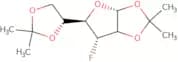
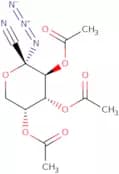
CAS:<p>3-Deoxy-3-fluoro-1,2:5,6-di-O-isopropylidene-a-D-glucofuranose (3DF) is a fluorinated sugar that is synthesized by reacting 2,3:5,6-di-O-isopropylidene a D glucofuranose with methyl iodide and trifluoromethanesulfonic acid. 3DF has been used for the synthesis of oligosaccharides and polysaccharides. It is also possible to use this compound for the preparation of other sugars as well as more complex carbohydrates. The purity of 3DF is 98% or higher. 3DF can be modified with click chemistry reactions and then reacted with amines to form amide bonds. This modification allows for the synthesis of high purity monosaccharides and disaccharides.</p>Formula:C12H19FO5Purity:Min. 95%Molecular weight:262.27 g/mol2,3,4-Tri-O-acetyl-1-azido-1-deoxy-b-D-arabinopyranosyl cyanide
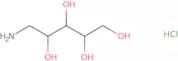
CAS:<p>2,3,4-Tri-O-acetyl-1-azido-1-deoxy-b-D-arabinopyranosyl cyanide is a synthetic carbohydrate that can be modified with fluorination, methylation and glycosylation. It is modified with acetyl groups at the 2, 3 and 4 positions of the sugar ring. This carbohydrate has been used to synthesize oligosaccharides and polysaccharides. The modification of this carbohydrate has been shown to improve its solubility in water.</p>Formula:C12H14N4O7Purity:Min. 95%Molecular weight:326.26 g/mol1-Amino-1-deoxy-D-xylitol hydrochloride
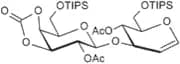
CAS:<p>1-Amino-1-deoxy-D-xylitol hydrochloride is a sugar that is used in the synthesis of complex carbohydrates and polysaccharides. It is also used to introduce fluorine atoms into saccharides or oligosaccharides, and can be custom synthesized to suit the needs of a customer. The chemical formula for 1-amino-1-deoxy-D-xylitol hydrochloride is C6H11NO4•HCl. Its CAS number is 22566-18-3. This product has a purity of ≥99%.</p>Purity:Min. 95%3,2'-Di-O-acetyl-3',4'-O-carbonyl-6,6'-di-O-tert-butyldiphenylsilyl lactal
CAS:<p>3,2'-Di-O-acetyl-3',4'-O-carbonyl-6,6'-di-O-tert-butyldiphenylsilyl lactal is a custom synthesis of a fluorinated carbohydrate. It is a modification of an oligosaccharide and can be used in the synthesis of saccharides and polysaccharides. The CAS number for this compound is 163228-35-1. This compound has been modified with click chemistry to add methyl groups to the hydroxyl group on the sugar ring. This compound has been used as a monosaccharide or as a part of complex carbohydrates.</p>Formula:C35H62O12Si2Purity:Min. 95%Molecular weight:731.03 g/molCelecoxib carboxylic acid acyl-b-D-glucuronide
CAS:<p>Celecoxib is a nonsteroidal anti-inflammatory drug (NSAID) that has been used to treat pain and inflammation. Celecoxib carboxylic acid acyl-b-D-glucuronide is an active metabolite of celecoxib that is formed by the conjugation of celecoxib with glucuronic acid. It has been shown to inhibit the synthesis of prostaglandins, which are inflammatory mediators.</p>Formula:C23H20F3N3O10SPurity:Min. 95%Molecular weight:587.48 g/molb-L-Xylose-1-phosphate
<p>b-L-Xylose-1-phosphate is a methylated, fluorinated, and custom synthesized monosaccharide that can be modified to produce an oligosaccharide or polysaccharide. This monomer is a sugar that is found in complex carbohydrates and has a purity of greater than 99%. It can be used for the synthesis of saccharides or as a fluorination agent.</p>Purity:Min. 95%4-Methoxyphenyl 2,3-di-O-benzyl-b-D-galactopyranoside
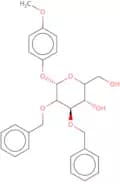
<p>4-Methoxyphenyl 2,3-di-O-benzyl-b-D-galactopyranoside is a high purity synthetic compound that can be custom synthesized to your specifications. This product is a carbohydrate with the molecular formula C7H8O6 and molecular weight of 232.14. The CAS number for this compound is 51878-93-5.</p>Formula:C27H30O7Purity:Min. 95%Molecular weight:466.52 g/mol2,3-Anhydro-4,6-O-benzylidene-N-Boc-1,5-deoxy-1,5-imino-D-glucitol
CAS:<p>2,3-Anhydro-4,6-O-benzylidene-N-Boc-1,5-deoxy-1,5-imino-D-glucitol is a fluorinated monosaccharide that is synthesized by reacting 2,3-anhydro-4,6-(O)-benzylidene glucose with Boc anhydride in the presence of triethylamine. It is an oligosaccharide derived from D-(+)-glucose and consists of a 1,5 anhydro ring linked to a 1,5 imino sugar. 2,3 Anhydro 4,6 O benzylidene N Boc 1 5 deoxy 1 5 imino D glucitol has been used as a building block for glycosylation reactions and has been shown to be useful in click chemistry. This compound is also available in various purity levels.</p>Formula:C18H23NO5Purity:Min. 95%Molecular weight:333.38 g/mol1,2-O-Isopropylidene-a-D-xylofuranuronic acid
CAS:<p>1,2-O-Isopropylidene-a-D-xylofuranuronic acid is a methylated form of the sugar xylofuranose. It is also known as 1,2-di-O-methylxylofuranuronic acid. The compound belongs to the class of oligosaccharides and polysaccharides. It has CAS number 35522-89-5 and molecular weight of 206.24 g/mol. It is soluble in water and ethanol but insoluble in ether. It can be used for chemical synthesis and modification of saccharide chains.</p>Formula:C8H12O6Purity:Min. 95%Molecular weight:204.18 g/molMan-3Xyl N-Glycan
CAS:<p>Man-3Xyl N-Glycan is a high purity, custom synthesized, synthetic and fluorinated monosaccharide. It is an Oligosaccharide that contains 3 mannose sugar residues. Man-3Xyl N-Glycan is used for Glycosylation in the synthesis of complex carbohydrate polymers, such as glycoproteins and glycolipids. Click modification can be used to introduce methyl groups onto the sugar residues of Man-3Xyl N-Glycan. This monosaccharide has been shown to have high stability and resistance to oxidation.</p>Formula:C39H66N2O30Purity:Min. 95%Molecular weight:1,042.94 g/mol2,3-O-Cyclohexylidene-b-D-ribofuranose
CAS:<p>2,3-O-Cyclohexylidene-b-D-ribofuranose is a monosaccharide that is used in the synthesis of complex carbohydrates. This compound possesses a cyclic structure that contains an oxygen atom at the 2 position and a hydroxyl group at the 3 position. It has been modified by fluorination, methylation, glycosylation, and click chemistry. The chemical name for this compound is 2,3-O-Cyclohexylideneb-D-ribofuranose.</p>Formula:C11H18O5Purity:Min. 95%Molecular weight:230.26 g/molGT1c-Oligosaccharide
<p>GT1c oligosaccharide (free acid) has a core tetrasaccharide structure (Galβ1,3GalNAcβ1,4Galβ1,4Glc) with three sialic acid residues (NeuAc) linked α2,8/α2,8/α2,3 to the inner galactose residue (Ledeen, 2009). A monoclonal antibody, established against the chick neural tube, was shown to recognize the trisialosyl residue, NeuAca2-8NeuAca2-8NeuAca2-3-R GT1c ganglioside in the cerebral cortex of fetal rats (Hirabayashi, 1989). This unusual multisialo ganglioside was recognised in chicken optic lobes and cerebrum, during embryonic development (Rosner, 1980) and in fish brains (Yu, 1980).</p>Formula:C59H93N4O45Na3Purity:Min. 95%Molecular weight:1,647.34 g/molBenzyl 4-O-(2,3,4,6-tetra-O-benzyl-a-D-galactopyranosyl)-2,3-di-O-benzyl-b-D-galactopyranoside
<p>Benzyl 4-O-(2,3,4,6-tetra-O-benzyl-a-D-galactopyranosyl)-2,3-di-O-benzylb -D-galactopyranoside is a Fluorination and Glycosylation product. It is a Custom Synthesis of Monosaccharide and Oligosaccharide. The CAS number for this product is 106835-99-8.</p>Formula:C61H64O11Purity:Min. 95%Molecular weight:973.15 g/molLipid A (E. Coli) triethylammonium salt
CAS:<p>The Lipid A moiety of lipopolysaccharide forms the outer monolayer of the outer membrane in most Gram-negative bacteria. Escherichia coli lipid A is synthesized on the cytoplasmic side of the inner membrane by a conserved pathway of nine constitutive enzymes. Following attachment of the core oligosaccharide, nascent core-lipid A is flipped to the outer surface of the inner membrane by the ABC transporter MsbA, where the O-antigen polymer is attached. These complex glycoforms protect bacteria from antibiotics and complement-mediated lysis. The core and O-antigen domains are required for virulence and consequently are present in most clinical and environmental isolates (Raetz, 2007).</p>Formula:C94H178N2O25P2Purity:Min. 95%Molecular weight:1,798.37 g/mol3,5,6-Tri-O-benzyl-D-glucofuranose
CAS:<p>3,5,6-Tri-O-benzyl-D-glucofuranose is a crystalline and white or off-white powder. It is soluble in water and toluene, but insoluble in chlorinated solvents. The chemical has been synthesized from benzoic acid and D-glucose. 3,5,6-Tri-O-benzyl-D-glucofuranose is used as a reagent for the synthesis of polyhydroxybutyrate (PHB) polymers that are biodegradable and can be used as thermoplastic polyesters. This compound has been shown to be potentially hazardous to the environment due to its high reactivity with chloride ions in the presence of benzyl alcohols.</p>Formula:C27H30O6Purity:Min. 95%Molecular weight:450.54 g/molMethyl 3-O-benzyl-6-deoxy-2-O-methyl-a-D-galactopyranoside
CAS:<p>Methyl 3-O-benzyl-6-deoxy-2-O-methyl-a-D-galactopyranoside is a custom synthesis that has been modified by fluorination, methylation and click modification. This product is a monosaccharide that can be used in the synthesis of oligosaccharides and polysaccharides. It has been shown to have many applications including glycosylation, sugar, and carbohydrate.</p>Formula:C15H22O5Purity:Min. 95%Molecular weight:282.34 g/molCyclohexylethanoyl-N-Hydroxyethylglucamide
CAS:<p>Cyclohexylethanoyl-N-Hydroxyethylglucamide (CYE) is a membrane protein with a strong affinity for the bacterial enzyme histidine kinase, which is involved in the regulation of bacterial cell wall synthesis. CYE binds to the catalytic site of this enzyme and inhibits its activity. CYE also has an inhibitory effect on clostridium dehydrogenases and campylobacter adenylate cyclases. CYE has been shown to bind to other enzymes, such as tecnologia and diffraction, synchrotron, staphylococcus kinases, and campylobacter adenylate cyclases. Structural studies of CYE have been carried out using crystallography at the Instituto de Tecnología Química e Biológica in Campinas, Brazil.</p>Formula:C16H31NO7Purity:Min. 95%Molecular weight:349.42 g/molLacto-N-fucopentaose II-APD-HSA
<p>Lacto-N-fucopentaose II-APD-HSA is a complex carbohydrate that has been chemically modified to include a fucose sugar. Lacto-N-fucopentaose II-APD-HSA is synthesized by the click reaction and then modified with the addition of an acetyl group. The product is then methylated and purified by HPLC. Lacto-N-fucopentaose II-APD-HSA can be used in a wide range of applications, including as a component in glycosylation reactions or as an adjuvant for fluorescence labelling.</p>Purity:Min. 95%Hexadecyl 2-acetamido-3,4,6-tri-O-acetyl-2-deoxy-b-D-glucopyranoside
CAS:<p>Hexadecyl 2-acetamido-3,4,6-tri-O-acetyl-2-deoxy-b-D-glucopyranoside (HAT) is an antibiotic that belongs to the class of macrolides. It has been shown to be heritable and its heritability is dependent on the type of animal species. HAT also has a basic structure with substituents that are either acidic or hydroxylated. The heterogeneity in this compound can be seen by the different lactation periods for different animals. Regression analysis was used to find out if there was a correlation between the lactation period and the basicity of HAT. This study found that there was no such correlation and therefore concluded that there is no relationship between HAT's basicity and its heritability.</p>Formula:C30H53NO9Purity:Min. 95%Molecular weight:571.74 g/molHexyl 2-acetamido-2-deoxy-b-D-glucopyranoside
CAS:<p>Hexyl 2-acetamido-2-deoxy-b-D-glucopyranoside is a sugar that is used in the study of immune reactions. It can be used to measure albumin levels and tissue samples, as well as in animal experiments. Hexyl 2-acetamido-2-deoxy-b-D-glucopyranoside has been shown to have toxic effects on cells, which may be due to its ability to inhibit DNA concentrations. This substance also has a directional fluorescence, which means that it will emit light in one direction only when stimulated with light of a certain wavelength.</p>Formula:C14H27NO6Purity:Min. 95%Molecular weight:305.37 g/mol1,3,5-Tri-O-acetyl-2-deoxy-2-fluoro-a-D-arabinofuranose
CAS:<p>1,3,5-Tri-O-acetyl-2-deoxy-2-fluoro-a-D-arabinofuranose is a sugar that is modified with fluorine. It has been synthesized using the "click" reaction methodology and is available for custom synthesis. This synthetic sugar can be used in glycosylation reactions or as a monosaccharide or polysaccharide in complex carbohydrate click chemistry. This product is of high purity and can be modified with methyl groups or other functional groups to suit your needs.</p>Formula:C11H15FO7Purity:Min. 95%Molecular weight:278.23 g/molNorcyclobenzaprine N-glucuronide
<p>Norcyclobenzaprine N-glucuronide is a custom synthesis of the complex carbohydrate, oligosaccharides. It has CAS No. and is a polysaccharide that is modified by methylation, glycosylation, click modification and fluorination. Norcyclobenzaprine N-glucuronide also has high purity and can be synthesized using sugar or carbohydrate. This product has been created through synthetic means with the addition of fluorine to the molecule.</p>Formula:C25H27NO6Purity:Min. 95%Molecular weight:437.49 g/molMethyl 2,3,6-tri-O-acetyl-a-D-glucopyranoside
CAS:<p>Methyl 2,3,6-tri-O-acetyl-a-D-glucopyranoside is a fluorinated monosaccharide that can be used in the synthesis of oligosaccharides, polysaccharides and complex carbohydrates. This product is custom synthesized for customers with specific needs. The modification of Methyl 2,3,6-tri-O-acetyl-a-D-glucopyranoside can also be done to provide desired properties. The purity of this product is high and suitable for various applications.</p>Formula:C13H20O9Purity:Min. 95%Molecular weight:320.29 g/molMethyl 2-acetamido-4-O-(2-acetamido-3,4,6-tri-O-acetyl-2-deoxy-b-D-glucopyranosyl)-2-deoxy-b-D-glucopyranoside
CAS:<p>Methyl 2-acetamido-4-O-(2-acetamido-3,4,6-tri-O-acetyl-2-deoxy-b-D-glucopyranosyl)-2-deoxy-b-D-glucopyranoside is a custom synthesis that is fluorinated and methylated to create an acetal. The monosaccharide is a custom synthesis that has been modified with click chemistry. This oligosaccharide is found in glycosylation reactions and can be used for the synthesis of polysaccharides. Methyl 2 acetamido 4 O-(2 acetamido 3,4,6 tri O acetyl 2 deoxy b D glucopyranosyl) 2 deoxy b D glucopyranoside has CAS Number 97242 82 5.</p>Formula:C23H36N2O14Purity:Min. 95%Molecular weight:564.54 g/molOctyl 2-acetamido-3,4,6-tri-O-acetyl-2-deoxy-b-D-glucopyranoside
CAS:<p>Octyl 2-acetamido-3,4,6-tri-O-acetyl-2-deoxy-b-D-glucopyranoside is an antigen that is expressed in tumor tissue. It is a polynucleotide molecule that can be used for the diagnosis of cancer and autoimmune diseases. The octyl 2-acetamido-3,4,6-tri-O acetyl 2 deoxy b D glucopyranoside molecule is a programmable molecule that can be used to induce a specific phenotype in cells. Octyl 2 acetamido 3,4,6 tri O acetyl 2 deoxy b D glucopyranoside has been shown to be an effective antigen for the generation of CD8+ T cells.</p>Formula:C22H37NO9Purity:Min. 95%Molecular weight:459.53 g/molMethyl 2,3,4-tri-O-benzyl-L-rhamnopyranoside
CAS:<p>Methyl 2,3,4-tri-O-benzyl-L-rhamnopyranoside is a sugar that is used in the synthesis of oligosaccharides and saccharides. This compound has been shown to be an intermediate for the synthesis of benzylidene acetone phosphate, which can be used as a precursor for polymers that have potential use in biomedical applications.</p>Formula:C28H32O5Purity:Min. 95%Molecular weight:448.55 g/molMethyl 3,5-di-O-(p-chlorobenzoyl)-2-keto-a-D-ribofuranoside
<p>Methyl 3,5-di-O-(p-chlorobenzoyl)-2-keto-a-D-ribofuranoside is an organic compound that is a modification of an oligosaccharide. It is synthesized by the methylation and glycosylation of an aldose sugar. The modification occurs in the form of a fluorination and saccharide substitution on the original molecule. This compound has been shown to have complex carbohydrate properties, as well as being a monosaccharide and polysaccharide. It has been found to be useful in numerous applications such as drugs, industrial chemicals, and others.</p>Purity:Min. 95%2-(N-Octylcarboamido)phenyl-2-acetamido-2-deoxy-b-D-glucopyranoside
<p>2-(N-Octylcarboamido)phenyl-2-acetamido-2-deoxy-b-D-glucopyranoside is a modified carbohydrate which is used as a synthetic monosaccharide. It is also used in the preparation of Oligosaccharides, Carbohydrates, and Complex Carbohydrates. 2-(N-Octylcarboamido)phenyl-2-acetamido-2-deoxy-b-D--glucopyranoside has been fluorinated to 2-(N-[3,5-(diiodo)phenyl]carboamido)phenyl)-2-[3,5-(diiodo)phenyl]-acetamide.</p>Formula:C23H36N2O8Purity:Min. 95%Molecular weight:468.54 g/mol6,1',6'-Tri-O-tertbutyldiphenylsilyl-sucrose
CAS:<p>6,1',6'-Tri-O-tertbutyldiphenylsilyl-sucrose is a high purity, custom synthesis chemical. It is an oligosaccharide and complex carbohydrate that is a Click modification of sucrose. This chemical has been fluorinated, glycosylated, and methylated.</p>Purity:Min. 95%Octyl 2-acetamido-2-deoxy-b-D-glucopyranoside
CAS:<p>Octyl 2-acetamido-2-deoxy-b-D-glucopyranoside is a lyotropic liquid that is flammable. It can be used to prepare potassium hydride, which is an organometallic. Potassium hydride reacts with organic acids and atorvastatin to produce argon gas. This reaction can be done in the presence of chlorine gas instead of air. Preparative methods for octyl 2-acetamido-2-deoxy-b-D-glucopyranoside include heating it in a vacuum or under argon gas and then reacting it with potassium tetrachlorocobaltate in water or ethanol solution.</p>Formula:C16H31NO6Purity:Min. 95%Molecular weight:333.42 g/molCyclohexylbutanoyl-N-hydroxyethylglucamide
CAS:<p>Cyclohexylbutanoyl-N-hydroxyethylglucamide (CHBE) is a nitrite reductase inhibitor that has been shown to be effective in plant cell cultures and in proton uptake assays. It inhibits the biosynthesis of cyclic guanosine monophosphate (cGMP), which is an important regulator of smooth muscle relaxation. CHBE has been shown to inhibit nitrite reductase activity, as well as cavity formation and protein synthesis in the bacteria typhimurium. This drug also binds to the active site of nitrite reductase, inhibiting its function by stabilising a reduced form of the enzyme.</p>Formula:C18H35NO7Purity:Min. 95%Molecular weight:377.47 g/mol2,5-Anhydro-D-glucitol-1,6-bis-(dibenzylphosphate)
CAS:<p>2,5-Anhydro-D-glucitol-1,6-bis-(dibenzylphosphate) is a synthetic carbohydrate with a complex structure. It can be used in the synthesis of glycosides and saccharides. This product has a molecular weight of 486.83 g/mol, a melting point of 169 oC, and an octanol/water partition coefficient of 3.00.</p>Formula:C34H38O11P2Purity:Min. 95%Molecular weight:684.61 g/molMethyl 3-O-benzyl-4,6-O-benzylidene-2-deoxy-2-phthalimido-b-D-glucopyranose
CAS:<p>Methyl 3-O-benzyl-4,6-O-benzylidene-2-deoxy-2-phthalimido-b-D-glucopyranose is a synthetic chemical that is used in the modification of saccharides. It has been shown to be an efficient and economical way to introduce methyl groups into saccharide chains. This product is a white solid that is soluble in water, ethanol, and chloroform. Methyl 3-O-benzyl-4,6-O-benzylidene-2-deoxy -2 -phthalimido -b -D -glucopyranose has a molecular weight of 564.1 grams per mole and an empirical formula of C14H22N2O8P. It has CAS number 97276–96–5 and can be found under code XA0433.</p>Formula:C29H27NO7Purity:Min. 95%Molecular weight:501.53 g/mol4,6-O-Benzylidene-2,3-di-O-(4-methoxybenzyl)-a-D-galactopyranosyl fluoride
<p>4,6-O-Benzylidene-2,3-di-O-(4-methoxybenzyl)-a-D-galactopyranosyl fluoride is a glycosylation reagent that is used in the synthesis of complex carbohydrates. This product is a fluorinated sugar with a CAS number and a high purity. It can be custom synthesized to order.</p>Formula:C29H31FO7Purity:Min. 95%Molecular weight:510.55 g/mol6-O-Acetyl-1,2:3,5-di-O-methylidene-a-D-glucofuranose
CAS:<p>6-O-Acetyl-1,2:3,5-di-O-methylidene-a-D-glucofuranose is a methylated saccharide that is a member of the polysaccharides. The compound has been modified using click chemistry to produce a fluorescent derivative. 6-O-Acetyl-1,2:3,5-di-O-methylidene-a-D-glucofuranose is also used for glycosylation and can be synthesized to provide high purity carbohydrates or sugars. It has an CAS number of 3244800 and may be used as a fluorinated complex carbohydrate.</p>Formula:C12H18O7Purity:Min. 95%Color and Shape:White to off-white solid.Molecular weight:274.27 g/mol4-O-Acetyl-2,5-anhydro-1,3-O-isopropylidene-6-O-trityl-D-glucitol
CAS:<p>4-O-Acetyl-2,5-anhydro-1,3-O-isopropylidene-6-O-trityl-D-glucitol is a custom synthesis of an oligosaccharide. It is a complex carbohydrate that has been modified by methylation and glycosylation. 4OATG has been fluorinated with 1,4 difluorobenzene and then reacted with Ac 2 O to make the glycosylate form. The compound was obtained in high purity and as a white solid.</p>Formula:C30H32O6Purity:Min. 95%Molecular weight:488.57 g/mol2-Acetamido-1,3-di-O-acetyl-4,6-O-benzylidene-2-deoxy-D-glucopyranose
CAS:<p>2-Acetamido-1,3-di-O-acetyl-4,6-O-benzylidene-2-deoxy-D-glucopyranose is a custom synthesized sugar with a high purity. It is used in glycosylation reactions and has been shown to be resistant to methylation reactions. This product can be modified by click chemistry, fluorination, and saccharide modification. It has been shown to be resistant to Methylation, Click Modification, Polysaccharide, Fluorination, and Saccharide Modification. This product is often used as an intermediate for the synthesis of complex carbohydrate oligosaccharides.</p>Formula:C19H23NO8Purity:Min. 95%Color and Shape:White to off-white solid.Molecular weight:393.4 g/molAllyl 2,3-di-O-benzyl-a-D-glucopyranoside
CAS:<p>Allyl 2,3-di-O-benzyl-a-D-glucopyranoside is a plant growth regulator that stimulates callus formation. It belongs to the group of auxins and has been shown to promote callus growth in Arabidopsis thaliana cultivars, such as glaberrima and kinetin. This compound has also been shown to stimulate the formation of calli from coconut explants.</p>Formula:C23H28O6Purity:Min. 95%Molecular weight:400.46 g/mol1,5-α-L-Arabinotetraose
CAS:<p>1,5-alpha-L-Arabinotetraose is a methylated and glycosylated tetrasaccharide with a molecular weight of 720. It is a custom synthesis product with high purity and it can be used for the modification of proteins, polysaccharides, or other compounds. 1,5-alpha-L-Arabinotetraose has been shown to have fluoroquinolone resistance due to its methylation and glycosylation. The compound is an oligosaccharide that is synthesized from arabinose. It can be modified by click chemistry to introduce fluorine atoms at desired positions.</p>Formula:C20H34O17Purity:(%) Min. 95%Color and Shape:Clear Viscous LiquidMolecular weight:546.47 g/mol1-O-tert-Butyldiphenysilyl-2-azido-4,6-O-benzylidene-2-deoxy-b-D-galactopyranoside
CAS:<p>1-O-tert-Butyldiphenysilyl-2-azido-4,6-O-benzylidene-2-deoxy-b-D-galactopyranoside is a custom synthesis of an oligosaccharide. It is a modification of the original compound by fluorination, methylation and glycosylation. The molecular weight of 1BPSA is 522.08 g/mol and its CAS number is 132183-16-5. This product is soluble in water and can be used for the synthesis of complex carbohydrates.</p>Formula:C29H33N3O5SiPurity:Min. 95%Molecular weight:531.68 g/molD-Xylose-2-C-D
CAS:<p>Please enquire for more information about D-Xylose-2-C-D including the price, delivery time and more detailed product information at the technical inquiry form on this page</p>Formula:C5H10O5Purity:Min. 95%Molecular weight:151.14 g/molN-b-D-Glucopyranosyl-L-Asn
CAS:<p>N-b-D-Glucopyranosyl-L-Asn is a complex carbohydrate that is modified by glycosylation and methylation. It is an Oligosaccharide, Polysaccharide, Modification, saccharide that can be synthesized from D-Glucose or D-Mannose. N-b-D-Glucopyranosyl-L-Asn has high purity and can be fluorinated for modification. This product can be used as a sugar and is also used in Click chemistry for modification.</p>Formula:C10H18N2O8Purity:Min. 95%Molecular weight:294.26 g/mol1,2,3,4,6-Penta-O-benzoyl-D-galactopyranoside
CAS:<p>1,2,3,4,6-Penta-O-benzoyl-D-galactopyranoside is a custom synthesis of an oligosaccharide. It is a polysaccharide that is modified by methylation and glycosylation. This product has been fluorinated and has been modified with a click reaction. The final product is highly pure with a CAS number of 3006-48-2.</p>Formula:C41H32O11Purity:Min. 95%Molecular weight:700.69 g/molBenzyl 3,4,6-tri-O-acetyl-2-deoxy-2-phthalimido-b-D-glucopyranoside
CAS:<p>Benzyl 3,4,6-tri-O-acetyl-2-deoxy-2-phthalimido-b-D-glucopyranoside is a carbohydrate compound that is used in the synthesis of complex carbohydrates and glycoproteins. This product can be custom synthesized to customer specifications using our unique capabilities. It is a high purity, methylated, glycosylated, and click modified sugar.</p>Formula:C27H27NO10Purity:Min. 95%Molecular weight:525.52 g/mol2,3,4,6-Tetra-O-benzoyl-a-D-glucopyranosyl p-trifluoromethylbenzylthio-N-(trifluoromethylphenyl)formimidate
CAS:<p>2,3,4,6-Tetra-O-benzoyl-a-D-glucopyranosyl p-trifluoromethylbenzylthio-N-(trifluoromethylphenyl)formimidate is a carbohydrate that has been synthesized from an oligosaccharide and a monosaccharide. It has been modified by fluorination, methylation, glycosylation and click chemistry. This product has been custom synthesized for use in the synthesis of saccharides.</p>Formula:C50H37F6NO10SPurity:Min. 95%Molecular weight:957.91 g/mol2-Deoxy-N-phenylglucosylamine
CAS:<p>2-Deoxy-N-phenylglucosylamine is a custom synthesis that can be modified to suit the needs of your project. It is a fluorinated compound with a methyl group on the phenyl ring and an amine at C2. This chemical has been shown to have anti-tumor activity against sarcoma 180 and leukemia L1210 in mice. 2-Deoxy-N-phenylglucosylamine is also known to inhibit the production of monosaccharides, oligosaccharides, and polysaccharides by inhibiting glycosylation. If you are looking for carbohydrate compounds for your next project, this chemical may be just what you need!</p>Formula:C12H17NO4Purity:Min. 95%Molecular weight:239.27 g/mol2,3,4,6-Tetra-O-acetyl-a-D-mannopyranosyl-(N2-Fmoc)-L-threonine pentafluorophenyl ester
CAS:<p>2,3,4,6-Tetra-O-acetyl-a-D-mannopyranosyl-(N2-Fmoc)-L-threonine pentafluorophenyl ester is a glycosylation reagent that can be used to synthesize oligosaccharides. This compound is the product of the reaction between 2,3,4,6-tetra-O-acetylmannose and L-(N2-Fmoc)-threonine. It has been modified with a fluorinated phenyl group at the C5 position as well as methylation at the C2 position. The purity of this compound is high (> 95%) and it is available for custom synthesis.</p>Formula:C39F5H36NO14Purity:Min. 95%Molecular weight:837.71 g/mol2, 3, 6, 2', 3', 4', 6'-Hepta- O- acetyl- D- maltose
CAS:<p>2, 3, 6, 2', 3', 4', 6'-Hepta-O-acetyl-D-maltose is a fluorinated monosaccharide that is used in the synthesis of glycosides. It has a CAS number of 56285-96-2 and can be custom synthesized. This product is an oligosaccharide that can be modified by glycosylation, methylation, or click modification. It is a complex carbohydrate with a high purity and can be used in the modification of sugars.</p>Formula:C26H36O18Purity:Min. 95%Color and Shape:White to off-white solid.Molecular weight:636.55 g/mol5-Azido-5-deoxy-α-D-glucofuranose
CAS:<p>Please enquire for more information about 5-Azido-5-deoxy-α-D-glucofuranose including the price, delivery time and more detailed product information at the technical inquiry form on this page</p>Formula:C6H11N3O5Purity:Min. 95%Molecular weight:205.17 g/mol2-Deoxy-1,3:4,5-di-O-isopropylidene-2-oxamoylamino-D-mannitol
CAS:<p>2-Deoxy-1,3:4,5-di-O-isopropylidene-2-oxamoylamino-D-mannitol is a synthetic glycosylation building block that has been fluorinated and custom synthesized. It is used for the synthesis of oligosaccharides and polysaccharides. This product is also used for click modification and complex carbohydrate modification. 2-Deoxy-1,3:4,5-di-O-isopropylidene-2-oxamoylamino D mannitol has a CAS number of 128741–75–3.</p>Formula:C14H24N2O7Purity:Min. 95%Molecular weight:332.35 g/mol3,6-Di-O-triisopropylsilyl-D-glucal
CAS:<p>3,6-Di-O-triisopropylsilyl-D-glucal is a synthetic monosaccharide. It has a molecular weight of 368.76 g/mol and chemical formula C14H22O8Si. 3,6-Di-O-triisopropylsilyl-D-glucal is soluble in water and ethanol.<br>It is used for the synthesis of oligosaccharides and polysaccharides, as well as for modification of sugar moieties on glycoproteins and glycolipids. 3,6-Di-O-triisopropylsilyl-D-glucal can be used for the preparation of complex carbohydrate structures by glycosylation or polysaccharide structures by methylation. 3,6-Di-O-triisopropylsilyl--D--glucal can also be used to synthesize sugar mo</p>Formula:C24H50O4Si2Purity:Min. 95%Molecular weight:458.82 g/molMethyl 4,6-dichloro-4,6-dideoxy-a-D-glucopyranoside
<p>Methyl 4,6-dichloro-4,6-dideoxy-a-D-glucopyranoside is a fluorinated carbohydrate that belongs to the class of monosaccharides and is synthetically produced. Methyl 4,6-dichloro-4,6-dideoxy-a-D-glucopyranoside is an oligosaccharide that has been modified with a click reaction. This product can be used in glycosylation reactions with polysaccharides or as an intermediate for the production of other modified sugars. Methyl 4,6-dichloro-4,6-dideoxy--D--glucopyranoside has high purity and CAS No. 8013695.</p>Formula:C7H12Cl2O4Purity:Min. 95%Molecular weight:231.08 g/mol4-Nitrophenyl 3,4,6-tri-O-acetyl-2-azido-2-deoxy-a-D-galactopyranoside
CAS:<p>4-Nitrophenyl 3,4,6-tri-O-acetyl-2-azido-2-deoxy-a-D-galactopyranoside is a synthetic compound that has been modified by glycosylation and fluorination. The modification of the sugar moiety with an acetyl group at position 4, 6 and 8 prevents the formation of disaccharides from the monosaccharides. This product is supplied as a white to off white powder for use in research applications. It has CAS number 1147438-51-4.</p>Formula:C18H20N4O10Purity:Min. 95%Molecular weight:452.37 g/mol(S)-Propranolol glucuronide
CAS:<p>(S)-Propranolol glucuronide is a custom-synthesized sugar that has been modified with fluorination and methylation. It is also a polysaccharide that has been glycosylated and carbamoylated. This compound is a white crystalline solid that can be used as an intermediate in the synthesis of saccharides, oligosaccharides, and polysaccharides.</p>Formula:C22H29NO8Purity:Min. 95%Molecular weight:435.47 g/mol1,2,3,6-Tetra-O-benzyl-4-O-trifluoromethanesulfonyl-b-D-mannopyranose
<p>1,2,3,6-Tetra-O-benzyl-4-O-trifluoromethanesulfonyl-b-D-mannopyranose is a synthetic sugar that can be custom synthesized with high purity. It is an oligosaccharide that has a sugar component and a glycosylation component. This product can be modified to order by methylation or fluorination and can be used in the synthesis of complex carbohydrates. It has been shown to have anti-inflammatory effects in rats.</p>Formula:C35H35F3O8SPurity:Min. 95%Molecular weight:672.71 g/molp-Methoxyphenyl 1-thio-b-D-galactopyranoside
CAS:<p>p-Methoxyphenyl 1-thio-β-D-galactopyranoside is a synthetic carbohydrate that has been modified with fluorine. It is a complex carbohydrate and an oligosaccharide that can be synthesized using a custom synthesis. This product is high purity, methylated, glycosylated, and click modified.</p>Purity:Min. 95%Heptyl b-D-thioglucopyranoside
CAS:<p>Heptyl b-D-thioglucopyranoside is a small molecule that is used as a regulator of the phosphatase enzyme (PP1). PP1 is an important enzyme in the regulation of cellular signaling pathways. Heptyl b-D-thioglucopyranoside interacts with the regulatory domain of PP1, which is required for its activity. The ligand binds to an antenna on the regulatory domain and induces conformational changes in the protein, leading to increased phosphatase activity. This small molecule also has two binding sites for ATP and L-phenylalanine, which are required for its regulatory function.</p>Formula:C13H26O5SPurity:Min. 95%Molecular weight:294.41 g/mol1-O-(trans-3-Hydroxycotinine)-4-deoxy-4,5-didehydro-b-D-glucuronide methyl ester
CAS:<p>1-O-(trans-3-Hydroxycotinine)-4-deoxy-4,5-didehydro-b-D-glucuronide methyl ester is a synthetic compound that is used as an intermediate in the synthesis of saccharides and oligosaccharides. It has been shown to be a potent inhibitor of glycosylation and can be used to modify complex carbohydrates. The chemical name for this compound is 1-[(trans)-3-hydroxycotinine]-4,5didehydrobis[deoxy]glucuronic acid methyl ester. This product should not be confused with 1-[(trans)-3 hydroxycotinine]-4,5 didehydro b D glucuronic acid methyl ester.</p>Formula:C17H20N2O7Purity:Min. 95%Molecular weight:364.35 g/mol1,2,3,6-Tetra-O-benzoyl-b-D-mannopyranose
CAS:<p>1,2,3,6-Tetra-O-benzoyl-b-D-mannopyranose is an oligosaccharide of the type b-D-mannopyranose. It is a synthetic compound that has been modified with a fluorine atom at the 1 position and with a benzoyl group at the 2 position. The compound is soluble in water and has an average molecular weight of 619.</p>Formula:C34H28O10Purity:Min. 95%Molecular weight:596.58 g/mol6-O-tert-Butyldiphenylsilyl-3,4-O-isopropylidene-D-galactal
CAS:<p>6-O-tert-Butyldiphenylsilyl-3,4-O-isopropylidene-D-galactal is a synthetic monosaccharide that is used as a building block for the synthesis of complex carbohydrates. This product is also used in glycosylation reactions and click modification. It is available in high purity and can be custom synthesized to meet customer needs.</p>Purity:Min. 95%Naphthofluorescein di-O-(b-D-galactopyranoside)
CAS:<p>Naphthofluorescein di-O-(b-D-galactopyranoside) is a fluorescent dye that is used in the study of polysaccharides, saccharides, and carbohydrates. This dye is a methylated derivative of naphthofluorescein with an additional sugar molecule attached to the fluorescing part. The chemical formula for this compound is C12H14N2O7 b-D-Galactopyranoside. The molecular weight of this compound is 542.3 g/mol. Naphthofluorescein di-O-(b-D-galactopyranoside) has CAS No. 133551-98-1 and can be found on the website of Chemical Abstracts Service (CAS).</p>Formula:C40H36O15Purity:Min. 95%Molecular weight:756.7 g/molHyaluronate rhodamine - Molecular Weight - 2500kDa
<p>Hyaluronate rhodamine is a modified, fluorinated, methylated, and monosaccharide-containing polysaccharide. It is synthesized by the addition of a click modification to an oligosaccharide. The saccharide is used in glycosylation reactions to produce complex carbohydrates. Hyaluronate rhodamine has a molecular weight of 2500kDa.</p>Purity:Min. 95%(R)-Propranolol b-D-glucuronide sodium salt
CAS:<p>(R)-Propranolol b-D-glucuronide sodium salt is a synthetic glycosylate prodrug of the β-adrenergic blocker propranolol. It is used for the treatment of hypertension, angina pectoris, and arrhythmias. The compound has been shown to be effective in reducing mortality rates in patients with heart failure or chronic obstructive pulmonary disease (COPD). It is also used as an adjunct therapy for asthma, bronchitis, and emphysema.</p>Formula:C22H28NNaO8Purity:Min. 95%Molecular weight:457.45 g/molN-(trans-3-Hydroxycotinine)-b-D-glucuronide methyl-D3
Controlled Product<p>N-(trans-3-Hydroxycotinine)-b-D-glucuronide methyl-D3 is a high purity synthetic oligosaccharide that can be used in the synthesis of complex carbohydrates. It is a glycosylation product of 3-hydroxycotinine, which is a fluorinated monosaccharide, and b-D-glucuronic acid, which is an Oligosaccharide. N-(trans-3-Hydroxycotinine)-b-D-glucuronide methyl-D3 has been shown to exhibit antibacterial activity against Gram positive bacteria such as Staphylococcus aureus and Clostridium perfringens.</p>Formula:C16H17D3N2O8Purity:Min. 95%Molecular weight:371.36 g/molSulindac sulfone acyl-b-D-glucuronide
CAS:<p>Sulindac sulfone acyl-b-D-glucuronide is a modification of sulindac sulfone, which is an Oligosaccharide. The complex carbohydrate is synthesized from a custom synthesis and has a high purity. It has the CAS No. 60018-37-3 and Methylation, Glycosylation, Polysaccharide, sugar, Fluorination, saccharide.</p>Formula:C26H25FO10SPurity:Min. 95%Molecular weight:548.54 g/mola-D-Fucose-1-phosphate
<p>a-D-Fucose-1-phosphate is a complex carbohydrate. It is an Oligosaccharide with CAS No. that can be modified by methylation, glycosylation, or click modification. Carbohydrates are saccharides that can be modified by fluorination or synthesis. a-D-Fucose-1-phosphate has high purity and a custom synthesis can be ordered from the company.</p>Purity:Min. 95%N-Ethyl glucamine
CAS:<p>N-Ethyl glucamine is a nonsteroidal anti-inflammatory drug (NSAID) that belongs to the class of drugs called salicylates. It is a prodrug that is hydrolyzed in vivo to form salicylic acid and ethylene glycol. The sub-effective dose of N-ethyl glucamine has been shown to be effective against various types of cancer cells, including lung, colon, breast, prostate, and skin cancers. This drug also has an effect on lipid metabolism and can be used for the treatment of metabolic disorders such as hyperlipidemia. N-Ethyl glucamine has been shown to have anti-inflammatory properties by inhibiting prostaglandin synthesis.</p>Formula:C9H19NO5Purity:Min. 95%Molecular weight:221.25 g/molMuraglitazar acyl-b-D-glucuronide
CAS:<p>Muraglitazar acyl-b-D-glucuronide is a complex carbohydrate that has been modified with fluorination. The compound is synthesized from methylation, glycosylation, and carbamylation reactions with saccharides. The saccharide modification includes the attachment of various sugars such as glucose, galactose, and mannose. Muraglitazar acyl-b-D-glucuronide can be used in the synthesis of oligosaccharides and polysaccharides. It is also used for Click modification of sugar molecules.</p>Formula:C36H38N2O12Purity:Min. 95%Molecular weight:690.71 g/molPhenyl 2-O-Acetyl-3,4,6-tri-O-benzyl-1-thio-b-D-galactopyranoside
CAS:<p>Phenyl 2-O-Acetyl-3,4,6-tri-O-benzyl-1-thio-b-D-galactopyranoside is a glycosylated sugar that is under custom synthesis. The molecule contains a fluorinated benzene ring and an acetyl group. Phenyl 2-O-Acetyl-3,4,6-tri-O-benzyl 1,5 b -D -galactopyranoside can be modified in the laboratory to produce different derivatives and modifications. This product is made of high purity and has CAS No. 18387528 7.</p>Formula:C35H36O6SPurity:Min. 95%Molecular weight:584.72 g/mol2,3-O-Isopropylidene-5-O-trityl-D-ribofuranose
CAS:<p>2,3-O-Isopropylidene-5-O-trityl-D-ribofuranose is a metal complex that can be used as an antitumor agent. It has been shown to have antimicrobial activity against Gram positive and Gram negative bacteria and fungi. 2,3-O-Isopropylidene-5-O-trityl-D-ribofuranose is also active against Gram negative bacteria such as Escherichia coli and Pseudomonas aeruginosa. This compound is easily synthesized from acetoacetic acid by the reaction with trifluoroacetic anhydride followed by ammonolysis or azide coupling. The product is then amidated or tosylated to give the desired product.<br>2,3-O-Isopropylidene - 5 - O - trityl - D - ribofuranose has also been shown to inhibit tumor growth in</p>Formula:C27H28O5Purity:Min. 95%Color and Shape:SolidMolecular weight:432.51 g/mol1,2,3,4,6-Penta-O-benzoyl-b-D-glucopyranose
CAS:<p>1,2,3,4,6-Penta-O-benzoyl-b-D-glucopyranose is a synthetic substrate that has been validated for use in heparin assays. It is an inhibitor of the enzyme sulfate protease and can be used to study the role of this enzyme in inflammation. 1,2,3,4,6-Penta-O-benzoyl-b-D-glucopyranose has also been shown to inhibit the activity of neutrophils (a type of white blood cell) and monocytes (a type of white blood cell). This compound has been shown to have antitumor activity as well as antiinflammatory activities.</p>Formula:C41H32O11Purity:Min. 95%Molecular weight:700.69 g/molBenzyl 2-acetamido-4,6-O-benzylidene-2-deoxy-a-D-galactopyranoside
CAS:<p>Benzyl 2-acetamido-4,6-O-benzylidene-2-deoxy-a-D-galactopyranoside is a synthetic fluorinated carbohydrate that has been custom synthesized and modified with a click modification. This high purity product is available in the form of an oligosaccharide or a complex carbohydrate. It can be used in glycosylation and polysaccharide synthesis.</p>Formula:C22H25NO6Purity:Min. 95%Molecular weight:399.44 g/mol2-Acetamido-3,4,6-tri-O-acetyl-2-deoxy-b-D-galactopyranosyl-Fmoc serine
CAS:<p>2-Acetamido-3,4,6-tri-O-acetyl-2-deoxy-b-D galactopyranosyl Fmoc serine is a modification of the natural glycoside 2 acetamido 3,4,6 tri O acetyl 2 deoxy b D galactopyranosyl. It is a synthetic carbohydrate that is used in the synthesis of complex carbohydrates. This product has been shown to be stable under acidic conditions and can be modified for use in glycosylation or other reactions.</p>Formula:C32H36N2O13Purity:Min. 95%Molecular weight:656.64 g/molEthyl 2-acetamido-3,4,6-tri-O-acetyl-2-deoxy-D-thiogalactopyranoside
<p>Ethyl 2-acetamido-3,4,6-tri-O-acetyl-2-deoxy-D-thiogalactopyranoside is a custom synthesis of an oligosaccharide. It has a CAS No. and is a high purity synthetic product. Ethyl 2-acetamido-3,4,6-tri-O-acetyl-2-deoxy -D thiogalactopyranoside consists of monosaccharides with a sugar backbone that has been modified by fluorination and methylation for increased stability. The modification of the sugar backbone makes it resistant to degradation by enzymes in the human body, so it can be used as an oral drug. This product is also soluble in water and alcohol, making it useful in pharmaceutical applications.</p>Purity:Min. 95%2,3-Di-O-acetyl-4,6-dideoxy-a-D-glucopyranosyl trichloroacetimidate
CAS:<p>2,3-Di-O-acetyl-4,6-dideoxy-a-D-glucopyranosyl trichloroacetimidate is a synthetic fluorinated carbohydrate with a complex structure. It is used in the synthesis of oligosaccharides and polysaccharides. 2,3-Di-O-acetyl-4,6-dideoxy-a-D-glucopyranosyl trichloroacetimidate is also used for click modification reactions to modify the sugar moiety of glycans. This product can be custom synthesized to meet customer specifications.<br>2,3 Di O acetyl 4,6 dideoxy a D glucopyranosyl trichloroacetimidate is soluble in water and methanol. It has CAS No. 485809 - 87 - 8 and Molecular Formula C17H19ClO8N2O7. The purity level is > 98</p>Formula:C12H16Cl3NO6Purity:Min. 95%Molecular weight:376.62 g/molPhenyl 2,3,4,6-tetra-O-benzyl-b-D-thiogalactopyranoside
CAS:<p>The chemical name for Phenyl 2,3,4,6-tetra-O-benzyl-b-D-thiogalactopyranoside is Phenyl 2,3,4,6-tetra-O-benzyl-b-D-thiogalactopyranoside. This chemical is a Carbohydrate that is Modification and saccharide. It has the molecular formula of C12H14O8S2. Phenyl 2,3,4,6-tetra-O-benzyl-b-D-thiogalactopyranoside is an Oligosaccharide with a sugar type of Monosaccharide. The Chemical Abstracts Service (CAS) registry number for this chemical is 577861 - 19 - 1. Phenyl 2,3,4,6 tetra O benzyl b D thiogalactop</p>Formula:C40H40O5SPurity:Min. 95%Color and Shape:PowderMolecular weight:632.81 g/molMycophenolic acid acyl-b-D-glucuronide allyl ester
CAS:<p>Mycophenolic acid acyl-b-D-glucuronide allyl ester is a modification of the natural product mycophenolic acid. It is an oligosaccharide made up of a complex carbohydrate that is synthesized from monosaccharides, methylated, and glycosylated. This compound has been shown to be useful in the synthesis of polysaccharides and saccharides. Mycophenolic acid acyl-b-D-glucuronide allyl ester can be fluorinated and saccharified to increase its stability.</p>Formula:C26H32O12Purity:Min. 95%Molecular weight:536.53 g/mol
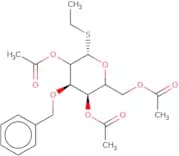

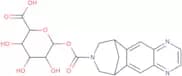
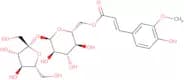
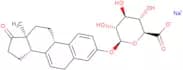
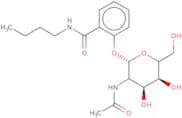
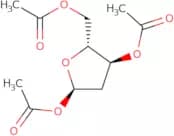
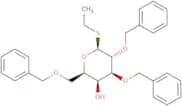
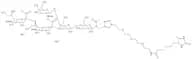
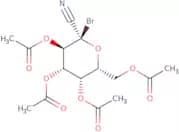
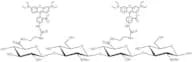
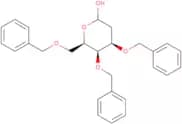


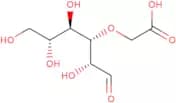
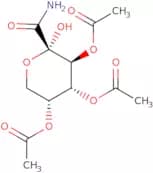
![N-[(e-N-Benzyloxycarbonylamino)caproyl]-b-D-galactopyranosylamine](/_next/image/?url=https%3A%2Fstatic.cymitquimica.com%2Fproducts%2F3D%2Fthumb-webp%2FMB04505.webp&w=3840&q=75)
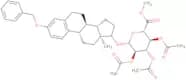

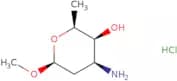
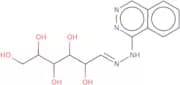
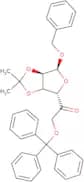
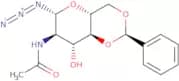
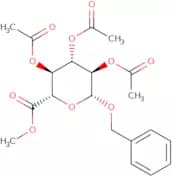
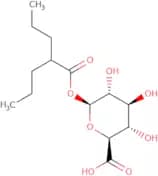
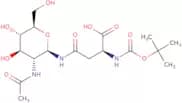
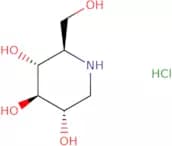
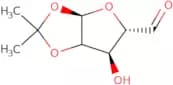
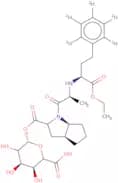


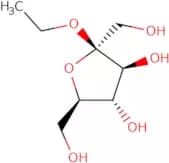
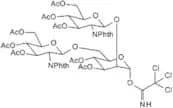
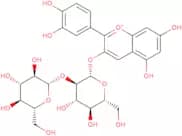

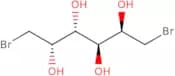
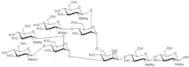
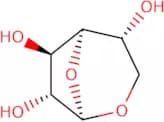

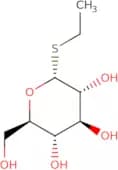
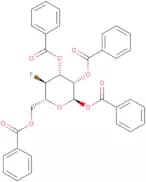
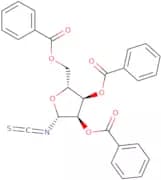
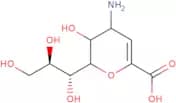
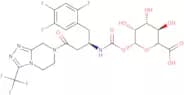
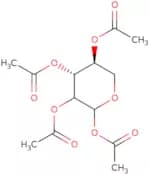
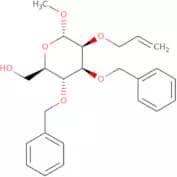
![[UL-13C18]Maltotriose hydrate](/_next/image/?url=https%3A%2Fstatic.cymitquimica.com%2Fproducts%2F3D%2Fthumb-webp%2FOM45239.webp&w=3840&q=75)
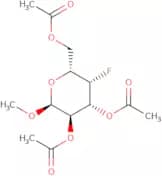
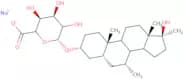
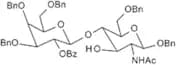
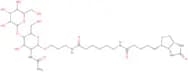
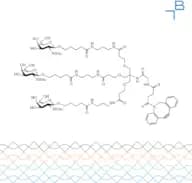
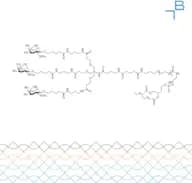

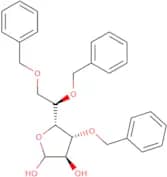
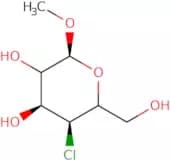
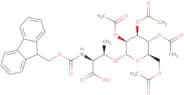
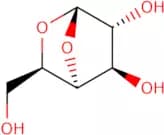
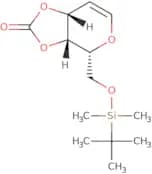
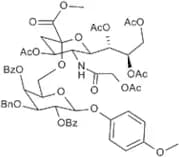

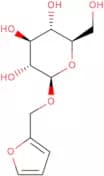
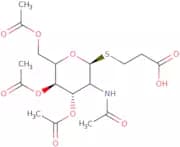
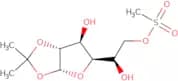
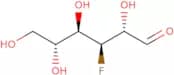

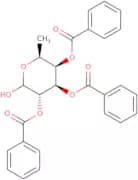

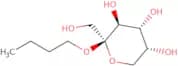
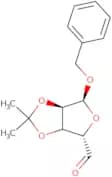
![N-[(e-Benzyloxycarbonylamino)caproyl]-b-L-fucopyranosylamine](/_next/image/?url=https%3A%2Fstatic.cymitquimica.com%2Fproducts%2F3D%2Fthumb-webp%2FMB04503.webp&w=3840&q=75)
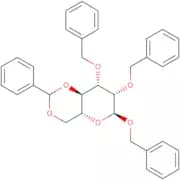
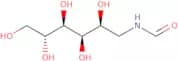
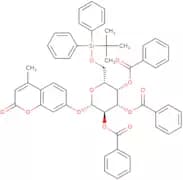
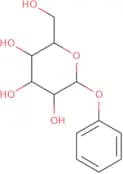
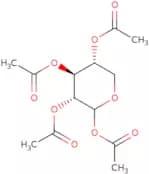
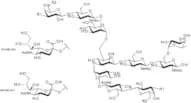

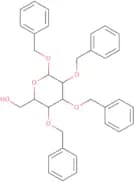


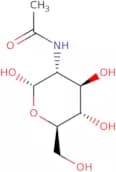
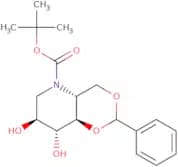

![5-(Acetylamino)-2,6-anhydro-3,4,5-trideoxy-4-[[(1,1-dimethylethoxy)carbonyl]amino]-D-glycero-D-gal…](/_next/image/?url=https%3A%2Fstatic.cymitquimica.com%2Fproducts%2F3D%2Fthumb-webp%2FMA58736.webp&w=3840&q=75)