Glycoscience
Glycoscience is the study of carbohydrates and their derivatives, as well as the interactions and biological functions they participate in. This field of research is crucial for understanding a wide variety of biological processes, including cell recognition, signaling, immune response, and disease development. Glycoscience has important applications in biotechnology, medicine, and the development of new drugs and therapies. At CymitQuimica, we offer a wide selection of high-quality, high-purity products for glycoscience research. Our catalog includes monosaccharides, oligosaccharides, polysaccharides, glycoconjugates, and specific reagents, designed to support researchers in their studies on the structure, function, and applications of carbohydrates in biological systems. These resources are intended to facilitate scientific discoveries and practical applications in various areas of bioscience and medicine.
Subcategories of "Glycoscience"
- Aminosugars(108 products)
- Glyco-Related Antibodies(282 products)
- Glycolipids(46 products)
- Glycosaminoglycans (GAGs)(55 products)
- Glycosides(419 products)
- Monosaccharides(6,622 products)
- Oligosaccharides(3,682 products)
- Polysaccharides(503 products)
Found 11041 products of "Glycoscience"
Sort by
Purity (%)
0
100
|
0
|
50
|
90
|
95
|
100
1,2:4,5-Di-O-isopropylidene-b-L-erythro-2,3-hexodiulo-2,6-pyranose
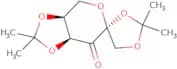
CAS:<p>1,2:4,5-Di-O-isopropylidene-b-L-erythro-2,3-hexodiulo-2,6-pyranose is a sugar that can be found in the human body. It has been shown to have a high level of hydrogen bonding and can be used as an energy source by replicon cells. It is also an enantiomer of 1,2:4,5:8,9-di-O-isopropylidene-b-(D)-threo--2,3--hexodiulo--2,6--pyranose. This molecule has been shown to inhibit the growth of herpes simplex virus in vitro and in vivo and has been investigated for its potential use as an antiherpes agent. 1,2:4,5:8,9 Di--O--isopropylidene--b-(D)--threo--2</p>Formula:C12H18O6Purity:Min. 95%Molecular weight:258.27 g/mol3',4'-Di-O-(b-D-glucopyranosyl)-L-DOPA
<p>3',4'-Di-O-(β-D-glucopyranosyl)-L-DOPA is a methylated form of L-DOPA that is used as a precursor in the synthesis of dopamine. It is available on custom synthesis, and can be modified with fluorination or click chemistry. This product is a synthetic monosaccharide sugar that is used in the production of polysaccharides and saccharides. It has a CAS number and is sold with high purity, which makes it an excellent candidate for modification.</p>Purity:Min. 95%Methimazole thio-b-D-glucuronide
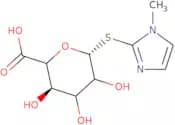
CAS:<p>Methimazole is a drug that inhibits the synthesis of thyroid hormones by blocking the action of thyroperoxidase. Methimazole thio-b-D-glucuronide is a non-toxic, water-soluble derivative of methimazole. It is used in the treatment of hyperthyroidism and thyrotoxicosis. This compound can be synthesized from methimazole by click chemistry, fluorination or glycosylation. The product can be custom synthesized with high purity and high carbohydrate content.</p>Formula:C10H14N2O6SPurity:Min. 95%Molecular weight:290.29 g/mol1,2, 4,6-Tetra-O-acetyl-3-O-carbamoyl- D-mannopyranose
CAS:<p>1,2,4,6-Tetra-O-acetyl-3-O-carbamoyl-D-mannopyranose is a synthetic sugar that belongs to the class of glycosides. It can be used in the synthesis of oligosaccharides and polysaccharides. This product is custom synthesized on request and can be modified with fluorination, methylation or click modification. It is available in high purity and has a CAS number of 99748-11-5.</p>Formula:C15H21NO11Purity:Min. 95%Molecular weight:391.33 g/mol1,3,5-Tri-O-benzoyl-2-bromo-2-deoxy-a-L-arabinofuranose
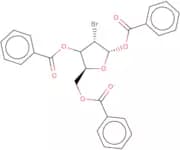
CAS:<p>1,3,5-Tri-O-benzoyl-2-bromo-2-deoxy-a-L-arabinofuranose is a synthetic sugar molecule. It is a complex carbohydrate that can be modified by methylation and glycosylation. The carbons in the sugar backbone have been fluorinated to create a high purity product. The CAS number for this compound is 2011707-39-2.</p>Formula:C26H21BrO7Purity:Min. 95%Molecular weight:525.34 g/molHexasaccharide dp6
<p>Hexasaccharide dp6 is a synthetic hexasaccharide that mimics heparin. It binds to the antithrombin III and pentasaccharide in human plasma, which are proteins that inhibit blood clotting. Hexasaccharide dp6 also has affinity for peptides from HIV-1 and anti-HIV activity. Hexasaccharide dp6 can be used to prevent coagulation or as an antithrombotic agent.</p>Formula:C36H93N15O57S9Purity:Min. 95%Molecular weight:1,936.78 g/molBlood group A trisaccharide-APE-[biotin]-BSA
<p>ABO trisaccharide conjugated to BSA via Biotin & an aminophenyl ethyl spacer</p>Purity:Min. 95%Carboxymethyl cellulose sodium - Viscosity 4000-6000 mPa·s
CAS:<p>Please enquire for more information about Carboxymethyl cellulose sodium - Viscosity 4000-6000 mPa·s including the price, delivery time and more detailed product information at the technical inquiry form on this page</p>Methyl 2-O-allyl-3,4-di-O-benzyl-a-D-mannopyranoside
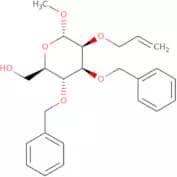
CAS:<p>Methyl 2-O-allyl-3,4-di-O-benzyl-a-D-mannopyranoside is an organic compound that belongs to the group of Modification. It is a modified oligosaccharide with a molecular weight of 690.3 g/mol. The modification is an Oligosaccharide, Carbohydrate, complex carbohydrate, Custom synthesis, Synthetic. CAS No. 210297-56-6, High purity, Monosaccharide, Methylation, Glycosylation and Polysaccharide. This molecule has a monosaccharide with the chemical formula C5H11NO5 and a molecular weight of 131.2 g/mol. The fluorination and saccharides are Fluorination and saccharides respectively.</p>Formula:C24H30O6Purity:Min. 95%Molecular weight:414.49 g/molLactose octaacetate
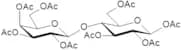
CAS:<p>Lactose octaacetate is a complex carbohydrate that is used in the synthesis of oligosaccharides and polysaccharides. It has been modified by click chemistry to introduce a fluorinated group, which can be useful for fluorinating other molecules. Lactose octaacetate is also used as a precursor for the synthesis of sugar monomers, such as glucose and galactose. This product is available in high purity and with various modifications.</p>Formula:C28H38O19Purity:Min. 95%Molecular weight:678.6 g/mol2,3-Di-O-benzyl-5-O-tert-butyldimethylsilyl-D-xylofuranose
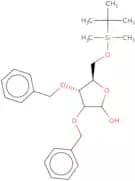
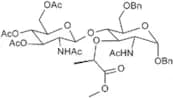
<p>2,3-Di-O-benzyl-5-O-tert-butyldimethylsilyl-D-xylofuranose is a custom synthesis of an oligosaccharide. The modification of this product is fluorination. The product has a purity of 99% and the CAS number is 125548-81-1. This product is soluble in water and ethanol. It has a molecular weight of 600. The monosaccharides found in this product are xylose, glucose, and galactose in the ratio 2:2:1. This product can be used as a sugar substitute or as a reagent for the structural analysis of complex carbohydrates.</p>Formula:C25H36O5SiPurity:Min. 95%Molecular weight:444.65 g/mol4-O-(2-Acetamido-2-deoxy-3,4,6-tri-O-acetyl-b-D-glucopyranosyl)-1,6-di-O-benzyl-2-deoxy-a-D-muramic acid methyl ester
<p>4-O-(2-Acetamido-2-deoxy-3,4,6-tri-O-acetyl-b-D-glucopyranosyl)-1,6-di-O-benzyl-2-deoxy--aDmuramic acid methyl ester is a synthetic carbohydrate. It is a modification of an oligosaccharide and can be used as a starting material in the synthesis of complex carbohydrates. 4ODBGMEM is synthesized by acetylation of 1,6 di O benzyl 2 deoxy a D muramic acid methyl ester with acetic anhydride and triethylamine. The compound has been shown to be effective in fluoroquinolone resistance and methicillin resistance.</p>Formula:C40H52N2O16Purity:Min. 95%Molecular weight:816.84 g/molLewis A tetrasaccharide-BSA
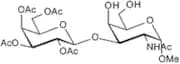
<p>Lewis A tetrasaccharide-BSA is a synthetic oligosaccharide complex carbohydrate. It is a high purity custom synthesis that has been modified with click chemistry, methylation, and fluorination. Lewis A tetrasaccharide-BSA is a glycosylated polysaccharide that has been shown to have antiviral activity against human cytomegalovirus. This product can be used in research as a model for studying the structure of glycoproteins, including their interactions with other molecules in biological systems.</p>Color and Shape:White PowderMethyl 2-acetamido-2-deoxy-3-O-(2,3,4,6-tetra-O-acetyl-b-D-galactopyranosyl)-a-D-galactopyranoside
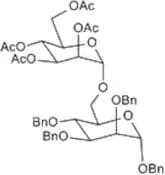
CAS:<p>Methyl 2-acetamido-2-deoxy-3-O-(2,3,4,6-tetra-O-acetyl-b-D-galactopyranosyl)-a-D-galactopyranoside is a modified saccharide with a fluorinated methyl group. It is used as an intermediate for the synthesis of oligosaccharides and complex carbohydrates.</p>Formula:C23H35NO15Purity:Min. 95%Molecular weight:565.52 g/mol6-O-(2,3,4,6-Tetra-O-acetyl-a-D-mannopyranosyl)-1,2,3,4-tetra-O-benzyl-a-D-mannopyranoside
<p>6-O-(2,3,4,6-Tetra-O-acetyl-a-D-mannopyranosyl)-1,2,3,4-tetra-O-benzyl-a-D-mannopyranoside is an oligosaccharide with a complex carbohydrate structure. This chemical is a custom synthesis and it has high purity. 6-O-(2,3,4,6-Tetra-O-acetyl-a-D-mannopyranosyl)-1,2,3,4-- tetra--O--benzyl--A--mannopyranoside is used as an intermediate for the production of other compounds. The CAS number for this compound is</p>Formula:C48H54O15Purity:Min. 95%Molecular weight:870.93 g/mola-Glucametacin
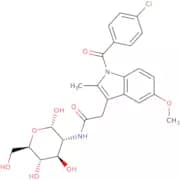
CAS:<p>a-Glucametacin is a methylation of glucosamine. It is a polysaccharide that consists of glycosylated and non-glycosylated saccharides. The glycosylation pattern can be customized to suit the needs of the customer, as well as being synthesized to have no glycosylation at all. This compound also has fluorination on its sugar ring, which may be beneficial for certain applications.</p>Formula:C25H27ClN2O8Purity:Min. 95%Molecular weight:518.94 g/mol1,2:5,6-Di-O-isopropylidene-3-O-p-toluenesulfonyl-a-D-gulofuranose
<p>1,2:5,6-Di-O-isopropylidene-3-O-p-toluenesulfonyl-a-D-gulofuranose is a custom synthesis with a CAS number. It is a complex carbohydrate that has been modified with methylation and glycosylation. This product is also fluorinated and has been synthesized using the Click modification. The 1,2:5,6-Di-O-isopropylidene-3-O-p-toluenesulfonyl-a -D -gulofuranose is an Oligosaccharide that is highly pure and of high purity.</p>Formula:C19H26O8SPurity:Min. 95%Molecular weight:414.47 g/mol2-Acetamido-4-O-(2-acetamido-2-deoxy-a-D-glucopyranosyl)-2-deoxy-D-galactopyranose
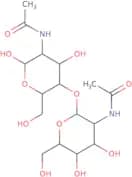
CAS:<p>2-Acetamido-4-O-(2-acetamido-2-deoxy-a-D-glucopyranosyl)-2-deoxy-D-galactopyranose is a Custom synthesis of an oligosaccharide that is synthesized by the modification of natural sugars. This product has been fluorinated, methylated and modified with click chemistry. It is saccharide consisting of two monosaccharides, which are 2 acetamido 4 O-(2 acetamido 2 deoxy a D glucopyranosyl)-2 deoxy D galactopyranose and 2 deoxy D galactose. The molecular weight of this compound is 528.5 g/mol.</p>Formula:C16H28N2O11Purity:Min. 95%Molecular weight:424.4 g/molPhenyl 2,3,4-tri-O-benzyl-a-L-thiorhamnopyranose
<p>Phenyl 2,3,4-tri-O-benzyl-a-L-thiorhamnopyranose is a modified carbohydrate that is synthesized from the saccharide thiorhamnopyranose. The carbonyl group of the saccharide is substituted with phenyl group and then benzylated. Phenyl 2,3,4-tri-O-benzyl-a-L-thiorhamnopyranose is a white powder that has a CAS number, can be custom synthesized to order, and has high purity. It can be used in glycosylation reactions as well as click modification reactions, which are modifications to the molecule that increase its stability and allow it to react more readily with other molecules.</p>Formula:C33H34O4SPurity:Min. 95%Molecular weight:526.69 g/mol3,4,2',3',4'-Penta-O-acetylsucrose
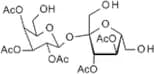
CAS:<p>3,4,2',3',4'-Penta-O-acetylsucrose (PAS) is a carbohydrate that has been found to be a potent inhibitor of the enzyme glycogen phosphorylase. The reductive elimination of the acetyl groups from PAS produces 2,3,4'-tri-O-acetylsucrose (TAS), which is also an inhibitor of glycogen phosphorylase. TAS inhibits this enzyme by binding to the active site and blocking access to the substrate. TAS also inhibits gluconeogenesis in liver cells by competing with glucose for uptake into the cell. In vitro studies have shown that TAS binds to boron trifluoride and lithium aluminum hydride more effectively than it does to diazomethane or detritylation.</p>Formula:C22H32O16Purity:Min. 95%Molecular weight:552.49 g/mol17-b-Estradiol-d3 3-b-D-glucuronide
<p>17-b-Estradiol-d3 3-b-D-glucuronide is a custom synthesis of a complex carbohydrate. It has CAS No. and is a modification of the saccharides, methylation, glycosylation and click modification. This compound is fluorinated for high purity and synthetic.</p>Formula:C24H29D3O8Purity:Min. 95%Molecular weight:451.52 g/mol2-Octyldodecyl-D-xylopyranoside
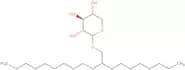
CAS:<p>2-Octyldodecyl-D-xylopyranoside is a synthetic, fluorinated glycosylated monosaccharide. The chemical name for this compound is 2-octyldodecyl-D-xylopyranoside and the CAS number is 423772-95-6. It is a white to off white solid that has Glycosylation and Methylation. This compound can be modified with Click modification and Polysaccharide. It has a molecular weight of 400.25 g/mol and it's molecular formula is C32H62O14F2N2O8S2. 2-Octyldodecyl-D-xylopyranoside can be used as a methyl donor in the synthesis of glycoproteins, glycolipids, glycopeptides, polysaccharides, oligosaccharides, or other complex carbohydrates. It is also used in fluor</p>Formula:C25H50O5Purity:Min. 95%Color and Shape:White solid.Molecular weight:430.66 g/mol6- Amino- 6- deoxy-D-allopyranose hydrochloride
CAS:<p>6-Amino-6-deoxy-D-allopyranose hydrochloride is a complex carbohydrate that can be modified with fluorination, methylation, glycosylation, and/or saccharide. It has a CAS number of 24384-96-1. We offer this product in high purity and custom synthesis.</p>Formula:C6H13NO5·HClPurity:Min. 95%Molecular weight:215.63 g/mol4-O-Acetyl-3,6-di-O-(2,3,4,6-tetra-O-acetyl-a-D-mannopyranosyl)-1,2-ethyledine-b-D-mannopyranose
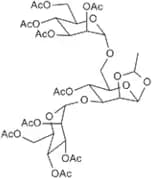
CAS:<p>4-O-Acetyl-3,6-di-O-(2,3,4,6-tetra-O-acetyl-a-D-mannopyranosyl)-1,2-ethyledine (CAS No. 230953-17) is a carbohydrate that has been modified with acetyl groups at the 3 and 6 positions of the monosaccharide unit. This modification is a complex carbohydrate that is made up of oligosaccharides and polysaccharides. The modification causes changes in the chemical properties of the carbohydrate compared to natural saccharides. 4-O-(2,3,4,6) tetra O acetyl a D mannopyranosyl 1 2 ethyledine b D mannopyranose has been used in synthesis of custom sugars for medical applications. It has also shown anti inflammatory activities against Mycobacterium tuberculosis and Mycobacterium avium complex</p>Formula:C38H52O25Purity:Min. 95%Molecular weight:908.8 g/molMethyl 4-azido-3-O-benzyl-4,6-dideoxy-2-O-methyl-a-D-glucopyranoside
CAS:<p>Methyl 4-azido-3-O-benzyl-4,6-dideoxy-2-O-methyl-a-D-glucopyranoside is a synthetic sugar that has been modified with azide and fluoride. It may be used in the synthesis of saccharides as a monosaccharide or oligosaccharide. This compound can be used to prepare glycosylation derivatives, which are complex carbohydrates that are important for cell recognition and immune system function.</p>Formula:C15H21N3O4Purity:Min. 95%Molecular weight:307.35 g/mol3,4,6-Tri-O-acetyl-2-azido-2-deoxy-a-D-glucopyranosyl fluoride
<p>3,4,6-Tri-O-acetyl-2-azido-2-deoxy-a-D-glucopyranosyl fluoride is a custom synthesis that can be synthesized with a range of modifications. It is an azide glycosylation product that has been modified with fluorination and methylation. This compound is high purity and can be used in the synthesis of oligosaccharides or saccharides.</p>Purity:Min. 95%Methyl 4,6-O-benzylidene-2-O-p-toluenesulfonyl-a-D-glucopyranoside
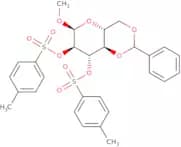
CAS:<p>Methyl 4,6-O-benzylidene-2-O-p-toluenesulfonyl-a-D-glucopyranoside is a modification of the natural carbohydrate, alpha-D-(1→4)-glucose. It is an oligosaccharide that is synthesized by the methylation of a natural sugar and subsequent glycosylation with a saccharide. This compound has been shown to inhibit the activity of bacterial RNA polymerase and DNA gyrase enzymes. The synthesis of this compound has been described in detail in the literature.<br>Methyl 4,6-O-benzylidene-2-O-(p-toluenesulfonyl)a D glucopyranoside <br>This compound is a modification of the natural carbohydrate, alpha D (1 ->4) glucose. It is an oligosaccharide that is synthesized by methylation of a natural</p>Formula:C21H24O8SPurity:Min. 95%Molecular weight:436.48 g/molD-[1-13C]Galacturonic acid potassium salt
<p>D-[1-13C]Galacturonic acid potassium salt is a sugar that is synthesized by the reaction of galactose with carbon dioxide. This sugar has been custom synthesized and is used in glycosylation reactions. Other modifications to this sugar include methylation and click modification, which can be done to make the sugar more reactive. D-[1-13C]Galacturonic acid potassium salt is a high purity product with a CAS number.</p>Purity:Min. 95%4-Hydroxyestradiol-4-O-b-D-glucuronide
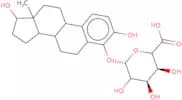
CAS:<p>4-Hydroxyestradiol-4-O-b-D-glucuronide is a custom synthesis of a sugar, Click modification, fluorination, glycosylation, synthetic, methylation, modification and oligosaccharide. It has CAS No. 90746-95-5. 4-Hydroxyestradiol-4-O-b-D-glucuronide is a saccharide with a complex carbohydrate structure.</p>Formula:C24H32O9Purity:Min. 95%Molecular weight:464.51 g/mol1,6-Di-O-benzyl-a-D-glucopyranoside
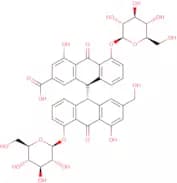
<p>1,6-Di-O-benzyl-a-D-glucopyranoside is an oligosaccharide that has been synthesized by the Click chemistry method. It is a polysaccharide with a high purity and an excellent yield. The product contains a single monosaccharide unit of D-glucose with a 1,6 glycosylation pattern. The product has undergone methylation and fluorination to produce the desired structure. 1,6-Di-O-benzyl-a-D-glucopyranoside has been shown to have antihypertensive effects in rats and is thought to be due to its ability to inhibit angiotensin II receptor activity.</p>Purity:Min. 95%Sennoside D
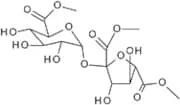
CAS:<p>Sennoside D is a fatty acid that can be isolated from the sennosides found in the leaves of the plant Senna alata. It has been shown to have anti-tumor properties and may play a role in treating colon cancer, breast cancer, and skin cancer. Sennoside D has also been shown to be effective against autoimmune diseases such as arthritis, ulcerative colitis, and Crohn's disease. The low energy of this compound may be due to its formation rate. The hydroxide solution (NaOH) is used in the synthesis of this molecule because it binds with carbon dioxide molecules to form sodium bicarbonate and carbon dioxide gas which can then be captured by water. This process produces a high yield of sennoside D. In addition, the bound form of this molecule is soluble in organic solvents and insoluble in water, which makes it suitable for skin conditions as well as colon cancer treatments.</p>Purity:Min. 95%Color and Shape:SolidSucrose 1,6,6'-tricarboxylic acid trimethyl ester
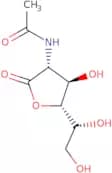
CAS:<p>Sucrose 1,6,6'-tricarboxylic acid trimethyl ester is a carbohydrate that has been fluorinated and methylated. It is a synthetic sugar that can be custom synthesized by our chemists to meet your specifications. This product is very pure and has a high degree of purity. It can be used as an oligosaccharide or as a monosaccharide in glycosylation or methylation reactions. Sucrose 1,6,6'-tricarboxylic acid trimethyl ester is also known as sucrose 3-fluoro-3-methylbutyrate, CAS No. 289711-92-8, or C12H18O7F3.</p>Formula:C15H22O14Purity:Min. 95%Molecular weight:426.33 g/mol2-Acetamido-2-deoxy-D-galactono-1,4-lactone
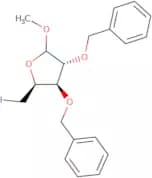
CAS:<p>2-Acetamido-2-deoxy-D-galactono-1,4-lactone is a trifluoroacetate analogue of 2-acetamido-2,3,4,5,6-pentafluorobenzonitrile. It has been shown to be an inhibitor of the synthesis of pyrimidine nucleotides in calf thymus DNA. The lactone ring structure is responsible for the antimicrobial activity of this compound. Sodium borohydride converts the compound into a phenylhydrazone derivative and formazans are formed during this process. This reaction is indicative of the presence of pentavalent nitrogen atoms in the molecule. The shift in position of the formazan band on paper chromatography indicates that this compound has two different forms: one with a double bond and one with a triple bond between carbons 3 and 4. The five membered ring structure is stabilized by two carbon atoms (C</p>Formula:C8H13NO6Purity:Min. 95%Color and Shape:SolidMolecular weight:219.19 g/molMethyl 2,3-di-O-benzyl-5-deoxy-5-iodo-D-xylofuranoside
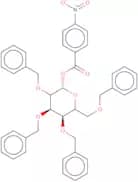
CAS:<p>Methyl 2,3-di-O-benzyl-5-deoxy-5-iodo-D-xylofuranoside is a sugar derivative that is a glycosylation product of the sugar xylose. It has been methylated and fluorinated to generate a complex carbohydrate. This product has been modified with click chemistry, which is a reaction that generates an alkyne on the C2 position of the xylose. The oligosaccharides were synthesized using custom synthesis and high purity was confirmed by HPLC analysis.</p>Purity:Min. 95%2,3,4,6-Tetra-O-benzyl-1-O-(4-nitrobenzoyl)-b-D-glucopyranose
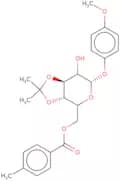
<p>2,3,4,6-Tetra-O-benzyl-1-O-(4-nitrobenzoyl)-b-D-glucopyranose is a synthetic sugar that is the building block for oligosaccharides and polysaccharides. It has been modified with fluorination and methylation to produce a high purity product. The CAS number for this compound is 248940-24-5.</p>Formula:C41H39NO9Purity:Min. 95%Molecular weight:689.77 g/mol4-Methoxyphenyl 3,4-O-isopropylidene-6-O-toluoyl-b-D-galactopyranoside
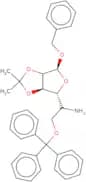
<p>4-Methoxyphenyl 3,4-O-isopropylidene-6-O-toluoyl-b-D-galactopyranoside is a synthetic compound that can be used as a methyl donor for glycosylation reactions. It is a high purity product with a purity of 99% and can be used in custom synthesis. This product has been modified to include fluorination at the C4 position of the phenyl ring. The CAS number for this product is 56987-54-2.</p>Formula:C24H28O8Purity:Min. 95%Molecular weight:444.49 g/molBenzyl 5-amino-5-deoxy-2,3-O-isopropylidene-6-O-trityl-a-L-gulofuranoside
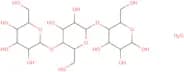
<p>Benzyl 5-amino-5-deoxy-2,3-O-isopropylidene-6-O-trityl-a-L-gulofuranoside is a custom synthesis of an Oligosaccharide. It is a complex carbohydrate that has been modified by methylation and glycosylation. The saccharide in this compound is a sugar and it has been fluorinated. This product is of high purity and has been synthesized using click chemistry.</p>Formula:C35H37NO5Purity:Min. 95%Color and Shape:SolidMolecular weight:551.67 g/molMaltotriose hydrate
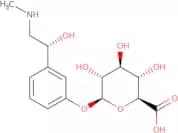
CAS:<p>Maltotriose hydrate is a Chinese-made inhibitor analog that has shown promising anticancer properties. It has been shown to inhibit kinases, which are proteins involved in cell signaling pathways that regulate cell growth and division. This inhibition leads to apoptosis, or programmed cell death, in cancer cells. Maltotriose hydrate has been found in human urine and may have potential as a medicinal agent for the treatment of various types of tumors and cancers. Its ability to target cancer cells specifically makes it a promising candidate for further research into cancer treatments.</p>Formula:C18H34O17Purity:Min. 95%Molecular weight:522.5 g/molPhenylephrine-D-glucuronide
CAS:<p>Phenylephrine-D-glucuronide is a modified form of phenylephrine that is synthesized from the natural product glycosylate. It has been shown to have a high degree of purity and is custom synthesized for customers. This compound can be modified in many ways, including fluorination, glycosylation, methylation, and saccharide modification. Phenylephrine-D-glucuronide has the ability to bind to sugar molecules and form complex carbohydrates. Phenylephrine-D-glucuronide is also an oligosaccharide or monosaccharide with a saccharide backbone.</p>Formula:C15H21NO8Purity:Min. 95%Molecular weight:343.33 g/molMaltododecaose
CAS:<p>α-1,4-glucododecasaccharide derived from starch by hydrolysis and chromatography</p>Formula:C72H122O61Purity:Min. 95%Color and Shape:Clear Liquid PowderMolecular weight:1,962 g/mol5-(2-Hydroxyethyl)-2'-deoxyuridine
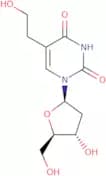
CAS:<p>5-(2-Hydroxyethyl)-2'-deoxyuridine is a regiospecific inhibitor of the enzyme thymidylate synthase. This drug inhibits the synthesis of thymine and uracil, which are used in DNA replication. 5-(2-Hydroxyethyl)-2'-deoxyuridine binds to the carbon chain of uracil, preventing its incorporation into DNA. 5-(2-Hydroxyethyl)-2'-deoxyuridine has been shown to be an effective inhibitor of thymidylate synthase in both prokaryotic and eukaryotic cells. The mechanism of action is thought to be competitive inhibition with respect to substrate binding at the active site of the enzyme. 5-(2-Hydroxyethyl)-2'-deoxyuridine can be synthesized by reacting acrylonitrile with 5-iodouridine chloride, followed by elimination reactions with methylene chloride or thionyl chloride. The product can then be</p>Formula:C11H16N2O6Purity:Min. 95%Color and Shape:PowderMolecular weight:272.25 g/molα-Methyl-γ-hydroxy-1,N2-propano-2’-deoxyguanosine
CAS:<p>α-Methyl-γ-hydroxy-1,N2-propano-2’-deoxyguanosine is a chemical that inhibits the production of reactive oxygen species (ROS) and prevents oxidative DNA damage. It has been shown to inhibit skin cancer in animal studies and to have an inhibitory effect on cancer gene therapy in human cell cultures. α-Methyl-γ-hydroxy-1,N2-propano-2’-deoxyguanosine has also been found to be genotoxic in humans, which may be due to its ability to induce repair genes.<br>α -Methyl -γ -hydroxy -1,N2 -propano -2 ‘deoxyguanosine is a carcinogen that has been shown to cause cancer in animals. It damages DNA by forming covalent bonds with it and alters the genetic information stored in the DNA. When this happens, cells cannot divide normally and grow out of</p>Formula:C14H19N5O5Purity:Min. 95%Molecular weight:337.33 g/molL-Idaric acid
CAS:<p>L-Idaric acid is a novel anti-inflammatory agent that is a derivative of the endogenous compound d-glucuronic acid. It has been shown to have anti-inflammatory effects in animal studies as well as in human cell cultures and it has been shown to be safe for use in humans. L-Idaric acid inhibits the production of inflammatory mediators, such as prostaglandins, leukotrienes, and cytokines. L-Idaric acid also inhibits the activity of β-glucuronidase, which may be responsible for its ability to prevent the degradation of glucuronic acid derivatives.</p>Formula:C6H10O8Purity:Min. 95%Color and Shape:White to off-white solid.Molecular weight:210.14 g/mol6-O-Benzyl-D-glucal
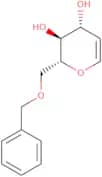
CAS:<p>6-O-Benzyl-D-glucal is an Oligosaccharide, Carbohydrate, complex carbohydrate. It is a custom synthesis of 6-O-benzylated D-glucal. This product is synthesized by the methylation and glycosylation of D-glucose. The molecular weight of this product ranges from 300 to 500 Da. It is also a synthetic compound that can be used in the modification of oligosaccharides and polysaccharides. 6-O-Benzyl-D-glucal has high purity, which can be confirmed by analyzing its melting point and IR spectrum. The CAS number for this product is 1655248566. It reacts with fluoride to produce fluorinated saccharide products that are soluble in water or organic solvents.</p>Formula:C13H16O4Purity:Min. 95%Molecular weight:236.26 g/molD-Mannose-6-13C
CAS:<p>Please enquire for more information about D-Mannose-6-13C including the price, delivery time and more detailed product information at the technical inquiry form on this page</p>Formula:C6H12O6Purity:Min. 95%Molecular weight:180.16 g/mol8-Ethoxycarbonylheptyl N,N'-di-O-acetyl-b-chitobioside
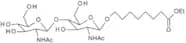
<p>8-Ethoxycarbonylheptyl N,N'-di-O-acetyl-b-chitobioside is a custom synthesis of an oligosaccharide. It is a complex carbohydrate that is composed of saccharides and has a CAS number. 8-Ethoxycarbonylheptyl N,N'-di-O-acetyl-b-chitobioside is modified with methylation, glycosylation and click modification. This product is also fluorinated. 8-Ethoxycarbonylheptyl N,N'-di-O-acetyl-b-chitobioside has high purity and can be used as a sugar in the synthesis of other compounds.</p>Formula:C26H46N2O13Purity:Min. 95%Molecular weight:594.65 g/molL-[2-13C]Xylose
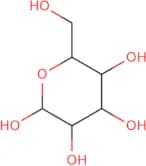
CAS:<p>Please enquire for more information about L-[2-13C]Xylose including the price, delivery time and more detailed product information at the technical inquiry form on this page</p>Formula:C5H10O5Purity:Min. 95%Molecular weight:151.12 g/molMan-3Xyl N-Glycan
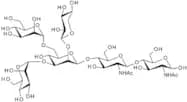
CAS:<p>Man-3Xyl N-Glycan is a high purity, custom synthesized, synthetic and fluorinated monosaccharide. It is an Oligosaccharide that contains 3 mannose sugar residues. Man-3Xyl N-Glycan is used for Glycosylation in the synthesis of complex carbohydrate polymers, such as glycoproteins and glycolipids. Click modification can be used to introduce methyl groups onto the sugar residues of Man-3Xyl N-Glycan. This monosaccharide has been shown to have high stability and resistance to oxidation.</p>Formula:C39H66N2O30Purity:Min. 95%Molecular weight:1,042.94 g/mol3,4,6-Tri-O-acetyl-2-deoxy-2-phthalimido-b-D-glucopyranosyl azide
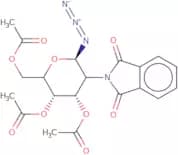
CAS:<p>3,4,6-Tri-O-acetyl-2-deoxy-2-phthalimido-b-D-glucopyranosyl azide is a carbohydrate that has been modified by acetylation and fluorination. Carbohydrates are saccharides and oligosaccharides that have the general formula (CH2O)n. 3,4,6-Tri-O-acetyl-2-deoxy-2-phthalimido b -D -glucopyranosyl azide is an example of a high purity custom synthesis glycosylation product. This modification is a methylation reaction in which the hydroxymethyl group of the sugar alcohol reacts with methanol to produce methyl alcohol. The methyl group then reacts with an organic acid to yield the desired product.</p>Formula:C20H20N4O9Purity:Min. 95%Molecular weight:460.39 g/mol1D-1-O-Butyryl-4,6-O-dibenzoyl-myo-inositol
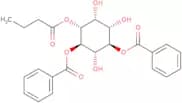
CAS:<p>1D-1-O-Butyryl-4,6-O-dibenzoyl-myo-inositol is an oligosaccharide that has been modified with fluoride. It is a custom synthesis of a complex carbohydrate and its CAS number is 153265-90-8. 1D-1-O-Butyryl-4,6-O-dibenzoyl-myo-inositol is used in the synthesis of saccharides and polysaccharides.</p>Formula:C24H26O9Purity:Min. 95%Molecular weight:458.46 g/mol


![Blood group A trisaccharide-APE-[biotin]-BSA](/_next/image/?url=https%3A%2Fstatic.cymitquimica.com%2Fproducts%2F3D%2Fthumb-webp%2FOT02519.webp&w=3840&q=75)


![D-[1-13C]Galacturonic acid potassium salt](/_next/image/?url=https%3A%2Fstatic.cymitquimica.com%2Fproducts%2F3D%2Fthumb-webp%2FMG28931.webp&w=3840&q=75)


![L-[2-13C]Xylose](/_next/image/?url=https%3A%2Fstatic.cymitquimica.com%2Fproducts%2F3D%2Fthumb-webp%2FDUA50663.webp&w=3840&q=75)