Glycoscience
Subcategories of "Glycoscience"
- Aminosugars(108 products)
- Glyco-Related Antibodies(283 products)
- Glycolipids(46 products)
- Glycosaminoglycans (GAGs)(55 products)
- Glycosides(419 products)
- Monosaccharides(6,619 products)
- Oligosaccharides(3,711 products)
- Polysaccharides(505 products)
Found 11027 products of "Glycoscience"
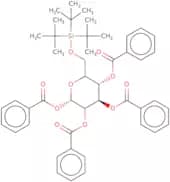
1,2,3,4-Tetra-O-benzoyl-6-O-triisopropylsilyl-b-D-galactopyranose
1,2,3,4-Tetra-O-benzoyl-6-O-triisopropylsilyl-b-D-galactopyranose is an oligosaccharide. The carbohydrate is a complex carbohydrate that has been custom synthesized and high purity. The CAS number for this compound is 10981-97-5. This compound is a monosaccharide that has been methylated and glycosylated. It is also a polysaccharide composed of sugar molecules with the molecular formula C8H18O6. This compound has been fluorinated and saccharided.Formula:C46H54O10SiPurity:Min. 95%Molecular weight:795.02 g/mol2,5:3,4-Dianhydro-6-O-2-propenyl-dimethyl acetal-L-talose
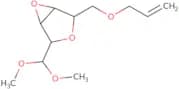
CAS:2,5:3,4-Dianhydro-6-O-2-propenyl-dimethyl acetal-L-talose is a fluorinated sugar that is synthesized by the reaction of an acetal with glycosylation. It has been modified to contain a methyl group and a click modification. 2,5:3,4-Dianhydro-6-O-2-propenyl-dimethyl acetal-L-talose is used as a fluorescent probe for the detection of nucleic acids in living cells. It has high purity and can be custom synthesized to meet customer specifications.Formula:C11H18O5Purity:Min. 95%Molecular weight:230.26 g/molHaloperidol-1-hydroxy-2'-b-D-glucuronide
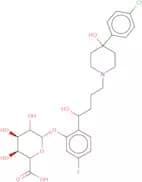
CAS:Haloperidol-1-hydroxy-2'-b-D-glucuronide is a modified carbohydrate that is synthesized from the sugar glucose. This product has been custom synthesized and is fluorinated at the 1 position of the sugar ring. The glycosylation of this product can be customized to your specifications. Haloperidol-1-hydroxy-2'-b-D-glucuronide has a CAS number of 100442-86-2.Formula:C27H33ClFNO9Purity:Min. 95%Molecular weight:570 g/mol[2S- (2a, 3b, 4a, 5b) ] - 1-Benzyl - 2-methyl-3, 4, 5- piperidinetriol
This product is a custom synthesis. It is a fluorinated, modified monosaccharide that has been synthesized by click chemistry and contains an O-glycosyl group. This product can be used in the synthesis of glycosylated polysaccharides and oligosaccharides, or as a building block for modification of complex carbohydrates to produce new compounds with novel properties, such as fluorescence.Purity:Min. 95%Ethyl β-D-glucopyranoside
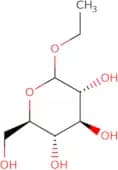
CAS:Ethyl β-D-glucopyranoside is a fatty acid with the chemical formula CH 3 (CHOH) 2 CH(OH)CH 2 OH. It is a reaction product of inulin and levulinate. Ethyl β-D-glucopyranoside can be used as a control agent for urine samples to test for microbial infection. It also has an inhibitory effect on the growth of microbes, such as bacteria and fungi, which may be due to its ability to disrupt the cell membrane. Ethyl β-D-glucopyranoside is also known to have detergent properties that can be used in soaps and detergents.
Formula:C8H16O6Purity:Min. 98 Area-%Color and Shape:Clear Viscous Liquid Solidified MassMolecular weight:208.21 g/molMethyl 2,3-di-O-benzoyl-4,6-O-(4-methoxybenzylidene)-a-D-glucopyranoside
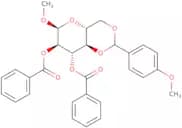
CAS:Methyl 2,3-di-O-benzoyl-4,6-O-(4-methoxybenzylidene)-a-D-glucopyranoside is a synthetic carbohydrate. The chemical name is methyl 2,3-di-O-benzoyl-4,6--O-(4--methoxybenzylidene) -a -D--glucopyranoside. It is a white or off white powder that is soluble in water and methanol. This product can be used as a monosaccharide for glycosylation or polysaccharide for saccharide modification.Formula:C29H28O9Purity:Min. 95%Molecular weight:520.54 g/mol3-O-Benzyl-1,2-O-isoproylidene-4-C-(phenylmethoxy)methyl-β-L-lyxofuranose
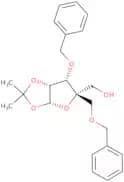
CAS:3-O-Benzyl-1,2-O-isoproylidene-4-C-(phenylmethoxy)methyl-b-L-lyxofuranose is a monosaccharide that belongs to the group of carbohydrates. It is used as a raw material in the synthesis of complex carbohydrates by click chemistry, glycosylation and methylation. 3-O-Benzyl--1,2--O--isoproylidene--4--C-(phenylmethoxy)methyl--b--L--lyxofuranose has been modified for use in fluoroformations and glycosylations. This compound can also be used as an intermediate for the synthesis of other saccharides.Formula:C23H28O6Purity:Min. 95%Color and Shape:PowderMolecular weight:400.46 g/molHaloperidol b-D-glucuronide
CAS:Controlled ProductHaloperidol b-D-glucuronide is the glucuronide conjugate of haloperidol. It is a major metabolite of haloperidol, which can be detected in urine samples and plasma concentration–time curves. It has been shown to be effective in the treatment of schizophrenic patients and is used as a marker for schizophrenia. Haloperidol b-D-glucuronide has been found to inhibit the reduction of carbonyl groups by human liver microsomes, but not rat liver microsomes. This inhibition may be due to its capacity to bind with human liver enzymes, such as cytochrome P450 reductase and glutathione reductase. Haloperidol b-D-glucuronide also inhibits the uptake of antipsychotic medications into human liver cells, but not rat liver cells.
Formula:C27H31ClFNO8Purity:Min. 95%Molecular weight:551.99 g/mol2'-Fucosyllactose - Synthetic
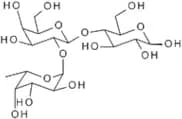
CAS:2'-Fucosyllactose (2'-FL) is the most abundant human milk oligosaccharide (HMO) with multiple functions including: acting as a prebiotic, protecting against infections and inflammation, modulating the immune system, supporting brain development, and reducing the risk of necrotizing enterocolitis. The commercial availability of synthetic fucosyllactose is important because HMOs were previously only found at significant levels in human milk, however they are now available in several infant formulas. It has been given Generally Recognized As Safe (GRAS) status and the European Union has approved the use of 2'-Fucosyllactose in infant formula products (Reverri, 2018).Formula:C18H32O15Purity:(2'-Fucosyllactose) Min. 94.0%Color and Shape:White PowderMolecular weight:488.44 g/mol4-Aminophenyl β-D-galactopyranoside
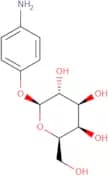
CAS:4-Aminophenyl-beta-D-galactopyranoside is a substrate for beta-galactosidase. 4-aminophenol is released upon cleavage by beta-galactosidase. 4-aminophenol can be assayed by electro-oxidation to 4-imino quinone while recording changes in potential or current of a galvanic system. 4-Aminophenyl-beta-D-galactopyranoside can be used in affinity chromatography for the isolation of galactose-binding lectins.Formula:C12H17NO6Purity:Min. 95%Color and Shape:PowderMolecular weight:271.27 g/molD-Glucono-1,4-lactone
CAS:D-Glucono-1,4-lactone is a sugar that is produced by the action of glucoamylase on starch or cellulose. It can be used as a source of food for yeast, in the production of polyesters and plastics, and as a precursor to vitamin C. The pH optimum for D-glucono-1,4-lactone production is between 3.5 and 4.5. X-ray crystal structures have shown that the enzyme binds to crystalline cellulose via hydrogen bonding interactions, which are formed by hydroxyl groups on the enzyme and carboxyl groups on crystalline cellulose. These interactions are important for the cleavage of glucose from crystalline cellulose by D-glucono-1,4-lactone. D-glucono-1,4-lactone has been shown to reduce blood glucose levels in rats with metabolic disorders when administered orally at doses
Formula:C6H10O6Purity:Min. 95%Color and Shape:White PowderMolecular weight:178.14 g/molD-Lyxose
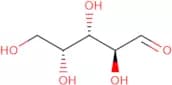
CAS:Starting material for chiral-pool based synthesis of modified nucleosides
Formula:C5H10O5Purity:Min. 99 Area-%Color and Shape:White PowderMolecular weight:150.13 g/mol3,5-O-Benzylidene-D-lyxono-1,4-lactone
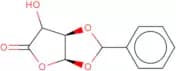
3,5-O-Benzylidene-D-lyxono-1,4-lactone is a crystalline compound with a molecular formula of C6H8O3. It has the molecular weight of 154.11 g/mol and melting point of 104°C. 3,5-O-Benzylidene-D-lyxono-1,4-lactone has been shown to be an inhibitor for the enzyme xanthine oxidase. This compound may be useful in treating conditions such as hyperuricemia or gout.Formula:C11H10O5Purity:Min. 95%Molecular weight:222.2 g/mol1,2,3,4-Tetra-O-benzyl-6-O-tert-butyldimethylsilyl-a-D-mannopyranose
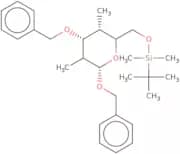
This is a fluorinated monosaccharide, synthesized by the click modification of an oligosaccharide with an a-D-mannopyranose. The complex carbohydrate has been modified with methyl and benzyl groups, which can be removed using tert-butyldimethylsilyl chloride to yield 1,2,3,4-Tetra-O-benzyl-6-O--tert-butyldimethylsilyl a-D-mannopyranose.Formula:C40H50O6SiPurity:Min. 95%Molecular weight:654.93 g/mol1-Deoxy-D-ribose
CAS:1-Deoxy-D-ribose is a sugar that is synthesized from the sugar ribose. It can be produced by reductive cleavage of the sugar sulfate adenosine, which gives rise to 1-deoxy-D-ribose and sulfite. This compound also has an important role in DNA synthesis. The natural source of this compound is D-ribose, which can be found in many sources such as yeast extract, pectin, and honey. 1-Deoxy-D-ribose is a nucleoside that has the cyclic form of ribose. This compound was first isolated in 1957 and was originally synthesized in 1891 by Emil Fischer. 1-Deoxy-D-ribose binds to adenosine with a connective bond and forms a cyclic molecule called pyrrolo[2,3]pyrimidine.Formula:C5H10O4Purity:Min. 95%Color and Shape:PowderMolecular weight:134.2 g/molMethylphenyl 2-O-benzyl-b-D-thiogalactopyranoside
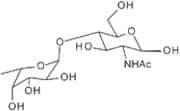
Methylphenyl 2-O-benzyl-b-D-thiogalactopyranoside (MPBGT) is a modification of the natural disaccharide, galactose. It is synthesized by the glycosylation and methylation of galactose with methyl phenyl b-D-thioglucopyranoside. MPBGT is typically used as a building block for oligosaccharides or polysaccharides. The MPBGT can be modified by fluorination or saccharide substitution to produce diverse products.Formula:C20H24O5SPurity:Min. 95%Molecular weight:376.47 g/mol2-Acetamido-2-deoxy-4-O-(a-L-fucopyranosyl)-D-glucopyranose
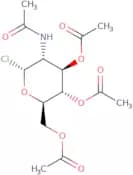
CAS:2-Acetamido-2-deoxy-4-O-(a-L-fucopyranosyl)-D-glucopyranose is a methylated, custom synthesized oligosaccharide. It has been modified to include a fluorine atom at the C4 position on the glucose residue. The product is highly pure and in crystalline form, with a CAS number of 76211-71-7.Formula:C14H25NO10Purity:90%Color and Shape:White PowderMolecular weight:367.35 g/mol2-Acetamido-3,4,6-tri-O-acetyl-2-deoxy-a-D-glucopyranosyl chloride - Stabilised with 2.5% CaCO3
CAS:2-Acetamido-3,4,6-tri-O-acetyl-2-deoxy-a-D-glucopyranosyl chloride - Stabilised with 2.5% CaCO3 is a crystalline compound that is synthesized from acetobromosugars and has the ability to inhibit virus activity. The compound binds to the reactive sulfhydryl groups on the surface of the virus, inhibiting its infectivity. This compound can be used in biomedical research for the treatment of hepatitis.Formula:C14H20ClNO8Purity:Min. 95%Color and Shape:White PowderMolecular weight:365.76 g/molβ-D-(2-Acetamido-2-deoxy-D-glucopyranosyl)-2-acetamido-2-deoxy-β-D-thioglucopyranoside
b-D-(2-Acetamido-2-deoxy-D-glucopyranosyl)-2-acetamido-2-deoxy-b-D-thioglucopyranoside is an oligosaccharide that belongs to the carbohydrate class. It is a fluorinated monosaccharide with a high purity and custom synthesis. This compound is methylated and glycosylated, making it a complex carbohydrate with click modification.Formula:C16H28N2O10SPurity:Min. 95%Color and Shape:Off-white to light brown crystals.Molecular weight:440.47 g/molGlucose spacer fluorescein
Glucose spacer fluorescein is a sugar that is used in glycosylation reactions. It has a molecular weight of 368.2 g/mol, CAS No. 605-85-8, and the chemical formula C6H10O5. Glucose spacer fluorescein is synthesized by reacting glucose with an activator such as sodium borohydride or tris(dibenzylideneacetone)dipalladium(0) (Pd). The synthesis of glucose spacer fluorescein can be modified to include methylation, glycosylation, or other modifications. Glucose spacer fluorescein is composed of two monosaccharides and one saccharide residue. This sugar consists of a glucose molecule linked to a fluorinated 1-deoxy-D-ribofuranose via an ether bond at position 3' and a glucosamine residue attached to the 5Purity:Min. 95%

![[2S- (2a, 3b, 4a, 5b) ] - 1-Benzyl - 2-methyl-3, 4, 5- piperidinetriol](/_next/image/?url=https%3A%2Fstatic.cymitquimica.com%2Fproducts%2F3D%2Fthumb-webp%2FMB163330.webp&w=3840&q=75)