


Glycoscience
Glycoscience is the study of carbohydrates and their derivatives, as well as the interactions and biological functions they participate in. This field of research is crucial for understanding a wide variety of biological processes, including cell recognition, signaling, immune response, and disease development. Glycoscience has important applications in biotechnology, medicine, and the development of new drugs and therapies. At CymitQuimica, we offer a wide selection of high-quality, high-purity products for glycoscience research. Our catalog includes monosaccharides, oligosaccharides, polysaccharides, glycoconjugates, and specific reagents, designed to support researchers in their studies on the structure, function, and applications of carbohydrates in biological systems. These resources are intended to facilitate scientific discoveries and practical applications in various areas of bioscience and medicine.
Subcategories of "Glycoscience"
- Aminosugars(108 products)
- Glyco-Related Antibodies(282 products)
- Glycolipids(46 products)
- Glycosaminoglycans (GAGs)(55 products)
- Glycosides(419 products)
- Monosaccharides(6,622 products)
- Oligosaccharides(3,682 products)
- Polysaccharides(503 products)
Found 11041 products of "Glycoscience"
Sort by
Purity (%)
0
100
|
0
|
50
|
90
|
95
|
100
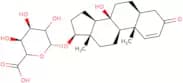
5-b-Androst-1-en-17b-ol-3-one glucuronide
CAS:<p>5-b-Androst-1-en-17b-ol-3-one glucuronide is a carbohydrate that can be used as a building block for oligosaccharides, saccharides, and sugars. It is also a fluorinated compound that has been synthesized with high purity. This custom synthesis can be modified with methylation, glycosylation, or click chemistry.</p>Formula:C25H36O9Purity:Min. 95%Molecular weight:480.56 g/molcis-Zeatin-9-glucoside
CAS:<p>Cis-Zeatin-9-glucoside is a plant hormone known as a cytokinin, which is primarily synthesized in plants such as Zea mays (corn) and other monocots. Cytokinins play a critical role in regulating plant growth and development by promoting cell division, influencing nutrient allocation, and delaying leaf senescence. The mode of action of cis-Zeatin-9-glucoside involves its role as a signaling molecule that interacts with specific receptors in plant cells, thereby triggering a cascade of gene expression changes that modulate physiological processes.</p>Formula:C16H23N5O6Purity:Min. 95%Color and Shape:PowderMolecular weight:381.38 g/mol6-Amino-6-deoxy-L-sorbose
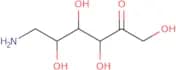
CAS:<p>6-Amino-6-deoxy-L-sorbose is a sugar that is metabolized by the body to produce energy. This compound has been shown to be an effective antidiabetic, as it may inhibit glucose production in the liver and enhance insulin sensitivity. 6-Amino-6-deoxy-L-sorbose is a nutrient that can be found in food sources such as bananas, potatoes, and soybeans. It can also be synthesized from various plant sources. The biosynthesis of this compound is dependent on a number of enzymes, including L-arabinose 1 phosphate dehydrogenase.</p>Purity:Min. 95%3,2',3',4'-Tetra-O-acetyl-6,6'-di-O-tert-butyldimethylsilyl-lactal
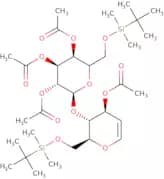
CAS:<p>3,2',3',4'-Tetra-O-acetyl-6,6'-di-O-tert-butyldimethylsilyl-lactal is a glycosylation agent that can be used in the synthesis of oligosaccharides and polysaccharides. It can be fluorinated to create a reactive site for methylation and click modification. 3,2',3',4'-Tetra-O-acetyl-6,6'-di-O-tert-butyldimethylsilyl-lactal is an acetylated lactal with a silyl ether protecting group. This product has been custom synthesized and is available in high purity.</p>Purity:Min. 95%1,3,5-Tri-O-benzoyl-2-O-(trifluoromethanesulfonyl)-a-D-ribofuranose
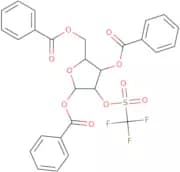
CAS:<p>1,3,5-Tri-O-benzoyl-2-O-(trifluoromethanesulfonyl)-a-D-ribofuranose is a nucleoside that is phosphorylated by the enzyme deoxycytidine kinase to form 1,3,5-tri-O-benzoyl-2'-O-(trifluoromethanesulfonyl)-a-[D]ribofuranosyl phosphate. This compound has been shown to activate immune cells in vitro and in vivo. The activation of immune cells may be due to its ability to inhibit the expression of enzymes that are required for DNA synthesis. 1,3,5-Tri-O-benzoyl-2'-O-(trifluoromethanesulfonyl)-a-[D]ribofuranosyl phosphate also inhibits the expression of enzymes involved in DNA replication and cell proliferation.</p>Formula:C27H21F3O10SPurity:Min. 95%Color and Shape:PowderMolecular weight:594.51 g/molD-Xylonic acid lithium
CAS:<p>D-Xylonic acid lithium salt is a redox potential regulator that belongs to the class of nucleotide phosphate. It has been shown to inhibit the transcriptional regulation of genes in Saccharomyces cerevisiae strain. D-Xylonic acid lithium salt inhibits the growth of bacteria by binding to a hydroxyl group on the surface of bacterial cells, which disrupts the cell membrane and causes cell death. This drug also has film-forming properties and can be used as a model system for studying glycolaldehyde, an intermediate in sugar metabolism.</p>Formula:C5H10O6•LiPurity:Min. 95%Molecular weight:173.07 g/mol6-Chloro-6-deoxy-D-glucitol
<p>6-Chloro-6-deoxy-D-glucitol is a synthetic sugar, in which the D-glucose moiety has been substituted with a 6-chloro group. It is an important precursor for the synthesis of many complex carbohydrates and polysaccharides. The product can be used as a methylating agent to modify saccharides, oligosaccharides, and polysaccharides. The product is also used to modify sugars by glycosylation, fluorination, or click chemistry. In addition, this product can be used as a starting material for the synthesis of other sugars via glycosylation or fluorination.</p>Formula:C6H13ClO5Purity:Min. 95%Molecular weight:200.62 g/mol(Hydroxypropyl)methyl cellulose - Viscocity 75000-140000 cP, 2 % in H2O
CAS:<p>Viscoelastic polymer; excipient; food additive</p>Purity:Min. 95%Olmesartan N2-glucuronide
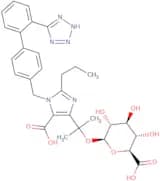
CAS:<p>Olmesartan N2-glucuronide is a methylated metabolite of olmesartan, which is an angiotensin II receptor blocker. Olmesartan glucuronide is a high purity chemical compound with CAS No. 369395-57-3. It can be custom synthesized to order and has been used in glycosylation reactions as a sugar donor or acceptor. This product is also useful for the Click modification of oligosaccharides and polysaccharides, as well as for the modification of saccharides with fluorination and other chemical reactions.</p>Formula:C30H34N6O9Purity:Min. 95%Molecular weight:622.63 g/mol8-Methoxycarbonyloctyl 2-deoxy-2-phthalimido-b-D-glucopyranoside
CAS:<p>8-Methoxycarbonyloctyl 2-deoxy-2-phthalimido-b-D-glucopyranoside is a glycoconjugate that is used as an anti-tumor agent. It is a synthetic glycosaminoglycan with a polysaccharide backbone and fluorinated saccharide branches. The monosaccharides are linked by methylene bridges, and the oligosaccharides are modified with methoxycarbonyl groups. This compound has been shown to have activity against tumor cells in vitro and in vivo, and it may be useful for the treatment of cancer. 8-Methoxycarbonyloctyl 2-deoxy-2-phthalimido-b-D-glucopyranoside can be synthesized on request.</p>Formula:C24H33NO9Purity:Min. 95%Molecular weight:479.52 g/molL-Ribose
CAS:<p>L-Ribose is a monosaccharide that is a constituent of ribonucleic acid, deoxyribonucleic acid and other compounds. It can be found in small quantities in most living organisms. L-Ribose has been modified to include fluorine atoms at the C2 position. The addition of fluorine atoms increases the stability of the molecule and its resistance to hydrolysis by esterases. L-Ribose has also been modified with methyl groups at the C3 position and glycosylation at the C4 position. This modification preserves the biological activity of L-Ribose and increases its water solubility. L-Ribose is used as a building block for custom synthesis, such as peptides or oligosaccharides.>>END>></p>Formula:C5H10O5Molecular weight:150.13 g/mol2-Acetamido-3,4,6-tri-O-acetyl-2-deoxy-a-D-galactopyranosyl-(N-Fmoc)-L-serine pentafluorophenyl ester
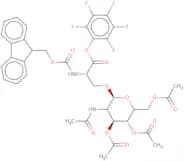
CAS:<p>The 2-acetamido-3,4,6-tri-O-acetyl-2-deoxy-a-D-galactopyranosyl-(N-Fmoc)-L-serine pentafluorophenyl ester is a synthetic sugar that has been modified using the Click chemistry. It is a complex carbohydrate that can be used in the synthesis of oligosaccharides and polysaccharides. This product is custom synthesized to order and has high purity. The 2AA3TA2DO6TFA2DGA2DGAPFPE2SAR2LSE5 is an oligosaccharide with a monosaccharide at the reducing end and methylated at the nonreducing end. The 2AA3TA2DO6TFA2DGA2DGAPFPE2SAR2LSE5 has been fluorinated at the saccharide position on the nonreducing end</p>Formula:C38F5H35N2O13Purity:Min. 95%Molecular weight:822.69 g/mola-Tetrasaccharide-APE-KLH
<p>a-Tetrasaccharide-APE-KLH is a modification of the original tetrasaccharide APE-KLH conjugate. This modified conjugate has increased stability and higher binding affinity to the Fc receptor, which is required for antibody therapy. It is synthesized by custom synthesis and has high purity, with a CAS number of 674797-36-5. The monosaccharides in this conjugate are methylated and glycosylated, with a molecular weight of 1254. The saccharides are fluorinated and saccharide with a molecular weight of 1354.</p>Purity:Min. 95%N-Glycolyl GM1 ganglioside
<p>N-Glycolyl GM1 ganglioside has a core tetrasaccharide structure (Galβ1,3GalNAcβ1,4Galβ1,4Glc) with N-glycolyl sialic acid linked α2,3 to the central galactose residu,e and ceramide linked β to position 1 on the reducing terminal glucose residue (Ledeen, 2009). SV40, Py, and the human BK viruses are unusual among viruses in that they use glycolipids as their major cell surface receptors. SV40 uses the N-glycolylneuraminic acid (NeuGc) analog of the ganglioside GM1 [GM1(Gc)] as the cell surface receptor and it gave markedly stronger binding signals than the NeuAc analog [GM1(Ac)] (Campanero-Rhodes, 2007).</p>Purity:Min. 95%2-C-Methyl-D-arabono-1,4-lactone
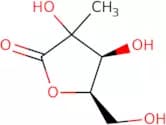
CAS:<p>2-C-Methyl-D-arabono-1,4-lactone is a synthetic sugar that can be custom synthesized to order. This product is fluorinated and methylated, which allows for the modification of any desired position. The product is also an oligosaccharide with a high purity and can be modified using click chemistry. 2-C-Methyl-D-arabono-1,4-lactone can be used as a sugar in glycosylation reactions or as a polysaccharide in complex carbohydrate synthesis.</p>Formula:C6H10O5Purity:Min. 95%Molecular weight:162.14 g/mol(2-Pirydyl) 2,3,4,6-tetra-O-acetyl-1-deoxy-b-D-galacto-1-C-pyranoside
<p>2-Pirydyl 2,3,4,6-tetra-O-acetyl-1-deoxy-b-D-galacto-1Cpyranoside is a custom synthesis of a high purity glycosylation. This compound is an oligosaccharide that contains a sugar and a polysaccharide. The sugar is a monosaccharide while the polysaccharide is made up of many saccharides. The modification on this compound is methylation. This product has been assigned CAS No.: 362889-00-0.</p>Purity:Min. 95%Molecular weight:409.39 g/mol6-O-Triisopropylsilyl-D-galactal
CAS:<p>6-O-Triisopropylsilyl-D-galactal is a thioether that can be used to modify the octane number of petroleum. It can also be used as an analytical reagent for sulfur compounds and as a catalyst in desulfurization reactions. 6-O-Triisopropylsilyl-D-galactal is synthesized by reacting 6,6'-dithiodipyridine with glycerol in the presence of triisopropylsilyl chloride. The reaction is synchronous and the interaction energy between the two molecules is high. The orientation of the components (i.e., sulfoxide and sulfide) are octane and oriented, respectively.</p>Formula:C15H30O4SiPurity:Min. 95%Molecular weight:302.48 g/molEthyl 4-O-allyl-3,6-di-O-benzyl-2-O-levulinoyl-b-D-thioglucopyranoside
<p>Ethyl 4-O-allyl-3,6-di-O-benzyl-2-O-levulinoyl-b-D-thioglucopyranoside is a carbonylated sugar. It is used as an intermediate in the synthesis of glycosides and saccharides. This chemical can be custom synthesized to meet your requirements. Ethyl 4-O-allyl-3,6-di-O-benzyl 2,5,6 trideoxygalactoside can be methylated, glycosylated, or fluorinated to produce different derivatives.</p>Purity:Min. 95%D-[1-13C]Galacturonic acid potassium salt
<p>D-[1-13C]Galacturonic acid potassium salt is a sugar that is synthesized by the reaction of galactose with carbon dioxide. This sugar has been custom synthesized and is used in glycosylation reactions. Other modifications to this sugar include methylation and click modification, which can be done to make the sugar more reactive. D-[1-13C]Galacturonic acid potassium salt is a high purity product with a CAS number.</p>Purity:Min. 95%






![D-[1-13C]Galacturonic acid potassium salt](/_next/image/?url=https%3A%2Fstatic.cymitquimica.com%2Fproducts%2F3D%2Fthumb-webp%2FMG28931.webp&w=3840&q=75)