Glycoscience
Glycoscience is the study of carbohydrates and their derivatives, as well as the interactions and biological functions they participate in. This field of research is crucial for understanding a wide variety of biological processes, including cell recognition, signaling, immune response, and disease development. Glycoscience has important applications in biotechnology, medicine, and the development of new drugs and therapies. At CymitQuimica, we offer a wide selection of high-quality, high-purity products for glycoscience research. Our catalog includes monosaccharides, oligosaccharides, polysaccharides, glycoconjugates, and specific reagents, designed to support researchers in their studies on the structure, function, and applications of carbohydrates in biological systems. These resources are intended to facilitate scientific discoveries and practical applications in various areas of bioscience and medicine.
Subcategories of "Glycoscience"
- Aminosugars(108 products)
- Glyco-Related Antibodies(282 products)
- Glycolipids(46 products)
- Glycosaminoglycans (GAGs)(55 products)
- Glycosides(419 products)
- Monosaccharides(6,622 products)
- Oligosaccharides(3,682 products)
- Polysaccharides(503 products)
Found 11041 products of "Glycoscience"
Sort by
Purity (%)
0
100
|
0
|
50
|
90
|
95
|
100
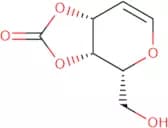
3,4-O-Carbonyl-D-galactal
CAS:<p>3,4-O-Carbonyl-D-galactal is a custom synthesis that can be used to modify oligosaccharides, carbohydrates or complex carbohydrates. It has a high purity and is non-toxic in humans. 3,4-O-Carbonyl-D-galactal has been fluorinated and saccharide modified. This product has CAS No. 149847-26-7 and can be synthesized with methylation and glycosylation.</p>Purity:Min. 95%1,2:5,6-Di-O-isopropylidene-L-chiro-inositol
CAS:<p>1,2:5,6-Di-O-isopropylidene-L-chiro-inositol is a custom synthesis that can be modified by fluorination, methylation and click modification. The product is a monosaccharide and an oligosaccharide. It is also a synthetic saccharide and a polysaccharide. The product can be glycosylated or sugar modified with carbohydrates such as complex carbohydrate to form 1,2:5,6-Di-O-isopropylidene-L-chiro-inositol.</p>Formula:C12H20O6Purity:Min. 95%Molecular weight:260.28 g/molBenzyl-6-O-(2,3,4,6-tetra-O-acetyl-a-D-mannopyranosyl)-2,3,4-tri-O-benzyl-a-D-mannopyranoside
<p>A custom synthesis of benzyl-6-O-(2,3,4,6-tetra-O-acetyl-a-D-mannopyranosyl)-2,3,4-tri-O-benzyl-a-D-mannopyranoside was made with the following modifications: fluorination and methylation. The molecular weight is 636.81 g/mol. It is a white crystalline solid. CAS No.:</p>Formula:C48H54O15Purity:Min. 95%Molecular weight:870.93 g/molD-Galactose-2-D
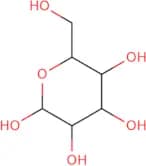
CAS:<p>D-Galactose-2-D is an anticancer agent that has been shown to inhibit the activity of kinases, which are enzymes involved in cell signaling pathways. It is a derivative of D-galactose and has been found in human urine. D-Galactose-2-D has demonstrated potent antitumor effects against various cancer cell lines, including Chinese hamster ovary cells and human colon carcinoma cells. This compound induces apoptosis, or programmed cell death, in cancer cells by inhibiting the activity of key proteins involved in cell survival. Additionally, D-Galactose-2-D has been found to be a potent inhibitor of capsaicin-induced activation of kinase, suggesting its potential as a therapeutic agent for inflammatory conditions.</p>Formula:C6H12O6Purity:Min. 95%Molecular weight:181.16 g/molMethyl 4-chloro-4-deoxy-a-D-galactopyranoside
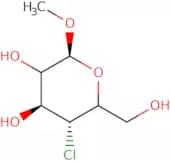
<p>Methyl 4-chloro-4-deoxy-a-D-galactopyranoside is a synthetic monosaccharide that has been modified with fluorination and methylation. The modification of this sugar provides it with the ability to be used in glycosylation reactions, click chemistry, and other modification reactions. This product is offered as a custom synthesis and can be synthesized for any desired specification. It is also available in high purity form.</p>Formula:C7H13ClO5Purity:Min. 95%Molecular weight:212.63 g/mol6-O-Acetyl-2-azido-3,4-di-O-benzyl-2-deoxy-D-glucopyranose
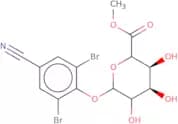
CAS:<p>Glucosamine is a hexose sugar that is an amino sugar and a precursor in the biosynthesis of glycoproteins. It also acts as an intermediate for the synthesis of other non-carbohydrate natural products. 6-O-Acetyl-2-azido-3,4-di-O-benzyl-2-deoxyglucopyranose is a glucosamine derivative that has been synthesized from trifluoroacetic acid and piperidine. The acetyl group on this compound makes it soluble in water, which allows for its use in pharmaceuticals and other applications.</p>Purity:Min. 95%Bromoxynil D-glucuronide methyl ester
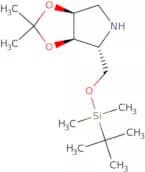
<p>Bromoxynil D-glucuronide methyl ester is a synthetic, high-purity chemical with a CAS number of 2512-06-3. It is an Oligosaccharide and sugar that is Glycosylated and Click modified. This product can be used in Custom synthesis or as a Modification to saccharides.</p>Formula:C14H13Br2NO7Purity:Min. 95%Molecular weight:467.06 g/mol5-O-tert-Butyldimethylsilyl-1,4-dideoxy-1,4-imino-2,3-O-isopropylidene-D-ribitol
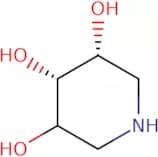
CAS:<p>5-O-tert-Butyldimethylsilyl-1,4-dideoxy-1,4-imino-2,3-O-isopropylidene-D-ribitol is a custom synthesis of a complex carbohydrate. It is an Oligosaccharide and Polysaccharide that has CAS No. 153172-31-7. 5BDSR is modified with methylation and glycosylation and can be used for the synthesis of saccharides or carbohydrates. It is high purity with a fluorination modification and click chemistry to provide synthetic products.</p>Formula:C14H29NO3SiPurity:Min. 95%Molecular weight:287.47 g/mol1,5-Dideoxy-1,5-imino-D-xylitol
CAS:<p>1,5-Dideoxy-1,5-imino-D-xylitol is a synthetic molecule that inhibits the enzyme glycinamide ribonucleotide transformylase (GART) and blocks the synthesis of purines. 1,5-Dideoxy-1,5-imino-D-xylitol has been shown to be potent in inhibiting GART with an IC50 of 0.3 μM. This inhibitory effect was observed in Sprague Dawley rats after oral administration of 1,5-dideoxy-1,5 imino D xylitol at a dose of 10 mg/kg. The inhibition was found to be specific for amination reactions that are catalyzed by GART and not by other enzymes such as glycine amidinotransferase or adenylate kinase. It can be used to study the structure and function of tissue cells.</p>Formula:C5H11NO3Purity:Min. 95%Molecular weight:133.15 g/mol1,2,3,4,6-Penta-O-benzoyl-a-D-glucopyranose
CAS:<p>1,2,3,4,6-Penta-O-benzoyl-a-D-glucopyranose is a natural product that has not been fully resolved or characterized. It is a carbohydrate and has a molecular weight of 532. It is found in urine as a metabolite of myo-inositol. 1,2,3,4,6-Penta-O-benzoyl-a-D-glucopyranose has been synthesized from inositol and benzoyl chloride. The compound can be separated into the two stereoisomers by fractional crystallization with chloroform and methanol.</p>Formula:C41H32O11Purity:Min. 95%Molecular weight:700.69 g/mol2-epi-(-)-emtricitabine
CAS:<p>2-epi-(-)-emtricitabine is an analog of the nucleoside cytidine, which inhibits the phosphorylation and subsequent degradation of deoxycytidine kinase, thereby blocking the production of the viral DNA polymerase. The compound also inhibits tyrosine kinases, which are enzymes that play a vital role in cell signaling. This inhibition may contribute to its antiviral activity. 2-epi-(-)-emtricitabine has been shown to inhibit human immunodeficiency virus (HIV) replication in vitro and in vivo. It is a prodrug that is converted to emtricitabine, its active form, by deoxycytidine kinase and then hydrolyzed by esterases. 2-epi-(-)-emtricitabine has been shown to be effective against hepatitis B virus and cancer cells.</p>Formula:C8H10FN3O3SPurity:Min. 95%Molecular weight:247.25 g/molPhenyl-α-D-glucopyranoside
CAS:<p>Phenyl-alpha-D-glucopyranoside is a molecule that is found in the β-cell of the pancreas. It is thought to be involved in the biosynthesis of oligosaccharides and interacts with other molecules to form glycosidic bonds. The interaction between phenyl-alpha-D-glucopyranoside and other molecules has been analysed by gas chromatography, which showed that it was hydrophobic, but also interacted with carbohydrates. Phenyl-alpha-D-glucopyranoside has also been shown to inhibit gram negative bacteria, such as Escherichia coli or Salmonella enterica.</p>Formula:C12H16O6Molecular weight:256.25 g/molOctyl L-glucopyranoside
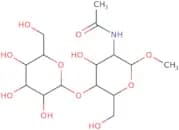
CAS:<p>Octyl L-glucopyranoside is a detergent that is used in biochemical research. It is used as a signal peptide to purify proteins by binding to the hydrophobic region of the protein. In addition, it binds to human polymorphonuclear leukocytes and dextran sulfate. Octyl L-glucopyranoside also has a rate constant of 8 × 10 M-1 s-1 and an analytical method for glycol ethers. The octyl glucopyranoside has been shown to inhibit axonal growth, which may be due to its ability to bind toll-like receptor 4 (TLR4) on dendritic cells.</p>Formula:C14H28O6Purity:Min. 95%Molecular weight:292.37 g/molMethyl a-N-acetyllactosamine
CAS:<p>Methyl a-N-acetyllactosamine is a custom synthesis of Methyl a-N-acetylgalactosamine. This compound has been modified by fluorination, methylation, and click modification to yield the desired product. The monosaccharide structure was synthesized from the corresponding glycosyl halide and protected amino acid. The glycosylation reaction between this monosaccharide and the oligosaccharide containing an unprotected hydroxyl group yields the desired product. The purity of this compound is greater than 99%.</p>Formula:C15H27NO11Purity:Min. 95%Molecular weight:397.38 g/molMethyl 3-amino-3,6-dideoxy-a-L-taloside
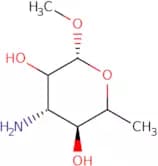
<p>Methyl 3-amino-3,6-dideoxy-a-L-taloside is a custom synthesis of a monosaccharide. It is modified with fluorine and methyl groups and may be used in click chemistry. The CAS number for this compound is 103614-34-8. Methyl 3-amino-3,6-dideoxy-a-L-taloside is an oligosaccharide that can be glycosylated or complexed with sugar. This compound has properties of a carbohydrate and can be classified as a saccharide or polysaccharide.</p>Formula:C7H15NO4Purity:Min. 95%Molecular weight:177.2 g/mol3-Deoxy-2-keto-D-galactonate lithium salt
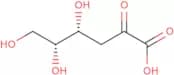
CAS:<p>3-Deoxy-2-keto-D-galactonate lithium salt is an enzyme inhibitor that belongs to the group of galacturonosyltransferases. It is a competitive inhibitor that binds to the enzyme active site and inhibits the transfer of galacturonic acid from UDP-galactose to various acceptor molecules, including oligosaccharides, polysaccharides, glycoproteins, and glycolipids. 3-Deoxy-2-keto-D-galactonate lithium salt has been shown to inhibit wild type strains of Escherichia coli and Saccharomyces cerevisiae. This compound also inhibits acid analysis enzymes such as catalase and triosephosphate isomerase in Escherichia coli. 3DGLS also inhibits protein synthesis by inhibiting the activity of enzymes such as ribonucleotide reductase and xanthine oxidase in Escherichia coli. The</p>Formula:C6H10O6·xLiPurity:Min. 95%3,4-Dideoxyglucosone-3-ene
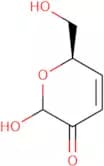
CAS:<p>3,4-di-deoxyglucosone-3-ene is a bioreactive glucose degradation product which can be formed during heat sterilisation of glucose containing peritoneal dialysis solutions. Chemically, 3,4-Dideoxyglucosone-3-ene is an α,β-unsaturated carbonyl compound which increases its reactivity with cellular sulfhydryl, amino groups, proteins, and DNA. 3,4-Dideoxyglucosone-3-ene induces apoptosis in neutrophils, renal cells and peripheral blood mononuclear cells. Such induction leads to impaired peritoneal antibacterial defence.</p>Formula:C6H8O4Purity:Min. 95 Area-%Color and Shape:Colorless PowderMolecular weight:144.13 g/molLacto-N-neotetraose-GEL
<p>Lacto-N-neotetraose-GEL is a glycosylation product that is used in the synthesis of complex carbohydrates. It is a methylated, fluorinated, and saccharide-modified oligosaccharide. This product can be custom synthesized in high purity with a CAS number and has a very low endotoxin level. Lacto-N-neotetraose-GEL has been shown to have many uses including as an adjuvant for vaccines and monoclonal antibody production. It has also been shown to suppress inflammation and increase the efficacy of cancer treatments.</p>Purity:Min. 95%D-Ribose-2,3,4,5-13C4
CAS:<p>D-Ribose-2,3,4,5-13C4 is a complex carbohydrate with saccharide units. It is synthesized by the chemical modification of D-ribose. This product can be used to modify or methylate glucose and other carbohydrates. It has been shown to inhibit the formation of amyloid plaques in Alzheimer's disease, which may be due to its ability to reduce nitric oxide and reactive oxygen species levels. The purity of this product is at least 98%.</p>Formula:C5H10O5Purity:Min. 95%Molecular weight:154.1 g/molMethyl 1-(6-tert-butylmethylsilyl-4'-hydroxyraloxifene)-2,3,4,-tri-O-acetyl-b-D-glycopyranuronate
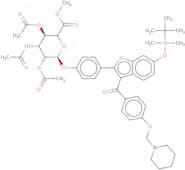
CAS:<p>This is a complex carbohydrate, which is a modification of an oligosaccharide. The structure of this carbohydrate is based on the sugar methyl 1-(6-tert-butylmethylsilyl-4'-hydroxyraloxifene)-2,3,4,-tri-O-acetyl-b-D-glycopyranuronate. This modification has been shown to be useful for glycosylation and polysaccharide synthesis. This compound can be synthesized by click chemistry and has high purity with little or no impurities.</p>Formula:C46H55NO13SSiPurity:Min. 95%Molecular weight:890.08 g/mol