Glycoscience
Glycoscience is the study of carbohydrates and their derivatives, as well as the interactions and biological functions they participate in. This field of research is crucial for understanding a wide variety of biological processes, including cell recognition, signaling, immune response, and disease development. Glycoscience has important applications in biotechnology, medicine, and the development of new drugs and therapies. At CymitQuimica, we offer a wide selection of high-quality, high-purity products for glycoscience research. Our catalog includes monosaccharides, oligosaccharides, polysaccharides, glycoconjugates, and specific reagents, designed to support researchers in their studies on the structure, function, and applications of carbohydrates in biological systems. These resources are intended to facilitate scientific discoveries and practical applications in various areas of bioscience and medicine.
Subcategories of "Glycoscience"
- Aminosugars(108 products)
- Glyco-Related Antibodies(282 products)
- Glycolipids(46 products)
- Glycosaminoglycans (GAGs)(55 products)
- Glycosides(419 products)
- Monosaccharides(6,622 products)
- Oligosaccharides(3,682 products)
- Polysaccharides(503 products)
Found 11041 products of "Glycoscience"
Sort by
Purity (%)
0
100
|
0
|
50
|
90
|
95
|
100
1-Deoxy-1-nitro-L-galactitol
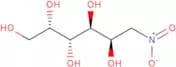
CAS:<p>1-Deoxy-1-nitro-L-galactitol is a compound that has been shown to inhibit serine protease and glutaminyl cyclase activity. It is commonly used in laboratory settings as a potassium substitute in media formulations. This compound belongs to the class of monosaccharides known as glutaminyl derivatives. It has been studied for its potential as an inhibitor of nafamostat, a serine protease inhibitor used in the treatment of pancreatitis and disseminated intravascular coagulation (DIC). Additionally, 1-Deoxy-1-nitro-L-galactitol has been investigated for its potential as a disinfectant and as an adrenergic receptor agonist. Preliminary studies have also suggested antiviral properties against certain viruses. Further research is needed to fully understand the potential applications of this compound.</p>Formula:C6H13NO7Purity:Min. 95%Molecular weight:211.17 g/molSinapic acid acyl-β-D-glucoside
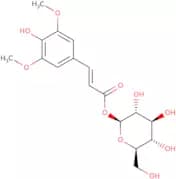
CAS:<p>a functionalised glucoside</p>Formula:C17H22O10Purity:Min. 95%Molecular weight:386.35 g/molBenzyl 2-acetamido-4,6-O-benzylidene-2-deoxy-3-O-(b-D-galactopyranosyl)-a-D-galactopyranoside
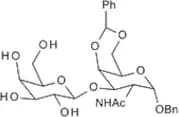
<p>Benzyl 2-acetamido-4,6-O-benzylidene-2-deoxy-3-O-(b-D-galactopyranosyl)-a-D-galactopyranoside is a methylated and fluorinated monosaccharide. It is used in the synthesis of complex carbohydrates and oligosaccharides. The modification of this compound can be done with click chemistry, which is a process that allows for the rapid assembly of molecules on surfaces. This product has been shown to have high purity, making it suitable for use in research or production.</p>Formula:C28H35NO11Purity:Min. 95%Molecular weight:561.58 g/mol1,4-β-D-Glucosyl-D-mannobiose
CAS:<p>1,4-β-D-Glucosyl-D-mannobiose is a specialized carbohydrate substrate, which is derived from complex polysaccharides typically found in plant cell walls. It acts as a substrate for endo-1,4-β-mannanase, an enzyme that cleaves specific glycosidic bonds within mannans. This substrate facilitates the investigation of enzymatic activity by allowing the measurement of endo-1,4-β-mannanase efficiency and specificity under controlled conditions.In biochemical enzyme assays, 1,4-β-D-Glucosyl-D-mannobiose serves as a critical component for quantifying mannanase activity. It enables researchers to study the enzyme's role in various biological processes, including polysaccharide degradation. Additionally, this product is invaluable in in vitro diagnostic analyses where precise enzyme activity assessment is crucial for understanding pathological states or the functionality of industrial enzyme preparations. Its applications extend to biotechnology research, where it aids in the formulation of enzyme-based solutions and optimization of enzymatic reactions in diverse biological and industrial contexts.</p>Formula:C18H32O16Purity:Min. 95%Molecular weight:504.4 g/mol7-Xylosyl-10-deacetyltaxol
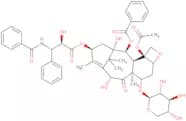
CAS:<p>7-Xylosyl-10-deacetyltaxol is a plant chemical that is found in the needles of the Taxus cuspidata tree. This compound has been shown to inhibit prostate cancer cells and has been clinically used as an adjuvant agent for cancer treatment. 7-Xylosyl-10-deacetyltaxol binds to prostate cancer cells and inhibits their growth, which may be due to its ability to inhibit cell cycle progression at the G2/M phase transition. It also has a strong inhibitory effect on test samples from human prostate cancer cells. In addition, it inhibits enzyme activities that are involved in the biosynthesis of membrane lipids, such as phospholipase A2, arachidonate 12-lipoxygenase, and cyclooxygenase 2. 7-Xylosyl-10-deacetyltaxol also inhibits enzyme activities in cell culture that are involved in the synthesis of carbon</p>Formula:C50H57NO17Purity:Min. 95%Molecular weight:943.98 g/mol1-Deoxy-L-idonojirimycin hydrochloride
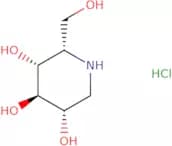
CAS:<p>1-Deoxy-L-idonojirimycin hydrochloride is a chaperone that is structurally related to the natural substrate, L-idonojirimycin. It has been found to interact with recombinant human Hsp70 and Hsp90. 1-Deoxy-L-idonojirimycin hydrochloride enhances the kinetic and thermodynamic parameters of these chaperones in vitro. The structural analysis of this compound revealed that it binds to both Hsp70 and Hsp90, which may be due to its ability to mimic the natural substrate's binding site on these chaperones.</p>Formula:C6H14ClNO4Purity:Min. 95%Molecular weight:199.63 g/mol1,3-a-1,6-a-D-Mannotriosyl trichloroacetimidate
<p>1,3-α-D-mannopyranosyl trichloroacetimidate (1,3-α-DMTCA) is a fluorinated monosaccharide that is used as a building block for the synthesis of oligosaccharides and polysaccharides. The synthesis of 1,3-α-DMTCA involves the reaction of α,β-unsaturated chloral hydrate with mannose in aqueous solution. This produces an intermediate product that undergoes glycosylation with glycosylation reagents like glycosyl chloride to yield 1,3-α-DMTCA. The chemical structure of 1,3-α-DMTCA can be modified by various reactions including methylation or click modification. 1,3 DMTCA is also available as a high purity material.<br>1,3 α - D - mannosyltetrahydrochlorofonuimidoksyl</p>Purity:Min. 95%1,6-Anhydro-2,4-di-O-p-toluenesulfonyl-β-D-glucopyranose
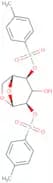
CAS:<p>1,6-Anhydro-2,4-di-O-p-toluenesulfonyl-b-D-glucopyranose is a fluorinated sugar that is synthesized by the reaction of 1,6 anhydro-2,4 di O p toluenesulfonyl b D glucopyranose and osmium tetroxide. The synthesis of this compound involves the use of high purity reagents and solvents. This product can be custom synthesized to order with a minimum quantity of 500 grams.</p>Formula:C20H22O9S2Purity:Min. 95%Molecular weight:470.52 g/mola1,2-Mannobiose-BSA
<p>a1,2-Mannobiose-BSA is a glycosylation that can be used for the synthesis of complex carbohydrate. It is methylated and click modified with fluorine, which renders it resistant to proteolytic degradation. This product is also available in various purities and modifications.</p>Purity:Min. 95%Forosamine
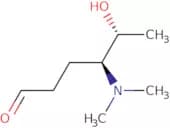
CAS:<p>Forosamine is a spinosyn analog that has been shown to be an effective control agent against bacterial strains. It is a β-amino acid and has a chemical structure similar to the natural spinosyns. Forosamine has been shown to have a broad spectrum of activity against animal health-related bacteria, including those resistant to other antibiotics. Forosamine’s mode of action is not well understood, but it may involve the inhibition of protein synthesis. Forosamine's molecular modeling suggests that the molecule contains a hydroxyl group, which may be responsible for its antibacterial activity.</p>Purity:Min. 95%2,3,6-Trimethyl-γ-cyclodextrin
CAS:<p>This gamma-cyclodextrin (γ-CD) derivative is a modified cyclic oligosaccharide composed of eight glucose units, featuring a larger cavity size than α- and β-cyclodextrins. This structural characteristic allows γ-CDs to form inclusion complexes with a wider range of guest molecules, making it particularly versatile in various industries. In the food sector, it is used as a carrier and stabilizer for flavors, fat-soluble vitamins, and polyunsaturated fatty acids, protecting volatile compounds from evaporation. In pharmaceuticals, it enhances the solubility and bioavailability of poorly water-soluble drugs and, thanks to its larger ring size, allows for the encapsulation of larger molecules or even entire drug molecules. γ-CDs and derivatives are also used for environmental remediation and, in analytical chemistry, for the extraction and concentration of target substances.</p>Formula:C72H128O40Purity:Min. 95%Color and Shape:PowderMolecular weight:1,633.8 g/mol2-Deoxy-D-ribose-anilide
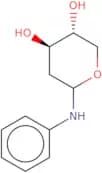
CAS:<p>2-Deoxy-D-ribose-anilide is a fluorinated monosaccharide that is used as a synthetic building block for the synthesis of oligosaccharides, polysaccharides, and other complex carbohydrates. This compound has been modified with methyl groups and click chemistry to form new types of sugars. 2-Deoxy-D-ribose-anilide is also available in high purity and can be used for glycosylation reactions.</p>Formula:C11H15NO3Purity:Min. 95%Color and Shape:Off-White To Light (Or Pale) Yellow SolidMolecular weight:209.24 g/mol6-O-(a-D-Maltotriosyl)-D-glucopyranose tetradecaacetate
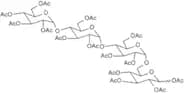
<p>6-O-(a-D-Maltotriosyl)-D-glucopyranose tetradecaacetate is a carbohydrate that belongs to the class of saccharides. It is synthesized from D-glucose by glycosylation and methylation. 6-O-(a-D-Maltotriosyl)-D-glucopyranose tetradecaacetate is a complex carbohydrate with a high purity and custom synthesis. It can be used in click chemistry, due to its reactive group on the C6 position.</p>Formula:C52H70O35Purity:Min. 95%Molecular weight:1,255.09 g/molMethyl a-D-mannofuranoside
CAS:<p>Methyl a-D-mannofuranoside is a synthetic sugar that has been modified by the addition of fluorine at C-1 and methylation at C-2. This modification provides the compound with desired physical properties, such as increased stability and solubility. Methyl a-D-mannofuranoside can be used in the synthesis of oligosaccharides, which are complex carbohydrates consisting of three to ten monosaccharides linked together by glycosidic bonds. It is also used for click chemistry modifications.</p>Formula:C7H14O6Purity:Min. 95%Molecular weight:194.18 g/molChitosan - non-animal origin
CAS:<p>Chitosan is the deacetylated form of chitin. The polysaccharide is deacetylated in order to render it soluble, which is then possible at pH values of less than 7 (normally in dilute acid). This then allows the material to be used in a number of industrial applications as a binder and film former.</p>Formula:(C6H11NO4)nHeparin derived dp22 saccharide ammonium salt
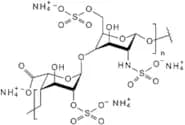
<p>Heparin derived dp22 saccharide ammonium salt is a complex carbohydrate that is synthesized with the click chemistry. It is a high purity, fluorinated compound. This modified heparin has an average molecular weight of approximately 5,400 Da and contains an average of 15 saccharide units. Heparin derived dp22 saccharide ammonium salt has been modified by methylation and glycosylation to produce a heparin-like compound that can be used as a drug delivery system for anticancer drugs.</p>Purity:Min. 95%Color and Shape:White to off-white solid.Molecular weight:~6300 (Average)Methyl 2,3,4-tri-O-benzyl-b-L-thiofucopyranoside
CAS:<p>Methyl 2,3,4-tri-O-benzyl-b-L-thiofucopyranoside is a glycosyl acceptor that can be used in the synthesis of oligosaccharides. It is also an intermediate for the production of antifungal drugs such as fluconazole.</p>Formula:C28H32O4SPurity:Min. 95%Molecular weight:464.62 g/mol(-)-Lyoniresinol 9'-O-glucoside
CAS:<p>This chemical is a custom synthesis of (-)-Lyoniresinol 9'-O-glucoside. The chemical is a modification of (-)-Lyoniresinol 9'-O-glucoside and fluorinated at the C2 position. It is also methylated on the C3 position. The chemical is synthesized by click chemistry, which involves the use of copper(II) ions as catalysts to generate covalent bonds between two molecules. This chemical has been shown to be an oligosaccharide with saccharide chains that are linked together by glycosylation. There are six sugar residues in this compound: glucose, galactose, rhamnose, xylose, glucuronic acid, and mannitol. This compound has CAS number 143236-02-6 and molecular weight of 881.5 g/mol (CAS No.).</p>Formula:C28H38O13Purity:Min. 95%Molecular weight:582.59 g/molPhenyl 2-deoxy-2-fluoro-a-D-glucopyranoside
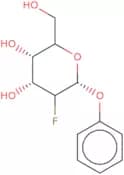
<p>Phenyl 2-deoxy-2-fluoro-a-D-glucopyranoside is a sugar that belongs to the group of saccharides. It is a synthetic compound and is often used as an intermediate in the synthesis of complex carbohydrates, such as glycosides. Phenyl 2-deoxy-2-fluoro-a-D-glucopyranoside has been shown to have high purity, which makes it suitable for custom synthesis. This compound can be methylated and glycosylated, which increases its biological activity. The structure of this sugar can also be modified by fluorination, making it suitable for use in fluorescence studies.</p>Formula:C12H15FO5Purity:Min. 95%Molecular weight:258.24 g/mol1,2,3-Tri-O-benzyl-4,6-O-(4-methoxybenzylidene)-a-D-mannopyranoside
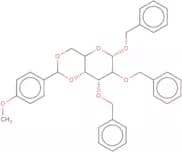
<p>Ai Product Descriptions 50 Creative</p>Formula:C35H36O7Purity:Min. 95%Molecular weight:568.66 g/mol