Glycoscience
Glycoscience is the study of carbohydrates and their derivatives, as well as the interactions and biological functions they participate in. This field of research is crucial for understanding a wide variety of biological processes, including cell recognition, signaling, immune response, and disease development. Glycoscience has important applications in biotechnology, medicine, and the development of new drugs and therapies. At CymitQuimica, we offer a wide selection of high-quality, high-purity products for glycoscience research. Our catalog includes monosaccharides, oligosaccharides, polysaccharides, glycoconjugates, and specific reagents, designed to support researchers in their studies on the structure, function, and applications of carbohydrates in biological systems. These resources are intended to facilitate scientific discoveries and practical applications in various areas of bioscience and medicine.
Subcategories of "Glycoscience"
- Aminosugars(108 products)
- Glyco-Related Antibodies(282 products)
- Glycolipids(46 products)
- Glycosaminoglycans (GAGs)(55 products)
- Glycosides(419 products)
- Monosaccharides(6,622 products)
- Oligosaccharides(3,682 products)
- Polysaccharides(503 products)
Found 11041 products of "Glycoscience"
Sort by
Purity (%)
0
100
|
0
|
50
|
90
|
95
|
100
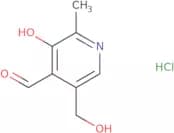
Pyridoxal galactoside
CAS:<p>Pyridoxal galactoside is a synthetic carbohydrate that is glycosylated and methylated. It is soluble in water and sparingly soluble in ethanol and acetone. Pyridoxal galactoside has a CAS number of 644-88-2. The chemical formula for pyridoxal galactoside is C6H7NO3, with a molecular weight of 171.12 g/mol. This product can be custom synthesized to meet customer specifications.</p>Formula:C14H19O8NPurity:Min. 95%Color and Shape:Pale brown solid.Molecular weight:329.31 g/mol2-N-(S'-Acetyl-2'-thioacetyl)-2-deoxy-D-glucamine
<p>2-N-(S'-Acetyl-2'-thioacetyl)-2-deoxy-D-glucamine is a monosaccharide and is the acetylated form of 2-deoxyglucose. It can be used as a methyl donor, click reagent, or fluorinating agent. This product has been custom synthesized to meet your specifications and has been shown to have purity greater than 99%.</p>Formula:C10H17NO7SPurity:Min. 95%Color and Shape:White to off-white solid.Molecular weight:295.31 g/mol2,4-Anhydro-3,5-O-[(S)-phenylmethylene]- D-lyxonic acid methyl ester
CAS:<p>2,4-Anhydro-3,5-O-[(S)-phenylmethylene]- D-lyxonic acid methyl ester is a synthetic monosaccharide that has a fluorination modification. It is commonly used as a raw material in the synthesis of oligosaccharides and polysaccharides. This chemical can be synthesized using Click chemistry or methylation reactions. 2,4-Anhydro-3,5-O-[(S)-phenylmethylene]- D-lyxonic acid methyl ester is used in the production of complex carbohydrates with glycosylation and polysaccharide modifications. This chemical exhibits high purity and can be custom synthesized to meet specific needs.</p>Formula:C13H14O5Purity:Min. 95%Molecular weight:250.25 g/molNeocarrahexaose-24,41,3,5-tetra-O-sulfate sodium salt
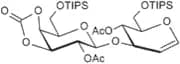
<p>Neocarrahexaose-24,41,3,5-tetra-O-sulfate sodium salt is a glycosylation agent that is used in the synthesis of polysaccharides and oligosaccharides. It is a complex carbohydrate that contains 24% of galactose, 41% of mannose, 3% of glucose and 5% of fructose. This compound has been modified by methylation, click modification and fluorination. Neocarrahexaose-24,41,3,5-tetra-O-sulfate sodium salt has CAS No. 66894-00-2 and can be custom synthesized to meet customer specifications.</p>Formula:C36H52Na4O40S4Purity:Min. 95%Color and Shape:White/Off-White SolidMolecular weight:1,345 g/mol3,2'-Di-O-acetyl-3',4'-O-carbonyl-6,6'-di-O-tert-butyldiphenylsilyl lactal
CAS:<p>3,2'-Di-O-acetyl-3',4'-O-carbonyl-6,6'-di-O-tert-butyldiphenylsilyl lactal is a custom synthesis of a fluorinated carbohydrate. It is a modification of an oligosaccharide and can be used in the synthesis of saccharides and polysaccharides. The CAS number for this compound is 163228-35-1. This compound has been modified with click chemistry to add methyl groups to the hydroxyl group on the sugar ring. This compound has been used as a monosaccharide or as a part of complex carbohydrates.</p>Formula:C35H62O12Si2Purity:Min. 95%Molecular weight:731.03 g/mol1-Oxododecyl-D-glucopyranoside
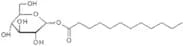
CAS:<p>1-Oxododecyl-D-glucopyranoside is a custom synthesis that contains an oligosaccharide and polysaccharide. The monosaccharides are modified with methylation, glycosylation, or fluorination. The complex carbohydrate is prepared by the click modification of a sugar. 1-Oxododecyl-D-glucopyranoside is synthesized with high purity and high quality. It can be used in medicine as an anti-inflammatory drug and for treatment of diabetes.</p>Formula:C18H34O7Purity:Min. 95%Color and Shape:SolidMolecular weight:362.4 g/mol3,4-Di-O-acetyl-1,6-anhydro-2-deoxy-2-iodo-b-D-glucopyranose
CAS:<p>3,4-Di-O-acetyl-1,6-anhydro-2-deoxy-2-iodo-b-D-glucopyranose is a synthetic sugar that is used in the synthesis of polysaccharides. It can be methylated at C3 and C4 to yield 3,4,5'-triacetyl 1,6 anhydro 2 deoxy 2 iodo b D glucopyranose. This compound has been shown to have antiulcerogenic activity due to its ability to inhibit gastric acid secretion and reduce the incidence of gastric ulcers. 3,4 Di acetyl 1 6 anhydro 2 deoxy 2 iodo b D glucopyranose has also been shown to selectively inhibit the growth of cancer cells. The compound is fluorinated at C3 and C4 with a high purity which allows for modification of the molecular structure.</p>Formula:C10H13IO6Purity:Min. 95%Molecular weight:356.11 g/mol8-Methoxycarbonyloctyl-6-O-(a-L-fucopyranosyl)-N,N'-diacetyl-chitobioside
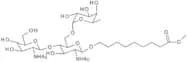
CAS:<p>8-Methoxycarbonyloctyl-6-O-(a-L-fucopyranosyl)-N,N'-diacetylchitobioside is a synthetic carbohydrate that has been fluorinated at the 8 position and acetylated at the 6 position. It is a custom synthesis that can be modified with methylation and other modifications. This compound is used in biochemical research as well as for medical purposes. It has a CAS number of 106445-35-6, and has been shown to have glycosylation, oligosaccharide, sugar, methylation, monosaccharide, polysaccharide, saccharide click modification properties.</p>Formula:C32H56N2O17Purity:Min. 95%Molecular weight:740.79 g/molL-Galacturonic acid
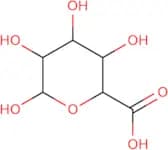
CAS:<p>L-Galacturonic acid is an acidic polysaccharide that is a constituent of many plants, especially in the cell walls of pectin. L-Galacturonic acid has biochemical properties, such as growth factor activity and anticoagulant properties. It also has nucleophilic properties, which means it can be used to extract other substances. The chemical structures of L-galacturonic acid are C6H8O7 with hydroxyl groups on both carbons 1 and 4. The hydroxyl group on carbon 1 makes it a good reactant for nucleophilic attack by sodium carbonate. This reaction increases the number of negative charges on the molecule, which make it a good carbohydrate chemistry reagent. L-Galacturonic acid is not soluble in water but can be dissolved in hydrochloric acid or sodium carbonate solution. It is not toxic when ingested orally and has been shown to have anti-coagulant properties in</p>Purity:Min. 95%Lactose octaacetate
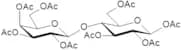
CAS:<p>Lactose octaacetate is a complex carbohydrate that is used in the synthesis of oligosaccharides and polysaccharides. It has been modified by click chemistry to introduce a fluorinated group, which can be useful for fluorinating other molecules. Lactose octaacetate is also used as a precursor for the synthesis of sugar monomers, such as glucose and galactose. This product is available in high purity and with various modifications.</p>Formula:C28H38O19Purity:Min. 95%Molecular weight:678.6 g/molMan-3-F N-Glycan
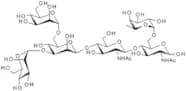
CAS:<p>Man-3-F N-Glycan is a custom synthesis of an oligosaccharide. It is a polysaccharide that is modified with methylation, glycosylation and click modification. Man-3-F N-Glycan is a high purity product that has been fluorinated for use in synthetic biology.</p>Formula:C40H68N2O30Purity:Min. 95%Molecular weight:1,056.96 g/molD-Tagatose-6-phosphate lithium salt
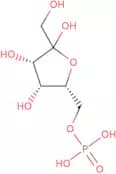
CAS:<p>D-Tagatose-6-phosphate lithium salt is a bacterial strain that belongs to the group of polyols. It is an epimerization product of D-tagatose, which is converted by the enzyme tagatose kinase to D-tagatose-6-phosphate. D-Tagatose-6-phosphate lithium salt can be used as a substrate for the enzymes galactitol dehydrogenase and galactitol 1,2-dioxygenase, which are involved in the metabolism of D-tagatose.</p>Formula:C6H13O9P·xLiPurity:Min. 95%Molecular weight:260.14 g/molT-antigen-HSA
<p>T-antigen-HSA is a synthetic, high-purity, custom synthesis glycoprotein with click modification. It is a complex carbohydrate that contains an oligosaccharide and a saccharide, which are attached to the protein backbone through an amide linkage. T-antigen-HSA is synthesized using recombinant DNA technology and can be modified by fluorination, methylation, or other modifications. This product has CAS No.</p>Purity:Min. 95%Color and Shape:White Powder1,2,3,4,6-Penta-O-pivaloyl-β-D-mannopyranose
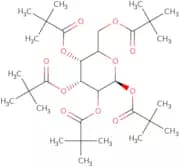
CAS:<p>1,2,3,4,6-Penta-O-pivaloyl-β-D-mannopyranose is an oligosaccharide which is a type of complex carbohydrate. It has the chemical formula C(13)H(22)O(12). 1,2,3,4,6-Penta-O-pivaloyl-β-D-mannopyranose can be synthesized by methylation and glycosylation of pentaerythritol. The molecular weight of 1,2,3,4,6-Penta-O-pivaloyl-β-D-mannopyranose is 391.5 g/mol. 1,2,3,4,6 -Penta -O -pivaloyl - β - D - mannopyranose has been shown to inhibit the growth of Staphylococcus aureus in vitro</p>Formula:C31H52O11Purity:Min. 95%Color and Shape:White PowderMolecular weight:600.74 g/molDelphinidin 3-glucoside chloride
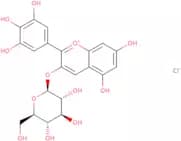
CAS:<p>Delphinidin 3-glucoside chloride is a natural, water-soluble compound that exhibits antimicrobial activity against Staphylococcus aureus. It has been shown to inhibit the growth of this bacteria by inhibiting detoxification enzymes and intracellular cGMP production. Delphinidin 3-glucoside chloride also inhibits uptake of this bacterium by human cells, which may be due to its synergistic interaction with other compounds such as cinnamic acid derivatives. This compound has been shown to have cardiac effects in animals and is being studied for its potential use in treating heart disease.</p>Formula:C21H21O12ClPurity:Min. 95%Color and Shape:PowderMolecular weight:500.84 g/mol2,3,4,6-Tetra-O-acetyl-b-D-glucopyranosyl-N-Fmoc-L-threonine pentafluorophenyl ester
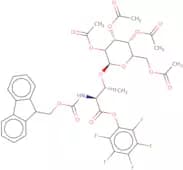
<p>2,3,4,6-Tetra-O-acetyl-b-D-glucopyranosyl-N-Fmoc-L-threonine pentafluorophenyl ester is a custom synthesis. This product is a complex carbohydrate that belongs to the group of polysaccharides. It has been modified by methylation and glycosylation. 2,3,4,6-Tetra-O-acetyl-b-D-glucopyranosyl-N-Fmoc-L--threonine pentafluorophenyl ester has a CAS number and is available in high purity. This product can be used as an additive for food products or as a starting material for the synthesis of other saccharides.</p>Formula:C39F5H36NO14Purity:Min. 95%Molecular weight:837.71 g/mol4-O-(2-Acetamido-2-deoxy-3,4,6-tri-O-acetyl-b-D-glucopyranosyl)-1,6-di-O-benzyl-2-deoxy-a-D-muramic acid methyl ester
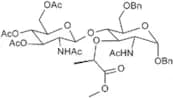
<p>4-O-(2-Acetamido-2-deoxy-3,4,6-tri-O-acetyl-b-D-glucopyranosyl)-1,6-di-O-benzyl-2-deoxy--aDmuramic acid methyl ester is a synthetic carbohydrate. It is a modification of an oligosaccharide and can be used as a starting material in the synthesis of complex carbohydrates. 4ODBGMEM is synthesized by acetylation of 1,6 di O benzyl 2 deoxy a D muramic acid methyl ester with acetic anhydride and triethylamine. The compound has been shown to be effective in fluoroquinolone resistance and methicillin resistance.</p>Formula:C40H52N2O16Purity:Min. 95%Molecular weight:816.84 g/molHyaluronate rhodamine - Molecular Weight - 500kDa
<p>Hyaluronate is a naturally occurring glycosaminoglycan (GAG) found in the extracellular matrix of animal tissues. It is a linear polymer composed of alternating units of N-acetylglucosamine and glucuronic acid. The molecular weight of hyaluronate ranges from 10,000 Da to 1,000,000 Da. Hyaluronate has been modified by fluorination, methylation, and click modification reactions. These modifications affect the physical properties of hyaluronate, including its reactivity with other molecules. Click modification reactions are often used to link two different molecules together. This may include linking an oligosaccharide or saccharide to the hydroxyl groups on the glucuronic acid residues in hyaluronate.</p>Purity:Min. 95%3-Deoxy-D-[UL-13C6]fructose
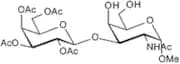
<p>3-Deoxy-D-[UL-13C6]fructose is a high purity, custom synthesis, modification, and fluorination of a methylated oligosaccharide. It is a synthetic molecule that can be used to study the methylation of complex carbohydrates. 3-Deoxy-D-[UL-13C6]fructose can be used as an intermediate in the synthesis of other sugar molecules. The structure is shown below:</p>Purity:Min. 95%Methyl 2-acetamido-2-deoxy-3-O-(2,3,4,6-tetra-O-acetyl-b-D-galactopyranosyl)-a-D-galactopyranoside
CAS:<p>Methyl 2-acetamido-2-deoxy-3-O-(2,3,4,6-tetra-O-acetyl-b-D-galactopyranosyl)-a-D-galactopyranoside is a modified saccharide with a fluorinated methyl group. It is used as an intermediate for the synthesis of oligosaccharides and complex carbohydrates.</p>Formula:C23H35NO15Purity:Min. 95%Molecular weight:565.52 g/mol


![2,4-Anhydro-3,5-O-[(S)-phenylmethylene]- D-lyxonic acid methyl ester](/_next/image/?url=https%3A%2Fstatic.cymitquimica.com%2Fproducts%2F3D%2Fthumb-webp%2FFA76878.webp&w=3840&q=75)

![3-Deoxy-D-[UL-13C6]fructose](/_next/image/?url=https%3A%2Fstatic.cymitquimica.com%2Fproducts%2F3D%2Fthumb-webp%2FMD14754.webp&w=3840&q=75)