Glycoscience
Glycoscience is the study of carbohydrates and their derivatives, as well as the interactions and biological functions they participate in. This field of research is crucial for understanding a wide variety of biological processes, including cell recognition, signaling, immune response, and disease development. Glycoscience has important applications in biotechnology, medicine, and the development of new drugs and therapies. At CymitQuimica, we offer a wide selection of high-quality, high-purity products for glycoscience research. Our catalog includes monosaccharides, oligosaccharides, polysaccharides, glycoconjugates, and specific reagents, designed to support researchers in their studies on the structure, function, and applications of carbohydrates in biological systems. These resources are intended to facilitate scientific discoveries and practical applications in various areas of bioscience and medicine.
Subcategories of "Glycoscience"
- Aminosugars(108 products)
- Glyco-Related Antibodies(282 products)
- Glycolipids(46 products)
- Glycosaminoglycans (GAGs)(55 products)
- Glycosides(419 products)
- Monosaccharides(6,622 products)
- Oligosaccharides(3,682 products)
- Polysaccharides(503 products)
Found 11041 products of "Glycoscience"
Sort by
Purity (%)
0
100
|
0
|
50
|
90
|
95
|
100
Methyl 2,3,6-tri-O-benzoyl-a-D-mannopyranoside
CAS:<p>Methyl 2,3,6-tri-O-benzoyl-a-D-mannopyranoside is a modified mannopyranose sugar that is used as a building block for the synthesis of oligosaccharides and saccharides. This compound can be found in glycosylation reactions. It has been shown to be useful in click chemistry, where it is used as a reactive group. Methyl 2,3,6-tri-O-benzoyl-a-D-mannopyranoside is also used in fluorination and glycosylation reactions. The CAS number for this compound is 3396-68-7.</p>Formula:C28H26O9Purity:Min. 95%Molecular weight:506.5 g/molN-Cyclohexylpropyl deoxynorjirimycin
CAS:<p>N-Cyclohexylpropyl deoxynorjirimycin is a sugar that belongs to the group of carbohydrates. It is an analog of deoxynojirimycin and has been synthesized by glycosylation, methylation, and fluorination of the natural product. N-Cyclohexylpropyl deoxynorjirimycin can be used as an intermediate for the synthesis of other carbohydrate compounds.</p>Formula:C15H29NO4Purity:Min. 95%Molecular weight:287.4 g/molHyaluronate biotin - Molecular Weight - 1000kDa
<p>Hyaluronate biotin (HB) is a modified form of hyaluronic acid. It is produced by the methylation and glycosylation of hyaluronic acid and it has an average molecular weight of 1000 kDa. HB is used in tissue engineering, cell culture, and as a contrast agent for magnetic resonance imaging. The modification of hyaluronate with biotin allows for the visualization of HB using immunofluorescence microscopy. Hyaluronate biotin is a synthetic product that can be custom-synthesized to customer specifications, such as purity level, oligosaccharide content, and monosaccharide content.</p>Purity:Min. 95%Topiramate dimer impurity
CAS:<p>Topiramate dimer impurity is a Glycosylation, Oligosaccharide, sugar, Synthetic, Fluorination, Custom synthesis, Methylation, Monosaccharide that is custom synthesized and is available as a high purity and complex carbohydrate. It has a CAS No. 35405-70-0 and is available in Click modification. This product is used to modify polysaccharides or saccharides by click chemistry reactions.</p>Formula:C24H39NO13SPurity:Min. 95%Molecular weight:581.63 g/moltrans-3'-Hydroxycotinine-O-b-D-glucuronide D3 sodium salt
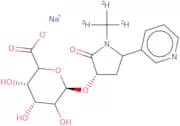
Controlled Product<p>Trans-3'-Hydroxycotinine-O-b-D-glucuronide D3 sodium salt is a modification of the natural product trans-3'-hydroxycotinine. It is an oligosaccharide with a complex carbohydrate structure, which may be synthesized by custom synthesis or by glycosylation. This modification has a high purity and may be monosaccharide or polysaccharide. Trans-3'-hydroxycotinine-O-b-D-glucuronide D3 sodium salt may have CAS number and fluorination. It has been shown to have antihistamine activities, which are due to its ability to inhibit the release of histamine from mast cells in the lungs.</p>Formula:C16H16N2O8D3·NaPurity:Min. 95%Molecular weight:393.34 g/molMethyl 2-deoxy-2-fluoro-D-ribofuranoside
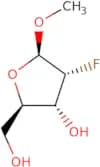
CAS:<p>Methyl 2-deoxy-2-fluoro-D-ribofuranoside is a crystalline compound that contains a methoxyl group and benzoyloxy. It is used as an intermediate for the synthesis of nucleosides, pyranoside, and glycosides. Methyl 2-deoxy-2-fluoro-D-ribofuranoside has been shown to have antibacterial activity against Mycobacterium tuberculosis in the amorphous form. This compound is also debenzoylated by alkali to give methyl 2,3,4,5,6-pentafluoropentanoate.</p>Purity:Min. 95%Methyl b-D-glucuronide
CAS:<p>Methyl b-D-glucuronide is a glucuronide compound, which is a derivative of D-glucuronic acid. It is typically sourced from the oxidation of glucose, which naturally occurs in plants and the human body. As a derivative, Methyl b-D-glucuronide is involved in the conjugation processes that aid in the detoxification and elimination of various compounds.The mode of action for Methyl b-D-glucuronide centers around its conversion by UDP-glucuronosyltransferases in the conjugation pathway, rendering xenobiotics and endogenous substances more water-soluble for excretion. This ability to facilitate glucuronidation makes it a valuable model compound in biochemical research and pharmacology, particularly in studying metabolism and pharmacokinetics of drugs.In terms of applications, Methyl b-D-glucuronide finds significant use in analytical chemistry and molecular biology. It serves as a reference or control compound in enzyme assays and studies investigating drug metabolism and transport. Additionally, its role in detoxification pathways offers insights into liver function and disease mechanisms, providing a foundation for developing therapeutic interventions. Such versatile uses make it an integral component in physiological and pharmacological research.</p>Purity:Min. 95%Color and Shape:Powder1,2,3,4-Tetra-O-acetyl-6-deoxy-6-fluoro-a-D-glucopyranose
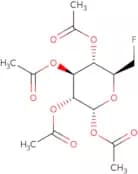
CAS:<p>1,2,3,4-Tetra-O-acetyl-6-deoxy-6-fluoro-a-D-glucopyranose is a synthetic sugar that contains four acetyl groups and one fluorine atom. It can be used for the synthesis of oligosaccharides and glycosylations. This product is custom synthesized according to customers' requirements, with high purity and good quality.</p>Formula:C14H19FO9Purity:Min. 95%Molecular weight:350.29 g/molPhenyl 4-azido-2,3,6-tri-O-benzyl-4-deoxy-b-D-thioglucopyranoside
CAS:<p>Phenyl 4-azido-2,3,6-tri-O-benzyl-4-deoxy-b-D-thioglucopyranoside is a fluorinated monosaccharide that can be synthesized from commercially available starting materials. The compound has been shown to inhibit the glycosylation of proteins and is used in the synthesis of complex carbohydrates such as oligosaccharides and polysaccharides. Phenyl 4-azido-2,3,6-tri-O-benzyl -4 deoxy -b D thioglucopyranoside is a white crystalline solid that has a melting point of 155 ˚C and an assay of 99% purity.</p>Formula:C33H36N3O4SPurity:Min. 95%Molecular weight:570.72 g/mol2'-(N-Butylcarboamido)phenyl-2-acetamido-3,4,6-tri-O-acetyl-2-deoxy-b-D-glucopyranoside
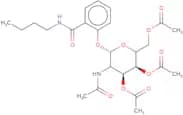
<p>2'-(N-Butylcarboamido)phenyl-2-acetamido-3,4,6-tri-O-acetyl-2-deoxy-b-D-glucopyranoside is a glycosylation product that is custom synthesized for use in fluoroquinolone drug development. It is an acetamido derivative of 2'-phenylglycosides that undergoes fluorination and methylation to produce the desired compound. This product has been shown to be a potent inhibitor of bacterial cell wall synthesis by glycosylation of the peptidoglycan strands.</p>Formula:C25H34N2O10Purity:Min. 95%Molecular weight:522.54 g/molMethyl (methyl 3-deoxy-D-arabino-hept-2-ulopyranosid)onate
CAS:<p>Methyl 3-deoxy-D-arabino-hept-2-ulopyranosid)onate is a custom synthesis of methylation, click modification, and oligosaccharide. It is an oligosaccharide that contains a saccharide linked to a monosaccharide. Methyl 3-deoxy-D-arabino-hept-2-ulopyranosid)onate is used in the synthesis of polysaccharides and complex carbohydrates. This product is characterized by high purity and low cost, making it ideal for research purposes.</p>Formula:C9H16O7Purity:Min. 95%Molecular weight:236.22 g/molMethyl 2,4,6-tri-O-acetyl-b-D-glucopyranoside
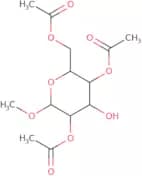
CAS:<p>Methyl 2,4,6-tri-O-acetyl-b-D-glucopyranoside is a modified sugar that is synthesized by a click reaction. This compound has been shown to be an efficient glycosylide donor for the synthesis of complex carbohydrates. Methyl 2,4,6-tri-O-acetyl-b-D-glucopyranoside has been used in the synthesis of oligosaccharides and glycosylated proteins.</p>Purity:Min. 95%3-O-Methyl-D-mannopyranose
CAS:<p>3-O-Methyl-D-mannopyranose is a glycosidic compound with immunostimulating properties. It is an intermediate in the synthesis of 3,6-anhydro-N-acetylneuraminic acid and other related carbohydrates. The hydrolysis of this molecule yields silver trifluoromethanesulfonate, chloride, and low molecular weight material. 3-O-Methyl-D-mannopyranose can be used as a reagent for the preparation of high molecular weight material by ion exchange chromatography or by dehydrative coupling.</p>Formula:C7H14O6Purity:Min. 95%Molecular weight:194.18 g/mol1,5-Anhydroxylitol
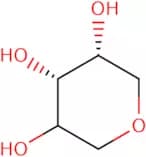
CAS:<p>1,5-Anhydroxylitol is a white crystalline solid that is soluble in water and methanol. 1,5-Anhydroxylitol is an intermediate in the metabolic pathway of glyceric acid. It can be produced by the oxidation of sulfoxide or by reduction of glycols. 1,5-Anhydroxylitol has been shown to have acidic properties with a pKa value of 3.2. The protonation of 1,5-anhydroxylitol is postulated to involve hydroxide ions from water or hydroxide solution. The hydroxide ion reacts with the hydroxyl group on the ring at the 5th carbon atom to produce a reactive metastable form that quickly decomposes into glyceric acid and water.</p>Formula:C5H10O4Purity:Min. 95%Molecular weight:134.13 g/molL-Rhamnose bis(ethylsulfone)
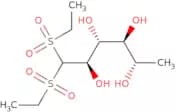
CAS:<p>L-Rhamnose bis(ethylsulfone) is a custom synthesis that belongs to the class of saccharides. L-Rhamnose bis(ethylsulfone) is often used in the production of complex carbohydrates, such as polysaccharides and glycosylation. It has been modified with fluorination, methylation, and click modification. L-Rhamnose bis(ethylsulfone) can be used for the synthesis of oligosaccharides or saccharides by glycosylation.</p>Formula:C10H22O8S2Purity:Min. 95%Molecular weight:334.41 g/molMaltobionic acid dicyclohexylammonium salt
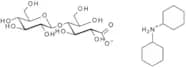
CAS:Controlled Product<p>An antioxidant used in food and feeds, produced from starch, using enzymes</p>Formula:C24H45NO12Purity:Min. 95%Molecular weight:539.61 g/molPropyl 2-acetamido-3,4,6-tri-O-acetyl-2-deoxy-b-D-glucopyranoside
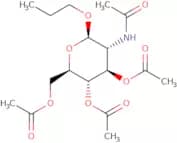
CAS:<p>Propyl 2-acetamido-3,4,6-tri-O-acetyl-2-deoxy-b-D-glucopyranoside is a synthetic glycosylamine that has been fluorinated at the C2 position and modified with a methyl group. It is used in the synthesis of complex carbohydrates for use as antigens or vaccines. This product can be custom synthesized to order and is available in high purity form.</p>Formula:C17H27NO9Purity:Min. 95%Molecular weight:389.4 g/mol1-Chloro-1-deoxy-scyllo-inositol
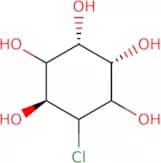
<p>1-Chloro-1-deoxy-scyllo-inositol is a molecule that can be transported by the transporter symporter. It has been shown to interact with hydrophobic interactions, and this interaction is stereospecific. This molecule is also a ligand which interacts with other molecules through hydrophobic interactions. Furthermore, it has been shown in microscopy studies to have a transporters morphology.</p>Formula:C6H11ClO5Purity:Min. 95%Molecular weight:198.6 g/molD-Threonic acid calcium
CAS:<p>Please enquire for more information about D-Threonic acid calcium including the price, delivery time and more detailed product information at the technical inquiry form on this page</p>Formula:(C4H8O5)2•CaPurity:Min. 95%Molecular weight:312.29 g/molD-Fructose-13C6-1,6-diphosphate sodium salt
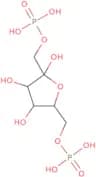
CAS:<p>D-Fructose-13C6-1,6-diphosphate sodium salt is a reactive compound used as a model in studies of metabolic disorders. It has been shown to have an inhibitory effect on the enzymes that catalyze the conversion of D-fructose 1,6 diphosphate to D-fructose 6 phosphate in the cytosol. The compound is also useful for determining the binding of calcium ions to proteins and for measuring the activity of carbon source enzymes.</p>Formula:C6H10Na4O12P2·xH2OPurity:Min. 95%Color and Shape:PowderMolecular weight:434 g/mol