Glycoscience
Glycoscience is the study of carbohydrates and their derivatives, as well as the interactions and biological functions they participate in. This field of research is crucial for understanding a wide variety of biological processes, including cell recognition, signaling, immune response, and disease development. Glycoscience has important applications in biotechnology, medicine, and the development of new drugs and therapies. At CymitQuimica, we offer a wide selection of high-quality, high-purity products for glycoscience research. Our catalog includes monosaccharides, oligosaccharides, polysaccharides, glycoconjugates, and specific reagents, designed to support researchers in their studies on the structure, function, and applications of carbohydrates in biological systems. These resources are intended to facilitate scientific discoveries and practical applications in various areas of bioscience and medicine.
Subcategories of "Glycoscience"
- Aminosugars(108 products)
- Glyco-Related Antibodies(282 products)
- Glycolipids(46 products)
- Glycosaminoglycans (GAGs)(55 products)
- Glycosides(419 products)
- Monosaccharides(6,622 products)
- Oligosaccharides(3,682 products)
- Polysaccharides(503 products)
Found 11041 products of "Glycoscience"
Sort by
Purity (%)
0
100
|
0
|
50
|
90
|
95
|
100
Ergosterol peroxide glucoside
CAS:<p>Ergosterol peroxide glucoside is a glycosylated compound that has been modified with methyl and fluorine groups. It can be custom synthesized to order, and is available in high purity. Ergosterol peroxide glucoside is a complex carbohydrate that has been modified with methyl and fluorine groups. This modification provides stability to the molecule, making it an ideal candidate for use as a pharmaceutical excipient. The sugar moiety is also modified to contain a click-reaction site for the covalent attachment of other molecules. The synthesis of this compound requires glycosylation, methylation, and fluorination reactions.</p>Purity:Min. 95%Heparin derived dp14 saccharide ammonium salt
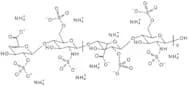
<p>Heparin derived dp14 saccharide ammonium salt is a synthetic glycosaminoglycan that is found in mammalian tissues and blood. This compound is synthesized from heparin, which is a Glycosylated, complex carbohydrate. The synthesis of this compound includes methylation, click modification (a type of chemical reaction), and fluorination. This product contains saccharides that are modified with sugar, oligosaccharides, or monosaccharides. It can be custom synthesized for your specific needs and is available in high purity.</p>Purity:Min. 95%Color and Shape:White to pale yellow solid.Molecular weight:~4100 (Average)1',6,6'-Trichloro sucrose
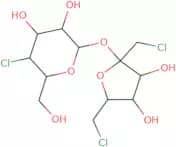
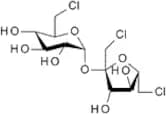
CAS:<p>1',6,6'-Trichloro sucrose is a complex carbohydrate that is synthesized from sucrose by the methylation of the hydroxyl groups followed by 1,6-dichlorination. This product has been shown to have a high degree of purity and can be used in a number of applications, including as a sugar substitute.</p>Formula:C12H19Cl3O8Purity:Min. 95%Molecular weight:397.63 g/mol1-Bromo-1-deoxyfructose
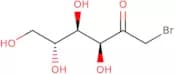
CAS:<p>1-Bromo-1-deoxyfructose is a monosaccharide that is used in the synthesis of polysaccharides and oligosaccharides. It is also used for the click modification of proteins, which can be used to study protein function and activity. 1-Bromo-1-deoxyfructose can be synthesized from fructose by means of a fluorination reaction. This product is available with custom synthesis.</p>Formula:C6H11BrO5Purity:Min. 95%Molecular weight:243.05 g/mol2-Amino-2-deoxy-D-xylose
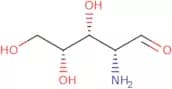
CAS:<p>2-Amino-2-deoxy-D-xylose is a metal chelator that can be used in the treatment of infections caused by bacteria. It has been shown to have synergistic effects with metaperiodate, a compound that inhibits bacterial growth by blocking the synthesis of folic acid. 2-Amino-2-deoxy-D-xylose also chelates and removes heavy metals such as mercury and lead from the bloodstream and other tissues. In addition, this drug is an efficient method for producing amino function pyrimidine nucleosides, which are precursors to DNA and RNA synthesis. The metal chelate ring is formed through dehydration of a furanose molecule with a chloride ion. This leads to an advanced carbohydrate product that contains chlorine.</p>Purity:Min. 95%L-[6-13C]Sorbose
CAS:<p>L-[6-13C]Sorbose is a modified sugar that is synthesized from D-glucose, L-sorbose, and 13C-labeled methyl groups. This compound can be used to study the methylation and glycosylation of polysaccharides and oligosaccharides.</p>Formula:C513CH12O6Purity:Min. 95%Molecular weight:181.15 g/mol3,2'-Di-O-acetyl-3',4'-O-carbonyl-6,6'-di-O-tert-butyldimethylsilyl-lactal
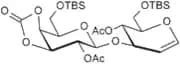
<p>3,2'-Di-O-acetyl-3',4'-O-carbonyl-6,6'-di-O-tert-butyldimethylsilyl-lactal is a fluorinated oligosaccharide that is custom synthesized for glycosylation and polysaccharide modifications. This product has been shown to be resistant to degradation by enzymes, including aminoglycosides, beta-lactam antibiotics, and penicillin. 3,2'-Di-O-acetyl-3',4'-O-carbonyl-6,6'-di-O-tert-butyldimethylsilyl--lactal is a high purity product with CAS number 207787 - 39 - 0.</p>Purity:Min. 95%Molecular weight:646.87 g/molD-Allose-13C
CAS:<p>Please enquire for more information about D-Allose-13C including the price, delivery time and more detailed product information at the technical inquiry form on this page</p>Formula:C6H12O6Purity:Min. 95%Molecular weight:181.15 g/mola-D-1,5-Difluoroglucose
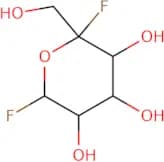
CAS:<p>a-D-1,5-Difluoroglucose is a synthetic sugar that is used in the modification of complex carbohydrates. It is fluorinated to give a stable compound that can be methylated and glucosylated. The compound has been shown to have high purity and a long shelf life.</p>Formula:C6H10F2O5Purity:Min. 95%Molecular weight:200.14 g/molFluphenazine b-D-glucuronide
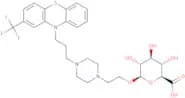
CAS:Controlled Product<p>Fluphenazine is a phenothiazine antipsychotic agent that is metabolized by the liver to form fluphenazine b-D-glucuronide. This compound has been shown to have high yield and an electron affinity. Fluphenazine b-D-glucuronide is a primary alcohol with a phenolic hydroxyl group. It can be synthesized using immobilized enzyme, which is an electron donor, and an aliphatic substrate such as methanol. The reaction product is incubated for six hours before it undergoes glucuronidation.</p>Formula:C28H34F3N3O7SPurity:Min. 95%Molecular weight:613.65 g/molMethimazole thio-b-D-glucuronide
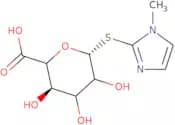
CAS:<p>Methimazole is a drug that inhibits the synthesis of thyroid hormones by blocking the action of thyroperoxidase. Methimazole thio-b-D-glucuronide is a non-toxic, water-soluble derivative of methimazole. It is used in the treatment of hyperthyroidism and thyrotoxicosis. This compound can be synthesized from methimazole by click chemistry, fluorination or glycosylation. The product can be custom synthesized with high purity and high carbohydrate content.</p>Formula:C10H14N2O6SPurity:Min. 95%Molecular weight:290.29 g/mol4'-Hydroxytrazodone b-D-glucuronide
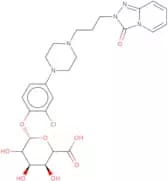
CAS:<p>4'-Hydroxytrazodone b-D-glucuronide is a modification of the drug 4'-hydroxytrazodone, which is used to treat hypertension and depression. The modification prevents the degradation of 4'-hydroxytrazodone by glucuronyl transferase enzymes in the liver, prolonging its half-life. It is synthesized from the glycogen or starch of plants such as corn, wheat, or potatoes. This compound can also be found in natural sources such as honey and fruit juices.</p>Formula:C25H30ClN5O8Purity:Min. 95%Molecular weight:564 g/molD-[6,6'-2H2]Glucose
CAS:Controlled Product<p>D-[6,6'-2H2]Glucose is a carbohydrate that is present in many foods and also produced by the cells of the human body. It can be used as a biomarker for cancer cells because it is taken up by malignant cells at a higher rate than normal cells. D-[6,6'-2H2]Glucose is often used to assess the response of patients to chemotherapy treatment. The uptake of D-[6,6'-2H2]Glucose by malignant cells can be measured using vibrational spectroscopy or chromatographic science. The deformation of glucose molecules can be quantified using nuclear magnetic resonance (NMR) spectroscopy and this data can then be used to estimate the degree of glycolysis in specific tissues.</p>Formula:C6D2H10O6Purity:Min. 95%Molecular weight:182.17 g/molSucralose-d6
CAS:<p>Sucralose is a non-nutritive artificial sweetener that has no calories and is used in place of sugar. It is made from sucrose by substituting three hydrogen-oxygen groups with three chlorine atoms. The deuterium isotope, D6, was used to prepare this compound for analysis because it only emits positrons that can be detected using a PET scanner. Sucralose-d6 was shown to have high resistance to degradation due to its strong bond between the carbon and oxygen atoms in the molecule. This property makes it more stable than other sugars and carbohydrates which are subject to hydrolysis by enzymes in wastewater treatment plants. Deionized water can be used as a sample preparation solvent for sucralose-d6 because it does not contain any ions that may react with this compound.</p>Formula:C12H19Cl3O8Purity:Min. 95%Molecular weight:403.7 g/mol2-Naphthylmethyl 2-acetamido-2-deoxy-b-D-glucopyranoside
CAS:<p>2-Naphthylmethyl 2-acetamido-2-deoxy-b-D-glucopyranoside is a synthetic, fluorinated monosaccharide. It is a custom synthesis that can be glycosylated and methylated to produce polysaccharides. It has been shown to inhibit cancer cell growth in vitro and in vivo by inhibiting protein synthesis.</p>Formula:C19H23NO6Purity:Min. 95%Molecular weight:361.39 g/molUDP-a-D-Xylose disodium
CAS:<p>UDP-a-D-Xylose disodium is a fluorinated synthetic monosaccharide that has been synthesized to produce an oligosaccharide. It is a complex carbohydrate with glycosylation and polysaccharide modifications, which can be modified by methylation or click chemistry. This product is usually used as a custom synthesis for research purposes.</p>Purity:Min. 95%O-Desmethyl-N,N-desmethyl-venlafaxine D-gluronide
<p>O-Desmethyl-N,N-desmethyl-venlafaxine D-gluronide is a custom synthesis, modification and fluorination of venlafaxine. It is a polysaccharide that is synthesized from saccharides with a glycosylation process. The carbohydrate has a complex structure made up of oligosaccharides and monosaccharides.</p>Purity:Min. 95%Methyl b1-4-D-xylobioside
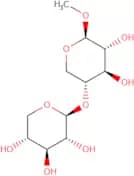
CAS:<p>Methyl b1-4-D-xylobioside is a bioreactor that binds to the carbohydrate binding domain of the enzyme. It has been shown to be reactive with galactose and other glycosides, and is used as a substrate for electrophotographic analysis. This product also has immobilized properties, which make it suitable for use in an acceptor column in order to purify oligosaccharides or gene products with similar sequences. Methyl b1-4-D-xylobioside is used as a selective inhibitor of tuberculosis by binding to the enzyme mycobactin synthase, which is involved in the biosynthesis of mycolic acids.</p>Formula:C11H20O9Purity:Min. 95%Molecular weight:296.27 g/mol2,3,6-Tri-O-acetyl-4-O-(2,3,4,6-tetra-O-acetyl-a-D-mannopyranosyl)-D-mannopyranose
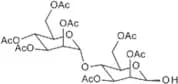
CAS:<p>This product is a fatty acid that binds to the carbohydrate binding sites in the cell membrane of Caco-2 cells. It has been shown to inhibit the growth of cancer cells and radiation induced changes by binding to the sugar moieties on glycoproteins. This product also inhibits the production of glycoconjugates, which are important for cell-cell interactions and biological function. The disaccharide form has been found to be a diagnostic agent for cancer cells, with a structural formula that can be seen in the figure below.</p>Formula:C26H36O18Purity:Min. 95%Molecular weight:636.55 g/molD-Glucose-4-D
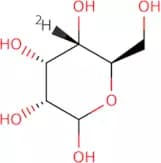
CAS:Controlled Product<p>D-Glucose-4-D is a deuterated form of glucose. It is a halophilic sugar that is used in the biosynthesis of lipids. D-Glucose-4-D can be synthesized chemically or by isotope effect by using d-glucose as the starting material. This compound can be used to study lipid synthesis and lipid metabolism in bacteria, such as E. coli, because it has been shown to inhibit the enzyme glycerol dehydratase, which catalyzes the conversion of glycerol to dihydroxyacetone phosphate, an intermediate in lipid biosynthesis. D-Glucose-4-D also inhibits the enzyme phosphatidate phosphohydrolase, which converts phosphatidic acid to diacylglycerol. These compounds are important for membrane lipid formation and are involved in cellular signalling pathways.</p>Formula:C6H11DO6Purity:Min. 95%Molecular weight:181.16 g/mol


![L-[6-13C]Sorbose](/_next/image/?url=https%3A%2Fstatic.cymitquimica.com%2Fproducts%2F3D%2Fthumb-webp%2FMS35536.webp&w=3840&q=75)

![D-[6,6'-2H2]Glucose](/_next/image/?url=https%3A%2Fstatic.cymitquimica.com%2Fproducts%2F3D%2Fthumb-webp%2FMG74985.webp&w=3840&q=75)