Glycoscience
Glycoscience is the study of carbohydrates and their derivatives, as well as the interactions and biological functions they participate in. This field of research is crucial for understanding a wide variety of biological processes, including cell recognition, signaling, immune response, and disease development. Glycoscience has important applications in biotechnology, medicine, and the development of new drugs and therapies. At CymitQuimica, we offer a wide selection of high-quality, high-purity products for glycoscience research. Our catalog includes monosaccharides, oligosaccharides, polysaccharides, glycoconjugates, and specific reagents, designed to support researchers in their studies on the structure, function, and applications of carbohydrates in biological systems. These resources are intended to facilitate scientific discoveries and practical applications in various areas of bioscience and medicine.
Subcategories of "Glycoscience"
- Aminosugars(108 products)
- Glyco-Related Antibodies(282 products)
- Glycolipids(46 products)
- Glycosaminoglycans (GAGs)(55 products)
- Glycosides(419 products)
- Monosaccharides(6,622 products)
- Oligosaccharides(3,682 products)
- Polysaccharides(503 products)
Found 11041 products of "Glycoscience"
Sort by
Purity (%)
0
100
|
0
|
50
|
90
|
95
|
100
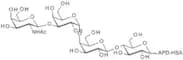
Globo-N-tetraose-APD-HSA
<p>Globo-N-tetraose conjugated to HSA with acetyl-phenylenediamine spacer</p>Purity:Min. 95%Blood group B trisaccharide-GEL
<p>Gala1-3(Fuca1-2)Gal Conjugated to BSA on Fractogel with glycosylamine formation</p>Purity:Min. 95%Scopoletin b-D-glucuronide
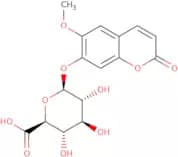
CAS:<p>Scopoletin b-D-glucuronide is a synthetic compound that is modified by the addition of a fluorine atom to the methyl group in scopoletin. Scopoletin b-D-glucuronide has shown antiviral activity against herpes simplex virus type 1 and 2, with an IC50 value of 1.6 μM. It also has antiviral activity against HIV type 1 and HIV type 2, with an IC50 value of 0.5 μM. This compound also inhibits viral DNA synthesis, which may be due to its inhibition of host cell protein synthesis and subsequent inhibition of viral protein synthesis. Scopoletin b-D-glucuronide has been shown to have anti-inflammatory effects in a mouse model for rheumatoid arthritis, and it may be due to its suppression of prostaglandin synthesis or interference with leukocyte chemotaxis.</p>Formula:C16H16O10Purity:Min. 95%Molecular weight:368.29 g/molN-Methyl acarbose
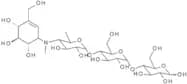
<p>N-Methyl acarbose is a synthetic, high purity, fluorinated carbohydrate with a variety of applications. It has been modified to contain methyl groups on the carbons adjacent to the anomeric carbon, which are used for click chemistry and other bioconjugation reactions. N-Methyl acarbose can be used in glycosylation reactions and offers a wide range of custom synthesis options. This compound is a complex sugar that contains both glucose and fructose monomers.</p>Formula:C26H45NO18Purity:Min. 95%Molecular weight:659.63 g/molEthyl 3-O-benzyl-4,6-O-benzylidene-b-D-thioglucopyranoside
<p>Ethyl 3-O-benzyl-4,6-O-benzylidene-b-D-thioglucopyranoside is a custom synthesis of an oligosaccharide with a complex carbohydrate. It has been modified with methylation and glycosylation and can be used in the production of high purity saccharides. Ethyl 3-O-benzyl-4,6-O-benzylidene-b-D-thioglucopyranoside is synthesized by the fluorination of ethyl bromoacetate with sodium fluoride followed by alkylation with benzaldehyde. This product has a CAS number and can be used for food or pharmaceutical purposes.</p>Purity:Min. 95%4-Toluoyl 2-O-benzyl-4,6-O-benzylidene-3-O-p-methoxybenzyl-a-D-thiomannopyranoside
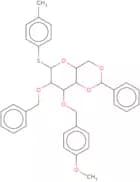
<p>4-Toluoyl 2-O-benzyl-4,6-O-benzylidene-3-O-p-methoxybenzyl a (1 → 4)-D-thiomannopyranoside is a carbohydrate with an α-(1→4) linkage. It is synthesized by the modification of the hydroxymethyl group on the C2 position of toluose with benzyl bromide and then methylation of the C6 position. This product has been custom synthesized for our customer and can be produced in high purity. It is also glycosylated and click modified.</p>Formula:C35H36O6SPurity:Min. 95%Molecular weight:584.72 g/molDimeric Lewis X hexasaccharide-APE-HSA
<p>Dimeric Lewis X hexasaccharide-APE-HSA is a carbohydrate molecule that is a modification of a saccharide. It is an oligosaccharide sugar with a CAS number. The monosaccharide sugar in this molecule has been synthetically modified and fluorinated to yield the desired product. This complex carbohydrate has been custom synthesized for high purity and has undergone methylation and glycosylation reactions to achieve the desired modification. The final result of these modifications is a dimeric Lewis X hexasaccharide-APE-HSA, which will be used as an immunogen.</p>Purity:Min. 95%Hyaluronate biotin - Molecular Weight - 2500kDa
<p>Hyaluronate biotin is a complex carbohydrate that consists of a saccharide with a terminal sugar and methylated N-acetylglucosamine. The molecular weight of Hyaluronate biotin is 2500kDa. It can be synthesized by reacting the appropriate monosaccharides under the presence of an enzyme, such as glucose oxidase. This product has high purity and is modified using Fluorination and Click modification.</p>Purity:Min. 95%D-[4,5,6]-Fructose-13C3
CAS:<p>D-[4,5,6]-Fructose-13C3 is a potent inhibitor of the golgi alpha-mannosidases which are enzymes that catalyze the hydrolysis of mannose residues from glycoproteins. This compound has been shown to inhibit the synthesis of glycoproteins in vitro and in vivo. D-[4,5,6]-Fructose-13C3 also inhibits other chemical reactions by binding to fatty acids or proteins. In cell culture, this compound has been shown to synergistically interact with cytochalasin B, which disrupts Golgi membranes. D-[4,5,6]-Fructose-13C3 is lipophilic and can be easily detected by magnetic resonance spectroscopy (MRS). MRS can be used to monitor the inhibition of fatty acid synthesis in cells cultured with this agent.</p>Formula:C3C3H12O6Purity:Min. 95%Molecular weight:183.13 g/molPhenyl 2,3,4,6-tetra-O-benzyl-a-L-thioglucopyranoside
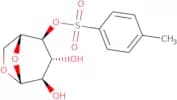
<p>Phenyl 2,3,4,6-tetra-O-benzyl-a-L-thioglucopyranoside is a complex carbohydrate that can be modified with methylation, glycosylation, or click modification. It has a CAS number of 62790-21-8 and is a member of the Polysaccharides class. The main function of this compound is as an Oligosaccharide. This compound is Fluorinated and Synthetic.</p>Formula:C40H40O5SPurity:Min. 95%Molecular weight:632.81 g/mol1,6-Anhydro-4-O-p-toluenesufonyl-b-D-glucopyranose
CAS:<p>This modified sugar can be used in the synthesis of oligosaccharides and polysaccharides. It can also be used as a custom synthesis to introduce fluorine atoms into saccharides. This modification is useful for obtaining specific glycosylation products, such as those that are methylated or click-modified.</p>Formula:C13H16O7SPurity:Min. 95%Molecular weight:316.33 g/mol6-Chloro-6-deoxy-D-glucitol
<p>6-Chloro-6-deoxy-D-glucitol is a synthetic sugar, in which the D-glucose moiety has been substituted with a 6-chloro group. It is an important precursor for the synthesis of many complex carbohydrates and polysaccharides. The product can be used as a methylating agent to modify saccharides, oligosaccharides, and polysaccharides. The product is also used to modify sugars by glycosylation, fluorination, or click chemistry. In addition, this product can be used as a starting material for the synthesis of other sugars via glycosylation or fluorination.</p>Formula:C6H13ClO5Purity:Min. 95%Molecular weight:200.62 g/mol(Hydroxypropyl)methyl cellulose - Viscocity 75000-140000 cP, 2 % in H2O
CAS:<p>Viscoelastic polymer; excipient; food additive</p>Purity:Min. 95%3,4-O-Isopropylidene-b-D-arabinopyranose
CAS:<p>3,4-O-Isopropylidene-b-D-arabinopyranose is a synthetic monosaccharide that is used in the synthesis of oligosaccharides and polysaccharides. It can be fluorinated, methylated, or glycosylated to produce a range of compounds with different properties. 3,4-O-Isopropylidene-b-D-arabinopyranose is not active against bacteria, but it does inhibit the growth of yeast cells. In addition to its use in biochemistry and as a nutritional supplement for animals and humans, 3,4-O-Isopropylidene-b-D-arabinopyranose can be used as an additive for plastics and other materials.</p>Formula:C8H14O5Purity:Min. 95%Molecular weight:190.19 g/mol(2R,4R)-2-[D-Xylo-tetrahydroxybut-1-yl]-1,3-thiazolidine-4-carboxylic acid
CAS:<p>(2R,4R)-2-[D-Xylo-tetrahydroxybut-1-yl]-1,3-thiazolidine-4-carboxylic acid is a methylated saccharide that has been modified by the click chemistry method. It is a synthetic product with high purity and good quality. This compound can be used for glycosylation and oligosaccharide synthesis. (2R,4R)-2-[D-Xylo-tetrahydroxybut-1-yl]-1,3-thiazolidine-4-carboxylic acid has CAS No. 110270-19-4 and can be found in complex carbohydrates in nature.</p>Formula:C8H15NO6SPurity:Min. 95%Molecular weight:253.27 g/mol6-Deoxy-3-C-methyl-D-gulose
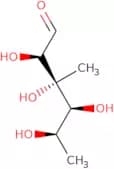
CAS:<p>6-Deoxy-3-C-methyl-D-gulose is an enantiomer of 3,6-dideoxy-D-gluconic acid. This compound has been shown to be a virulent factor in mastitis caused by the mutant strain of Escherichia coli (MT1) and to be expressed at a higher level in mastitic milk than in normal milk. 6DMG has also been shown to induce monoclonal antibody production and stimulate specific immune responses. It is thought that 6DMG damages cells, which leads to the release of intracellular components that trigger an antibody response. The biological function of 6DMG is not known, but it may play a role in the infection process by stimulating an antibody response against infectious agents.</p>Purity:Min. 95%3,5-O-Isopropylidene-L-arabinofuranose
<p>3,5-O-Isopropylidene-L-arabinofuranose is a sugar that is used in the synthesis of saccharides. It is a monosaccharide that can be modified by fluorination, methylation, and custom synthesis. This product has been shown to be an excellent substrate for click chemistry and can be used as an intermediate in the production of oligosaccharides and polysaccharides. 3,5-O-Isopropylidene-L-arabinofuranose has a high purity level and can be used as a replacement for other sugars in complex carbohydrate synthesis.</p>Purity:Min. 95%L-Ribose
CAS:<p>L-Ribose is a monosaccharide that is a constituent of ribonucleic acid, deoxyribonucleic acid and other compounds. It can be found in small quantities in most living organisms. L-Ribose has been modified to include fluorine atoms at the C2 position. The addition of fluorine atoms increases the stability of the molecule and its resistance to hydrolysis by esterases. L-Ribose has also been modified with methyl groups at the C3 position and glycosylation at the C4 position. This modification preserves the biological activity of L-Ribose and increases its water solubility. L-Ribose is used as a building block for custom synthesis, such as peptides or oligosaccharides.>>END>></p>Formula:C5H10O5Molecular weight:150.13 g/molb-D-Glucosyl C4-ceramide
CAS:<p>b-D-Glucosyl C4-ceramide is a synthetic, fluorinated polysaccharide that has been modified with methylation, saccharide and glycosylation. This product is a complex carbohydrate consisting of a polymer of D-glucose units linked by β-(1→4) bonds. It is used in the synthesis of polysaccharides and oligosaccharides. The b-D-glucosyl C4-ceramide can be custom synthesized to meet customer specifications for purity, molecular weight and other physical properties.</p>Formula:C28H53NO8Purity:Min. 95%Molecular weight:531.72 g/mol2,3-O-Cyclohexylidene-b-D-ribofuranose
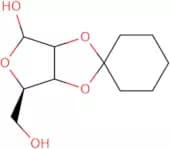
CAS:<p>2,3-O-Cyclohexylidene-b-D-ribofuranose is a monosaccharide that is used in the synthesis of complex carbohydrates. This compound possesses a cyclic structure that contains an oxygen atom at the 2 position and a hydroxyl group at the 3 position. It has been modified by fluorination, methylation, glycosylation, and click chemistry. The chemical name for this compound is 2,3-O-Cyclohexylideneb-D-ribofuranose.</p>Formula:C11H18O5Purity:Min. 95%Molecular weight:230.26 g/mol

![D-[4,5,6]-Fructose-13C3](/_next/image/?url=https%3A%2Fstatic.cymitquimica.com%2Fproducts%2F3D%2Fthumb-webp%2FMF171832.webp&w=3840&q=75)


![(2R,4R)-2-[D-Xylo-tetrahydroxybut-1-yl]-1,3-thiazolidine-4-carboxylic acid](/_next/image/?url=https%3A%2Fstatic.cymitquimica.com%2Fproducts%2F3D%2Fthumb-webp%2FMX01042.webp&w=3840&q=75)