Enzyme, Peptide and Protein Related Compounds
Subcategories of "Enzyme, Peptide and Protein Related Compounds"
- Amino Acids (AA)(40,743 products)
- Enzymes(3,492 products)
- Peptides(27,932 products)
- Proteins(15,182 products)
Found 1266 products for "Enzyme, Peptide and Protein Related Compounds".
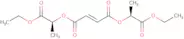
(-)-Bis(S)-1-(Ethoxycarbonyl)ethyl fumarate
CAS:(-)-Bis(S)-1-(Ethoxycarbonyl)ethyl fumarate is a chemical compound that has been used for the synthesis of other compounds. This chemical has been shown to react with a wide range of nucleophiles and electrophiles, making it an important reagent in synthetic organic chemistry. (-)-Bis(S)-1-(Ethoxycarbonyl)ethyl fumarate is also useful as a scaffold for more complex molecules and as a building block for the synthesis of more complex structures.Formula:C14H20O8Purity:Min. 95 Area-%Molecular weight:316.3 g/molVeratric acid
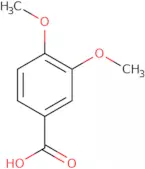
CAS:Veratric acid is a natural compound that is found in plants such as Vitis vinifera and Vaccinium myrtillus. It has been shown to have antimicrobial activity against Gram-positive bacteria, including Staphylococcus aureus and Streptococcus pneumoniae. Veratric acid binds to toll-like receptor 4 (TLR4), which activates the transcription factor nuclear factor kappa B (NF-κB) and increases expression of bacterial genes. It also inhibits pro-inflammatory cytokines by preventing the acetylation of histones at position H3, which are involved in transcriptional regulation. Veratric acid has synergistic effects when combined with p-hydroxybenzoic acid or ester hydrochloride. These compounds inhibit cell wall synthesis by inhibiting the enzyme peptidoglycan synthetase, leading to cell death. Veratric acid has also been shown to increase glomerular filtration rate and improve coordinationFormula:C9H10O4Purity:Min. 95%Color and Shape:White/Off-White SolidMolecular weight:182.17 g/molBradykinin triacetate trihydrate
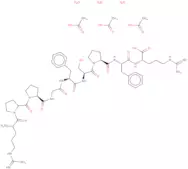
CAS:Bradykinin is a naturally occurring peptide hormone that has been found to have a wide variety of uses. It can be used as a fine chemical, useful scaffold, versatile building block, and useful intermediate in the synthesis of complex compounds. Bradykinin can also act as a reaction component for the synthesis of speciality chemicals, such as pharmaceuticals and research chemicals. Bradykinin is used in the manufacture of medicines for high blood pressure and pain relief, among other things. It is also used in research studies to study the effects of drugs on cell cultures and animals.Formula:C50H73N15O11•(C2H4O2)3•(H2O)3Purity:Min. 95%Color and Shape:PowderMolecular weight:1,294.41 g/molChromotropic acid disodium salt dihydrate - ACS reagent
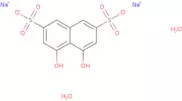
CAS:Chromotropic acid is a reactive compound that has been shown to be adsorbed on the surface of activated carbon. The adsorption mechanism and the kinetic constants for this reaction have been studied in detail. Chromotropic acid decomposes at high temperatures, releasing hydrogen chloride gas and water vapor. This chemical is also used in pharmaceutical preparations as an additive to inhibit oxidation reactions. It may also serve as a photoreceptor, reacting with tyramine hydrochloride and other compounds to produce a color change.Formula:C10H6O8S2Na2·2H2OColor and Shape:PowderMolecular weight:400.29 g/molN-Ethyl-3,3'-diphenyldipropylamine citrate
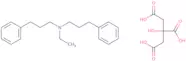
CAS:N-Ethyl-3,3'-diphenyldipropylamine citrate is a nonsteroidal anti-inflammatory drug (NSAID) that inhibits the activity of cyclooxygenase and lipoxygenase. It reduces pain, fever, and inflammation. The drug has been shown to be effective in the treatment of inflammatory bowel disease and colitis. N-Ethyl-3,3'-diphenyldipropylamine citrate is used for the relief of chronic and acute pain associated with osteoarthritis, rheumatoid arthritis, ankylosing spondylitis, or other forms of joint inflammation; as well as for temporary relief from the symptoms of minor aches or pains due to headache, toothache, muscular aches, backache, or menstrual cramps. N-Ethyl-3,3'-diphenyldipropylamine citrate also has been found to be effective in reducing symptoms associated with leukemiaFormula:C26H35NO7Purity:Min. 95%Color and Shape:White Off-White PowderMolecular weight:473.56 g/molSulfaclozine sodium monohydrate
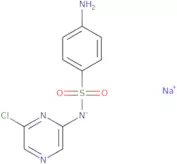
CAS:Sulfaclozine sodium monohydrate is an extractant that is used in sample preparation. It has a molecular weight of 273.5 daltons and can be used to separate and purify proteins, which are often found in the extracellular matrix. Sulfaclozine sodium monohydrate binds to the protein matrix, which prevents other substances from binding to it and causing interference with the results of the experiment. This extractant is commonly used in research involving coccidiosis, collagen, lectins, and animal cells. Sulfaclozine sodium monohydrate also has been shown to be effective against human serum proteins when it is used as an extractant for sample preparation.Formula:C10H8ClN4O2SNa·H2OPurity:Min. 95%Color and Shape:PowderMolecular weight:324.72 g/molFolic acid dihydrate
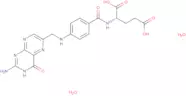
CAS:Folic acid dihydrate is a water-soluble vitamin that is involved in the production of nucleic acids and amino acids. It is a component of many compounds, such as DNA and RNA, and is essential for cell growth. Folic acid dihydrate can be synthesized by bacteria, which use it as an energy source. The radionuclide form of folic acid has been used to study the thermal expansion of food composition and to determine the nutrient content of foods. In addition, folic acid dihydrate has been used in tissue culture experiments to measure receptor binding or growth factor activity. Folic acid dihydrate has also been investigated for its ability to inhibit the growth of infectious diseases, including Streptococcus faecalis, Helicobacter pylori and HIV-1.Formula:C19H19N7O6Purity:97 To 102%Molecular weight:441.4 g/molFerrous gluconate dihydrate
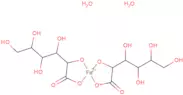
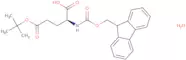
CAS:Ferrous gluconate dihydrate is a fine chemical that has many applications in research and development. It is a versatile building block that can be used as a starting material for the synthesis of complex compounds, such as drugs, pesticides, and perfumes. Ferrous gluconate dihydrate can also be used as a reaction component to produce speciality chemicals, such as benzyl alcohols. In addition to its usefulness in research, ferrous gluconate dihydrate is an important reagent for the production of high-quality pharmaceuticals.Formula:C12H22FeO14·2H2OPurity:Min. 95%Color and Shape:PowderMolecular weight:482.17 g/molFmoc-L-glutamic acid-O-tert-butyl ester hydrate
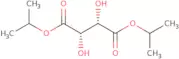
CAS:Fmoc-L-glutamic acid-O-tert-butyl ester hydrate is a useful scaffold that is used in the synthesis of complex compounds. It can be used as a reaction component for the preparation of speciality chemicals and as an intermediate for the production of fine chemicals. Fmoc-L-glutamic acid-O-tert-butyl ester hydrate has a CAS number of 204251-24-1.Formula:C24H27NO6•H2OPurity:Min. 95%Color and Shape:White PowderMolecular weight:443.49 g/molDiisopropyl D-tartrate
CAS:Diisopropyl tartrate is a chemical compound that has been used in the synthesis of antibiotics. It is bifunctional, meaning that it can act as both a nucleophile and a base. The chloride forms a nucleophilic addition with the allyl group, forming an intermediate that is an excellent leaving group for the final product. Diisopropyl tartrate is used to synthesize monomers for polymers, such as chloroprene and styrene, which are used in the manufacture of plastics and rubber. This chemical is also used in catalytic asymmetric reactions, where it acts as a catalyst by stabilizing one enantiomer over another to promote stereoselective reactions.Formula:C10H18O6Purity:Min. 95%Color and Shape:Colorless Clear LiquidMolecular weight:234.25 g/molNesfatin-1 (human) trifluoroacetate salt
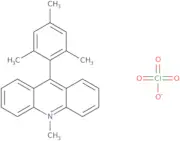
CAS:Please enquire for more information about Nesfatin-1 (human) trifluoroacetate salt including the price, delivery time and more detailed product information at the technical inquiry form on this pageFormula:C427H691N113O134Purity:Min. 95%Molecular weight:9,551.74 g/mol9-Mesityl-10-methylacridinium perchlorate
CAS:9-Mesityl-10-methylacridinium perchlorate is a cross-coupling reagent that can be used to form amines from alkenes via bond cleavage. The mechanism of this reaction involves irradiation, which generates radical species, and the use of molecular probes to rationalize the rate of the reaction. 9-Mesityl-10-methylacridinium perchlorate is a highly reactive compound with a short half life, which makes it an ideal candidate for generating radicals in order to study mechanistic studies on acridinium.Formula:C23H22ClNO4Purity:Min. 95%Color and Shape:PowderMolecular weight:411.88 g/mol3,5-Pyrazoledicarboxylic acid monhydrate
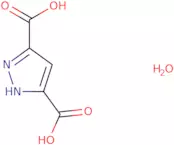
CAS:3,5-Pyrazoledicarboxylic acid monhydrate (PDA) is a hydrogen-bonding molecule that can be used for the production of various compounds. PDA can be synthesized in a stepwise process from 3,5-dihydroxypyridine and pyrazole. In this process, the first step involves the formation of an amide bond between 3,5-dihydroxypyridine and pyrazole to form 3,5-pyrazolidinecarboxamide. The second step is the dehydrogenation of 3,5-pyrazolidinecarboxamide to form PDA with loss of one water molecule. This compound shows photocatalytic activity due to its coordination chemistry properties.Formula:C5H4N2O4·H2OPurity:Min. 95%Color and Shape:White PowderMolecular weight:174.11 g/molOrphenadrine citrate salt
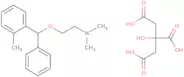
CAS:Controlled ProductOrphenadrine citrate salt is a nonsteroidal anti-inflammatory drug that is used to treat pain and inflammation. It is also used in the treatment of cancer, as well as in the prevention of side effects associated with chemotherapy. Orphenadrine citrate salt is primarily used to relieve muscle spasms and to reduce pain, especially in cases of cancer. This medication has been shown to be effective for treating cervical cancer, psychiatric patients, and geriatric patients. Orphenadrine citrate salt has also been found to have antibiotic properties against bacteria such as capsicum annuum and other drugs that are metabolized by the liver.
Formula:C24H31NO8Purity:Min. 95%Color and Shape:White To Off-White SolidMolecular weight:461.5 g/mol4-Aminosalicylic acid sodium salt dihydrate
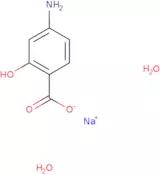
CAS:4-Aminosalicylic acid sodium salt dihydrate is a molecule that has been shown to be useful for the diagnosis of viral, autoimmune, and cancerous diseases. It is a diagnostic agent that can be used in both the diagnosis and treatment of bowel disease. 4-Aminosalicylic acid sodium salt dihydrate can also be used to treat cavity formation in teeth. It binds to fatty acids in the target tissue, which leads to cell death by apoptosis. This drug has been shown to be effective against inflammatory bowel disease (IBD) as well as other types of bowel disease. This drug has been shown to have no adverse effects on healthy cells or tissues, but it may cause kidney toxicity when taken orally or injected intravenously.
Formula:C7H6NNaO3·2H2OPurity:Min. 95%Color and Shape:White PowderMolecular weight:211.15 g/mol6-Thiouric acid sodium salt dihydrate
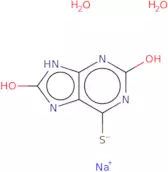
CAS:6-Thiouric acid sodium salt dihydrate is a reaction component and fine chemical that is used as a reagent in the synthesis of various speciality chemicals. It has been used as a building block for the synthesis of complex compounds, and is also an intermediate for the production of high quality research chemicals. 6-Thiouric acid sodium salt dihydrate is soluble in water, methanol, ethanol, acetone and benzene. The CAS number for this product is 1329805-85-7.Formula:C5H7N4NaO4SPurity:Min. 95%Color and Shape:PowderMolecular weight:242.19 g/mol3,5-Diaminobenzoic acid dihydrochloride
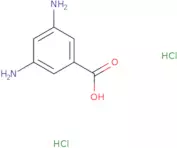
CAS:3,5-Diaminobenzoic acid dihydrochloride (DABA) is a potent inhibitor of peroxidase and has been shown to inhibit the activity of hydrogen peroxide. It has been used in medicine as an antiseptic and disinfectant. 3,5-Diaminobenzoic acid dihydrochloride also inhibits uncatalysed and catalysed reactions. The inhibition of these reactions is due to the reaction with hydrogen peroxide, which causes the formation of potent inhibitory species that are capable of reacting with other molecules. These reactions lead to a decrease in the rate of reaction. This product also exhibits potent inhibitory activity towards peroxidase and can be used for the treatment of infections caused by bacteria, such as Mycobacterium tuberculosis or Mycobacterium avium complex.Formula:C7H8N2O2·2HClMolecular weight:225.07 g/mol2-Hydroxybenzylamine hydrate
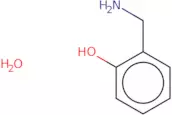
CAS:2-Hydroxybenzylamine hydrate is a fine chemical, useful building block, research chemical, and reagent. It is soluble in water and has a neutral pH. 2-Hydroxybenzylamine hydrate is an intermediate in the synthesis of amphetamines and phenethylamines. This product is also used as a reaction component for the synthesis of polymers, pharmaceuticals, natural products, and other organic compounds. 2-Hydroxybenzylamine hydrate has a high quality level and can be used as a versatile building block in complex reactions.Formula:C7H9NO·H2OPurity:Min. 95%Molecular weight:141.17 g/molEthyl 2-phenylbutyrate
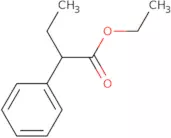
CAS:Ethyl 2-phenylbutyrate is a synthetic, non-steroidal compound that has been shown to inhibit the activity of cyclooxygenase enzymes. It is used as an intermediate in organic synthesis and as a reagent in the cross-coupling reaction between arenes and magnesium. The compound is synthesized by reacting cyclopentyl bromide with an alkyl halide, followed by treatment with an alkanoic acid. The enantiomers of ethyl 2-phenylbutyrate can be separated by chromatography or by crystallization. This chemical is soluble in benzene and ether, but not in water.
Formula:C12H16O2Purity:Min. 95%Color and Shape:PowderMolecular weight:192.25 g/molCinnamyl butyrate
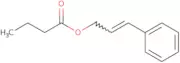
CAS:Cinnamyl butyrate is a chemical compound that belongs to the class of diphenyl ethers. It has been shown to reduce plasma glucose levels in mice by inhibiting fatty acid synthesis and stimulating glucose uptake into cells. Cinnamyl butyrate also acts as a cross-linking agent, which enhances the stability of polymers by forming covalent bonds between reactive groups. The surface methodology used for this study was a surface science technique called atomic force microscopy (AFM). This method can be used to measure the thickness of the film, or the diameter of the particles. The AFM images showed that cinnamyl butyrate formed a thin film that was uniform over large areas.
Formula:C13H16O2Purity:Min. 95%Color and Shape:Clear LiquidMolecular weight:204.26 g/mol