Antimicrobials
Antimicrobials are agents that destroy or inhibit the growth of microorganisms, including bacteria, viruses, fungi, and parasites. These compounds are essential in the prevention and treatment of infections, playing a crucial role in medicine, agriculture, and the food industry. At CymitQuimica, we offer an extensive range of high-quality, high-purity antimicrobials suitable for various scientific and industrial applications. Our catalog includes antibiotics, antifungals, antivirals, and disinfectants, all designed to meet the needs of research and development, as well as clinical and production applications. With our products, professionals can ensure the effectiveness and safety in infection control and public health protection.
Subcategories of "Antimicrobials"
- Antibiotics(4,112 products)
- Antifungals(837 products)
- Antiparasitics(704 products)
- Antivirals(763 products)
Found 2422 products of "Antimicrobials"
Sort by
Purity (%)
0
100
|
0
|
50
|
90
|
95
|
100
Nifedipine
CAS:<p>Nifedipine is a pharmaceutical compound belonging to the class of dihydropyridine calcium channel blockers, which is synthetically derived. Its mode of action involves the inhibition of calcium ions entering vascular smooth muscle and cardiac muscle cells, leading to vasodilation. By blocking these channels, it reduces peripheral vascular resistance, thereby decreasing blood pressure and easing cardiac workload.</p>Formula:C17H18N2O6Purity:Min. 98 Area-%Molecular weight:346.33 g/molVebufloxacin
CAS:<p>Vebufloxacin is an antibacterial agent, which is synthesized as a member of the fluoroquinolone class of antibiotics. This compound is derived from chemical synthesis, specifically designed to target and inhibit bacterial DNA gyrase and topoisomerase IV. These enzymes play crucial roles in DNA replication and transcription, making them ideal targets for disrupting bacterial cell function.</p>Formula:C19H22FN3O3Purity:Min. 95%Molecular weight:359.4 g/molShowdomycin
CAS:<p>Showdomycin is an antibiotic, which is derived from the bacterium *Streptomyces showdoensis*. The mode of action of Showdomycin involves its role as a nucleoside analog that disrupts nucleic acid synthesis by incorporating itself into the nucleic acid chains during replication and transcription, thereby impairing cellular functions.</p>Formula:C9H11NO6Purity:Min. 95%Molecular weight:229.19 g/molOxacillin sodium
CAS:<p>Oxacillin sodium is a beta-lactam antibiotic with action on bacterial cell wall synthesis and is used for treating infections caused by penicillin-resistant Staphylococcus aureus.</p>Formula:C19H18N3NaO5SPurity:Min. 95%Color and Shape:PowderMolecular weight:423.42 g/molVoxilaprevir
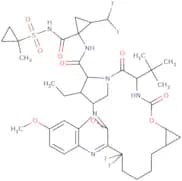
CAS:<p>Voxilaprevir is an antiviral compound, which is a product of chemical synthesis with a unique mode of action targeting the Hepatitis C virus (HCV). It acts as a potent inhibitor of the HCV NS3/4A protease, a crucial enzyme required for the viral replication process. By inhibiting this protease, Voxilaprevir disrupts the viral life cycle, preventing replication and aiding in the clearance of the virus from the host.</p>Formula:C40H52F4N6O9SPurity:Min. 95%Molecular weight:868.94 g/molAqabamycin F
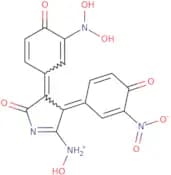
CAS:<p>Aqabamycin F is a type of antibiotic compound, which is derived from marine natural sources, specifically from bacteria found in oceanic environments. This product is characterized by its unique molecular structure that offers potent antimicrobial properties. The mode of action of Aqabamycin F involves inhibiting essential bacterial enzymes, thus disrupting the cellular processes necessary for bacteria to survive and proliferate. This mechanism makes it effective against a wide range of bacterial pathogens, contributing to its potential in treating infections that are resistant to conventional antibiotics. Research into Aqabamycin F continues to explore its full spectrum of activity, offering insights into new therapeutic pathways for antibiotic-resistant bacterial infections. Its unique origin and molecular activity position Aqabamycin F as a promising candidate for addressing the growing challenge of antibiotic resistance.</p>Formula:C16H11N4O8Purity:Min. 95%Molecular weight:387.28 g/molBRITE-338733
CAS:<p>BRITE-338733 is an advanced biotechnological product, which is derived from microbial fermentation with high specificity enzymatic action. This product is engineered to efficiently catalyze specific biochemical reactions, thereby facilitating various lab-scale processes.</p>Formula:C27H35N3O2Purity:Min. 95%Molecular weight:433.6 g/molFlutimide
CAS:<p>Flutimide is a nonsteroidal antiandrogen, which is synthesized chemically. It functions by competitively inhibiting the binding of androgens, such as testosterone, to androgen receptors. This interferes with the action of androgens at the cellular level, leading to a reduction in the growth effects mediated by these hormones.</p>Formula:C12H18N2O3Purity:Min. 95%Molecular weight:238.28 g/molGrazoprevir hydrate
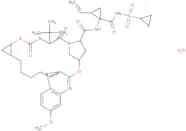
CAS:<p>Grazoprevir hydrate is a direct-acting antiviral agent used in the treatment of hepatitis C virus (HCV) infections. It is a synthetic compound derived through targeted pharmaceutical synthesis aimed at inhibiting viral replication. This compound operates by selectively inhibiting the NS3/4A protease, an enzyme critically involved in the post-translational processing and replication of the HCV polyprotein. By blocking this protease, grazoprevir effectively disrupts the virus's life cycle, thereby reducing viral load in patients.</p>Formula:C38H52N6O10SPurity:Min. 95%Molecular weight:784.9 g/molHexazinone metabolite C
CAS:<p>Hexazinone Metabolite C is a chemical compound that serves as a marker for the metabolic degradation of hexazinone, a systemic herbicide. This metabolite is derived from the biological and chemical transformation processes that hexazinone undergoes when applied to plants and soil environments.</p>Formula:C11H18N4O3Purity:Min. 95%Molecular weight:254.29 g/molBromuconazole
CAS:<p>Bromuconazole is a systemic fungicide, which is a synthetic chemical compound primarily used to protect crops from fungal diseases. It is derived from the triazole class of fungicides, which are known for their ability to inhibit important biochemical processes within fungal cells. The mode of action of Bromuconazole involves the inhibition of the enzyme C14-demethylase, a key component in the biosynthesis of ergosterol. Ergosterol is an essential component of fungal cell membranes, and its disruption leads to impaired cellular function and ultimately the death of the fungal organism.</p>Formula:C13H12BrCl2N3OPurity:Min. 95%Molecular weight:377.1 g/mol3-Chloro-4-(3-chloro-2-nitrophenyl)pyrrole
CAS:<p>3-Chloro-4-(3-chloro-2-nitrophenyl)pyrrole is a synthetic chemical compound, classified as an organochlorine derivative. This compound originates from the modification of pyrrole structures, which are heterocyclic aromatic compounds. The synthesis involves chlorination and nitration processes to enhance its potential activity and specificity.</p>Formula:C10H6Cl2N2O2Purity:Min. 95%Molecular weight:257.07 g/mol14-Chloro daunorubicin
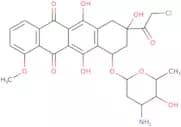
CAS:<p>14-Chloro daunorubicin is a chemotherapeutic agent, which is a synthetic derivative of the naturally occurring anthracycline antibiotic, daunorubicin. This compound is specifically modified to include a chlorine atom at the 14th position, which enhances its pharmacological effectiveness compared to its parent compound. The drug acts primarily by intercalating into DNA, disrupting the function of topoisomerase II, and generating free radicals. These mechanisms collectively inhibit DNA replication and transcription, leading to cell apoptosis, particularly in rapidly dividing cancer cells.</p>Formula:C27H28ClNO10Purity:Min. 95%Molecular weight:561.96 g/molNafcillin sodium
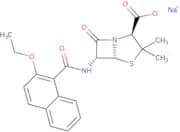
CAS:<p>Nafcillin sodium is a beta-lactam antibiotic, which is a semisynthetic derivative of the organic compound penicillin. It is specifically engineered to be resistant to the inactivation by penicillinase enzymes produced by certain bacteria. This feature allows it to remain effective against a range of penicillinase-producing staphylococcal infections.</p>Formula:C21H21N2NaO5SPurity:Min. 95%Color and Shape:PowderMolecular weight:436.46 g/molBeclabuvir
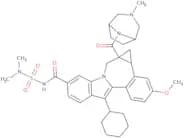
CAS:<p>Beclabuvir is an investigational antiviral agent, which is synthetically derived with the purpose of targeting the hepatitis C virus (HCV). It functions as a non-nucleoside inhibitor, specifically inhibiting the HCV NS5B RNA-dependent RNA polymerase, a crucial enzyme necessary for viral replication. By obstructing the polymerase activity, Beclabuvir effectively impedes the replication cycle of the virus, thereby reducing viral load in infected individuals.</p>Formula:C36H45N5O5SPurity:Min. 95%Molecular weight:659.84 g/molHexazinone metabolite B
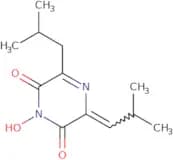
CAS:<p>Hexazinone metabolite B is a chemical byproduct of the breakdown of Hexazinone, which is an herbicide. This metabolite emerges from an extensive metabolic pathway in plants, fungi, and soil microorganisms as they degrade the parent compound. Its mode of action involves interacting with plant processes, potentially affecting growth and development, as it may influence photosynthetic pathways or other vital physiological functions.</p>Formula:C11H18N4O2Purity:Min. 95%Molecular weight:238.29 g/molHexazinone metabolite E
CAS:<p>Hexazinone metabolite E is a degradation product of the herbicide Hexazinone, which is derived from synthetic chemical processes. This metabolite emerges as a result of the biochemical breakdown of Hexazinone in soil and water environments. The mode of action involves the contamination and persistence in various environmental matrices, making it a key compound of interest for understanding the environmental impact of herbicide application. Hexazinone initially acts by inhibiting photosynthesis in plants, and its metabolites, including metabolite E, provide insights into the degradation pathways and long-term behavior of the herbicide in ecosystems.</p>Formula:C10H15N3O4Purity:Min. 95%Molecular weight:241.24 g/molDemethylbleomycin A2 sulfate
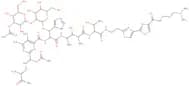
CAS:<p>Demethylbleomycin A2 sulfate is an antineoplastic agent, which is derived from the bacterium Streptomyces verticillus. This compound functions by binding to DNA, inducing strand breaks and inhibiting DNA synthesis, ultimately leading to apoptosis or programmed cell death. Its mechanism of action involves the generation of free radicals, which cause oxidative damage to the DNA strands, impairing cellular replication and tumor growth.</p>Formula:C55H84N17O21S3Purity:Min. 95%Molecular weight:1,415.6 g/molMesosulfuron
CAS:<p>Mesosulfuron is a selective herbicide, which is a synthetic chemical compound with a specific mode of action designed to inhibit acetolactate synthase (ALS). This enzyme inhibition disrupts the biosynthesis of essential amino acids such as valine, leucine, and isoleucine, leading to the cessation of cell division and consequent plant growth arrest. The herbicide is primarily utilized in agricultural settings, particularly for post-emergence control of various grass weeds within cereal crops, including wheat and barley. Its application is crucial for managing weed competition that can significantly impact crop yield and quality. Mesosulfuron is absorbed through the foliage and roots of targeted species, providing systemic action that ensures effective control. Its usage is governed by stringent regulations to minimize environmental impact and to manage herbicide resistance through integrated weed management strategies.</p>Formula:C16H19N5O9S2Purity:Min. 95%Molecular weight:489.5 g/molOxaquin
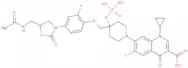
CAS:<p>Oxaquin is a synthetic antibiotic, which is a derivative of the fluoroquinolone class, developed through chemical synthesis. It disrupts bacterial DNA replication by inhibiting the DNA gyrase and topoisomerase IV enzymes, which are crucial for DNA synthesis and repair. This mode of action prevents bacterial cells from dividing and leading to cell death.</p>Formula:C31H33F2N4O11PPurity:Min. 95%Molecular weight:706.6 g/mol