Antimicrobials
Antimicrobials are agents that destroy or inhibit the growth of microorganisms, including bacteria, viruses, fungi, and parasites. These compounds are essential in the prevention and treatment of infections, playing a crucial role in medicine, agriculture, and the food industry. At CymitQuimica, we offer an extensive range of high-quality, high-purity antimicrobials suitable for various scientific and industrial applications. Our catalog includes antibiotics, antifungals, antivirals, and disinfectants, all designed to meet the needs of research and development, as well as clinical and production applications. With our products, professionals can ensure the effectiveness and safety in infection control and public health protection.
Subcategories of "Antimicrobials"
- Antibiotics(4,132 products)
- Antifungals(897 products)
- Antiparasitics(702 products)
- Antivirals(764 products)
Found 2423 products of "Antimicrobials"
Sort by
Purity (%)
0
100
|
0
|
50
|
90
|
95
|
100
Potassium clavulanate
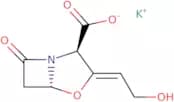
CAS:<p>Potassium clavulanate is a beta-lactamase inhibitor and an antibacterial agent. The presence of potassium clavulanate in culture media inhibits the activity of beta-lactamases, which are enzymes that confer resistance to penicillin and other beta-lactam antibiotics. It also has been shown to be active against bacterial infections such as tuberculosis, sepsis, and pneumonia, where it can inhibit the growth of bacteria by interfering with their ability to form cell walls. Potassium clavulanate is also used as an antimicrobial agent for blood culture technique and antimicrobial treatment.</p>Formula:C8H8NO5·KPurity:Min. 95%Color and Shape:White PowderMolecular weight:237.25 g/molMolnupiravir - Bio-X ™
CAS:Controlled Product<p>EIDD 2801 is an orally bioavailable prodrug of β-D-N4-hydroxycytidine and was shown to inhibit SARS-CoV-2 replication in human airway epithelial cells. EIDD 2801 was also tested in mice infected with SARS-CoV and MERS-CoV viruses. EIDD 2801 targets the RNA-dependent RNA polymerase (RdRp) and reduces virus titer and improved pulmonary function in experimental animals when used in prophylactic and therapeutic regime.</p>Formula:C13H19N3O7Purity:Min. 95%Color and Shape:Clear LiquidMolecular weight:329.31 g/molSTAADIUM™ GalactoZide II
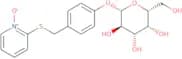
CAS:<p>STAADIUMTM GalactoZide II is a targeted inhibitor for β-galactosidase producing bacteria. The antibacterial activity of STAADIUMTM GalactoZide II is triggered by the enzyme β-galactosidase which is produced by E.coli (EHEC), thermophilic lactic acid bacteria, and other coliform bacteria. STAADIUMTM GalactoZide II can help to selectively inhibit the growth of E. coli in complex bacterial cultures and canbe used in microbiome studies, food control, environmental safety, hygiene, and clinical diagnostics. STAADIUMTM GalactoZide II is not compatible with some experimental conditions, e.g. pH indicators such as neutral red, indigo stains, and possibly H2S staining. STAADIUMTM GalactoZide II can be added as an enzyme-specific selective supplement to agar plates and as an enrichment agent to broth culture.</p>Formula:C18H21NO7SPurity:Min. 95 Area-%Color and Shape:PowderMolecular weight:395.43 g/molTicarcillin disodium salt - 80%
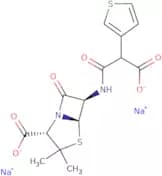
CAS:<p>Ticarcillin disodium salt is a beta-lactam antibiotic that has in vitro activity against Gram-positive and Gram-negative bacteria. Ticarcillin is active against penicillinase-producing strains of Staphylococcus aureus, Enterobacter aerogenes, Proteus mirabilis, Escherichia coli, Pseudomonas aeruginosa, Klebsiella pneumoniae, Serratia marcescens, Streptococcus pyogenes, Streptococcus faecalis, and Streptococcus pneumoniae. Furthermore, it inhibits transpeptidase activity of the cell wall of bacteria which prevents peptidoglycan synthesis. It is bactericidal for many bacteria at low concentrations.</p>Formula:C15H14N2Na2O6S2Purity:Min. 90 Area-%Color and Shape:PowderMolecular weight:428.4 g/molRitonavir - Bio-X ™
CAS:<p>Ritonavir is a HIV protease inhibitor. It has an anti-retroviral activity as it inhibits the protease enzymes specific of both HIV-1 and HIV-2 and has been shown to be effective in controlling virus replication in humans and animals. Ritonavir works by preventing the HIV viral protease enzyme from cleaving the structural and replicative proteins produced by HIV genes such as gag and pol.</p>Formula:C37H48N6O5S2Purity:Min. 98 Area-%Color and Shape:White PowderMolecular weight:720.95 g/molNigericin sodium - from Streptomyces hygroscopicus
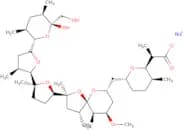
CAS:<p>Membrane pore-forming agent; H+, K+, Pb2+ ionophore; polyether antibiotic</p>Formula:C40H67O11NaPurity:Min. 95%Color and Shape:White PowderMolecular weight:746.94 g/molRef: 3D-FN46958
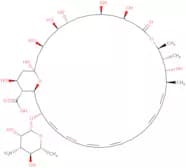
Discontinued productAmphotericin A
CAS:<p>Amphotericin A is a polyene macrolide antibiotic, which is derived primarily from the soil bacterium *Streptomyces nodosus*. This compound functions by binding to ergosterol, an essential component of fungal cell membranes. This binding creates pores in the membrane, increasing its permeability and ultimately leading to cell death. Unlike its more widely used counterpart Amphotericin B, Amphotericin A is less frequently utilized but is critical in the study and understanding of antifungal activity.</p>Formula:C47H75NO17Purity:Min. 95%Molecular weight:926.09 g/molRef: 3H-HE4005
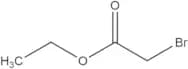
Discontinued productEthyl Bromoacetate
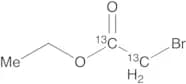
CAS:Formula:C4H7BrO2Color and Shape:Clear Colourless to Yellow OilMolecular weight:167.0Ethyl Bromoacetate-1,2-13C2
CAS:Formula:C2C2H7BrO2Color and Shape:Clear Colourless OilMolecular weight:168.99Papyracillic acid
CAS:<p>Papyracillic acid is a bioactive compound, classified as a secondary metabolite, which is isolated from certain species of fungi. This compound originates from the natural metabolic processes of these microorganisms, often cultured on specific media to optimize production levels. Its mode of action involves disrupting essential bacterial cellular functions, primarily by inhibiting the synthesis of key structural components, leading to compromised integrity and function of bacterial cells.</p>Formula:C11H14O5Purity:Min. 95%Molecular weight:226.23 g/molRef: 3D-EHA30849
Discontinued productAbacavir sulfate
CAS:<p>Abacavir sulfate is a pharmaceutical compound classified as a nucleoside reverse transcriptase inhibitor (NRTI), which is derived from synthetic sources. Its mode of action involves the inhibition of the reverse transcriptase enzyme, essential for the replication of HIV. By incorporating itself into the viral DNA chain during replication, Abacavir effectively halts the process, preventing further multiplication of the virus within the host cells.<br><br>This antiretroviral medication is primarily used in the management and treatment of human immunodeficiency virus (HIV-1) infections. Abacavir sulfate is a critical component in highly active antiretroviral therapy (HAART), contributing to the reduction of viral load, enhancing immune function, and improving the long-term clinical outcomes in patients living with HIV. Its application in combination therapies has been instrumental in transforming HIV from a fatal disease into a manageable chronic condition.</p>Formula:C14H18N6O·H2O4SPurity:Min. 95%Molecular weight:384.41 g/molRef: 3D-RIA69907
Discontinued productGanciclovir, Antibiotic for Culture Media Use Only
CAS:<p>Ganciclovir is an antiviral agent specifically designed for culture media use. It is a synthetic analogue of 2'-deoxy-guanosine, derived from nucleoside compounds, and operates primarily by inhibiting the replication of viral DNA. Its mode of action involves selective phosphorylation by viral kinases, which converts it into ganciclovir triphosphate, a potent inhibitor of viral DNA polymerase, ultimately preventing viral DNA synthesis.</p>Formula:C9H13N5O4Purity:Min. 98.0 Area-%Molecular weight:255.23 g/molRef: 3D-Q-201148
Discontinued productSymetine
CAS:<p>Symetine is a synthetic peptide-based compound, which is a highly selective agonist of the adenosine A2A receptor. This receptor is coupled to G-proteins mainly associated with activating adenylate cyclase, leading to an increase in cyclic adenosine monophosphate (cAMP) levels within the cell. Symetine binds with high affinity to these receptors, inducing a conformational change that facilitates the downstream signaling pathways associated with this receptor family.</p>Formula:C30H48N2O2Purity:Min. 95%Molecular weight:468.7 g/molRef: 3D-QAA59945
Discontinued product1-Ethyl-6-fluoro-7-(piperazin-1-yl)quinolin-4(1H)-one
CAS:<p>1-Ethyl-6-fluoro-7-(piperazin-1-yl)quinolin-4(1H)-one is a fluoroquinolone antibiotic, which is a synthetic derivative sourced from the quinolone family. This compound functions by targeting bacterial DNA gyrase and topoisomerase IV, which are crucial enzymes involved in the replication and transcription of bacterial DNA. By inhibiting these enzymes, the antibiotic effectively disrupts DNA replication in susceptible bacterial strains, leading to cell death.</p>Formula:C15H18FN3OPurity:Min. 95%Molecular weight:275.32 g/molRef: 3D-ADA00182
Discontinued productCephalexin hydrate, Antibiotic for Culture Media Use Only
CAS:<p>Please enquire for more information about Cephalexin hydrate, Antibiotic for Culture Media Use Only including the price, delivery time and more detailed product information at the technical inquiry form on this page</p>Formula:C16H19N3O5SPurity:Min. 95.0 Area-%Molecular weight:365.41 g/molRef: 3D-Q-200819
Discontinued productChevalone E
CAS:<p>Chevalone E is a specialized nematicide, which is derived from natural plant sources. Its mode of action is based on disrupting the normal physiological processes of nematodes, thereby inhibiting their ability to infect and damage host plants. Chevalone E is particularly valued for its ability to target a broad range of nematode species, making it an effective tool in integrated pest management strategies.</p>Formula:C26H38O4Purity:Min. 95%Molecular weight:414.6 g/molRef: 3D-QCC45194
Discontinued product3'-N,N-Di(desmethyl)-3'-N-formyl azithromycin
CAS:<p>3'-N,N-Di(desmethyl)-3'-N-formyl azithromycin is a semisynthetic macrolide antibiotic derivative, which is synthesized through chemical modification of azithromycin. Azithromycin is originally derived from erythromycin, which is produced by the bacterium Saccharopolyspora erythraea. The modifications in this derivative result in enhanced specificity and altered pharmacokinetic properties compared to the parent compound.</p>Formula:C37H68N2O13Purity:Min. 95%Color and Shape:White/Off-White SolidMolecular weight:748.94 g/molRef: 3D-AD21416
Discontinued productAliconazole
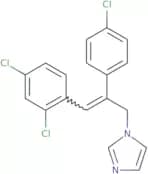
CAS:<p>Aliconazole is a triazole-based antifungal agent, which is a synthetic derivative developed through chemical synthesis. It functions by inhibiting the enzyme lanosterol 14α-demethylase, crucial in the biosynthesis of ergosterol, a vital component of fungal cell membranes. By disrupting ergosterol production, aliconazole compromises the structural integrity of the cell membrane, leading to increased permeability and eventual cell death.</p>Formula:C18H13Cl3N2Purity:Min. 95%Molecular weight:363.7 g/molRef: 3D-NCA82412
Discontinued productPerfluorodecanephosphonic acid
CAS:<p>Perfluorodecanephosphonic acid is a fluorinated organic compound, which is synthesized through the controlled polymerization of fluorinated precursors. It is characterized by its unique perfluorinated alkyl chain and a phosphonic acid group, providing a distinctive combination of hydrophobic and functional properties. Its mode of action involves the strong adsorption onto surfaces through the phosphonic acid moiety, allowing the formation of highly stable self-assembled monolayers (SAMs).</p>Formula:C10H2F21O3PPurity:Min. 95%Molecular weight:600.06 g/molRef: 3D-CCA29926
Discontinued productValidamycin D
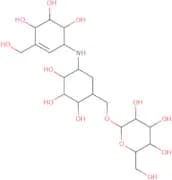
CAS:<p>Validamycin D is an antifungal antibiotic produced by the fermentation of certain Streptomyces species. This compound acts by inhibiting the synthesis of trehalose, a crucial component in the cell structure and stress response of fungi. By disrupting trehalose production, Validamycin D effectively impairs the growth and viability of fungal cells, making it a potent agent in the management of fungal pathogens.</p>Formula:C20H35NO13Purity:Min. 95%Molecular weight:497.5 g/molRef: 3D-MAA65067
Discontinued productTachyplesin I trifluoroacetate
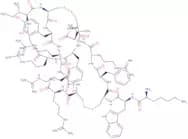
CAS:<p>Tachyplesin I trifluoroacetate is an antimicrobial peptide with action on bacterial and fungal membranes by disrupting their integrity and is used for research on antimicrobial properties and potential therapeutic applications.</p>Formula:C99H151N35O19S4•(C2HF3O2)xPurity:Min. 95%Color and Shape:PowderMolecular weight:2,263.75 g/mol1-(6-Amino-3,5-difluoro-2-pyridinyl)-7-[3-[3-[[1-(6-amino-3,5-difluoro-2-pyridinyl)-3-carboxy-8-chloro-6-fluoro-1,4-dihydro-4-oxo-7- quinolinyl]amino]-2-hydroxypropoxy]-1-azetidinyl]-8-chloro-6-fluoro-1,4-dihydro-4-oxo-3-quinolinecarboxylic acid
CAS:<p>1-(6-Amino-3,5-difluoro-2-pyridinyl)-7-[3-[3-[[1-(6-amino-3,5-difluoro-2-pyridinyl)-3-carboxy-8-chloro-6-fluoro-1,4-dihydro-4-oxo-7-quinolinyl]amino]-2-hydroxypropoxy]-1-azetidinyl]-8-chloro-6-fluoro-1,4-dihydro-4-oxo-3-quinolinecarboxylic acid is a fluoroquinolone antibiotic, engineered through synthetic chemistry. It is derived from chemical sources involving complex organic synthesis, highlighting its intricate molecular architecture. Its mode of action is distinctive, as it inhibits bacterial DNA gyrase and topoisomerase IV, enzymes crucial for DNA replication and transcription. This interference with bacterial DNA processes results in bactericidal effects, effectively eliminating susceptible bacterial strains.</p>Formula:C36H24Cl2F6N8O8Purity:Min. 95%Molecular weight:881.52 g/molRef: 3D-AA184076
Discontinued product