Antimicrobials
Antimicrobials are agents that destroy or inhibit the growth of microorganisms, including bacteria, viruses, fungi, and parasites. These compounds are essential in the prevention and treatment of infections, playing a crucial role in medicine, agriculture, and the food industry. At CymitQuimica, we offer an extensive range of high-quality, high-purity antimicrobials suitable for various scientific and industrial applications. Our catalog includes antibiotics, antifungals, antivirals, and disinfectants, all designed to meet the needs of research and development, as well as clinical and production applications. With our products, professionals can ensure the effectiveness and safety in infection control and public health protection.
Subcategories of "Antimicrobials"
- Antibiotics(4,115 products)
- Antifungals(841 products)
- Antiparasitics(704 products)
- Antivirals(763 products)
Found 2422 products of "Antimicrobials"
Sort by
Purity (%)
0
100
|
0
|
50
|
90
|
95
|
100
Vanoxonin
CAS:<p>Please enquire for more information about Vanoxonin including the price, delivery time and more detailed product information at the technical inquiry form on this page</p>Formula:C18H25N3O9Purity:Min. 95%Molecular weight:427.40 g/molMaribavir
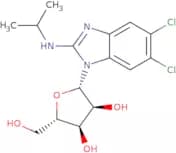
CAS:<p>Potent antiviral against HCMV and Epstein-Barr virus (EBV)</p>Formula:C15H19Cl2N3O4Purity:Min. 95%Molecular weight:376.24 g/molBromophos-methyl-oxon
CAS:<p>Bromophos-methyl-oxon is an organophosphate insecticide and acaricide, which is a synthetic chemical derived from organophosphate compounds. It functions by inhibiting the activity of the enzyme acetylcholinesterase in target organisms. This inhibition leads to the accumulation of acetylcholine at nerve synapses, disrupting normal nerve function and ultimately resulting in the paralysis and death of pests.</p>Formula:C8H8BrCl2O4PPurity:Min. 95%Molecular weight:349.93 g/molAsukamycin
CAS:<p>Asukamycin is an antibiotic, which is a secondary metabolite derived from the bacterium *Streptomyces nodosus*. Its mode of action involves the inhibition of cell wall synthesis in susceptible bacteria by interfering with peptidoglycan polymerization, which is essential for maintaining bacterial cell integrity. Additionally, asukamycin exhibits the ability to interfere with the biosynthesis of important cellular components in certain pathogens, contributing to its antimicrobial efficacy.</p>Formula:C31H34N2O7Purity:Min. 95%Molecular weight:546.6 g/molChaetoglobosin A - From chaetomium globosum
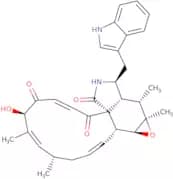
CAS:<p>Chaetoglobosin A is a mycotoxin, which is a secondary metabolite produced by the fungus Chaetomium globosum. This compound exhibits its mode of action by disrupting the cytoskeletal elements within cells, primarily affecting actin polymerization. This interference leads to alterations in cell morphology and can induce apoptosis in certain cell lines.</p>Formula:C32H36N2O5Purity:Min. 95%Molecular weight:528.64 g/molPantoprazole-d3
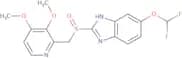
CAS:<p>Pantoprazole-d3 is a stable isotope-labeled version of the proton pump inhibitor pantoprazole, which is derived synthetically for scientific research and analytical applications. Isotope labeling involves substituting hydrogen atoms with deuterium, resulting in Pantoprazole-d3 containing three deuterium atoms. This modification preserves the pharmacological profile of the parent compound while enabling precise tracking in biological studies through advanced spectroscopic techniques.</p>Formula:C16H15F2N3O4SPurity:Min. 95%Molecular weight:386.4 g/molPhthivazid
CAS:<p>Phthivazid is an antibiotic, which is a synthetic derivative of isonicotinic acid hydrazide. It functions by inhibiting the synthesis of mycolic acids in the mycobacterium cell wall, which are essential components for the survival of the bacteria. This disruption in the cell wall synthesis results in bactericidal activity against Mycobacterium tuberculosis.</p>Formula:C14H13N3O3Purity:90% MinColor and Shape:PowderMolecular weight:271.27 g/molTrans-tetradecenyl acetate
CAS:<p>Trans-tetradecenyl acetate is a synthetic pheromone, which is an analog of a naturally occurring insect sex pheromone. It is derived from synthetic organic chemistry processes that aim to replicate the molecular structure of pheromones produced by insects. The mode of action involves mimicking the natural pheromone signals used by female insects to attract males. By dispersing trans-tetradecenyl acetate into the environment, it disrupts the mating communication between the sexes, leading to a reduction in successful mating events and, consequently, a decrease in pest population over time.</p>Formula:C16H30O2Purity:Min. 95%Molecular weight:254.41 g/molDuocarmycin sa
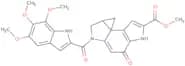
CAS:<p>Duocarmycin SA is an antitumor antibiotic, which is derived from the natural products of Streptomyces bacteria. This compound exhibits its mode of action through the alkylation of DNA, specifically binding within the minor groove. The alkylation process preferentially targets adenine-thymine-rich regions, leading to irreversible DNA damage and subsequent inhibition of DNA replication. Such interaction results in the induction of apoptosis in rapidly dividing cells.</p>Formula:C25H23N3O7Purity:Min. 95%Molecular weight:477.5 g/molPSI-7409
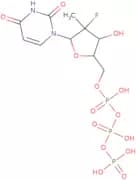
CAS:<p>PSI-7409 is a novel antimicrobial compound, which is synthetically derived with a unique mechanism of action. This compound is engineered through a complex synthesis process ensuring high purity and efficacy. PSI-7409 exerts its effects by disrupting bacterial cell wall synthesis, leading to cell lysis and death. Its precise mode of interaction on the molecular level involves inhibition of key enzymatic pathways essential for peptidoglycan assembly, thereby compromising the structural integrity of bacterial cells.</p>Formula:C10H16FN2O14P3Purity:Min. 95%Molecular weight:500.16 g/molBromobutide-desbromo
CAS:<p>Bromobutide-desbromo is a chemical compound that functions as a selective herbicide. It is derived from synthetic sources and is specifically formulated to interfere with photosynthesis in target plants. The mode of action of bromobutide-desbromo involves inhibiting photosystem II, a crucial component of the photosynthetic electron transport chain in plants. This inhibition disrupts the energy conversion process, leading to a decrease in ATP and NADPH production, which are essential for plant growth.</p>Formula:C15H23NOPurity:Min. 95%Molecular weight:233.35 g/mol2,4,5,6-Tetrachlorophenol-13C6
CAS:<p>2,4,5,6-Tetrachlorophenol-13C6 is an isotopically labeled chemical compound, primarily used as a reference standard in analytical chemistry. This compound, derived from its non-labeled counterpart 2,4,5,6-tetrachlorophenol, is synthesized through the incorporation of carbon-13 isotopes. Its primary mode of action involves acting as a stable, traceable marker, facilitating accurate quantification and analysis of environmental samples, particularly in mass spectrometry.</p>Formula:C6H2Cl4OPurity:Min. 95%Molecular weight:237.8 g/molRadicinol
CAS:<p>Radicinol is a natural compound, which is a dihydroflavonol primarily sourced from plant origins. This compound is biosynthesized in specific plant species and extracted through meticulous biochemical processes to ensure its purity and efficacy. The mode of action of Radicinol involves the modulation of specific cellular pathways, conferring antioxidative and anti-inflammatory properties. It acts by scavenging free radicals and enhancing cellular resilience against oxidative stress.</p>Formula:C12H14O5Purity:Min. 95%Molecular weight:238.24 g/molEgcg octaacetate
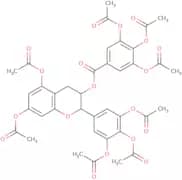
CAS:<p>Please enquire for more information about Egcg octaacetate including the price, delivery time and more detailed product information at the technical inquiry form on this page</p>Formula:C38H34O19Purity:Min. 95%Molecular weight:794.7 g/molTolnifanide
CAS:<p>Tolnifanide is a fungicidal product, which is a synthetic compound derived from chemical synthesis. It operates by interfering with the normal cellular function of fungi, inhibiting their growth and reproduction. This mode of action involves disrupting key processes within the fungal cells, rendering them unable to thrive in their host environment.</p>Formula:C15H15ClN2O4SPurity:Min. 95%Molecular weight:354.8 g/molLascufloxacin
CAS:<p>Lascufloxacin is a synthetic fluoroquinolone antibiotic, which is derived from chemical synthesis. Its mode of action involves inhibiting bacterial DNA gyrase and topoisomerase IV, enzymes crucial for DNA replication, transcription, repair, and recombination. By targeting these enzymes, lascufloxacin effectively hampers bacterial cell division and growth, leading to cell death. This mechanism specifically affects Gram-positive and Gram-negative bacterial strains, making it a versatile agent in antibacterial therapy.</p>Formula:C21H24F3N3O4Purity:Min. 95%Molecular weight:439.4 g/molFluxapyroxad-N-desmethyl
CAS:<p>Fluxapyroxad-N-desmethyl is a fungicidal metabolite, which is derived from the parent compound fluxapyroxad, a pyridine carboxamide fungicide. The source of this compound is through the biological or chemical transformation of fluxapyroxad, which involves demethylation. Its mode of action involves the inhibition of succinate dehydrogenase, an essential enzyme in the fungal pathogen's mitochondrial electron transport chain. This inhibition results in disruption of energy production within the fungal cells, ultimately leading to their death.</p>Formula:C17H10F5N3OPurity:Min. 95%Molecular weight:367.27 g/molN-Biotinyl-12-aminododecanoyltobramycin amide
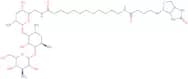
CAS:<p>N-Biotinyl-12-aminododecanoyltobramycin amide is a synthetic bioconjugate, which is derived from the aminoglycoside antibiotic tobramycin. This compound is chemically modified by the addition of a biotin moiety linked through a 12-aminododecanoyl spacer. The source of this product is rooted in the conjugation of biotin to tobramycin, allowing for targeted delivery and potential hybrid applications in both therapeutic and diagnostic fields.</p>Formula:C40H74N8O12SPurity:Min. 95%Molecular weight:891.13 g/molOfloxacin methyl ester
CAS:<p>Ofloxacin methyl ester is a chemical compound, which is a derivative utilized in scientific research, particularly in the synthesis of ofloxacin-related compounds. It is a synthetic ester, derived from chemical synthesis involving ofloxacin, a fluoroquinolone antibiotic. The mode of action of ofloxacin methyl ester is based on its role as an intermediate compound. It facilitates the creation of active forms or analogs that can be tested for their pharmacological properties. Although not directly used as a therapeutic agent, it plays a crucial role in the development and modification of molecules for antibacterial applications.</p>Formula:C19H22FN3O4Purity:Min. 95%Molecular weight:375.4 g/molAbacavir-d4
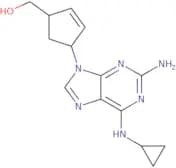
CAS:Controlled Product<p>Abacavir-d4 is a deuterium-labeled analogue of the antiretroviral medication Abacavir. It serves as a critical tool for pharmaceutical research and development. This isotopically labeled compound is synthesized by incorporating four deuterium atoms into the molecular structure of Abacavir, preserving the pharmacokinetic and pharmacodynamic properties of the original molecule while allowing for precise analytical quantification.</p>Formula:C14H14D4N6OPurity:Min. 95%Molecular weight:290.36 g/mol