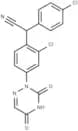
Antiparasitics
Found 696 products of "Antiparasitics"
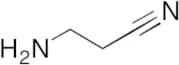
3-Aminopropionitrile (Stabilized with K2CO3)
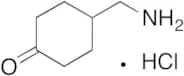
CAS:Controlled ProductFormula:C3H6N2Color and Shape:NeatMolecular weight:70.094-(Aminomethyl)-cyclohexanone Hydrochloride
CAS:Controlled ProductApplications 4-(Aminomethyl)-cyclohexanone Hydrochloride is used to prepare dispiro-1,2,4-trioxolanes with antimalarial activities. It is also used to synthesize aminopyrimidines as SYK inhibitors useful in the treatment of SYK-mediated diseases.
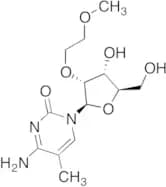
References Tang, Y., et al.: Bioorg. Med. Chem. Lett., 17, 1260 (2007); Altman, M., et al.: PCT Int. Appl. (2011), WO 2011075515 A1 20110623Formula:C7H13NO·HClColor and Shape:NeatMolecular weight:163.642'-O-(2-Methoxyethyl)-5-methylcytidine (~90%)
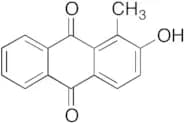
CAS:Controlled ProductFormula:C13H21N3O6Purity:~90%Color and Shape:NeatMolecular weight:315.322-Hydroxy-1-methyl-9,10-anthracenedione
CAS:Controlled ProductFormula:C15H10O3Color and Shape:NeatMolecular weight:238.243-[(Dimethylamino)methyl]-2-hexanone
CAS:Controlled ProductFormula:C9H19NOColor and Shape:ColourlessMolecular weight:157.254''-Amino-5-O-[(2-propenyloxy)carbonyl] O’-TMS Abamectin
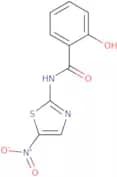
Formula:C55H85NO15SiPurity:~90%Color and Shape:NeatMolecular weight:1028.35Tizoxanide - 98%
CAS:Anti-parasitic; pyruvate ferredoxin oxidoreductase inhibitorFormula:C10H7N3O4SPurity:Min. 95%Molecular weight:265.01573Oxfendazole
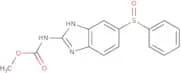
CAS:Oxfendazole is a benzimidazole anthelmintic with action on microtubule formation in parasitic worms and is used for treating gastrointestinal parasites in livestock.Formula:C15H13N3O3SPurity:Min. 98 Area-%Color and Shape:White PowderMolecular weight:315.35 g/molPF 1022A
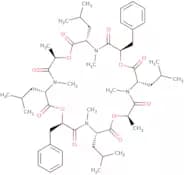
CAS:PF 1022A is a cyclooctadepsipeptide, which is a type of cyclic peptide composed of amino acids and hydroxy acids. It is derived from the fermentation products of the fungus *Mycelia sterilia*, a member of the *Rosellinia* genus. Its mode of action involves disrupting glutamate-gated chloride channels in parasitic nematodes, which leads to paralysis and eventual death of the parasite.
Formula:C52H76N4O12Purity:Min. 95%Molecular weight:949.18 g/molIvermectin
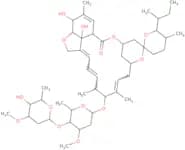
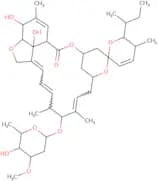
CAS:Naturally produced by the soil bacterium Streptomyces avermitili, it is clinically used in the treatment of parasitosis in both humans and animals. Ivermectin is commercially available as a mixture of 80% 22, 23-dihydroavermectin B1a and 20% 22, 23-dihydroavermectin B1b. In 2020, Ivermectin indicated that it was a good antiviral agent in the treatment of SARS-CoV-2 and a new mechanism of action has been suggested. Ivermectin would act on importin α/β heterodimer and affect nuclear transport and the translocation of viral proteins.Formula:C48H74O14Purity:85%MinMolecular weight:875.1 g/molHalofuginone
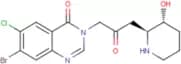
CAS:Halofuginone (RU-19110) inhibits prolyl-tRNA synthetase (Ki=18.3 nM), down-regulates Smad3, and blocks TGF-β at 10 ng/ml.Formula:C16H17BrClN3O3Purity:99.53%Color and Shape:Off-White SolidMolecular weight:414.68Ref: TM-T6856
1mg34.00€5mg82.00€10mg116.00€25mg227.00€50mg344.00€100mg517.00€500mg1,134.00€1mL*10mM (DMSO)92.00€4′-O-De(2,6-dideoxy-3-O-methyl-α-L-arabino-hexopyranosyl)-5-O-demethylavermectin A1a
CAS:4′-O-De(2,6-dideoxy-3-O-methyl-α-L-arabino-hexopyranosyl)-5-O-demethylavermectin A1a is a semi-synthetic derivative of avermectin, which is a naturally occurring compound isolated from the fermentation broth of the soil bacterium *Streptomyces avermitilis*. This compound exhibits potent antiparasitic activity by targeting the glutamate-gated chloride channels in the nervous systems of parasitic organisms. By binding and activating these channels, it increases the permeability of the cell membrane to chloride ions, resulting in paralysis and death of the parasite.Formula:C41H60O11Purity:Min. 95%Molecular weight:728.91 g/molAmoscanate
CAS:Amoscanate is an antischistosomal agent, which is a synthetic compound with a broad spectrum of activity against parasitic infections. Its mode of action involves the disruption of parasite metabolism and structure, ultimately leading to the elimination of schistosomes. Schistosomes are trematode worms responsible for schistosomiasis, a significant parasitic disease affecting millions of people worldwide.Formula:C13H9N3O2SPurity:Min. 95%Molecular weight:271.3 g/molAntileishmanial agent-14
CAS:Antileishmanial agent-14, a sulfuretin analog, exhibits potential activity against Leishmania donovani promastigotes (IC 50 = 4.1 μM) and inhibits infection byFormula:C23H26ClNO5Purity:98%Color and Shape:SolidMolecular weight:431.91ICA
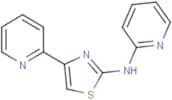
CAS:ICA (N-[4-(2-Pyridinyl)-2-thiazolyl]-2-pyridinamine) is a SK channel inhibitor and exhibits antileishmanial activity (IC50: 2.1 µM).Formula:C13H10N4SPurity:99.68%Color and Shape:SolidMolecular weight:254.31Ref: TM-T15546
1mg64.00€5mg116.00€10mg170.00€25mg271.00€50mg375.00€100mg525.00€200mg705.00€1mL*10mM (DMSO)163.00€Epsiprantel
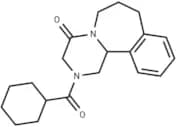
CAS:Epsiprantel is an orally active antiparasitic drug that inhibits various tapeworms, including Echinococcus granulosus (granular echinococcus), in dogs.Formula:C20H26N2O2Purity:98.09%Color and Shape:SolidMolecular weight:326.43SQ109
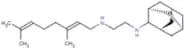
CAS:SQ109 (NSC-722041) is an effective inhibitor of the trypomastigote form of the parasite (IC50 = 50 nM). SQ109 is an antitubercular agent and targets MmpL3.Formula:C22H38N2Purity:99.70% - 99.91%Color and Shape:SolidMolecular weight:330.55Ref: TM-T16925
1mg66.00€5mg140.00€10mg216.00€25mg462.00€50mg677.00€100mg938.00€500mg1,882.00€1mL*10mM (DMSO)157.00€CRK12-IN-2
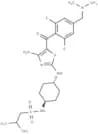
CAS:CRK12-IN-2, a potent CRK12 inhibitor, has EC50 of 3.2 nM for T. congolense and 0.08 nM for T. vivax; treats trypanosomiasis in animals.
Formula:C23H33F2N5O3S2Purity:99.26% - 99.70%Color and Shape:SolidMolecular weight:529.67Antitrypanosomal agent 2
CAS:Antitrypanosomal agent 2 shows potent and specific antiparasite activities against Trypanosoma brucei.Formula:C17H13N5O3Purity:99.2%Color and Shape:SolidMolecular weight:335.32(Z)-Tyrphostin A51
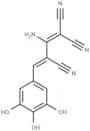
CAS:(Z)-Tyrphostin A51 is an isomer of Tyrphostin A51 exhibiting inhibitory activity against P. falciparum (IC₅₀≈10 μM).Formula:C13H8N4O3Color and Shape:Brown SolidMolecular weight:268.23Symetine
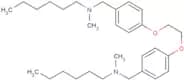
CAS:Symetine(L 16726) is a small molecule compound with antiparasitic activity that can be used to study amoebic liver abscesses in guinea pigs.Formula:C30H48N2O2Purity:99.79%Color and Shape:SolidMolecular weight:468.71Piperaquine
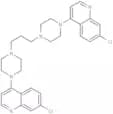
CAS:Piperaquine is a bisquinoline antimalarial compound and a companion compound to artemisinin.Formula:C29H32Cl2N6Purity:98%Color and Shape:SolidMolecular weight:535.51Antimalarial agent 29
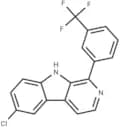
CAS:Compound 29 (also known as Compound 16) is an antimalarial agent that demonstrates inhibition of the P.Formula:C18H10ClF3N2Purity:98%Color and Shape:SolidMolecular weight:346.73Halofuginone hydrobromide
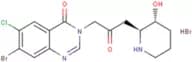
CAS:Halofuginone specifically inhibits collagen type I and MMP-2 gene expression, which may result in the suppression of angiogenesis and tumor cell growth.Formula:C16H17BrClN3O3·HBrPurity:97.01% - 99.73%Color and Shape:SolidMolecular weight:495.59Ref: TM-T3524
1mg34.00€2mg49.00€5mg74.00€10mg106.00€25mg207.00€50mg310.00€100mg469.00€500mg897.00€1mL*10mM (DMSO)84.00€(Rac)-ACT-451840
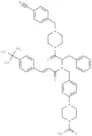
CAS:(Rac)-ACT-451840 is an isomer of ACT-451840 exhibiting antimalarial activity against Plasmodium falciparum NF54.Formula:C47H54N6O3Purity:99.25%Color and Shape:SolidMolecular weight:750.97Ref: TM-T23625
1mg91.00€2mg133.00€5mg216.00€10mg346.00€25mg687.00€50mg1,046.00€100mg1,607.00€200mg2,164.00€1mL*10mM (DMSO)239.00€BPH-715
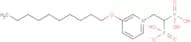
CAS:BPH-715 inhibits the liver-stage growth of P. falciparum with an IC50 of 10 μM for P. falciparum exoerythrocytic forms in HepG2 cells.Formula:C17H31NO7P2Purity:98.91%Color and Shape:SolidMolecular weight:423.38Antimalarial agent 24
CAS:Compound 24 (Compound 7), an in vitro antimalarial agent, demonstrates inhibitory activity against the Plasmodium falciparum W2 strain with an IC50 of 0.81 μMFormula:C20H16N4O2Purity:98%Color and Shape:SolidMolecular weight:344.37Antimalarial agent 26
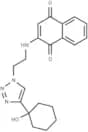
CAS:Antimalarial agent 26, a derivative of 1,4-naphthoquinones, demonstrates antimalarial properties through oral administration.Formula:C20H22N4O3Purity:98%Color and Shape:SolidMolecular weight:366.41Quinfamide
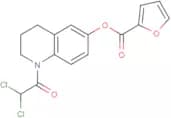
CAS:Quinfamide is a compound with the potential to treat tropical parasitic infections such as Amoebiasis and Helminthiasis.Formula:C16H13Cl2NO4Purity:99.92%Color and Shape:SolidMolecular weight:354.18Ref: TM-T16705
1mg52.00€5mg100.00€10mg147.00€25mg241.00€50mg349.00€100mg479.00€200mg657.00€1mL*10mM (DMSO)105.00€MMV006833
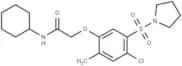
CAS:MMV006833 is an inhibitor of Plasmodium falciparum. It targets the lipid transfer protein PfSTART1, inhibiting the ring-stage development of Plasmodium falciparum.
Formula:C19H27ClN2O4SColor and Shape:SolidMolecular weight:414.95Phosphodiesterase-IN-1
CAS:Phosphodiesterase-IN-1 (Compound 7), a phosphodiesterase (PDE) inhibitor, exhibits anti-Plasmodium and antiproliferative activities. It effectively inhibits P. falciparum (strain 3D7) with an IC 50 value of 0.64 μM [1].Formula:C15H15FN4OColor and Shape:SolidMolecular weight:286.3Chalcone 4 hydrate
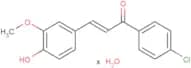
CAS:Chalcone 4 hydrate, an anti-parasite compound, inhibits the growth of Theileria and Babesia.Formula:C16H15ClO4Purity:99.54%Color and Shape:SolidMolecular weight:306.74Antileishmanial agent-15
CAS:Antileishmanial agent-15 (compound 13c) exhibits potent activity against L.Formula:C28H39N5O4Purity:98%Color and Shape:SolidMolecular weight:509.64Antiparasitic agent-18
CAS:Antiparasitic agent-18 (compound 3a) exhibits potent and selective antiprotozoal activity, demonstrating effective inhibition of T.Formula:C25H21N7OPurity:98%Color and Shape:SolidMolecular weight:435.48Antimalarial agent 19
CAS:Compound 6e, an antimalarial, targets P. falciparum K1 (EC50 0.3 µM) and P. berghei (EC50 15.3 µM); has high solubility and stability.Formula:C22H33Cl2N5SPurity:98%Color and Shape:SolidMolecular weight:470.5Insecticidal agent 2
CAS:Insecticidal agent 2 (example 2) is an effective pesticide that significantly inhibits pest growth [1].Formula:C16H8ClF7N2O2Purity:98%Color and Shape:SolidMolecular weight:428.69Bithionol sulfoxide
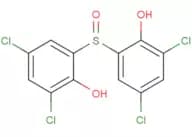
CAS:Bithionol sulfoxide (Bithionoloxide) is a compound with inhibitory effects against parasites, inhibiting Fasciola hepatica and Schistosoma mansoni.Formula:C12H6Cl4O3SPurity:98.76%Color and Shape:Off White To Tinch Pink Crystalline PowderMolecular weight:372.05Artelinic acid
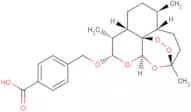
CAS:Artelinic acid is an artemisinin analog with antimalarial activity and is used for the treatment of multi-drug resistant strains of Plasmodium falciparum.Formula:C23H30O7Purity:97.49% - 97.69%Color and Shape:SolidMolecular weight:418.48Ref: TM-T10378
1mg63.00€5mg138.00€10mg215.00€25mg403.00€50mg627.00€100mg892.00€1mL*10mM (DMSO)172.00€UCT943
CAS:UCT943 is an inhibitor of Plasmodium falciparum PI4K (IC50 = 23 nM).Formula:C22H20F3N5OPurity:99.87%Color and Shape:SolidMolecular weight:427.42Ref: TM-T13246
1mg99.00€2mg149.00€5mg245.00€10mg355.00€25mg572.00€50mg772.00€100mg1,035.00€500mg2,080.00€1mL*10mM (DMSO)264.00€AP-C5
CAS:AP-C5 inhibits cGKII with a Pic50 of 7.2, useful in diarrheal disease research.Formula:C16H13N5Purity:99.82%Color and Shape:SolidMolecular weight:275.31Brotianide
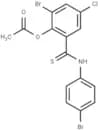
CAS:Brotianide (BAY-VA4059) has anthelmintic activity and is highly potent against liver fluke and gastric fluke infestations and can be used to treat acute,Formula:C15H10Br2ClNO2SPurity:97.44% - 98.14%Color and Shape:SolidMolecular weight:463.57Allopurinol riboside
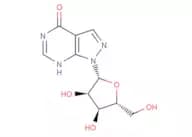
CAS:Allopurinol riboside, an allopurinol metabolite, inhibits purine nucleoside phosphorylase in parasites with a Ki of 277 μM.Formula:C10H12N4O5Purity:99.46% - 99.73%Color and Shape:SolidMolecular weight:268.23Antimalarial agent 30
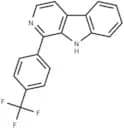
CAS:Antimalarial agent 30 has anti-Plasmodium berghei liver stage parasite activity and antimalarial activity for the study of malarial infections.Formula:C18H11F3N2Purity:99.83% - 99.90%Color and Shape:SolidMolecular weight:312.29Rufigallol
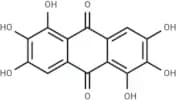
CAS:Rufigallol, an anthraquinone with six OH groups, induces DLC and fluoresces when aggregated, showing antimalarial effects with vitamin C and ketones.
Formula:C14H8O8Purity:98.92% - 99.27%Color and Shape:SolidMolecular weight:304.21JCP174
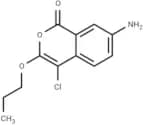
CAS:JCP174 is a depalmitoylase inhibitor that enhances Toxoplasma host-cell invasion by targeting TgPPT1.
Formula:C12H12ClNO3Purity:97.05%Color and Shape:SolidMolecular weight:253.68Myrrhterpenoid O
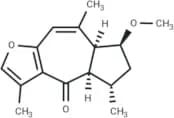
CAS:Unfortunately, you did not provide the description of the chemical compound that needs to be rewritten.Formula:C16H20O3Purity:98%Color and Shape:SolidMolecular weight:260.33Antileishmanial agent-16
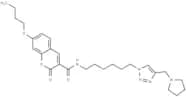
CAS:Antileishmanial agent-16 (compound 14c), an anti-Leishmania agent, exhibits potent activity against Leishmania major promastigotes (IC50 = 0.59 µM) andFormula:C27H37N5O4Purity:98%Color and Shape:SolidMolecular weight:495.61Antileishmanial agent-17
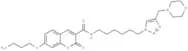
CAS:Antileishmanial agent-17, a coumarin hybrid, exhibits potent antileishmanial activity (IC50 <0.78 μM) while proving non-toxic to normal VERO cells.Formula:C27H37N5O5Purity:98%Color and Shape:SolidMolecular weight:511.61ELQ-596
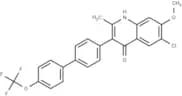
CAS:ELQ-596, a quinolone derivative, exhibits antimicrobial activity against several protozoan parasites, including the intraerythrocytic parasites Plasmodium and Babesia. ELQ-596 attenuates babesiosis in immunosuppressed mice [1].Formula:C24H17ClF3NO3Color and Shape:SolidMolecular weight:459.84Clazuril
CAS:Clazuril, Anticoccidial drug, inhibits asexual and sexual stages of Eimeria labbeana/E. columbarum, disrupts life cycle.Formula:C17H10Cl2N4O2Color and Shape:SolidMolecular weight:373.19

![3-[(Dimethylamino)methyl]-2-hexanone](/_next/image/?url=https%3A%2Fstatic.cymitquimica.com%2Fproducts%2FTR%2Fthumb-webp%2FD462285.webp&w=3840&q=75)
![4''-Amino-5-O-[(2-propenyloxy)carbonyl] O’-TMS Abamectin](/_next/image/?url=https%3A%2Fstatic.cymitquimica.com%2Fproducts%2FTR%2Fthumb-webp%2FA610180.webp&w=3840&q=75)