


Fatty Acids
Fatty acids are carboxylic acids with long hydrocarbon chains, which can be either saturated or unsaturated. They are essential components of lipids, serving as key building blocks for complex lipids, energy sources, and signaling molecules. Fatty acids are involved in various biological processes, including metabolism, cell membrane structure, and inflammation. At CymitQuimica, we offer a diverse range of high-quality fatty acids to support your research in lipid biochemistry, nutrition, and related fields.
Subcategories of "Fatty Acids"
- Acylglycerols/Glycerides(42 products)
- Eicosanoids(6 products)
- Fatty Acid Esters(850 products)
- Halogenated Fatty Acids(32 products)
Found 2455 products of "Fatty Acids"
Sort by
Purity (%)
0
100
|
0
|
50
|
90
|
95
|
100
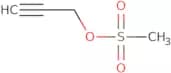
Propargyl methanesulfonate ester
CAS:<p>Propargyl methanesulfonate ester is an organic compound that is used as a cross-coupling reagent in the synthesis of chiral mesylates. It is prepared by treatment of propargyl alcohol with methanesulfonyl chloride and sodium hydroxide in an organic solvent. The product is purified by removal of the solvent, followed by crystallization or distillation. The mesylate group reacts with an amine to give a secondary amine, which can be converted to a carbamate or mediated reaction product. This process can also generate genotoxic impurities, such as dioxane and 1,4-dioxane, which are removed by transfer to an inert solvent.</p>Formula:C4H6O3SPurity:Min. 95%Color and Shape:Clear LiquidMolecular weight:134.15 g/mol3-Oxodecanoic acid ethyl ester
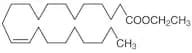
CAS:<p>3-Oxodecanoic acid ethyl ester is a selenium compound that can be catalytic. It has been shown to produce lactones by the cyclization of an anthranilic acid. Selenium compounds are often used as research catalysts in organic synthesis, specifically for the elimination and cyclization reactions. 3-Oxodecanoic acid ethyl ester is also a natural product that can be found in various plants and animals. It has been found to have an active role in many natural products, such as benzyne and heterocycles.</p>Formula:C12H22O3Purity:Min. 95%Color and Shape:PowderMolecular weight:214.3 g/molEthyl Erucate
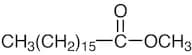
CAS:Formula:C24H46O2Purity:>95.0%(GC)Color and Shape:Colorless to Light yellow to Light orange clear liquidMolecular weight:366.63Methyl Heptadecanoate
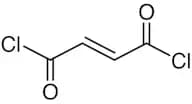
CAS:Formula:C18H36O2Purity:>98.0%(GC)Color and Shape:White or Colorless to Light yellow powder to lump to clear liquidMolecular weight:284.48Fumaryl Chloride
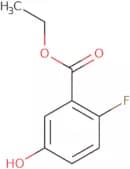
CAS:Formula:C4H2Cl2O2Purity:>95.0%(GC)(T)Color and Shape:Colorless to Light orange to Yellow clear liquidMolecular weight:152.962-Fluoro-5-hydroxybenzoic acid ethyl ester
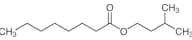
CAS:<p>2-Fluoro-5-hydroxybenzoic acid ethyl ester is a fine chemical that is used as a versatile building block, complex compound, and reagent. It has been used in the synthesis of novel drugs, such as oseltamivir. 2-Fluoro-5-hydroxybenzoic acid ethyl ester has been shown to have useful properties in research, such as being an intermediate for the synthesis of other compounds. This chemical can also be used as a scaffold for the synthesis of other compounds.</p>Formula:C9H9FO3Purity:Min. 95%Molecular weight:184.16 g/molIsoamyl n-Octanoate (contains 2-Methylbutyl n-Octanoate)
CAS:Formula:C13H26O2Purity:min. 97.0 %(total of isomer)(GC)Color and Shape:Colorless to Light yellow clear liquidMolecular weight:214.35Sodium Palmitate
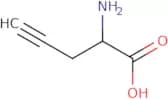
CAS:<p>Sodium palmitate is a saturated fatty acid that has been shown to induce phase transition temperature in the range of 37-40°C. The Toll-like receptor 4 (TLR4) is a pattern recognition receptor that has been found to be important in the pathogenesis of infectious diseases. Sodium palmitate enhances TLR4-mediated responses, and as such can be used for the treatment of infectious diseases. Sodium palmitate also has significant cytotoxicity and potent inducers of polymer compositions. It is also an effective agonist for toll-like receptor 4, which may be due to its ability to stimulate RhoA activity, leading to increased production of reactive oxygen species.</p>Formula:C16H31NaO2Purity:Min. 95%Color and Shape:White PowderMolecular weight:278.41 g/molDL-Propargylglycine
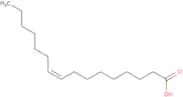
CAS:<p>DL-Propargylglycine is a molecule that has been used as a model system for studying the interaction of neurokinin-1 receptor with response elements. It has also been shown to have inhibitory properties on polymerase chain, which is important in the process of energy metabolism. This compound has been shown to increase cytosolic Ca2+ and inhibit nuclear DNA synthesis in certain cells. DL-Propargylglycine can be used to study the effects of growth factor-β1 on myocardial infarcts and bowel disease.</p>Formula:C5H7NO2Purity:Min. 95%Color and Shape:White Off-White PowderMolecular weight:113.11 g/molPalmitoleic acid - 98%
CAS:<p>Palmitoleic acid is a fatty acid with a molecular weight of 256. It is an unsaturated fatty acid that contains 16 carbon atoms and two double bonds. Palmitoleic acid has been shown to be effective in treating bowel disease, such as ulcerative colitis and Crohn's disease, by influencing the production of inflammatory cytokines. This active form inhibits the activity of toll-like receptor 4 (TLR4) and lipopolysaccharide (LPS)-induced signal peptide activation of nuclear factor kappa B (NF-κB), which leads to reduced inflammation. Palmitoleic acid has also been shown to have anti-inflammatory properties in vitro and in vivo, which may be due to its ability to inhibit IL-1β production by macrophages.</p>Formula:C16H30O2Purity:Min. 95%Color and Shape:Clear Colourless To Pale Yellow LiquidMolecular weight:254.41 g/molFmoc-D-propargylglycine
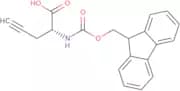
CAS:<p>D-propargylglycine is a chemical compound that belongs to the group of valency modifiers. It is a modulator that can be used in cancer research and as an anti-inflammatory agent. It has been shown to have protein–protein interaction by binding to casein kinase, which may lead to its use in cancer therapy. D-propargylglycine can also interact with other proteins and inflammatory agents, leading to potential applications in the treatment of inflammatory conditions such as arthritis.</p>Formula:C20H17NO4Purity:Min. 95%Color and Shape:PowderMolecular weight:335.35 g/mol2'-Hydroxy-5'-nitrohexadecanamide sodium
CAS:<p>2'-Hydroxy-5'-nitrohexadecanamide sodium is a reagent that can be used for a variety of laboratory reactions. It is a versatile building block, useful intermediate, and useful building block for complex compounds. This compound has also been shown to be useful in the synthesis of pharmaceuticals and other fine chemicals.</p>Formula:C22H36N2O4NaPurity:Min. 95%Molecular weight:415.52 g/molLubiprostone
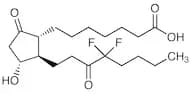
CAS:Formula:C20H32F2O5Purity:>97.0%(HPLC)Color and Shape:White to Light yellow powder to crystalMolecular weight:390.476-Bromohexanoic acid ethyl ester
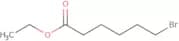
CAS:<p>6-Bromohexanoic acid ethyl ester is a fluorescent compound that has been used to assess the presence of azobenzene in urine samples. This product is also used as a marker for capsicum annuum, which is an edible plant. 6-Bromohexanoic acid ethyl ester has been shown to be effective in the diagnosis of cancer, especially carcinoma cells. Coumarin derivatives have been found to possess fluorescence properties similar to 6-bromohexanoic acid ethyl ester and are also used as markers for cancer cells. The use of polyclonal antibodies and hydrochloric acid for this product can lead to fluorescence properties that are specific for cancer cells.</p>Formula:C8H15BrO2Purity:Min. 95%Color and Shape:Colourless To Pale Yellow LiquidMolecular weight:223.11 g/mol4-[Bis(2-hydroxypropyl)amino]benzoic acid ethyl ester, 90%
CAS:<p>4-[Bis(2-hydroxypropyl)amino]benzoic acid ethyl ester is an absorber that is used in the production of cationic surfactants. It has been shown to have clinical properties and can be combined with antibiotics for the treatment of inflammatory diseases. 4-[Bis(2-hydroxypropyl)amino]benzoic acid ethyl ester is also used as a radiation absorber, which prevents the formation of free radicals by absorbing radiation. This drug also has an antioxidant effect and may protect skin cells from damage caused by UV light.</p>Formula:C15H23NO4Purity:Min. 95%Color and Shape:Yellow PowderMolecular weight:281.35 g/molSodium Decanoate
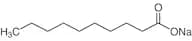
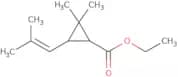
CAS:Formula:C10H19NaO2Purity:>99.0%(T)Color and Shape:White to Light yellow powder to crystalMolecular weight:194.25Chrysanthemum monocarboxylic acid ethyl ester
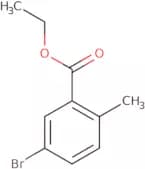
CAS:<p>Chrysanthemum monocarboxylic acid ethyl ester is a chemical compound that belongs to the group of chrysanthemic acid derivatives. It is synthesized by reacting the carboxylic acid with an alcohol in the presence of hydrochloric acid and sodium ethoxide. Chrysanthemum monocarboxylic acid ethyl ester has been shown to have genotoxic effects, as well as fatty acids that can induce lysine residues. This drug also has a pharmaceutical use for tissue culture, which may be due to its ability to inhibit l-tartaric acid, an alkanoic acid.</p>Formula:C12H20O2Purity:Min. 95%Molecular weight:196.29 g/mol5-Bromo-2-methylbenzoic acid ethyl ester
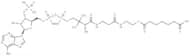
CAS:<p>5-Bromo-2-methylbenzoic acid ethyl ester is a fine chemical used as a versatile building block in organic synthesis. It is also used as a reagent for the conversion of alcohols to alkyl bromides, and for the preparation of 2-bromoacetophenones from 2-bromobenzenes. 5-Bromo-2-methylbenzoic acid ethyl ester can be used as a useful intermediate in the synthesis of other compounds or in reactions with other chemicals. This product has high quality and can be used as a useful scaffold for synthesizing new compounds.</p>Formula:C10H11BrO2Purity:Min. 95%Molecular weight:243.1 g/molPimeloyl-CoA
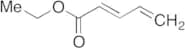
CAS:<p>Pimeloyl-CoA is a CoA derivative formed from pimelate, serving as a precursor in the biotin biosynthesis pathway of certain bacteria.</p>Formula:C28H46N7O19P3SPurity:100%Color and Shape:SolidMolecular weight:909.69(2E)-2,4-Pentadienoic Acid Ethyl Ester
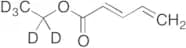
CAS:Controlled ProductFormula:C7H10O2Color and Shape:NeatMolecular weight:126.153(2E)-2,4-Pentadienoic Acid Ethyl Ester-d5
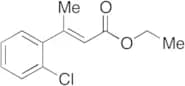
CAS:Controlled ProductFormula:C7H5D5O2Color and Shape:NeatMolecular weight:579.98(2E)-3-(2-Chlorophenyl)-2-butenoic Acid Ethyl Ester
CAS:Controlled ProductFormula:C12H13ClO2Color and Shape:NeatMolecular weight:224.683-Bromo-4-fluoro-benzoic Acid Ethyl Ester
CAS:Controlled ProductFormula:C9H8BrFO2Color and Shape:NeatMolecular weight:247.06n-Hexadecyl-1,1,2,2-d4 Hexadecanoate-16,16,16-d3
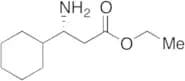
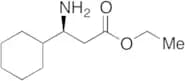
CAS:Controlled Product<p>Applications n-Hexadecyl-1,1,2,2-d4 Hexadecanoate-16,16,16-d3 (CAS# 1398066-15-3) is a useful isotopically labeled research compound.<br></p>Formula:C32H57D7O2Color and Shape:NeatMolecular weight:487.9(betaR)-β-Aminocyclohexanepropanoic Acid Ethyl Ester
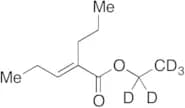
CAS:Controlled ProductFormula:C11H21NO2Color and Shape:NeatMolecular weight:199.29(E/Z)-2-Propyl-2-pentenoic Acid Ethyl Ester-d5
CAS:Controlled ProductFormula:C10H13D5O2Color and Shape:NeatMolecular weight:229.299N-[1-(2,3-Dioleyloxy)propyl]-N,N,N-trimethylammonium Chloride
CAS:Controlled Product<p>Applications Small unilamellar liposomes containing DOTMA interact spontaneously with DNA to form lipid-DNA complexes with 100% entrapment of DNA. Facilitates fusion of the complex with the plasma membrane of tissue culture cells, resulting in both uptake and expression of the DNA. Effective technique for transient and stable expression of transfected DNA.<br>References Zhu., N., et al.: Science, 261, 209 (1993), Wang, J., et al.: Pharmazie, 62, 723 (2007), Shur, J., et al.: J. Pharm. Sci., 97, 4857 (2008),<br></p>Formula:C42H84ClNO2Color and Shape:NeatMolecular weight:670.57rac-2-Linoleoyl-3-chloropropanediol, 95%
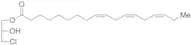
CAS:Controlled Product<p>Applications rac-2-Linoleoyl-3-chloropropanediol, 95% (cas# 1470071-08-9) is a compound useful in organic synthesis.<br></p>Formula:C21H37ClO3Purity:95%Color and Shape:NeatMolecular weight:372.97rac 1-Linolenoyl-3-chloropropanediol
CAS:Controlled Product<p>Applications New lipids in food protein hydrolyzates.<br>References Velisek, J., et al.: J. Agric. Chem., 28, 1142 (1980),<br></p>Formula:C21H35ClO3Color and Shape:NeatMolecular weight:370.95(11E)-11-Hexadecenal
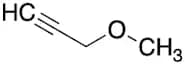
CAS:Controlled ProductFormula:C16H30OColor and Shape:NeatMolecular weight:238.409Methyl Propargyl Ether
CAS:Controlled Product<p>Applications Methyl Propargyl Ether (cas# 627-41-8) is a useful research chemical.<br></p>Formula:C4H6OColor and Shape:NeatMolecular weight:70.08Clorazepic Acid Ethyl Ester-d5
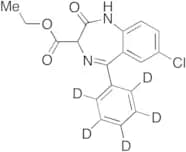
CAS:Controlled ProductFormula:C18D5H10ClN2O3Color and Shape:NeatMolecular weight:347.807(E)-4-Hydroxycrotonoic Acid Ethyl Ester (~85%)
CAS:Controlled Product<p>Stability No Date Available<br>Applications (E)-4-Hydroxycrotonoic Acid Ethyl Ester is an intermediate in the preparation of unusual amino acids that are potential Michael acceptor based antiplasmodial and antitrypanosomal cysteine protease inhibitors.<br>References Breuning, A., et al.: J. Med. Chem., 53, 1951 (2010);<br></p>Formula:C6H10O3Purity:~85%Color and Shape:NeatMolecular weight:130.142-(Dimethoxyphosphinyl)-2-[[(phenylmethoxy)carbonyl]amino]acetic Acid Ethyl Ester
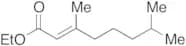
CAS:Controlled ProductFormula:C14H20NO7PColor and Shape:NeatMolecular weight:345.285(E)-3,7-Dimethyl-2-octenoic Acid Ethyl Ester
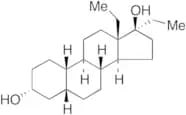
CAS:Controlled ProductFormula:C12H22O2Color and Shape:NeatMolecular weight:198.302(3α,5β,17α)-13-Ethyl-18,19-dinorpregnane-3,17-diol
CAS:Controlled Product<p>Applications (3α,5β,17α)-13-Ethyl-18,19-dinorpregnane-3,17-diol is an anabolic androgenic steroid.<br>References Fragkaki, A. et a.: J. Ster. Biochem. Mol. Biol., 115, 44 (2009);<br></p>Formula:C21H36O2Color and Shape:NeatMolecular weight:320.515-Methyl-2-hex-2-enoic Acid Ethyl Ester-d5
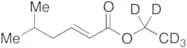
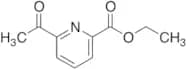
CAS:Controlled ProductFormula:C9H11D5O2Color and Shape:NeatMolecular weight:470.6846-Acetyl-picolinic Acid Ethyl Ester
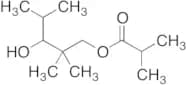
CAS:Controlled Product<p>Applications 6-ACETYL-PICOLINIC ACID ETHYL ESTER (cas# 114578-70-0) is a useful research chemical.<br></p>Formula:C10H11NO3Color and Shape:NeatMolecular weight:193.192-Methyl-propanoic Acid 3-Hydroxy-2,2,4-trimethylpentyl Ester
CAS:Controlled Product<p>Applications 2-Methyl-propanoic acid 3-Hydroxy-2,2,4-trimethylpentyl Ester is a plasticizer. It can also be used to synthesize hard and flexible nanocomposite coatings.<br>References Dieckmann, D., et al.:J. Vinyl Addit. Technol., 12, 217 (1990); Fogelstroem, L., et al.: ACS Appl. Mater. Interfaces, 2, 1679 (2010)<br></p>Formula:C12H24O3Color and Shape:NeatMolecular weight:216.32Propargyl Sulfide
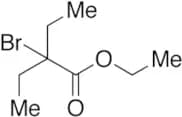
CAS:Controlled Product<p>Stability Air Sensitive, Light Sensitive<br>Applications Propargyl Sulfide (cas# 13702-09-5) is a useful research chemical.<br> Not a dangerous good if item is equal to or less than 1g/ml and there is less than 100g/ml in the package<br></p>Formula:C6H6SColor and Shape:NeatMolecular weight:110.18α-Bromodiethylacetic Acid Ethyl Ester
CAS:Controlled ProductFormula:C8H15BrO2Color and Shape:NeatMolecular weight:223.107Tuberculostearic Acid Ethyl Ester
CAS:Controlled ProductFormula:C21H42O2Color and Shape:NeatMolecular weight:811.87(betaS)-β-Aminocyclohexanepropanoic Acid Ethyl Ester
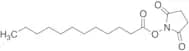
CAS:Controlled ProductFormula:C11H21NO2Color and Shape:NeatMolecular weight:199.292,5-Dioxopyrrolidin-1-yl dodecanoate
CAS:Controlled Product<p>Applications 2,5-Dioxopyrrolidin-1-yl dodecanoate (cas# 14565-47-0) is a useful research chemical.<br></p>Formula:C16H27NO4Color and Shape:Off-WhiteMolecular weight:297.396-Bromo-1,4-dioxa-8-azaspiro[4.5]decane-8-carboxylic Acid Ethyl Ester
CAS:Controlled Product<p>Applications 6-Bromo-1,4-dioxa-8-azaspiro[4.5]decane-8-carboxylic Acid Ethyl Ester is an intermediate in the synthesis of loratadine (L469575) related compounds.<br>References Bruttmann, G., et al.: J. Allergy Clin. Immunol., 83, 411 (1989), Haria, M., et al.: Drugs, 48, 617 (1994)<br></p>Formula:C10H16BrNO4Color and Shape:NeatMolecular weight:294.14tert-Butyl (1-Chloro-2-oxo-7,10,13-trioxa-3-azahexadecan-16-yl)carbamate
CAS:Controlled ProductFormula:C17H33ClN2O6Color and Shape:NeatMolecular weight:396.907Acetyl Coenzyme A Trisodium Salt
CAS:<p>Applications Acetyl Coenzyme A Trisodium Salt is used in skin-lightening cosmetics.<br></p>Formula:C23H38N7O17P3S·3NaColor and Shape:NeatMolecular weight:878.54tert-Butyl 8-Hydroxyoctanoate
CAS:Controlled Product<p>Applications tert-Butyl 8-Hydroxyoctanoate is used as a reagent in the synthesis of unsaturated hydroxy fatty acid derivatives as immuno adjuvants.<br>References Yamada, H., et al.: PCT Int. Appl. WO 2002017961 A1 20020307. Mar 7, 2002<br></p>Formula:C12H24O3Color and Shape:NeatMolecular weight:216.32(2E,13Z)-Octadecadien-1-ol
CAS:Controlled ProductFormula:C18H34OColor and Shape:NeatMolecular weight:266.4621-Iodo-hexadecane
CAS:Controlled Product<p>Applications 1-Iodo-hexadecane is a reagent used to synthesize various polymers and hydrocarbons.<br> Not a dangerous good if item is equal to or less than 1g/ml and there is less than 100g/ml in the package<br>References Kajitani, T., et al.: J. Am. Chem. Soc., 2013, 135, 14564 (2013); Oldham, J., et al.: J. Chem. Soc., 201 (1938);<br></p>Formula:C16H33IColor and Shape:NeatMolecular weight:352.34





![4-[Bis(2-hydroxypropyl)amino]benzoic acid ethyl ester, 90%](/_next/image/?url=https%3A%2Fstatic.cymitquimica.com%2Fproducts%2F3D%2Fthumb-webp%2FFB18673.webp&w=3840&q=75)




![N-[1-(2,3-Dioleyloxy)propyl]-N,N,N-trimethylammonium Chloride](/_next/image/?url=https%3A%2Fstatic.cymitquimica.com%2Fproducts%2FTR%2Fthumb-webp%2FD484000.webp&w=3840&q=75)



![2-(Dimethoxyphosphinyl)-2-[[(phenylmethoxy)carbonyl]amino]acetic Acid Ethyl Ester](/_next/image/?url=https%3A%2Fstatic.cymitquimica.com%2Fproducts%2FTR%2Fthumb-webp%2FD446715.webp&w=3840&q=75)


![6-Bromo-1,4-dioxa-8-azaspiro[4.5]decane-8-carboxylic Acid Ethyl Ester](/_next/image/?url=https%3A%2Fstatic.cymitquimica.com%2Fproducts%2FTR%2Fthumb-webp%2FB688715.webp&w=3840&q=75)




