Terpenoids
Subcategories of "Terpenoids"
- Diterpenes (C₂₀)(671 products)
- Hemiterpenes (C₅)(21 products)
- Monoterpenes (C₁₀)(709 products)
- Sesquiterpenes (C₂₅)(452 products)
- Tetraterpenes (C₄₀)(63 products)
- Triterpenes (C₃₀)(1,128 products)
Found 1423 products of "Terpenoids"
Geranyl acetate 100 µg/mL in Acetonitrile
CAS:Formula:C12H20O2Color and Shape:Single SolutionMolecular weight:196.29(-)-Borneol 100 µg/mL in Acetonitrile
CAS:Formula:C10H18OColor and Shape:Single SolutionMolecular weight:154.25Levomenol 100 µg/mL in Methanol
CAS:Formula:C15H26OColor and Shape:Single SolutionMolecular weight:222.37(1S)-β-Pinene 2000 µg/mL in Acetonitrile
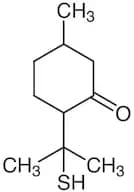
CAS:Formula:C10H16Color and Shape:Single SolutionMolecular weight:136.238-Mercaptomenthone
CAS:Formula:C10H18OSPurity:>97.0%(GC)(T)Color and Shape:Colorless to Light yellow to Light orange clear liquidMolecular weight:186.31α-Terpinene 2000 µg/mL in Acetonitrile
CAS:Formula:C10H16Color and Shape:Single SolutionMolecular weight:136.23Farnesol (mixture of isomers)
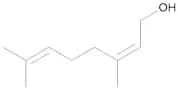
CAS:Controlled ProductFormula:C15H26OColor and Shape:NeatMolecular weight:222.37Nerol 1000 µg/mL in Isopropanol
CAS:Controlled ProductFormula:C10H18OColor and Shape:Single SolutionMolecular weight:154.25lnuchinenolide B
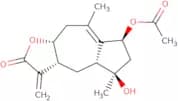
CAS:Lnuchinenolide B is a bioactive compound, which is a type of natural product often isolated from various plant species. This compound has garnered interest due to its origins in diverse botanical sources. Its mode of action is typically associated with its interaction at the molecular level with specific biological targets, potentially inhibiting or modulating particular enzymatic activities or receptor pathways. Such interaction underscores its capacity to influence biological processes, making it a compound of interest in pharmacological research.
Formula:C17H22O5Purity:Min. 95%Molecular weight:306.35 g/mol10-epi-Elemol
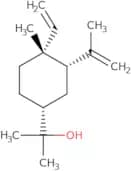
CAS:10-epi-Elemol is a sesquiterpene alcohol, which is derived from natural plant sources, primarily obtained through the essential oils of particular species. Its molecular structure includes a complex arrangement of carbon rings and an alcohol group, characterizing it as a prominent component among sesquiterpenes.
Formula:C15H26OPurity:Min. 95%Molecular weight:222.37 g/molEscin sodium
CAS:Escin sodium is a phytopharmaceutical agent, which is a derivative of the saponin complex found in the seeds of the horse chestnut tree, Aesculus hippocastanum. Its mode of action involves anti-inflammatory and vasoactive processes, primarily exerted through reducing vascular permeability and increasing venous tone. These mechanisms facilitate the reduction of edema and improve venous return.
Formula:C32H34O7Purity:Min. 95%Molecular weight:530.61 g/molIriversical
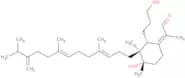
CAS:Iriversical is a synthetic compound, which is derived from a combination of bioactive organic molecules. It operates through intricate biochemical interactions, specifically targeting cellular pathways involved in signal transduction. These interactions are facilitated by the compound's affinity for binding sites on specific enzymes, thereby modulating their activity.
Formula:C31H52O3Purity:Min. 95%Molecular weight:472.74 g/molDeoxygedunin
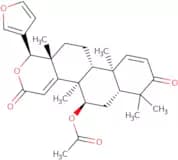
CAS:Deoxygedunin is a natural limonoid, which is a type of chemical compound often derived from plant sources, particularly in the Meliaceae family. This compound is primarily isolated from the seeds of the Indian neem tree (Azadirachta indica) and the African mahogany tree (Khaya senegalensis). It exhibits its biological effects through activation of the Nrf2 pathway, an essential cellular defense mechanism against oxidative stress. By promoting the expression of antioxidant proteins, deoxygedunin enhances cellular resilience to oxidative damage.
Formula:C28H34O6Purity:Min. 95%Molecular weight:466.57 g/molVolvalerenic acid
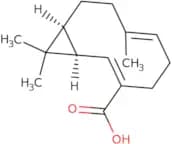
CAS:Volvalerenic acid is a sesquiterpene compound, which is a naturally occurring organic constituent found in the roots of Valeriana species, particularly Valeriana officinalis. This compound is primarily obtained through the extraction of these roots utilizing organic solvents and further chromatographic purification methods.
Formula:C15H22O2Purity:Min. 95%Molecular weight:234.33 g/molGnidimacrin
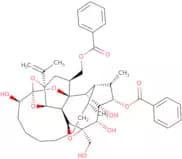
CAS:Gnidimacrin is a natural diterpenoid ester, which is derived from the plant genus *Gnidia*. It is known for its intricate molecular structure and potent biological activities. As a plant-derived compound, it is sourced primarily from the shrubs native to Africa and Asia, belonging to the Thymelaeaceae family.
Formula:C44H54O12Purity:Min. 95%Molecular weight:774.89 g/molLinalyl Butyrate
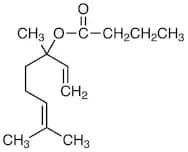
CAS:Formula:C14H24O2Purity:>97.0%(GC)Color and Shape:Colorless to Almost colorless clear liquidMolecular weight:224.34(+)-Menthol
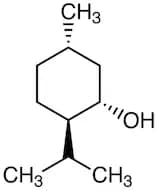
CAS:Formula:C10H20OPurity:>99.0%(GC)Color and Shape:White or Colorless powder to lump to clear liquidMolecular weight:156.27Soyasaponin Aa
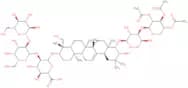
CAS:Soyasaponin Aa is a bioactive compound, specifically a type of saponin, which is derived from soybeans. As a secondary metabolite produced by plants, Soyasaponin Aa is characterized by its amphipathic structure, which allows it to interact with both lipid and aqueous environments. Its mode of action involves disrupting lipid membranes, which can lead to various biological effects, including cytotoxicity to certain cancer cells, cholesterol-lowering properties, and the modulation of immune responses.
Formula:C64H100O31Purity:Min. 95 Area-%Color and Shape:PowderMolecular weight:1,365.46 g/molRef: 3D-FS65453
Discontinued productα-Terpineol
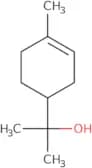
CAS:Alpha-terpineol is a terpene alcohol that exhibits cytotoxic effects on cells. It has been shown to cause cell lysis in both bacteria and mammalian cells, which may be due to its reactive oxygen species (ROS) production. Alpha-terpineol is also an effective agent against infectious diseases such as HIV, tuberculosis, and malaria. This molecule has a high resistance to chemical degradation, making it a promising anticancer agent. Alpha-terpineol can inhibit the polymerase chain reaction (PCR) by binding to the enzyme DNA polymerase, thereby preventing the synthesis of DNA molecules. It can also bind to the enzyme RNA polymerase and inhibit the transcription of mRNA into protein molecules. Lastly, alpha-terpineol is known for its genotoxic effects in vivo and in vitro. The genotoxicity of alpha-terpineol has been demonstrated using several different methods including electron microscopy, chemical stability assays, surface methodology experiments on kidney bean extract,
Formula:C10H18OPurity:Min. 95%Molecular weight:154.25 g/molSapindoside A
CAS:Sapindoside A is a bioactive saponin, which is a glycoside compound. It is derived from the fruit pericarp of Sapindus species, commonly known as soapberries or soapnuts. These are traditionally utilized for their natural surfactant properties due to the presence of saponins, which form stable foams when agitated in water.
Formula:C41H66O12Purity:Min. 98.0 Area-%Molecular weight:750.96 g/mol(-)-Secologanin
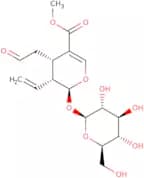
CAS:(-)-Secologanin is a monoterpenoid glycoside, which is a key intermediate in the biosynthesis of indole alkaloids, found primarily in plants such as those in the Apocynaceae and Rubiaceae families. It plays a crucial role in the natural production of complex alkaloids, forming the backbone for numerous pharmacologically active compounds, including quinine, camptothecin, and ajmalicine.
Formula:C17H24O10Purity:Min. 88 Area-%Color and Shape:PowderMolecular weight:388.37 g/molRef: 3D-FS65469
Discontinued product