Flavonoids
Flavonoids are a group of plant metabolites with antioxidant properties that contribute to the color of fruits and flowers. They play a significant role in protecting plants from UV radiation and pathogens. Flavonoids are studied for their potential health benefits, including anti-inflammatory, antiviral, and anticancer properties. They are widely researched in the fields of pharmacology, nutrition, and molecular biology.
Subcategories of "Flavonoids"
- Anthocyanidins(46 products)
- Anthocyanin(46 products)
- Catechin(88 products)
- Chalcones(237 products)
- Pterocarpan(28 products)
Found 2404 products of "Flavonoids"
Sort by
Purity (%)
0
100
|
0
|
50
|
90
|
95
|
100
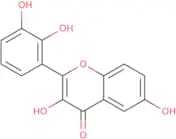
3,6,2',3'-Tetrahydroxyflavone
CAS:<p>3,6,2',3'-Tetrahydroxyflavone is a naturally occurring flavonoid, which is a type of phytochemical found in various plants. As a secondary metabolite, flavonoids like this one are primarily sourced from the polyphenolic compounds prevalent in fruits, vegetables, and certain herbs.</p>Formula:C15H10O6Purity:Min. 95%Molecular weight:286.24 g/molTernatin B
CAS:<p>Ternatin B is a naturally derived compound, which is a cyclic peptide sourced from plant-based materials. It functions predominantly by inhibiting the mechanistic target of rapamycin complex 1 (mTORC1), a critical pathway involved in the regulation of cell growth and autophagy. This mode of action positions Ternatin B as a potent inhibitor of autophagy, the cellular process responsible for the degradation and recycling of cellular components.</p>Formula:C75H81O41Purity:Min. 95%Molecular weight:1,638.42 g/molCalycosin-7-O-β-D-glucoside
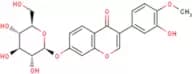
CAS:<p>Calycosin-7-O-β-D-glucoside (calycosin-7-O-beta-D-glucopyranoside) possesses a protective effect on rat hepatocytes, an inhibitory effect on COX-2 activity.</p>Formula:C22H22O10Purity:98% - 99.981%Color and Shape:SolidMolecular weight:446.4Quercetin-3-O-β-D-glucopyranosyl-6-acetate
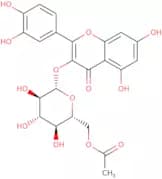
CAS:<p>Quercetin-3-O-beta-D-glucopyranosyl-6-acetate is a glycosylated flavonoid compound, which is a naturally occurring plant metabolite. This compound is predominantly sourced from various plant species, where it acts as a secondary metabolite contributing to plant defense mechanisms. The mode of action of Quercetin-3-O-beta-D-glucopyranosyl-6-acetate involves its ability to function as an antioxidant, scavenging free radicals and reducing oxidative stress in biological systems. Additionally, its glycosylated structure may enhance its solubility and stability, facilitating better bioavailability compared to non-glycosylated counterparts.</p>Formula:C23H22O13Purity:Min. 95%Color and Shape:PowderMolecular weight:506.41 g/molGlycitin
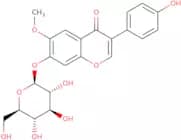
CAS:<p>Glycitin is an isoflavone glycoside, which is a bioactive compound primarily derived from soybeans. This natural compound is sourced from the soy plant, Glycine max, where it serves as one of the predominant isoflavones. Isoflavones like glycitin function as phytoestrogens, plant-derived compounds that can mimic or modulate the action of estrogen in the body. Glycitin undergoes hydrolysis in the digestive system to produce its aglycone form, glycitein, which can interact with estrogen receptors and exert estrogenic effects.</p>Formula:C22H22O10Purity:Min. 98 Area-%Color and Shape:White PowderMolecular weight:446.4 g/mol4'-Methoxyflavonol
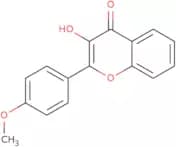
CAS:<p>4'-Methoxyflavonol is a flavonoid compound, which is a naturally occurring secondary metabolite primarily found in various plant species. It is characterized by the presence of a methoxy group attached to the flavonol backbone, contributing to its unique chemical properties. Through its antioxidant activity, 4'-Methoxyflavonol plays a crucial role in neutralizing free radicals and reducing oxidative stress within cells.</p>Formula:C16H12O4Purity:Min. 95%Molecular weight:268.26 g/molFlavanone rhamnoglucoside
<p>Flavanone rhamnoglucoside is a specialized flavonoid compound, which is derived from various natural sources such as fruits, vegetables, and certain medicinal plants. It functions primarily as an antioxidant by scavenging free radicals, thereby protecting cells from oxidative stress. Additionally, it exhibits anti-inflammatory properties by modulating pathways involved in inflammation, such as NF-kB and COX-2.</p>Purity:Min. 95%2',7-Dihydroxyflavone
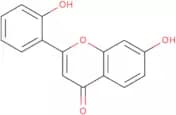
CAS:<p>2',7-Dihydroxyflavone is a natural flavonoid compound, which is derived from plant sources, particularly within the broader family of flavonoids known for their diverse biological activities. This compound exhibits its mode of action primarily through interactions with cellular signaling pathways, notably acting as a potent agonist for the TrkB receptor, a critical component in neurotrophic signaling. The activation of TrkB is pivotal in promoting neuronal survival, differentiation, and synaptic plasticity, making this compound of significant interest in the field of neuroscience.</p>Formula:C15H10O4Purity:Min. 95%Color and Shape:PowderMolecular weight:254.24 g/molPomiferin-3',4'-dimethylether
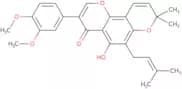
CAS:<p>Pomiferin-3',4'-dimethylether is a natural flavonoid compound, which is isolated from plants such as the Osage orange (Maclura pomifera). This compound is derived through meticulous extraction techniques that preserve its bioactive properties.</p>Formula:C27H28O6Purity:Min. 95%Molecular weight:448.51 g/molApigenin - 94%
CAS:<p>Apigenin - 94% is a purified form of apigenin, which is a naturally occurring flavonoid. It is primarily sourced from various plant species, including parsley, celery, and chamomile, where it is a prominent active component. The mode of action of apigenin involves multiple biochemical pathways: it acts as an anti-inflammatory agent, modulates enzyme activities, and exhibits antioxidant properties by scavenging free radicals. Additionally, apigenin interacts with cellular signaling pathways, such as the MAPK and PI3K/Akt, which contribute to its protective effects against oxidative stress and its potential in promoting apoptosis in cancerous cells.</p>Formula:C15H10O5Purity:Min. 95%Color and Shape:PowderMolecular weight:270.24 g/molDihydrokaempferol-3-O-arabinoside
CAS:<p>Dihydrokaempferol-3-O-arabinoside is a flavonoid compound, which is a type of phenolic product found in plants. These compounds are prevalent in various plant species where they contribute to the pigmentation and play a crucial role in plant defense mechanisms. The compound is derived from natural sources, primarily isolated from plant materials rich in flavonoids, such as certain fruits and medicinal herbs.</p>Formula:C20H20O10Purity:Min. 95%Molecular weight:420.37 g/molDihydrogenistein - decarboxy-dihydroxygenistein mixture
<p>Dihydrogenistein - decarboxy-dihydroxygenistein mixture is a synthetic biochemical compound, which is derived from the modification of isoflavonoid structures primarily sourced from plants. This mixture represents a complex amalgamation of two chemically altered forms of natural phytoestrogens. It functions by interacting with various cellular pathways, potentially influencing gene expression and signaling mechanisms through selective modulation of estrogen receptors and related enzymatic activities.</p>Purity:Min. 95%Scutellarein 7-methyl ether
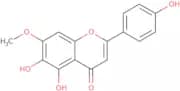
CAS:<p>Scutellarein 7-methyl ether is a naturally occurring flavone derivative, which is primarily sourced from various plant species within the genus Scutellaria. These plants are rich in flavonoids and have been studied extensively for their diverse biochemical properties. The mode of action of Scutellarein 7-methyl ether involves its ability to act as an antioxidant, neutralizing free radicals and reducing oxidative stress at the cellular level. This compound has been observed to interfere with various enzymatic pathways, contributing to its potential therapeutic effects.</p>Formula:C16H12O6Purity:Min. 95%Color and Shape:PowderMolecular weight:300.26 g/mol7-Hydroxy-4'-methoxyisoflavan
CAS:<p>7-Hydroxy-4'-methoxyisoflavan is a naturally occurring isoflavan, which is a type of flavonoid compound predominantly derived from leguminous plants. Isoflavans are a subclass of isoflavonoids that are known for their diverse biological activities. This particular compound is often extracted from plants in the Fabaceae family and exhibits a rich chemical framework that supports multiple pharmacological functions.</p>Formula:C16H16O3Purity:Min. 95%Molecular weight:256.3 g/molFlavanomarein
CAS:<p>Flavanomarein is a flavonoid compound, which is derived from the tea plant, Camellia sinensis. This compound is part of the broader family of polyphenolic flavonoids, which are secondary metabolites commonly found in various plants. Flavanomarein exerts its effects primarily through its antioxidant properties. The flavonoid can scavenge free radicals and inhibit oxidative stress, which are critical functions in preventing cellular damage and maintaining homeostasis. Additionally, flavanomarein may modulate various signaling pathways that are involved in inflammation and apoptosis, offering potential therapeutic benefits.</p>Formula:C21H22O11Purity:Min. 95%Color and Shape:PowderMolecular weight:450.39 g/mol4'-Hydroxy-7-methoxyisoflavan
CAS:<p>4'-Hydroxy-7-methoxyisoflavan is a naturally occurring isoflavan, which is a subclass of flavonoids typically found in legumes and various plant sources. This compound is derived from the phenylpropanoid pathway, a critical biosynthetic route in plants responsible for producing a variety of phenolic compounds. Its mode of action is largely attributed to its ability to interact with cellular signaling pathways, exhibiting antioxidant, anti-inflammatory, and potentially estrogenic activities. These properties allow 4'-Hydroxy-7-methoxyisoflavan to modulate oxidative stress by scavenging free radicals and influencing gene expression related to detoxification enzymes.</p>Formula:C16H16O3Purity:Min. 95%Molecular weight:256.3 g/molMorin hydrate
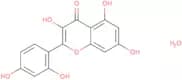
CAS:<p>Morin hydrate is a flavonoid compound, which is a naturally occurring substance found primarily in the members of the Moraceae family, such as morus or mulberry and other fruits. It possesses significant antioxidant activity, which is achieved through its ability to scavenge free radicals and inhibit oxidative stress pathways. This mechanism of action is primarily due to its capacity to donate hydrogen atoms, thereby neutralizing unstable and reactive oxidative species.</p>Formula:C15H10O7·xH2OPurity:Min. 95%Color and Shape:PowderMolecular weight:302.24 g/mol(-)-Deguelin
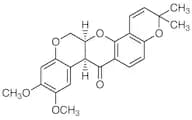
CAS:Formula:C23H22O6Purity:>95.0%(HPLC)Color and Shape:White to Yellow to Green powder to crystalMolecular weight:394.425,8-Dihydroxy-3,3',4',7-tetramethoxyflavone
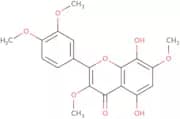
CAS:<p>5,8-Dihydroxy-3,3',4',7-tetramethoxyflavone is a secondary metabolite of plants that belongs to the group of phytochemicals. It is one of the most potent natural antioxidants and has been shown to have antioxidant activity in a number of different assays. 5,8-Dihydroxy-3,3',4',7-tetramethoxyflavone can be used for analytical purposes as an HPLC standard or reference material. This compound has also been shown to inhibit tumor cell proliferation in vitro and may be useful for research and development purposes.</p>Formula:C19H18O8Purity:Min. 95%Molecular weight:374.34 g/molIzalpinin
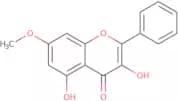
CAS:<p>Izalpinin is a specialized phytochemical compound, specifically a flavonoid, which is derived from various plant sources. It exhibits a range of bioactive properties due to its complex chemical structure. The primary mode of action of Izalpinin involves modulation of cellular signaling pathways and inhibition of specific enzymatic activities, which underpins its diverse pharmacological effects.</p>Formula:C16H12O5Purity:Min. 95%Molecular weight:284.26 g/mol