Flavonoids
Subcategories of "Flavonoids"
- Anthocyanidins(46 products)
- Anthocyanin(46 products)
- Catechin(88 products)
- Chalcones(237 products)
- Pterocarpan(28 products)
Found 2409 products of "Flavonoids"
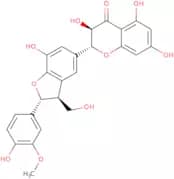
Silicristin
CAS:Silicristin is a flavonolignan compound, which is derived from the seeds of the milk thistle plant, Silybum marianum. This compound is one of the key constituents of silymarin, a complex group of flavonolignans used extensively in herbal medicine. Silicristin is isolated through advanced chromatographic techniques, ensuring high purity and specificity for research applications.
Formula:C25H22O10Purity:Min. 95%Color and Shape:White PowderMolecular weight:482.44 g/molRef: 3D-FS31958
Discontinued productVicenin III
CAS:Vicenin III is a natural flavonoid compound, which is a type of polyphenolic metabolite commonly found in various plant species. It is primarily extracted from herbaceous plants and certain fruits and vegetables, where it acts as a secondary metabolite contributing to the plant's defense mechanisms. The compound exerts its effects through antioxidant properties, which involve scavenging free radicals and reducing oxidative stress at the cellular level. Additionally, it demonstrates anti-inflammatory activity by modulating key signaling pathways and inhibiting pro-inflammatory mediators.
Formula:C26H28O14Purity:Min. 95%Color and Shape:PowderMolecular weight:564.49 g/molRef: 3D-FV145283
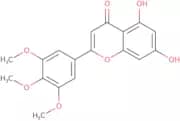
Discontinued productTricin 4'-methyl ether
CAS:Tricin 4'-methyl ether is a bioactive flavonoid, which is a phytochemical compound primarily derived from various plant sources such as rice, wheat, and maize. This compound is known for its antioxidant properties due to its phenolic structure, which allows it to scavenge free radicals and reduce oxidative stress. Additionally, Tricin 4'-methyl ether exhibits potential anti-inflammatory effects by modulating the activity of specific enzymes and pathways involved in inflammation.
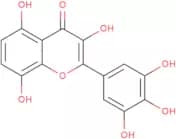
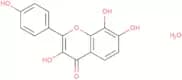
Formula:C18H16O7Purity:Min. 95%Color and Shape:PowderMolecular weight:344.32 g/mol3,3',4',5,5',8-Hexahydroxyflavone
CAS:3,3',4',5,5',8-Hexahydroxyflavone is a naturally occurring flavonoid, which is a type of polyphenolic compound. It is derived from various plant sources, including fruits, vegetables, and certain medicinal herbs. The compound is characterized by its chemical structure, which includes multiple hydroxyl groups, contributing to its biological activity.
The mode of action of 3,3',4',5,5',8-Hexahydroxyflavone involves its interaction with various cellular pathways and enzymes. Primarily, it is known for its antioxidant properties, where it scavenges free radicals and reactive oxygen species, thereby reducing oxidative stress. Additionally, it may exhibit anti-inflammatory effects by modulating signaling pathways involved in inflammation.
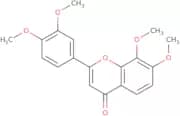
In terms of uses and applications, 3,3',4',5,5',8-Hexahydroxyflavone is primarily explored in scientific research focusing on its potential health benefits. Studies investigate its role in disease prevention, particularly conditions associated with oxidative stress and inflammation, such as cardiovascular diseases and neurodegenerative disorders. While it holds promise in these areas, further research is necessary to fully understand its mechanisms and therapeutic potential.Formula:C15H10O8Purity:Min. 95%Molecular weight:318.24 g/mol3',4',7,8-Tetramethoxyflavone
CAS:3',4',7,8-Tetramethoxyflavone is a naturally occurring flavonoid, which is a type of polyphenolic compound. It is predominantly found in various plant species, where it serves vital roles in the plant's defense mechanisms and contributes to its pigmentation. This compound is characterized by its methoxy groups attached to its flavonoid backbone, which influence its bioactivity and solubility.
Formula:C19H18O6Purity:Min. 95%Color and Shape:PowderMolecular weight:342.34 g/molRef: 3D-FT66134
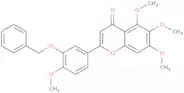
Discontinued product3'-Benzyloxy-4',5,6,7-tetramethoxyflavone
CAS:3'-Benzyloxy-4',5,6,7-tetramethoxyflavone is a synthetic flavone derivative, which is structurally modified from naturally occurring flavonoids. These compounds are often sourced from various plant species or created synthetically to mimic the beneficial components found in plant matter. The mode of action of this compound primarily hinges on its ability to interact with cellular pathways due to its polyphenolic structure. Such interactions may include the inhibition of certain enzymes, modulation of receptor activities, or altering oxidative states within cells.
Formula:C26H24O7Purity:Min. 95%Molecular weight:448.46 g/molRef: 3D-FB66452
Discontinued product7-Hydroxy-2',4',5'-trimethoxyisoflavone
CAS:7-Hydroxy-2',4',5'-trimethoxyisoflavone is a naturally occurring flavonoid, which is commonly isolated from various plant sources, including legumes and other flavonoid-rich botanical species. This compound exhibits a unique structural configuration characterized by hydroxyl and methoxy functional groups, contributing to its notable bioactivity.
Formula:C18H16O6Purity:Min. 95%Color and Shape:PowderMolecular weight:328.32 g/mol3,7,8,4'-Tetrahydroxyflavone
CAS:3,7,8,4'-Tetrahydroxyflavone is a naturally occurring flavonoid, which is a type of secondary metabolite commonly found in various plants. It is derived from botanical sources like fruits, vegetables, and certain herbs. This compound has gained attention due to its potential biological activities linked to its structural properties, specifically the presence of multiple hydroxyl groups that contribute to its antioxidant capacity.
Formula:C15H10O6Purity:Min. 95%Color and Shape:PowderMolecular weight:286.24 g/molRef: 3D-FT67101
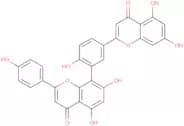
Discontinued productAmentoflavone
CAS:Amentoflavone is a biflavonoid compound, which is a naturally occurring substance found in various plants such as Ginkgo biloba and Hypericum perforatum. Its molecular structure consists of two flavonoid units joined together, contributing to its unique biochemical characteristics. The source of amentoflavone spans across several medicinal plants, where it plays roles in the plants’ defense mechanisms.
Formula:C30H18O10Purity:Min. 95%Color and Shape:White PowderMolecular weight:538.46 g/molRef: 3D-FA65485
Discontinued productRotenone
CAS:Rotenone is a naturally occurring insecticide and piscicide, which is derived from the roots of several tropical and subtropical plant species, primarily from the Leguminosae family. Its primary source includes plants such as *Derris* and *Lonchocarpus*. Rotenone works by inhibiting cellular respiration. Specifically, it interferes with the mitochondrial electron transport chain by binding to complex I, blocking the production of ATP and ultimately leading to cell death.
Formula:C23H22O6Purity:Min. 98 Area-%Color and Shape:Beige PowderMolecular weight:394.42 g/molRef: 3D-FR65511
Discontinued productKaempferol 3-O-neohesperidoside
CAS:Kaempferol 3-O-neohesperidoside is a flavonoid glycoside, which is a plant-derived secondary metabolite. It is commonly found in various fruits, vegetables, and herbs, including citrus fruits and certain medicinal plants. The compound consists of the flavonoid kaempferol linked to a neohesperidose sugar moiety.
Formula:C27H30O15Purity:Min. 95%Color and Shape:SolidMolecular weight:594.52 g/molQuercetin-3-arabinofuranoside
CAS:Quercetin-3-arabinofuranoside is a flavonoid, a type of plant-derived polyphenolic compound. It is sourced from various plant species, particularly fruits, vegetables, and grains, where it functions as a secondary metabolite. This compound acts primarily through antioxidant mechanisms, neutralizing free radicals and reducing oxidative stress in biological systems. Additionally, it may interact with various cellular signaling pathways, modulating enzyme activities and gene expression.
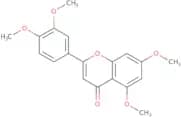
Formula:C20H20O11Purity:Min. 95%Molecular weight:436.37 g/mol3',4',5,7-Tetramethoxyflavone
CAS:3',4',5,7-Tetramethoxyflavone is a polyphenolic compound, which is a specific type of flavonoid. It is derived from various plant sources, where it occurs naturally as part of the plant's defense mechanism against environmental stressors. This compound exerts its activity through various biochemical pathways, including modulation of enzyme activities and interference with cellular signaling pathways. Studies suggest it may inhibit certain enzymes involved in inflammation and oxidative stress, thereby playing a potential role in therapeutic applications.
Formula:C19H18O6Purity:Min. 95%Color and Shape:White PowderMolecular weight:342.34 g/molNaringenin trimethyl ether
CAS:Naringenin trimethyl ether is a flavonoid compound, which is typically derived from citrus fruits and other plant sources. This compound is part of the larger class of polyphenolic compounds known as flavonoids, which are prominent for their presence in various plant species, contributing to a variety of physiological activities.
Formula:C18H18O5Purity:Min. 95%Color and Shape:PowderMolecular weight:314.33 g/molRef: 3D-XN161726
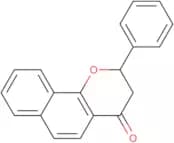
Discontinued productα-Naphthoflavanone
CAS:**α-Naphthoflavanone** is a synthetic flavanone compound, which is derived from natural plant polyphenols. It exhibits its mode of action primarily through the modulation of various biochemical pathways, potentially influencing enzyme activity, receptor binding, and signaling cascades. As a flavanone, it interacts with specific molecular targets, leading to possible antioxidant and anti-inflammatory effects.Formula:C19H14O2Purity:Min. 95%Color and Shape:SolidMolecular weight:274.31 g/molEriodictyol - 90%
CAS:Eriodictyol - 90% is a highly purified flavonoid, specifically a flavanone, commonly derived from the Eriodictyon californicum plant, also known as yerba santa. This compound, noted for its significant antioxidant properties, interacts with cellular signaling pathways by modulating oxidative stress and inhibiting inflammatory enzymes. Eriodictyol achieves these effects primarily through its ability to scavenge free radicals and modulate the activity of various kinases and transcription factors involved in the inflammatory response.
Formula:C15H12O6Purity:Min. 95%Color and Shape:White PowderMolecular weight:288.25 g/molRef: 3D-FE65017
Discontinued productLotisoflavan
CAS:Phytoalexin isolated from the fungus-inoculated leaflets of Lotus angustissimus
Formula:C17H18O5Purity:Min. 95%Color and Shape:PowderMolecular weight:302.32 g/molFicifolinol
CAS:Ficifolinol is a bioactive compound, which is a naturally occurring phenolic compound derived from the plant genus *Eucalyptus*, particularly from the species known for their rich bioactive profiles. Ficifolinol acts primarily through its antioxidant mechanisms, scavenging free radicals and inhibiting oxidative stress, thereby contributing to cellular protection and stability.
Formula:C25H28O4Purity:Min. 95%Molecular weight:392.49 g/mol3,7,8,4'-Tetramethoxyflavone
CAS:3,7,8,4'-Tetramethoxyflavone is a naturally occurring flavonoid, which is derived from various plant sources, including certain traditional medicinal herbs. Flavonoids like this one are noted for their diverse biological activities and potential therapeutic applications.
Formula:C19H18O6Purity:Min. 95%Molecular weight:342.34 g/molRef: 3D-XT183008
Discontinued product3'-Prenylbiochanin A
CAS:3'-Prenylbiochanin A is a prenylated isoflavone, which is a type of natural compound often derived from plants such as those in the Fabaceae family. Its unique structure incorporates a prenyl group, which is a 5-carbon isoprene unit, added to the biochanin A framework. This structural modification can significantly influence the compound's biological activity by enhancing its lipophilicity and bioavailability in cellular environments.
Formula:C21H20O5Purity:Min. 95%Molecular weight:352.38 g/mol