Flavonoids
Flavonoids are a group of plant metabolites with antioxidant properties that contribute to the color of fruits and flowers. They play a significant role in protecting plants from UV radiation and pathogens. Flavonoids are studied for their potential health benefits, including anti-inflammatory, antiviral, and anticancer properties. They are widely researched in the fields of pharmacology, nutrition, and molecular biology.
Subcategories of "Flavonoids"
- Anthocyanidins(46 products)
- Anthocyanin(46 products)
- Catechin(88 products)
- Chalcones(237 products)
- Pterocarpan(28 products)
Found 2404 products of "Flavonoids"
Sort by
Purity (%)
0
100
|
0
|
50
|
90
|
95
|
100
4',6,7-Trimethoxyisoflavone
CAS:<p>4',6,7-Trimethoxyisoflavone is a naturally occurring isoflavone, which is a type of phytoestrogen found in certain plants. This compound is generally derived from plant sources that are rich in isoflavones, such as soybeans and other legumes. Isoflavones like 4',6,7-Trimethoxyisoflavone are known to exhibit a range of biological activities due to their structural similarity to estrogens, allowing them to bind to estrogen receptors.</p>Formula:C18H16O5Purity:Min. 95%Color and Shape:White Off-White PowderMolecular weight:312.32 g/mol(S)-Equol
CAS:<p>(S)-Equol is a non-steroidal estrogen, which is a metabolite produced by the gut microbiota from dietary isoflavones, specifically daidzein, found in soy and other legumes. It has high affinity for estrogen receptor beta, playing a significant role in modulating estrogenic activity without altering steroid hormone levels.</p>Formula:C15H14O3Purity:Min. 98 Area-%Color and Shape:PowderMolecular weight:242.27 g/molAspalathin
CAS:<p>AntioxidantImage created by Dave Richardson sourced from <a href="https://www.inaturalist.org/photos/171407970" target="_blank" rel="noreferrer noopener">https://www.inaturalist.org/photos/171407970</a></p>Formula:C21H24O11Purity:Min. 97 Area-%Color and Shape:White PowderMolecular weight:452.41 g/molLeucocyanidin polymer
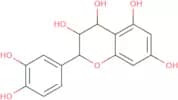
CAS:<p>Leucocyanidin polymer is an oligomeric flavonoid compound, which is primarily sourced from plants, particularly abundant in certain fruits, seeds, and barks. These naturally occurring polymers belong to a class of compounds known as proanthocyanidins, which are part of the larger flavonoid family.</p>Formula:(C15H14O7•C15H14O6)xPurity:Min. 95%Color and Shape:PowderLuteolin
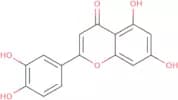
CAS:<p>Luteolin is a flavonoid compound, which is a naturally occurring substance found predominantly in various fruits, vegetables, and medicinal herbs. Its sources are diverse, including parsley, artichokes, celery, and chamomile tea, where it is accumulated as a secondary metabolite. The mode of action of luteolin primarily involves the inhibition of key enzymes and pathways that lead to oxidative stress and inflammation, including but not limited to the cyclooxygenase and lipoxygenase pathways. This inhibition results in its strong antioxidant and anti-inflammatory properties.</p>Formula:C15H10O6Purity:Min. 95 Area-%Color and Shape:White Yellow Green PowderMolecular weight:286.24 g/molTectoridin
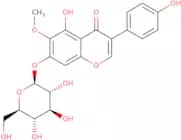
CAS:<p>Tectoridin is a naturally occurring isoflavone glycoside, which is derived from the rhizomes of the Iris plant, particularly from Iris tectorum. This compound acts as a bioactive isoflavone that can undergo enzymatic hydrolysis to release tectorigenin, the aglycone form. Tectoridin and its metabolites are investigated for their pharmacological properties, which include antioxidant, anti-inflammatory, and anti-cancer activities.</p>Formula:C22H22O11Purity:Min. 95%Color and Shape:White PowderMolecular weight:462.4 g/mol5,4'-Dimethoxyflavanone
<p>5,4'-Dimethoxyflavanone is a flavonoid compound, which is a type of polyphenolic product ubiquitously found in various plant sources. These flavonoids are synthesized by plants as secondary metabolites, which aid in plant defense against herbivores and pathogens, and also contribute to the plant's coloration. The mode of action of 5,4'-Dimethoxyflavanone involves the modulation of oxidative stress and inflammation pathways. It achieves this by scavenging free radicals and inhibiting pro-inflammatory enzymes, thus providing a protective effect at the cellular level.</p>Formula:C17H16O4Purity:Min. 95%Molecular weight:284.31 g/molVitexicarpin
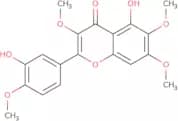
CAS:<p>Vitexicarpin is a type of flavonoid compound, which is derived from plants in the Vitex genus, commonly known as the chaste tree. This naturally occurring bioactive compound acts primarily through the inhibition of various signaling pathways involved in inflammation and cancer progression. Its mechanism often targets pathways such as NF-kB and MAPK, which play crucial roles in inflammatory responses and cellular proliferation.</p>Formula:C19H18O8Purity:Min. 95%Color and Shape:PowderMolecular weight:374.34 g/mol3,7,8,2',4'-Pentahydroxyflavone
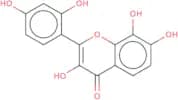
<p>3,7,8,2',4'-Pentahydroxyflavone is a flavonoid compound, which is a type of polyphenolic secondary metabolite found in various plants. This compound is typically isolated from natural sources, including vegetables, fruits, and certain herbs. Its chemical structure, characterized by multiple hydroxyl groups, contributes to its potent antioxidant activity, allowing it to scavenge free radicals effectively.</p>Formula:C15H10O7Purity:90%Color and Shape:PowderMolecular weight:302.24 g/molKaempferol-3-sophoroside-7-glucoside
CAS:<p>Kaempferol-3-sophoroside-7-glucoside is a flavonoid glycoside, which is a type of bioactive compound commonly found in various plant species. It is typically isolated from plant sources known for high flavonoid content, such as vegetables, fruits, and certain medicinal herbs. The compound's mode of action is primarily characterized by its ability to engage in redox reactions, thereby exerting antioxidative effects. This antioxidative action is facilitated via the scavenging of free radicals and reactive oxygen species, contributing to its role in cellular protection.</p>Formula:C33H40O21Purity:Min. 95%Molecular weight:772.66 g/molQuercetin 3-α-L-rhamnoside
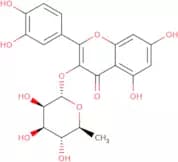
CAS:<p>Quercetin 3-α-L-rhamnoside is a flavonoid compound, which is a plant-derived product with rich biological activity. It is primarily sourced from various fruits and vegetables, where it occurs naturally as a glycoside. The mode of action involves its capability to modulate oxidative stress and inflammation through interactions with several cellular pathways, primarily by acting as an antioxidant and modulating enzyme activity related to reactive oxygen species.</p>Formula:C21H20O11Purity:Min. 95%Color and Shape:White PowderMolecular weight:448.38 g/molPatulin
CAS:<p>Patulin is a mycotoxin, which is a toxic secondary metabolite produced by certain species of fungi, particularly those within the genera Penicillium, Aspergillus, and Byssochlamys. It is predominantly sourced from moldy fruits, especially apples and apple-derived products, where these fungi thrive and synthesize the compound. The mode of action of patulin involves disrupting cellular processes by forming covalent adducts with proteins and nucleic acids, ultimately leading to cellular damage and oxidative stress.</p>Formula:C7H6O4Purity:Min. 95%Color and Shape:White PowderMolecular weight:154.12 g/molScutellarin
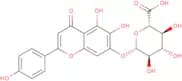
CAS:<p>Scutellarin is a bioactive flavonoid compound, which is derived primarily from the plant Scutellaria baicalensis and other species within the Scutellaria genus. As a naturally occurring phytochemical, Scutellarin exerts its effects through multiple biological pathways, including antioxidant, anti-inflammatory, and anti-apoptotic activities.</p>Formula:C21H18O12Purity:Min. 95%Color and Shape:Yellow PowderMolecular weight:462.36 g/mol7,2'-Dihydroxy-4',5'-methylenedioxyisoflavone
CAS:<p>7,2'-Dihydroxy-4',5'-methylenedioxyisoflavone is a naturally occurring isoflavone compound, which is typically isolated from various plant sources. This compound is a secondary metabolite, often found in plants known for their therapeutic properties. Isoflavones are well-recognized for their potential bioactivity, acting as phytoestrogens due to their structural similarity to estrogen.</p>Formula:C16H10O6Purity:Min. 95%Molecular weight:298.25 g/molIsosakuranetin
CAS:<p>Isosakuranetin is a flavonoid compound, which is derived from various plant sources, especially citrus fruits and other botanicals. Its mode of action involves modulating key signaling pathways, primarily through its antioxidant properties. These antioxidants scavenge free radicals, thereby mitigating oxidative stress and reducing cellular damage. This biochemical activity makes isosakuranetin a compound of interest in various fields related to health and disease prevention.</p>Formula:C16H14O5Purity:Min. 95%Color and Shape:PowderMolecular weight:286.28 g/mol5,6,7-Trimethoxyflavone
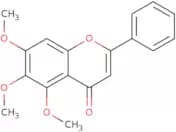
CAS:<p>5,6,7-Trimethoxyflavone is a specialized flavonoid compound, which is derived from natural plant sources. This compound exists primarily in certain species of the plant kingdom, such as citrus fruits, where it is part of a group of polyphenolic compounds known for their diverse biological activities. Its structure is characterized by the presence of three methoxy groups at positions 5, 6, and 7 on the flavone backbone, contributing to its distinct biochemical properties.</p>Formula:C18H16O5Purity:Min. 95%Color and Shape:PowderMolecular weight:312.32 g/mol7-Benzyloxy-2',4'-dimethoxyisoflavone
CAS:<p>7-Benzyloxy-2',4'-dimethoxyisoflavone is a synthetic isoflavone, which is a type of phenolic compound. Isoflavones are derived from plants, commonly found in soybeans and other legumes, and are often synthesized in laboratories for research and pharmaceutical purposes. These compounds are known for their structural similarity to estrogens and their ability to act as phytoestrogens.</p>Formula:C24H20O5Purity:Min. 95%Molecular weight:388.41 g/mol3-Hydroxy-5,7-dimethoxyflavone
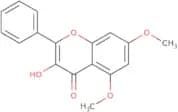
CAS:<p>3-Hydroxy-5,7-dimethoxyflavone is a naturally occurring flavonoid, which is primarily derived from various plant sources. This compound belongs to a class of polyphenolic substances known as flavonoids, which are commonly found in fruits, vegetables, and certain herbs. Flavonoids such as 3-Hydroxy-5,7-dimethoxyflavone are known for their diverse biological activities due to their unique structural configurations and ability to interact with various biological targets.</p>Formula:C17H14O5Purity:Min. 95%Molecular weight:298.29 g/molIcarisid II - Bio-X ™
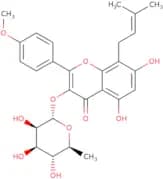
CAS:<p>Icariside II is a natural product derived from Epimedium brevicornu Maxim (E. brevicornu) that exhibits various beneficial properties as a small molecule drug candidate. It has been shown to induce apoptosis in K562 cells, making it a potential treatment for leukemia. Icariside also regulates MAPK signaling, which plays a crucial role in cell growth and differentiation. Moreover, it has been found to promote osteogenesis, making it a promising candidate for bone health. With its unique properties and potential therapeutic applications, Icariside II is an interesting candidate for small molecule studies and drug development research.This product is part of our Bio-X ™ Range. These products are aimed at life science researchers who need high quality ready-to-use products for assay development, screening or other R&D work. With a solubility datasheet and convenient vials, all of our Bio-X ™ products are in stock across our global warehouses for rapid delivery and ease of use.</p>Formula:C27H30O10Purity:Min. 95%Color and Shape:PowderMolecular weight:514.5 g/mol2'-Methoxyflavonol
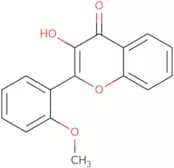
CAS:<p>2'-Methoxyflavonol is a methoxyflavonoid, which is a type of polyphenolic compound. It is derived from natural sources, primarily plants where flavonoids are commonly found. These compounds are known for their wide range of biological activities.</p>Formula:C16H12O4Purity:Min. 95%Color and Shape:White PowderMolecular weight:268.26 g/mol