Flavonoids
Flavonoids are a group of plant metabolites with antioxidant properties that contribute to the color of fruits and flowers. They play a significant role in protecting plants from UV radiation and pathogens. Flavonoids are studied for their potential health benefits, including anti-inflammatory, antiviral, and anticancer properties. They are widely researched in the fields of pharmacology, nutrition, and molecular biology.
Subcategories of "Flavonoids"
- Anthocyanidins(46 products)
- Anthocyanin(46 products)
- Catechin(88 products)
- Chalcones(237 products)
- Pterocarpan(28 products)
Found 2404 products of "Flavonoids"
Sort by
Purity (%)
0
100
|
0
|
50
|
90
|
95
|
100
5,7-Di-O-methyl-8-prenylflavanone
CAS:<p>5,7-Di-O-methyl-8-prenylflavanone is a prenylated flavanone, which is a type of natural compound known for its structural complexity and biological activities. This compound is primarily sourced from plants, especially those in the Leguminosae family, where it plays a role in the plant's defense mechanisms. Its mode of action involves the modulation of various intracellular signaling pathways, often contributing to its anti-inflammatory and anti-cancer properties. This compound can inhibit certain enzyme activities and interfere with cellular proliferation and apoptosis processes.</p>Formula:C22H24O4Purity:Min. 95%Molecular weight:352.42 g/molPrunetin
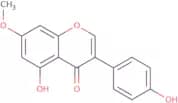
CAS:<p>Prunetin is a naturally occurring isoflavone, which is an organic compound derived from plant sources. It is primarily found in legumes and other plant materials where it naturally occurs as part of the plant's phytochemical arsenal. The mode of action of prunetin involves modulating various biochemical pathways, including acting as an antioxidant, influencing estrogenic activity, and affecting cellular signaling pathways. Its biochemical properties allow it to interact with multiple cellular targets, leading to its diverse biological activities.</p>Formula:C16H12O5Purity:Min. 95%Color and Shape:Slightly Brown PowderMolecular weight:284.26 g/mol7,2'-Dibenzyloxy-4',5'-methylenedioxyisoflavone
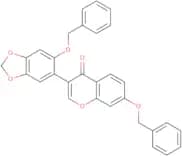
CAS:<p>7,2'-Dibenzyloxy-4',5'-methylenedioxyisoflavone is a synthetic compound derived from isoflavones, a class of naturally occurring organic compounds related to flavonoids. Isoflavones are typically found in plants, especially in legumes, and are known for their diverse biological activities. This particular derivative has been designed to explore advanced pharmacological properties through structural modification aimed at improving bioactivity and specificity.</p>Formula:C30H22O6Purity:Min. 95%Molecular weight:478.49 g/molQuercetagetin
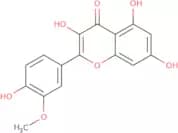
CAS:<p>Quercetagetin is a flavonoid compound, which is naturally sourced from the marigold plant, *Tagetes* species. This flavonoid is structurally related to other polyphenols and is synthesized in plants through the phenylpropanoid pathway. Quercetagetin primarily exerts its biological effects through the scavenging of reactive oxygen species (ROS) and modulating various signaling pathways associated with oxidative stress.</p>Formula:C15H10O8Purity:Min. 95 Area-%Color and Shape:PowderMolecular weight:318.24 g/molIsorhamnetin
CAS:<p>Isorhamnetin is a naturally occurring flavonoid, which is isolated from various plant sources such as fruits, vegetables, and medicinal herbs like Ginkgo biloba. As a member of the flavonoid family, it is primarily derived from the glycosylation and methylation of quercetin. The mode of action of isorhamnetin is mainly attributed to its potent antioxidant capabilities. It scavenges reactive oxygen species and inhibits oxidative stress, which may lead to beneficial effects in preventing cellular damage.</p>Formula:C16H12O7Purity:Min. 95%Color and Shape:Yellow PowderMolecular weight:316.26 g/molSigmoidin C
CAS:<p>Sigmoidin C is a naturally occurring alkaloid, which is derived from the roots of certain species within the genus Alstonia. This compound is notable for its complex chemical structure and its potential therapeutic effects, which stem from its plant-based origin. Sigmoidin C operates primarily through modulating neurotransmitter systems, where it influences synaptic transmission and neuronal excitability.</p>Formula:C20H18O6Purity:Min. 95%Molecular weight:354.35 g/molEucomol
CAS:<p>Eucomol is a synthetic compound derived from plant-based sources, designed as an antioxidant agent. It functions by scavenging reactive oxygen species (ROS), thereby reducing oxidative stress in biological systems. Eucomol's mode of action involves donating electrons to neutralize free radicals, which prevents cellular damage and maintains cellular homeostasis.</p>Formula:C17H16O6Purity:Min. 95%Molecular weight:316.31 g/molHinokiflavone-7,7”,4”’-trimethyl ether
CAS:<p>Hinokiflavone-7,7”,4”’-trimethyl ether is a specialized biflavonoid compound, which is a type of plant secondary metabolite. Derived primarily from certain species of the Cupressaceae family, it showcases the diverse capabilities of flavonoids in biochemical pathways. This compound functions by modulating enzyme activities, interacting with cellular receptors, and exhibiting antioxidant properties. It acts through mechanisms involving inhibition of specific kinases and other enzymes, thereby influencing cell signaling pathways and inflammatory responses.</p>Formula:C33H24O10Purity:Min. 95%Molecular weight:580.54 g/mol6-Hydroxy-5,7,4'-trimethoxyflavone
CAS:<p>6-Hydroxy-5,7,4'-trimethoxyflavone is a methoxylated flavone, which is a type of polyphenolic compound. It is derived from various natural sources, including certain plant species where flavonoids are abundant. This compound features distinct methoxy and hydroxyl groups that contribute to its biochemical activity.</p>Formula:C18H16O6Purity:Min. 95%Molecular weight:328.32 g/molGlycitein-7-O-methyl ether
CAS:<p>Glycitein-7-O-methyl ether is an isoflavone derivative, which is a type of flavonoid. It is primarily sourced from soybean and other leguminous plants, where it is present as a minor phytoestrogen. The mode of action of Glycitein-7-O-methyl ether involves mimicking estrogenic activity, binding to estrogen receptors, which could potentially affect various physiological processes. Additionally, it may exhibit antioxidant properties, scavenging free radicals and thereby influencing oxidative stress-related pathways.</p>Formula:C17H14O5Purity:Min. 95%Molecular weight:298.29 g/molSinensetin
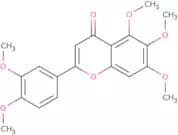
CAS:<p>Sinensetin is a polymethoxyflavone, which is a type of flavonoid compound. It is predominantly sourced from citrus peels, particularly those of oranges. The compound exhibits multiple biological activities, primarily through its mode of action that involves modulating inflammatory pathways and oxidative stress responses. Sinensetin achieves this by inhibiting pro-inflammatory cytokines and enzymes such as cyclooxygenase, thereby reducing inflammation processes at the cellular level.</p>Formula:C20H20O7Purity:Min. 95%Color and Shape:PowderMolecular weight:372.37 g/molDerrone-4'-methyl ether
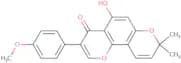
CAS:<p>Derrone-4'-methyl ether is a flavonoid derivative, which is a compound class known for diverse biological activities. This compound is sourced from the isoflavonoid family, predominantly found in legumes and other plant species. Isoflavonoids are secondary metabolites that play crucial roles in plant defense mechanisms and interactions with the environment.</p>Formula:C21H18O5Purity:Min. 95%Molecular weight:350.36 g/molTrifloxystrobin
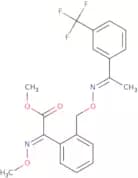
CAS:<p>Trifloxystrobin is a broad-spectrum fungicide, which is a synthetic compound derived from the strobilurin class of fungicides. Its mode of action involves the inhibition of mitochondrial respiration in fungi, specifically by binding to the Qo site of the cytochrome bc1 complex, thereby disrupting electron transport and energy production within fungal cells.</p>Formula:C20H19F3N2O4Purity:Min. 95%Color and Shape:PowderMolecular weight:408.37 g/molPseudobaptigenin
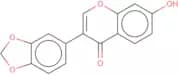
CAS:<p>Pseudobaptigenin is a naturally occurring flavonoid, which is primarily isolated from plant sources. As a type of secondary metabolite, flavonoids like pseudobaptigenin are synthesized by plants and often found in a variety of legumes and other plant species. These compounds typically play a role in plant defense mechanisms and contribute to pigmentation.</p>Formula:C16H10O5Purity:Min. 95%Color and Shape:PowderMolecular weight:282.25 g/mol3,3',4',5,7-Pentamethoxyflavone
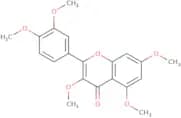
CAS:<p>3,3',4',5,7-Pentamethoxyflavone is a naturally occurring flavonoid compound, which is often extracted from specific plant sources. As a member of the flavonoid family, it is typically found in various plant extracts and contributes to the chemical diversity observed in phytochemistry.</p>Formula:C20H20O7Purity:Min. 98 Area-%Color and Shape:Slightly Yellow PowderMolecular weight:372.37 g/molArvensan
CAS:<p>Arvensan is a bioactive compound that acts as a biocide, derived from natural sources such as certain plant species. Its primary mode of action involves disrupting the cellular membranes of target microorganisms, leading to cell lysis and eventual death. This mechanism ensures efficacy against a broad spectrum of bacteria and fungi, demonstrating its potential as a versatile microbial control agent.</p>Formula:C17H18O4Purity:Min. 95%Molecular weight:286.32 g/mol7-Methoxyisoflavone
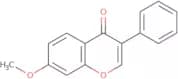
CAS:<p>7-Methoxyisoflavone is a synthetic isoflavone, which is a type of flavonoid compound typically found in plants. This compound, however, is artificially synthesized in laboratories, differentiating it from naturally occurring isoflavones found in sources like soy and other legumes. Its structure allows it to act as a non-hormonal anabolic agent, meaning it purportedly enhances anabolic processes without directly interacting with hormonal pathways, such as those involving testosterone or other steroids.</p>Formula:C16H12O3Purity:Min. 95%Molecular weight:252.26 g/mol3,5,7-Trihydroxy-4'-methoxyflavone
CAS:<p>3,5,7-Trihydroxy-4'-methoxyflavone is a flavonoid compound, which is naturally occurring in various plants. These bioactive compounds are part of a larger group known as flavones, prevalent in many fruits, vegetables, and certain herbs. Flavonoids such as 3,5,7-Trihydroxy-4'-methoxyflavone are synthesized through the plant's secondary metabolic pathways, typically as a response to environmental stressors or as part of normal growth processes.</p>Formula:C16H12O6Purity:Min. 95%Color and Shape:PowderMolecular weight:300.26 g/molNeoisoliquiritigenin
CAS:<p>Neoisoliquiritigenin is a flavonoid compound, which is a phytoestrogen derived from the root of Glycyrrhiza glabra, commonly known as licorice. Its mode of action primarily involves modulation of various cellular signaling pathways, including its notable antioxidant and anti-inflammatory effects. This compound exhibits a significant capability to scavenge free radicals and to inhibit pro-inflammatory mediators, thereby impacting oxidative stress and inflammatory responses at the cellular level.</p>Formula:C21H22O9Purity:Min. 95%Color and Shape:PowderMolecular weight:418.39 g/molVitexin
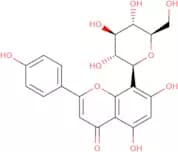
CAS:<p>Vitexin is a naturally occurring flavonoid, which is primarily extracted from plants such as the passionflower (Passiflora) and hawthorn (Crataegus). This bioactive compound is classified under the category of C-glycosyl flavones and is characterized by its unique structural features, including a glycosidic linkage that contributes to its stability and bioavailability.</p>Formula:C21H20O10Purity:Min. 95%Color and Shape:PowderMolecular weight:432.38 g/mol