Flavonoids
Flavonoids are a group of plant metabolites with antioxidant properties that contribute to the color of fruits and flowers. They play a significant role in protecting plants from UV radiation and pathogens. Flavonoids are studied for their potential health benefits, including anti-inflammatory, antiviral, and anticancer properties. They are widely researched in the fields of pharmacology, nutrition, and molecular biology.
Subcategories of "Flavonoids"
- Anthocyanidins(46 products)
- Anthocyanin(46 products)
- Catechin(88 products)
- Chalcones(237 products)
- Pterocarpan(28 products)
Found 2408 products of "Flavonoids"
Sort by
Purity (%)
0
100
|
0
|
50
|
90
|
95
|
100
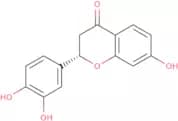
Butin
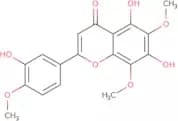
CAS:<p>Butin is a flavonoid compound, which is naturally derived from certain plants and is characterized by a chalcone structure. This compound acts as an antifungal agent by disrupting the cell membrane integrity of pathogenic fungi, ultimately inhibiting their growth and reproduction. The mechanism is thought to involve interference with key enzymatic pathways essential for cell wall synthesis, though precise molecular interactions are still under investigation.</p>Formula:C15H12O5Purity:Min. 95%Color and Shape:PowderMolecular weight:272.25 g/molAcerosin
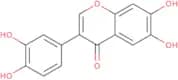
CAS:<p>Acerosin is a naturally derived antibiotic compound, sourced from Streptomyces bacteria, with a unique dual mode of action. It exhibits both antimicrobial activity and anti-inflammatory effects. The antimicrobial action is primarily achieved through disruption of bacterial cell wall synthesis, leading to bacterial cell lysis. Additionally, Acerosin modulates immune responses by inhibiting the production of pro-inflammatory cytokines, which reduces inflammation at the site of infection.</p>Purity:Min. 95%6,3'-Dihydroxydaidzein
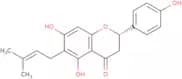
CAS:<p>6,3'-Dihydroxydaidzein is an isoflavonoid compound, which is a type of naturally occurring polyphenol. This compound is primarily sourced from plants, particularly legumes like soybeans, where it functions as a metabolite in the daidzein biosynthesis pathway. Mechanistically, 6,3'-Dihydroxydaidzein exhibits antioxidant properties by scavenging free radicals and inhibiting oxidative stress at the cellular level.</p>Formula:C15H10O6Purity:Min. 95%Color and Shape:Brown PowderMolecular weight:286.24 g/mol6-Prenylnaringenin
CAS:<p>6-Prenylnaringenin is a prenylflavonoid, which is a type of isoflavonoid, primarily derived from hops (Humulus lupulus). It is recognized for its potent phytoestrogenic properties, functioning as a selective agonist for estrogen receptors. By binding to estrogen receptors, 6-Prenylnaringenin can modulate estrogenic activities within the body, influencing various biological processes.</p>Formula:C20H20O5Purity:Min 98%Color and Shape:PowderMolecular weight:340.37 g/mol3'-Methoxy-β-naphthoflavone
CAS:3'-Methoxy-β-naphthoflavone is a synthetic compound, classified as a flavonoid derivative, which is widely utilized in scientific research as a potent inducer and modulator of cytochrome P450 enzymes, particularly CYP1A1 and CYP1A2. Its source is entirely chemical synthesis, allowing for controlled study of its physiological effects without interference from naturally occurring impurities.Formula:C20H14O3Purity:90%Color and Shape:PowderMolecular weight:302.32 g/molGenistin
CAS:<p>Genistin is a naturally occurring isoflavone glycoside, which is derived primarily from soybeans and other legumes. It serves as a glycoside form of genistein, a well-known phytoestrogen. The mode of action of Genistin involves its bioconversion into genistein through hydrolysis. Once converted, it functions by binding to estrogen receptors, exhibiting estrogenic activity that can modulate various biological pathways.</p>Formula:C21H20O10Purity:Min. 97 Area-%Color and Shape:Off-White PowderMolecular weight:432.38 g/mol5-Methyl 7-methoxyisoflavone
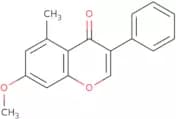
CAS:<p>5-Methyl 7-methoxyisoflavone is a synthetic isoflavone derivative, which is typically sourced in the laboratory through chemical synthesis processes involving the modification of plant-derived isoflavones. This compound is structurally similar to certain natural flavonoids but is characterized by the addition of the methyl and methoxy groups, which are not found in its natural counterparts.</p>Formula:C17H14O3Purity:Min. 95%Color and Shape:White PowderMolecular weight:266.29 g/mol3'-Prenyldaidzein
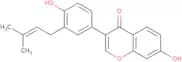
CAS:<p>3'-Prenyldaidzein is a prenylated isoflavone, which is a naturally occurring compound typically derived from plants such as those found in the Fabaceae family. Prenylated isoflavones are characterized by the attachment of a prenyl group to the isoflavone structure, which often enhances their biological activity compared to their non-prenylated counterparts.</p>Formula:C20H18O4Purity:Min. 95%Color and Shape:PowderMolecular weight:322.35 g/molKaempferol-3,4'-dimethyl ether
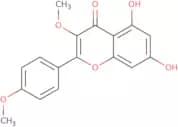
CAS:<p>Kaempferol-3,4'-dimethyl ether is a naturally occurring flavonoid compound which is primarily found in various plants. This compound is known for its structural classification as a methylated flavonol, distinguished by the presence of ether groups at the 3 and 4' positions of kaempferol. Derived mainly from botanical sources such as herbs and traditional medicinal plants, it plays a critical role in plant defense mechanisms.</p>Formula:C17H14O6Purity:Min. 95%Color and Shape:PowderMolecular weight:314.29 g/molOmbuoside
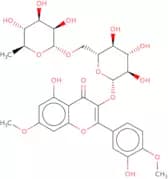
CAS:<p>Please enquire for more information about Ombuoside including the price, delivery time and more detailed product information at the technical inquiry form on this page</p>Formula:C29H34O16Purity:Min. 95%Color and Shape:Off-White To Yellow SolidMolecular weight:638.57 g/molQuercetin 3-b-D-glucopyranoside
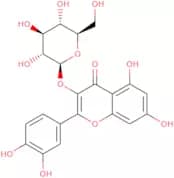
CAS:<p>Quercetin 3-b-D-glucopyranoside is a naturally occurring flavonoid, which is found predominantly in a variety of fruits and vegetables. Its primary source includes apples, onions, and tea, where it is often present as a glycoside conjugate. This compound exerts its effects through its mode of action as an antioxidant, scavenging free radicals, and modulating signaling pathways that influence cellular processes such as apoptosis and inflammation.</p>Formula:C21H20O12Purity:Min. 98 Area-%Color and Shape:PowderMolecular weight:464.38 g/mol3,7-Dihydroxy-5,8-dimethoxyflavanone
CAS:<p>3,7-Dihydroxy-5,8-dimethoxyflavanone is a flavonoid derivative, which is a type of polyphenolic compound commonly found in various plants. Flavonoids are known for their wide-ranging biological activities and are often studied for their roles in plant defense mechanisms. This compound can be sourced from plants such as those in the genus Citrus, where it contributes to the plant's metabolic pathways and confers resistance against pathogens.</p>Formula:C17H16O6Purity:Min. 95%Molecular weight:316.31 g/mol7,2',4'-Tribenzyloxyisoflavone
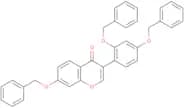
CAS:<p>7,2',4'-Tribenzyloxyisoflavone is a synthetic compound, which is a derivative of isoflavones, known for its potential role in biochemical and pharmacological research. This compound is primarily sourced through chemical synthesis involving the modification of the isoflavone structure by introducing benzyloxy groups, which alters its physicochemical properties and enhances its stability and solubility for research purposes.</p>Formula:C36H28O5Purity:Min. 95%Molecular weight:540.6 g/mol8,3'-Dihydroxydaidzein
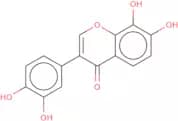
CAS:<p>8,3'-Dihydroxydaidzein is a naturally occurring isoflavonoid compound, which is a type of phytoestrogen predominantly found in soy and other leguminous plants. This compound is biosynthesized through the pathways involving the hydroxylation of daidzein, a well-known isoflavone. As a phytoestrogen, 8,3'-Dihydroxydaidzein mimics estrogenic activity by binding to estrogen receptors, thereby influencing various physiological processes in organisms.</p>Formula:C15H10O6Purity:(Hplc-Ms) Min. 80 Area-%Color and Shape:PowderMolecular weight:286.24 g/mol5,3'-Dimethoxyflavone
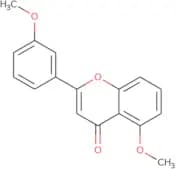
CAS:<p>5,3'-Dimethoxyflavone is a flavone derivative, which is a compound within the larger class of flavonoids. These compounds are primarily sourced from various plant species, where they contribute to pigmentation, growth, and defense. The presence of methoxy groups in this molecule alters its chemical properties, enhancing its solubility and bioavailability, which are critical for biological activity.</p>Formula:C17H14O4Purity:Min. 95%Molecular weight:282.29 g/molFlavone
CAS:<p>Flavone is a type of flavonoid, which is a naturally occurring compound found in various plant sources. As a subgroup of polyphenolic compounds, flavones are primarily derived from the leaves, stems, and seeds of plants like parsley, thyme, and celery. The mode of action of flavones involves their ability to act as antioxidant agents, scavenging free radicals and reducing oxidative stress in biological systems. This mechanism plays a crucial role in protecting cells from damage and maintaining cellular integrity.</p>Formula:C15H10O2Purity:Min. 98 Area-%Color and Shape:PowderMolecular weight:222.24 g/mol(-)-Pinostrobin
CAS:(-)-Pinostrobin is a natural flavonoid compound, which is predominantly found in various plant species, including members of the genus *Cajanus* and *Zingiber*. As a chiral molecule, it exhibits bioactive properties leading to multiple pharmacological effects. The mode of action of (-)-Pinostrobin involves modulation of various biochemical pathways, including antioxidant, anti-inflammatory, and antimicrobial activities. It interacts with cellular enzymes and receptors, exerting its effects through inhibition of pro-inflammatory cytokines and enhancing cellular antioxidant defenses.Formula:C16H14O4Purity:Min. 98 Area-%Color and Shape:PowderMolecular weight:270.28 g/mol(±)-Naringenin
CAS:<p>Inhibits CYP3A4 and Shad 3 transcription; antioxidant; anti-tumor</p>Formula:C15H12O5Purity:Min. 98 Area-%Color and Shape:Brown White PowderMolecular weight:272.25 g/mol7,8,4'-Trihydroxyflavone
CAS:<p>7,8,4'-Trihydroxyflavone is a synthetic flavonoid compound, which is a type of polyphenolic molecule derived through chemical synthesis. Its structure mimics naturally occurring flavonoids found in various plants but is specifically designed and manufactured in laboratory settings to achieve precise molecular composition and enhanced activity.</p>Formula:C15H10O5Purity:Min. 95%Color and Shape:PowderMolecular weight:270.24 g/mol7,2'-Dihydroxy-4',5'-dimethoxyisoflavone
CAS:<p>7,2'-Dihydroxy-4',5'-dimethoxyisoflavone is a naturally occurring isoflavone, which is a type of flavonoid commonly found in various plants. Isoflavones are primarily sourced from legumes and are prevalent in dietary phytoestrogens. The mode of action of this compound involves modulation of cellular pathways due to its antioxidant properties and potential to interact with estrogen receptors. Such interactions may influence gene expression and cell proliferation in specific tissue types.</p>Formula:C17H14O6Purity:Min. 95%Color and Shape:PowderMolecular weight:314.29 g/mol