Flavonoids
Flavonoids are a group of plant metabolites with antioxidant properties that contribute to the color of fruits and flowers. They play a significant role in protecting plants from UV radiation and pathogens. Flavonoids are studied for their potential health benefits, including anti-inflammatory, antiviral, and anticancer properties. They are widely researched in the fields of pharmacology, nutrition, and molecular biology.
Subcategories of "Flavonoids"
- Anthocyanidins(46 products)
- Anthocyanin(46 products)
- Catechin(88 products)
- Chalcones(237 products)
- Pterocarpan(28 products)
Found 2408 products of "Flavonoids"
Sort by
Purity (%)
0
100
|
0
|
50
|
90
|
95
|
100
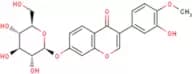
Calycosin-7-O-β-D-glucoside
CAS:<p>Calycosin-7-O-β-D-glucoside (calycosin-7-O-beta-D-glucopyranoside) possesses a protective effect on rat hepatocytes, an inhibitory effect on COX-2 activity.</p>Formula:C22H22O10Purity:98% - 99.981%Color and Shape:SolidMolecular weight:446.4Dihydrokaempferol-3-O-arabinoside
CAS:Dihydrokaempferol-3-O-arabinoside is a flavonoid compound, which is a type of phenolic product found in plants. These compounds are prevalent in various plant species where they contribute to the pigmentation and play a crucial role in plant defense mechanisms. The compound is derived from natural sources, primarily isolated from plant materials rich in flavonoids, such as certain fruits and medicinal herbs.Formula:C20H20O10Purity:Min. 95%Molecular weight:420.37 g/molHesperidin (natural)
CAS:<p>Hesperidin is a bioflavonoid compound, which is naturally sourced from citrus fruits, primarily found in the peels of oranges and lemons. Its mode of action involves acting as a potent antioxidant by scavenging free radicals and reducing oxidative stress. Hesperidin also exhibits anti-inflammatory effects by modulating various signaling pathways and inhibiting the release of pro-inflammatory cytokines.In scientific applications, hesperidin is extensively studied for its potential therapeutic benefits. Its antioxidant properties make it a candidate for mitigating oxidative damage in various tissues, while its anti-inflammatory effects are explored in the context of chronic inflammatory conditions. Research has shown potential cardiovascular benefits, including the improvement of endothelial function and lipid profiles. Additionally, hesperidin is investigated for its neuroprotective effects and potential in managing metabolic disorders. These diverse applications highlight the significance of hesperidin in pharmacological research, aiming to leverage its natural properties for health benefits.</p>Formula:C28H34O15Purity:Min. 90 Area-%Color and Shape:Off-White PowderMolecular weight:610.56 g/molOrobol 7,3',4'-trimethyl ether
CAS:<p>Orobol 7,3',4'-trimethyl ether is a synthetic flavonoid compound, which is derived from the chemical modification of natural flavonoids. These modifications involve methylation, specifically at the 7, 3', and 4' positions of the flavone structure. This chemical derivation allows for enhanced stability and solubility compared to its natural counterparts.</p>Formula:C18H16O6Purity:Min. 95%Molecular weight:328.32 g/molPuerarin
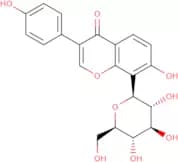
CAS:<p>Puerarin is a bioactive isoflavone, which is extracted from the root of Pueraria lobata, commonly known as kudzu. It functions as a phytoestrogen and exhibits multiple pharmacological activities. The mode of action of puerarin involves interacting with various biological pathways, including antioxidant, anti-inflammatory, and neuroprotective mechanisms. It modulates enzyme activities and influences cell signaling pathways, making it a versatile compound for therapeutic research.</p>Formula:C21H20O9Purity:Min. 98 Area-%Color and Shape:White PowderMolecular weight:416.38 g/molNeoisoastilbin
CAS:<p>Neoisoastilbin is a chemical compound, specifically a flavonoid derivative, derived primarily from natural botanical sources such as certain species of plants. It is characterized by its unique structural configuration which distinguishes it from its closely related isomers. As a flavonoid, Neoisoastilbin acts through multiple biochemical pathways, notably by scavenging free radicals and modulating oxidative stress responses, which can have significant implications in biological systems.Neoisoastilbin's notable applications lie in its potential antioxidant properties, which are of particular interest in the fields of pharmacology and biochemistry. Researchers study its effects on cellular models to understand its role in protecting cells from oxidative damage. It also has potential applications in the development of therapeutic agents aiming to mitigate conditions associated with oxidative stress, such as neurodegenerative diseases or cardiovascular disorders. Investigations into its pharmacodynamics and pharmacokinetics are essential to elucidate its full potential and mechanisms within complex biological systems.</p>Formula:C21H22O11Purity:Min. 95%Molecular weight:450.39 g/mol5-Hydroxy-7,4'-dimethoxy-6,8-dimethylflavone
CAS:<p>5-Hydroxy-7,4'-dimethoxy-6,8-dimethylflavone is a bioactive flavonoid compound, which is naturally derived from certain plant sources. As a type of flavone, this compound is notable for its polyphenolic skeleton that contributes to notable biological properties. Its mode of action primarily involves modulating various enzymatic pathways and cellular signaling processes due to its structural ability to interact with biomolecules like enzymes and receptors. This interaction can lead to a range of biological effects, including antioxidant and anti-inflammatory activities.</p>Formula:C19H18O5Purity:Min. 95%Molecular weight:326.34 g/mol5-Hydroxy-7,2',3',4',5'-pentamethoxyflavone
CAS:<p>5-Hydroxy-7,2',3',4',5'-pentamethoxyflavone is a flavone that can be found in coffee. It has been shown to inhibit the enzyme arabinose isomerase and psiadiarabin, which are involved in the conversion of sugar into energy in plants. 5-Hydroxy-7,2',3',4',5'-pentamethoxyflavone also inhibits the plant enzyme phytase, which breaks down phytic acid. Phytic acid is a naturally occurring substance that binds to minerals such as calcium and zinc, preventing their absorption by the body. This compound has not shown any significant activity against bacterial DNA gyrase or topoisomerase IV or human DNA gyrase or topoisomerase II.</p>Formula:C20H20O8Purity:Min. 95%Molecular weight:388.37 g/mol5,8-Dihydroxy-3,3',4',7-tetramethoxyflavone
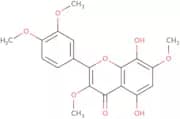
CAS:<p>5,8-Dihydroxy-3,3',4',7-tetramethoxyflavone is a secondary metabolite of plants that belongs to the group of phytochemicals. It is one of the most potent natural antioxidants and has been shown to have antioxidant activity in a number of different assays. 5,8-Dihydroxy-3,3',4',7-tetramethoxyflavone can be used for analytical purposes as an HPLC standard or reference material. This compound has also been shown to inhibit tumor cell proliferation in vitro and may be useful for research and development purposes.</p>Formula:C19H18O8Purity:Min. 95%Molecular weight:374.34 g/molScutellarein 7-methyl ether
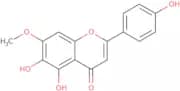
CAS:<p>Scutellarein 7-methyl ether is a naturally occurring flavone derivative, which is primarily sourced from various plant species within the genus Scutellaria. These plants are rich in flavonoids and have been studied extensively for their diverse biochemical properties. The mode of action of Scutellarein 7-methyl ether involves its ability to act as an antioxidant, neutralizing free radicals and reducing oxidative stress at the cellular level. This compound has been observed to interfere with various enzymatic pathways, contributing to its potential therapeutic effects.</p>Formula:C16H12O6Purity:Min. 95%Color and Shape:PowderMolecular weight:300.26 g/molDihydroisoformononetin
CAS:<p>Dihydroisoformononetin is an isoflavonoid compound, which is a type of phytoestrogen derived primarily from plant sources, such as legumes and certain medicinal herbs. This compound is of significant interest due to its structural similarity to estrogen, which allows it to interact with estrogen receptors in the body. Its mode of action involves modulating estrogenic activity by acting either as an agonist or antagonist, depending on the tissue context. Such dual behavior makes it an intriguing subject of study in endocrine research.</p>Formula:C16H14O4·H2OPurity:Min. 95%Molecular weight:288.3 g/molRhodiosin
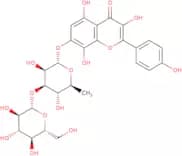
CAS:<p>Rhodiosin is a bioactive compound, which is a polyphenolic glycoside derived from the plant Rhodiola rosea. This compound is primarily sourced through extraction processes that isolate active constituents from the roots of Rhodiola, a perennial plant native to cold regions and known for its traditional medicinal uses. Rhodiosin exhibits its mode of action through various molecular pathways, particularly influencing the central nervous system and enhancing cellular resistance to stress. It acts as an adaptogen, a class of metabolic regulators that promote homeostasis and increase the body's resilience to environmental and physical stressors.</p>Formula:C27H30O16Purity:Min. 95%Color and Shape:PowderMolecular weight:610.52 g/mol(-)-Deguelin
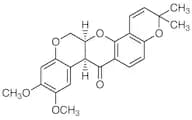
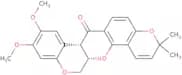
CAS:Formula:C23H22O6Purity:>95.0%(HPLC)Color and Shape:White to Yellow to Green powder to crystalMolecular weight:394.427-Hydroxyisoflavone-7-O-glucoside
CAS:<p>7-Hydroxyisoflavone-7-O-glucoside is a glucoside derivative of isoflavone, which is a naturally occurring flavonoid often sourced from plants such as legumes and soy. This compound is known for its biochemical properties, primarily its role as an antioxidant and its capacity to modulate inflammation.</p>Formula:C21H20O8Purity:Min. 95%Molecular weight:400.38 g/molIsogentisin
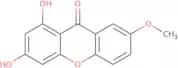
CAS:<p>Isogentisin is a specific type of biochemical compound that falls under the category of xanthones, which are naturally occurring polyphenolic compounds. It is typically sourced from certain medicinal plants, where it is found in the roots or other plant parts. The mode of action of isogentisin is primarily related to its antioxidant properties, which involve neutralizing free radicals and reducing oxidative stress within biological systems. This action can potentially protect cells and tissues from damage that may lead to various diseases.</p>Formula:C14H10O5Purity:Min. 95%Molecular weight:258.23 g/molDihydrogenistein - decarboxy-dihydroxygenistein mixture
<p>Dihydrogenistein - decarboxy-dihydroxygenistein mixture is a synthetic biochemical compound, which is derived from the modification of isoflavonoid structures primarily sourced from plants. This mixture represents a complex amalgamation of two chemically altered forms of natural phytoestrogens. It functions by interacting with various cellular pathways, potentially influencing gene expression and signaling mechanisms through selective modulation of estrogen receptors and related enzymatic activities.</p>Purity:Min. 95%Deguelin
CAS:<p>Deguelin is a rotenoid, which is a naturally occurring compound derived primarily from the roots of plants in the Leguminosae family, such as Mundulea sericea and Derris species. It functions as a potent inhibitor of mitochondrial complex I, interfering with cellular respiration by blocking electron transport within the mitochondrial electron transport chain. This action leads to the inhibition of ATP production, which is essential for cellular energy.</p>Formula:C23H22O6Purity:Min. 95%Molecular weight:394.42 g/molPomiferin-3',4'-dimethylether
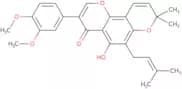
CAS:<p>Pomiferin-3',4'-dimethylether is a natural flavonoid compound, which is isolated from plants such as the Osage orange (Maclura pomifera). This compound is derived through meticulous extraction techniques that preserve its bioactive properties.</p>Formula:C27H28O6Purity:Min. 95%Molecular weight:448.51 g/molOrobol 7,3'-dimethyl ether
CAS:<p>Orobol 7,3'-dimethyl ether is a flavonoid compound, which is derived from natural plant sources. This compound is synthesized as a methylated ether of Orobol, a type of isoflavone. The mode of action of Orobol 7,3'-dimethyl ether involves interacting with biological pathways that may influence cellular processes, including antioxidant and anti-inflammatory activities. By modulating these pathways, it potentially impacts various physiological functions.</p>Formula:C17H14O6Purity:Min. 95%Molecular weight:314.29 g/mol7-Hydroxy-4'-methoxyisoflavan
CAS:7-Hydroxy-4'-methoxyisoflavan is a naturally occurring isoflavan, which is a type of flavonoid compound predominantly derived from leguminous plants. Isoflavans are a subclass of isoflavonoids that are known for their diverse biological activities. This particular compound is often extracted from plants in the Fabaceae family and exhibits a rich chemical framework that supports multiple pharmacological functions.Formula:C16H16O3Purity:Min. 95%Molecular weight:256.3 g/mol