Flavonoids
Flavonoids are a group of plant metabolites with antioxidant properties that contribute to the color of fruits and flowers. They play a significant role in protecting plants from UV radiation and pathogens. Flavonoids are studied for their potential health benefits, including anti-inflammatory, antiviral, and anticancer properties. They are widely researched in the fields of pharmacology, nutrition, and molecular biology.
Subcategories of "Flavonoids"
- Anthocyanidins(46 products)
- Anthocyanin(46 products)
- Catechin(88 products)
- Chalcones(237 products)
- Pterocarpan(28 products)
Found 2408 products of "Flavonoids"
Sort by
Purity (%)
0
100
|
0
|
50
|
90
|
95
|
100
Hesperetin 7-O-β-D-glucuronide
CAS:<p>Hesperetin 7-O-beta-D-glucuronide is a flavonoid metabolite, which is a derivative of hesperetin commonly found in citrus fruits. This compound is produced through the biotransformation of hesperetin, involving conjugation with glucuronic acid in the liver, and is integral to the metabolism of flavonoids in humans. Hesperetin 7-O-beta-D-glucuronide exhibits potential antioxidant properties, making it of interest in scientific research aimed at exploring its bioactivity and potential therapeutic benefits.</p>Formula:C22H22O12Purity:Min. 95%Molecular weight:478.4 g/mol3',5'-Diprenylliquiritigenin
CAS:<p>3',5'-Diprenylliquiritigenin is a prenylated flavonoid, which is a type of naturally occurring compound found in certain plants. This specific compound is isolated primarily from licorice root, where it is synthesized as part of the plant's secondary metabolites. Its mode of action involves modulating various signaling pathways within biological systems, demonstrating potential antioxidant, anti-inflammatory, and anti-cancer properties.</p>Formula:C25H28O4Purity:Min. 95%Molecular weight:392.49 g/mol7,8,4'-Trimethoxyisoflavone
CAS:<p>7,8,4'-Trimethoxyisoflavone is a naturally occurring isoflavone, which is a type of flavonoid commonly found in various plants. It is derived from natural botanical sources, where it functions as a secondary metabolite. Isoflavones are known for their complex chemical structures and ability to interact with various biological pathways.</p>Formula:C18H16O5Purity:Min. 95%Molecular weight:312.32 g/molGlycitin
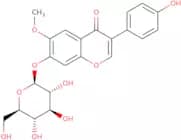
CAS:<p>Glycitin is an isoflavone glycoside, which is a bioactive compound primarily derived from soybeans. This natural compound is sourced from the soy plant, Glycine max, where it serves as one of the predominant isoflavones. Isoflavones like glycitin function as phytoestrogens, plant-derived compounds that can mimic or modulate the action of estrogen in the body. Glycitin undergoes hydrolysis in the digestive system to produce its aglycone form, glycitein, which can interact with estrogen receptors and exert estrogenic effects.</p>Formula:C22H22O10Purity:Min. 98 Area-%Color and Shape:White PowderMolecular weight:446.4 g/molIsoastilbin
CAS:<p>Isoastilbin is a bioactive flavonoid, which is a naturally occurring compound found primarily in certain plant species, such as the Chinese herb Smilax glabra and Engelhardtia roxburghiana Wall leaf. As a derivative of astilbin, it possesses a unique mechanism that involves the modulation of cellular redox states. Isoastilbin's mode of action is primarily through its antioxidant properties, where it scavenges free radicals and thus, mitigates oxidative stress at a cellular level. Additionally, it exhibits anti-inflammatory effects by inhibiting the production of pro-inflammatory cytokines.The applications of Isoastilbin are diverse and promising in scientific research. It is extensively studied for its potential therapeutic benefits in combating diseases associated with oxidative stress and inflammation, such as cardiovascular diseases, neurodegenerative disorders, and certain metabolic syndromes. Furthermore, its role in cell signaling and apoptosis makes it a candidate for cancer research, offering insights into the molecular pathways that can be targeted for therapeutic intervention. Isoastilbin’s multifunctional properties make it a compelling subject for ongoing pharmacological and biomedical research.</p>Formula:C21H22O11Purity:Min. 95%Color and Shape:PowderMolecular weight:450.39 g/molRothindin
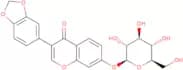
CAS:<p>Please enquire for more information about Rothindin including the price, delivery time and more detailed product information at the technical inquiry form on this page</p>Formula:C22H20O10Purity:Min. 95%Color and Shape:PowderMolecular weight:444.39 g/molNaringin dihydrate
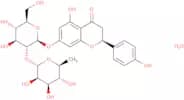
CAS:<p>Naringin dihydrate is a flavonoid glycoside, which is a bioactive compound found primarily in citrus fruits, especially grapefruits and oranges. It acts as a potent antioxidant and anti-inflammatory agent, which functions by scavenging free radicals and modulating signaling pathways involved in oxidative stress and inflammation.</p>Formula:C27H32O14·2H2OPurity:Min. 95%Molecular weight:616.57 g/molQuercetin 3-rhamnoside 7-glucoside
CAS:<p>Quercetin 3-rhamnoside 7-glucoside is a naturally occurring flavonoid glycoside, which is derived from various plant sources, particularly those rich in flavonoids like fruits, vegetables, and leaves. This compound is characterized by its complex structure that includes quercetin linked to sugar moieties, specifically rhamnose and glucose, at the 3 and 7 positions.</p>Formula:C27H30O16Purity:Min. 95%Color and Shape:PowderMolecular weight:610.52 g/molScutellarein-7-O-glucoside
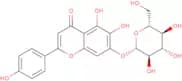
CAS:<p>Scutellarein-7-O-glucoside is a flavonoid glucoside, which is a type of phenolic compound commonly found in plants. This compound is primarily sourced from the Scutellaria species, among other botanical sources, where it occurs as a glycoside derivative of scutellarein. It serves a vital role in plant defense mechanisms, contributing to resistance against pathogens and ultraviolet radiation.</p>Formula:C21H20O11Purity:Min. 95%Color and Shape:White PowderMolecular weight:448.38 g/molQuercetin-3-O-β-D-glucopyranosyl-6-acetate
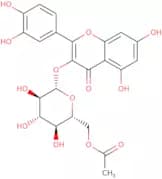
CAS:Quercetin-3-O-beta-D-glucopyranosyl-6-acetate is a glycosylated flavonoid compound, which is a naturally occurring plant metabolite. This compound is predominantly sourced from various plant species, where it acts as a secondary metabolite contributing to plant defense mechanisms. The mode of action of Quercetin-3-O-beta-D-glucopyranosyl-6-acetate involves its ability to function as an antioxidant, scavenging free radicals and reducing oxidative stress in biological systems. Additionally, its glycosylated structure may enhance its solubility and stability, facilitating better bioavailability compared to non-glycosylated counterparts.Formula:C23H22O13Purity:Min. 95%Color and Shape:PowderMolecular weight:506.41 g/molDihydrogenistein 4'-methyl ether
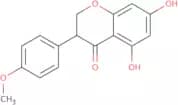
CAS:<p>Dihydrogenistein 4'-methyl ether is a phytoestrogen compound, which is derived from botanical sources such as Leguminosae plants. Its molecular structure consists of a flavonoid backbone, specifically modified with a methyl ether group at the 4' position. This structural modification imparts unique biological properties to the compound.</p>Formula:C16H14O5Purity:Min. 95%Color and Shape:PowderMolecular weight:286.28 g/molIsoaloeresin D (contains up to 20% Aloeresin D)
CAS:<p>Isoaloeresin D is a natural compound product, which is derived from the Aloe plant, specifically containing up to 20% Aloeresin D. It is a phytochemical extracted from the leaves of Aloe species, renowned for its inclusion of various bioactive compounds. The primary mode of action of Isoaloeresin D involves its potential antioxidant properties, which may contribute to the neutralization of free radicals and reduction of oxidative stress within biological systems.</p>Formula:C29H32O11Purity:Min. 95%Color and Shape:PowderMolecular weight:556.56 g/mol7,8-Dihydroxyflavanone
CAS:<p>7,8-Dihydroxyflavanone is a naturally occurring flavonoid compound, which is typically sourced from various plant species. This compound is structurally characterized by two hydroxyl groups, which are crucial for its biochemical activity. Its mode of action primarily involves the modulation of cellular signaling pathways, including those related to oxidative stress and enzyme inhibition. By interfering with these pathways, 7,8-Dihydroxyflavanone exerts antioxidant and possibly anti-inflammatory effects.</p>Purity:Min. 95%5-Hydroxy-7-methoxyisoflavone
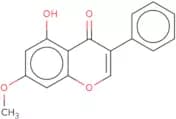
CAS:5-Hydroxy-7-methoxyisoflavone is an isoflavone compound, a type of naturally occurring organic substance usually derived from plant sources such as soybeans and other legumes. These compounds are known for their significant role in the plant kingdom, often contributing to the plant's resistance against pathogens and environmental stresses. The mode of action of 5-Hydroxy-7-methoxyisoflavone involves its potential antioxidant properties, where it may neutralize free radicals, thereby reducing oxidative stress and cellular damage. This activity arises primarily from its chemical structure, enabling it to donate electrons to unstable molecules.Formula:C16H12O4Purity:Min. 95%Molecular weight:268.26 g/molTamarixetin-7-O-rutinoside
CAS:<p>Tamarixetin-7-O-rutinoside is a flavonoid glycoside, which is a natural compound derived from the Tamarix plant. In nature, it is typically isolated from species within this genus, known for its phytoactive compounds. Tamarixetin-7-O-rutinoside acts primarily through its antioxidant mechanism, which involves scavenging free radicals and reducing oxidative stress within biological systems. This activity is crucial in minimizing cellular damage and maintaining homeostasis.</p>Formula:C28H32O16Purity:Min. 95%Color and Shape:PowderMolecular weight:624.54 g/molApigenin - 94%
CAS:<p>Apigenin - 94% is a purified form of apigenin, which is a naturally occurring flavonoid. It is primarily sourced from various plant species, including parsley, celery, and chamomile, where it is a prominent active component. The mode of action of apigenin involves multiple biochemical pathways: it acts as an anti-inflammatory agent, modulates enzyme activities, and exhibits antioxidant properties by scavenging free radicals. Additionally, apigenin interacts with cellular signaling pathways, such as the MAPK and PI3K/Akt, which contribute to its protective effects against oxidative stress and its potential in promoting apoptosis in cancerous cells.</p>Formula:C15H10O5Purity:Min. 95%Color and Shape:PowderMolecular weight:270.24 g/mol7-O-Methyl-liquiritigenin
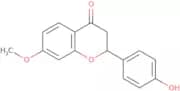
CAS:<p>7-O-Methyl-liquiritigenin is a flavonoid that has been shown to have anticarcinogenic properties. It has been studied in human studies and shown to be safe for use in cancer patients. 7-O-Methyl-liquiritigenin inhibits the growth of cancer cells by inhibiting cell proliferation, inducing apoptosis, and arresting the cell cycle at G2/M phase. 7-O-Methyl-liquiritigenin also inhibits the production of cyclooxygenase 2 (COX2) and prostaglandin E2 (PGE2), which have been linked to tumor promotion. 7-O-Methyl-liquiritigenin has been shown to inhibit the growth of human colon cancer cells in vitro, as well as in vivo when injected into mice. This compound also inhibits PIM1, an oncogene that regulates cellular proliferation, differentiation, tumor progression, angiogenesis, and metast</p>Formula:C16H14O4Purity:Min. 95%Molecular weight:270.28 g/mol4'-Hydroxy-7-methoxyisoflavan
CAS:<p>4'-Hydroxy-7-methoxyisoflavan is a naturally occurring isoflavan, which is a subclass of flavonoids typically found in legumes and various plant sources. This compound is derived from the phenylpropanoid pathway, a critical biosynthetic route in plants responsible for producing a variety of phenolic compounds. Its mode of action is largely attributed to its ability to interact with cellular signaling pathways, exhibiting antioxidant, anti-inflammatory, and potentially estrogenic activities. These properties allow 4'-Hydroxy-7-methoxyisoflavan to modulate oxidative stress by scavenging free radicals and influencing gene expression related to detoxification enzymes.</p>Formula:C16H16O3Purity:Min. 95%Molecular weight:256.3 g/mol7-Hydroxyflavone-beta-D-glucoside
CAS:<p>7-Hydroxyflavone-beta-D-glucoside is a glucoside compound, which is a type of natural flavonoid derivative. This compound is derived from plant sources, particularly those rich in flavonoids, where it is a metabolite formed through the glycosylation of 7-hydroxyflavone. The mode of action of 7-Hydroxyflavone-beta-D-glucoside involves interacting with cellular antioxidative pathways. It potentially offers protection against oxidative stress by scavenging free radicals and modulating enzyme activities related to oxidative metabolism.</p>Formula:C21H20O8Purity:Min. 95%Color and Shape:PowderMolecular weight:400.38 g/molIzalpinin
CAS:<p>Izalpinin is a specialized phytochemical compound, specifically a flavonoid, which is derived from various plant sources. It exhibits a range of bioactive properties due to its complex chemical structure. The primary mode of action of Izalpinin involves modulation of cellular signaling pathways and inhibition of specific enzymatic activities, which underpins its diverse pharmacological effects.</p>Formula:C16H12O5Purity:Min. 95%Molecular weight:284.26 g/mol