Flavonoids
Flavonoids are a group of plant metabolites with antioxidant properties that contribute to the color of fruits and flowers. They play a significant role in protecting plants from UV radiation and pathogens. Flavonoids are studied for their potential health benefits, including anti-inflammatory, antiviral, and anticancer properties. They are widely researched in the fields of pharmacology, nutrition, and molecular biology.
Subcategories of "Flavonoids"
- Anthocyanidins(46 products)
- Anthocyanin(46 products)
- Catechin(88 products)
- Chalcones(237 products)
- Pterocarpan(28 products)
Found 2408 products of "Flavonoids"
Sort by
Purity (%)
0
100
|
0
|
50
|
90
|
95
|
100
Morin hydrate
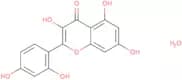
CAS:<p>Morin hydrate is a flavonoid compound, which is a naturally occurring substance found primarily in the members of the Moraceae family, such as morus or mulberry and other fruits. It possesses significant antioxidant activity, which is achieved through its ability to scavenge free radicals and inhibit oxidative stress pathways. This mechanism of action is primarily due to its capacity to donate hydrogen atoms, thereby neutralizing unstable and reactive oxidative species.</p>Formula:C15H10O7·xH2OPurity:Min. 95%Color and Shape:PowderMolecular weight:302.24 g/molFlavanone rhamnoglucoside
<p>Flavanone rhamnoglucoside is a specialized flavonoid compound, which is derived from various natural sources such as fruits, vegetables, and certain medicinal plants. It functions primarily as an antioxidant by scavenging free radicals, thereby protecting cells from oxidative stress. Additionally, it exhibits anti-inflammatory properties by modulating pathways involved in inflammation, such as NF-kB and COX-2.</p>Purity:Min. 95%3',4',7-Trimethoxyflavone
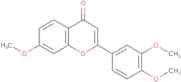
CAS:<p>3',4',7-Trimethoxyflavone is a bioactive flavonoid compound, which is predominantly sourced from certain plant species, including those within the genus Kaempferia. This compound is part of the larger class of flavonoids known for their diverse biological activities. Its mode of action primarily involves modulating various cellular pathways, including signaling pathways related to inflammation, angiogenesis, and apoptosis. Recent studies suggest its potential as an inhibitor of specific enzymes and receptors, enabling its role in reducing oxidative stress and modulating immune responses.</p>Formula:C18H16O5Purity:Min. 95%Molecular weight:312.32 g/molFlavanomarein
CAS:Flavanomarein is a flavonoid compound, which is derived from the tea plant, Camellia sinensis. This compound is part of the broader family of polyphenolic flavonoids, which are secondary metabolites commonly found in various plants. Flavanomarein exerts its effects primarily through its antioxidant properties. The flavonoid can scavenge free radicals and inhibit oxidative stress, which are critical functions in preventing cellular damage and maintaining homeostasis. Additionally, flavanomarein may modulate various signaling pathways that are involved in inflammation and apoptosis, offering potential therapeutic benefits.Formula:C21H22O11Purity:Min. 95%Color and Shape:PowderMolecular weight:450.39 g/mol2',7-Dihydroxyflavone
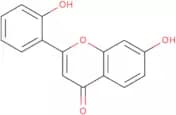
CAS:<p>2',7-Dihydroxyflavone is a natural flavonoid compound, which is derived from plant sources, particularly within the broader family of flavonoids known for their diverse biological activities. This compound exhibits its mode of action primarily through interactions with cellular signaling pathways, notably acting as a potent agonist for the TrkB receptor, a critical component in neurotrophic signaling. The activation of TrkB is pivotal in promoting neuronal survival, differentiation, and synaptic plasticity, making this compound of significant interest in the field of neuroscience.</p>Formula:C15H10O4Purity:Min. 95%Color and Shape:PowderMolecular weight:254.24 g/mol8-Hydroxygenistein-5,7,8,4'-tetramethyl ether
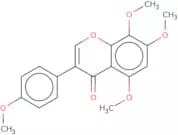
CAS:<p>8-Hydroxygenistein-5,7,8,4'-tetramethyl ether is a natural product with bioactive properties. It is an 8-hydroxy derivative of genistein that is found in soybeans and other legumes. The purity of this compound is confirmed by HPLC standards and it has been isolated from the plant source. This compound can be used as a reference material for analytical purposes or for quality control testing.</p>Formula:C19H18O6Purity:Min. 95%Molecular weight:342.34 g/molTectorigenin
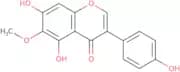
CAS:<p>Tectorigenin is a naturally occurring isoflavone, which is derived from plants such as Belamcanda chinensis and the Pueraria genus. It functions primarily as an antioxidant and has demonstrated various biological activities. Tectorigenin acts by inhibiting certain enzymes and signaling pathways, which contributes to its anti-inflammatory, anti-cancer, and neuroprotective effects.</p>Formula:C16H12O6Purity:Min. 95%Color and Shape:White PowderMolecular weight:300.26 g/mol8-Prenylnaringenin
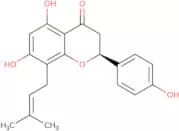
CAS:<p>8-Prenylnaringenin is a flavonoid compound, which is a naturally occurring phytoestrogen. It is primarily found in hops (Humulus lupulus), a plant commonly used in brewing beer. The compound is known for its high estrogenic activity, which is attributed to its ability to bind to estrogen receptors, particularly the estrogen receptor alpha.</p>Formula:C20H20O5Purity:Min. 98 Area-%Color and Shape:PowderMolecular weight:340.37 g/molPuerarin
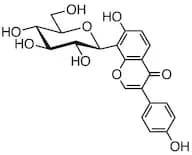
CAS:Formula:C21H20O9Purity:>98.0%(T)(HPLC)Color and Shape:White to Almost white powder to crystalMolecular weight:416.385-Hydroxyflavanone
CAS:<p>5-Hydroxyflavanone is a naturally occurring flavonoid compound, which is predominantly sourced from various plant species, including fruits, vegetables, and certain herbs. These plants synthesize flavonoids as part of their secondary metabolism, aiding in defense mechanisms against pathogens and contributing to their pigmentation.</p>Formula:C15H12O3Purity:Min. 95%Color and Shape:Off-White PowderMolecular weight:240.25 g/mol4'-Methoxyflavonol
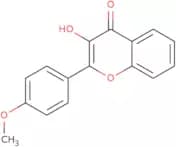
CAS:<p>4'-Methoxyflavonol is a flavonoid compound, which is a naturally occurring secondary metabolite primarily found in various plant species. It is characterized by the presence of a methoxy group attached to the flavonol backbone, contributing to its unique chemical properties. Through its antioxidant activity, 4'-Methoxyflavonol plays a crucial role in neutralizing free radicals and reducing oxidative stress within cells.</p>Formula:C16H12O4Purity:Min. 95%Molecular weight:268.26 g/mol2',6-Dihydroxyflavone
CAS:<p>2',6-Dihydroxyflavone is a natural flavonoid compound, which is derived from various plant sources. This compound is known for its interaction with cellular pathways and has been studied extensively for its potential neuroprotective effects. 2',6-Dihydroxyflavone acts as an agonist for the TrkB receptor, which is the high-affinity catalytic receptor for the brain-derived neurotrophic factor (BDNF). By activating this receptor, it plays a crucial role in neuronal survival, development, and plasticity.</p>Formula:C15H10O4Purity:Min. 95%Molecular weight:254.24 g/mol4,7-Dihydroxy-2'-methoxyisoflavan
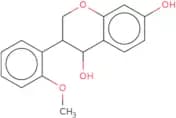
CAS:<p>4,7-Dihydroxy-2'-methoxyisoflavan is a naturally occurring isoflavan compound, which is typically extracted from various plant sources known for their medicinal properties. These sources include legumes and other plant families rich in phytoestrogens and related secondary metabolites.</p>Formula:C16H16O4Purity:Min. 95%Molecular weight:272.3 g/molAureusidin
CAS:<p>Aureusidin is a flavonoid pigment, which is a type of plant-derived compound. It is primarily sourced from various flowering plants, where it contributes to the coloration of petals. Aureusidin is synthesized through the enzymatic oxidation of chalcones, which involves flavonoid oxidase activity.</p>Formula:C15H10O6Purity:(%) Min. 96%Color and Shape:Orange PowderMolecular weight:286.24 g/molTyphaneoside
CAS:Controlled Product<p>Applications Typhaneoside is a flavonoid glycoside plant extract with potential ability to treat primary dysmenorrhea through the Shaofu Zhuyu decoction.<br>References Shulan S. et al.: Am. J. Chin. Med., 38, 777 (2010); Huang, X. et al.: J. Chrom. B. Anal. Tech. Biomed. Life Sci., 962, 75 (2014);<br></p>Formula:C34H42O20Color and Shape:NeatMolecular weight:770.685a-Pregnane-3-one-20a-ol
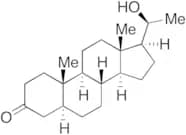
CAS:Controlled Product<p>Applications 5α-Pregnane-3-one-20α-ol, is a steroid metabolome, that can be used for in studies of a possible tool for laboratory diagnosis of schizophrenia. It is also a metabolite of Progesterone (P755900) in adipose cells.<br>References Bicikova, M., et al.: J. Steriod Biochem. Mol. Bio., 77, 133 (2013); Zhang, Y., et al.: Mol. Cell. Endocrinology, 298, 76 (2009);<br></p>Formula:C21H34O2Color and Shape:NeatMolecular weight:318.498,9-Di-O-methyl-urolithin D
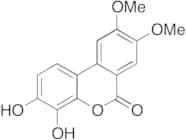
CAS:Controlled Product<p>Applications 8,9-Di-O-methyl-urolithin D is a derivative of Urolithin D (U847020) which is used in biological studies to evaluate DNA gyrase inhibitory activity of ellagic acid derivatives.<br>References Weidner-Weels, M. A., et al: Bioorg. Med. Chem. Lett., 8, 97 (1998)<br></p>Formula:C15H12O6Color and Shape:NeatMolecular weight:288.257-O-Methyl Quercetin
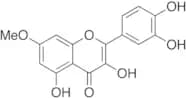
CAS:<p>Applications O-Methylated metabolite of the flavanoid Quercertin (Q509500) with antioxidant activity.<br>References Soobrattee, M.A. et al.: Mut. Res. Fund. Mol. Mech. Mutagen., 579, 200 (2005); Yamamoto, N. et al.: Arch. Biochem. Biophys., 372, 347 (1999);<br></p>Formula:C16H12O7Color and Shape:NeatMolecular weight:316.26R-Equol
CAS:<p>R-Equol is a chiral compound classified as an isoflavandiol, which is a type of non-steroidal estrogen. It is derived from the metabolic conversion of daidzein, an isoflavone predominantly found in soy products, by intestinal microbiota in some individuals. The presence of equol-producing bacteria is necessary for this biotransformation process.</p>Purity:Min. 95%